Li Wah
Our verdict
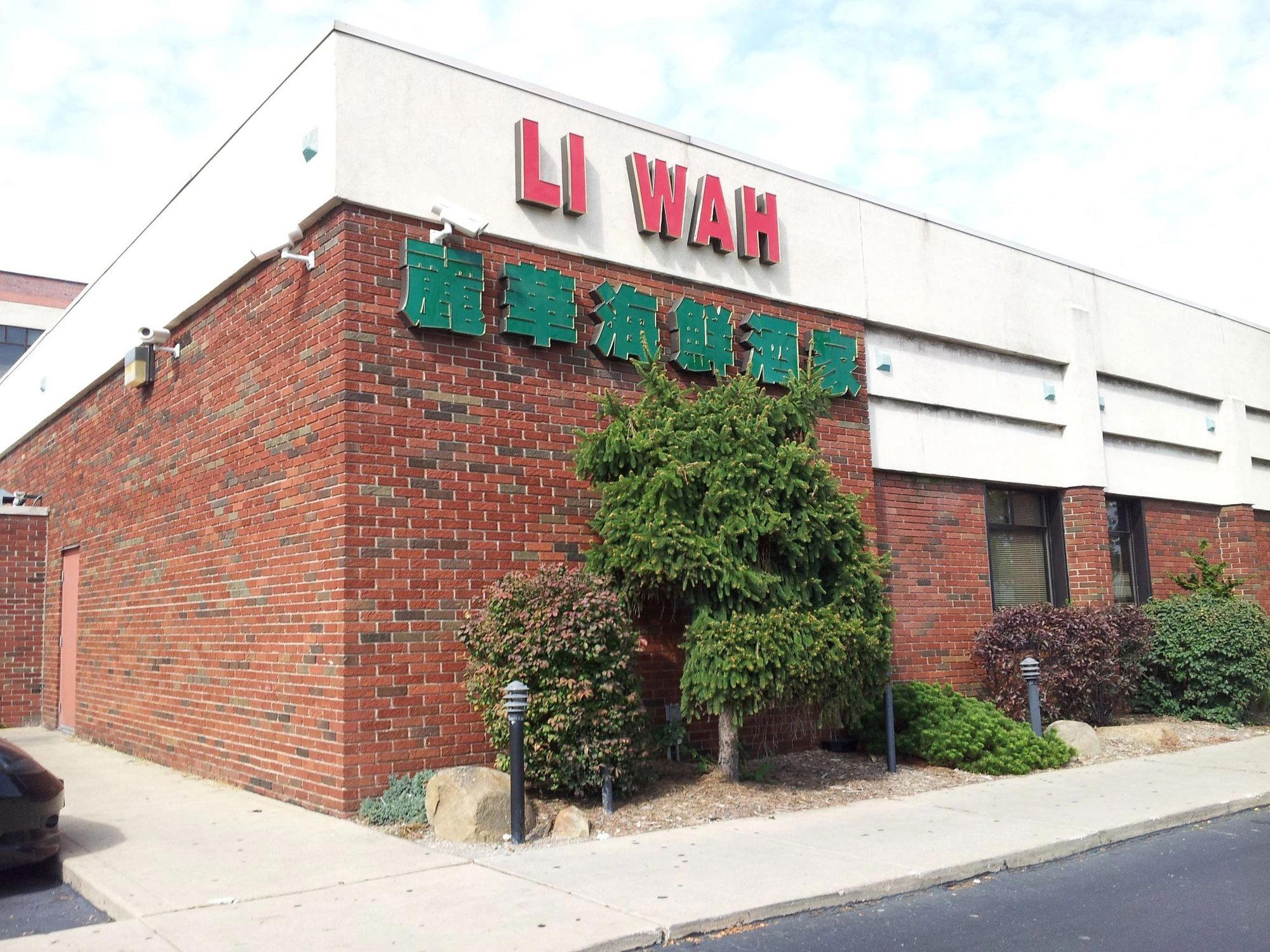
Li Wah has anchored Cleveland's AsiaTown dining corridor on Payne Avenue for decades, making it one of the neighborhood's most recognizable Chinese restaurants. Its location in the heart of the city's Asian commercial district places it within a wider tradition of Cantonese-influenced dim sum and banquet dining that has defined the area's culinary character since the mid-twentieth century.

Pearl is the En Primeur Club membership app — saves, bookings, and concierge access live there. Same editors, same standards.
- Address
- 2999 Payne Ave #102, Cleveland, OH 44114
- Phone
- (216) 696-6556
- Hours
- Mon–Fri 11 AM–9 PMSat–Sun 10 AM–9 PM
- Website
- liwahrestaurant.com
- Directions
- Get directions
The menu
What to order
- BBQ Pork Bun
- Har Gow
- Peking Duck
- Shrimp dumplings
AsiaTown's Long Game: How Li Wah Fits Cleveland's Chinese Dining Tradition
Payne Avenue in Cleveland's AsiaTown district does not announce itself with fanfare. The storefronts are functional, the signage multilingual, and the foot traffic is neighborhood-driven rather than tourist-facing. For anyone tracking where American cities have sustained authentic Chinese dining communities over multiple generations, this corridor is worth attention. Li Wah, at 2999 Payne Avenue, has been part of that story long enough to be considered one of the area's institutional addresses rather than a recent arrival.
AsiaTown sits roughly a mile east of downtown Cleveland, a compact commercial zone that has functioned as the city's primary Asian dining and retail district since the early twentieth century. Unlike Chinatowns in coastal cities that have been reshaped by gentrification or tourism pressure, Cleveland's version has remained a working neighborhood, where restaurant clientele skews heavily local and regulars bring genuine familiarity to the table. That context matters when assessing Li Wah: this is not a restaurant that evolved to meet the expectations of a transient dining audience. Its staying power reflects the kind of community embeddedness that drives repeat visits among families, not first-timers chasing novelty.
The Dim Sum Format in a Midwestern Context
Across American cities, the traditional Cantonese dim sum format has split into two distinct directions over the past two decades. One branch has moved upmarket, with high-ticket tasting versions appearing in cities like New York and San Francisco, where venues like Le Bernardin in New York City or Providence in Los Angeles represent the premium end of the dining spectrum that influences how all refined formats are assessed. The other branch has held to the banquet-hall format: large rooms, trolley or paper-order service, communal tables, and an emphasis on throughput and variety over theatrical presentation.
Li Wah belongs to the second tradition, and that is not a qualification. The banquet-hall model of Chinese dining carries its own discipline. The logistics of moving har gow, cheung fun, and roast pork buns from kitchen to table at pace, across a large room, while maintaining temperature and texture, demands kitchen organization that most casual observers underestimate. Midwest cities like Cleveland, Chicago, and Detroit have historically supported this model more durably than they have the premium spin-off format, partly because the restaurant communities in those cities grew around immigrant families who were building neighborhood infrastructure rather than destination dining.
For a broader frame of reference on what premium destination dining looks like elsewhere in the country, venues like Alinea in Chicago, Blue Hill at Stone Barns in Tarrytown, The French Laundry in Napa, or Single Thread Farm in Healdsburg represent the high-investment tasting format. Li Wah occupies a completely different position on that spectrum, one defined by accessibility, communal scale, and the kind of institutional continuity that fine-dining formats rarely achieve.
Reinvention Without Rebranding: The Slow Evolution of a Neighborhood Institution
The more interesting editorial question around Li Wah is not what it is now, but how it has persisted. AsiaTown has seen restaurants open and close around it through multiple cycles of neighborhood change. The broader American Chinese restaurant industry has been reshaped significantly over the past thirty years by shifting immigration patterns, competition from fast-casual formats, the rise of regional Chinese cooking from Sichuan, Hunan, and Shanghainese traditions, and more recently by the pressure of third-party delivery platforms that restructure the economics of kitchen-to-table service.
Restaurants that survive these shifts without rebranding tend to do so through one of two mechanisms: they either deepen their community relationships to the point where regular clientele functions as a built-in revenue base, or they maintain operational standards consistent enough that quality becomes a reliable signal rather than a variable one. In Cleveland's AsiaTown, where alternatives are available within walking distance, longevity itself is a form of evidence. Neighborhoods do not sustain mediocre institutions for decades when competing options exist at comparable price points.
Cleveland's dining scene overall has broadened considerably in the past decade. The Tremont and Ohio City neighborhoods have drawn significant attention for their independent restaurant culture, and the broader city has seen new formats arrive, from the Vietnamese cooking at #1 Pho to the riverside dining at 1330 on the River and Mediterranean flavors at Acqua di Dea. For a fuller picture of Cleveland's restaurant range, the full Cleveland restaurants guide covers options across neighborhoods and cuisines. Within that expanding context, Li Wah represents the AsiaTown anchor: the restaurant that predates many of these new arrivals and has outlasted several of them already.
Where Li Wah Sits in the City's Broader Restaurant Conversation
Cleveland's restaurant conversation has grown more sophisticated as the city has attracted greater national attention. Newcomers like Amba and Agave & Rye Cleveland represent formats built around national trend cycles, while destinations like Atomix in New York City, Emeril's in New Orleans, and The Inn at Little Washington in Washington anchor the premium tier at a national scale. Li Wah operates in a different register entirely, one where the measure of success is not critical acclaim or media recognition but continued relevance to the community that built it.
That positioning is not a limitation. In cities where restaurant culture is maturing beyond its initial fine-dining aspirations, the institutions that survive on community loyalty rather than media cycles often carry more information about a city's actual food culture than the venues that generate press. For the traveler or local diner trying to read Cleveland's Chinese dining tradition accurately, Li Wah on Payne Avenue is a more useful reference point than any recently opened concept. Further afield, venues like Addison in San Diego, Lazy Bear in San Francisco, and 8 1/2 Otto e Mezzo Bombana in Hong Kong sit at the premium end of their respective scenes.
Planning Your Visit
Li Wah is located at 2999 Payne Avenue, Suite 102, in Cleveland's AsiaTown neighborhood, roughly a mile east of the downtown core and accessible by car or rideshare without difficulty. The address places it within easy reach of other AsiaTown dining options, making it a natural starting point or anchor for a broader exploration of the corridor. Current hours, booking options, and pricing are best confirmed directly with the venue ahead of your visit, as this information is not centrally verified at the time of writing.
Frequently asked questions
What's the address for Li Wah?
Li Wah is located at 2999 Payne Ave #102, Cleveland, OH 44114, Cleveland.
Is Li Wah a good option for groups visiting Cleveland's AsiaTown?
The banquet-hall format that Li Wah operates within is inherently suited to groups: large tables, shared dishes, and a service style built around communal eating. Located at 2999 Payne Avenue in Cleveland's AsiaTown, the restaurant sits within a district that functions as the city's primary concentration of Chinese and pan-Asian dining. For a group looking to experience Cantonese dim sum in a Midwestern context, the format here is closer to what you'd find in a major coastal Chinatown than most Ohio alternatives.
What's the best thing to order at Li Wah?
Li Wah's reputation in Cleveland's AsiaTown is built on its Cantonese dim sum service, the format that has defined the restaurant's identity in the neighborhood. Traditional carts or ordered sheets covering har gow, siu mai, and similar Cantonese staples are the draw for regulars. If you're visiting Payne Avenue specifically for dim sum, that's the format to come for, not à la carte dishes.
Should I book Li Wah in advance?
Dim sum restaurants operating in the banquet-hall tradition draw their heaviest traffic on weekend mornings and early afternoons, when family groups arrive in numbers. Li Wah at 2999 Payne Ave follows that pattern, so arriving early or calling ahead for weekend visits is advisable. Weekday service tends to be quieter and walk-ins are generally easier to accommodate.
Recognition Snapshot
Comparable venues nearby, for context on price, style, and recognition.
| Venue | Cuisine | Price | Notes |
|---|---|---|---|
| Li WahThis venue — the venue you are viewing | Cantonese Dim Sum | $20–30 | Not listed |
| Bo Loong | Authentic Chinese Dim Sum | $10–20 | Goodrich-Kirtland Park |
| District | Contemporary American with Mediterranean Influences | Not listed | Playhouse Square |
| North Coast Cafe | American Casual Dining with International Buffet | $20–30 | Fairfax |
| Maxi's Bistro | Classic Italian Bistro | $20–30 | Little Italy |
| House of Creole Cleveland | Modern Cajun & Creole | $20–30 | Playhouse Square |
Continue exploring
More in Cleveland
Restaurants in Cleveland
Browse all →
Bars in Cleveland
Browse all →
Details
- Lively
- Classic
- Family
- Group Dining
- Brunch
- Open Kitchen
- A La Carte
- Small Plates
- Vegetarian Friendly
- Vegan Options
Current opening hours
- Monday
- 11 AM–9 PM
- Tuesday
- 11 AM–9 PM
- Wednesday
- 11 AM–9 PM
- Thursday
- 11 AM–9 PM
- Friday
- 11 AM–9 PM
- Saturday
- 10 AM–9 PM
- Sunday
- 10 AM–9 PM
Hours can change for holidays and private events. Last verified .
Busy and bustling atmosphere during dim sum service with carts rolling by, clean and spacious dining room.