

1 Michelin Star · Gault & Millau Remarkable Restaurant
Our verdict
A Michelin-starred table in the village of Biot, Les Terraillers occupies a former potter's studio where the original kiln now serves as the lounge. Chef Michaël Fulci trained under Alain Ducasse and Roger Vergé before channelling that lineage into a market-driven Mediterranean menu built around Menton lemons, courgette flowers, Vaucluse black truffle, and Alba white truffle.

Pearl is the En Primeur Club membership app, where members save venues, book tables and use the concierge.
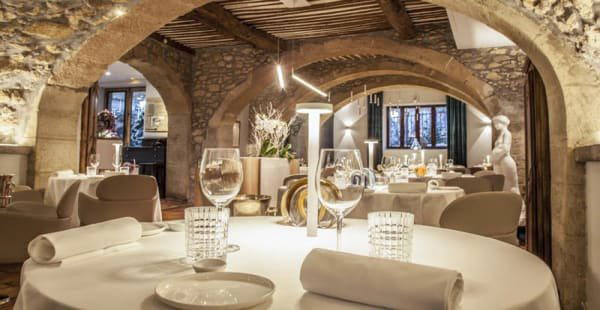
A Potter's Studio Turned Dining Room
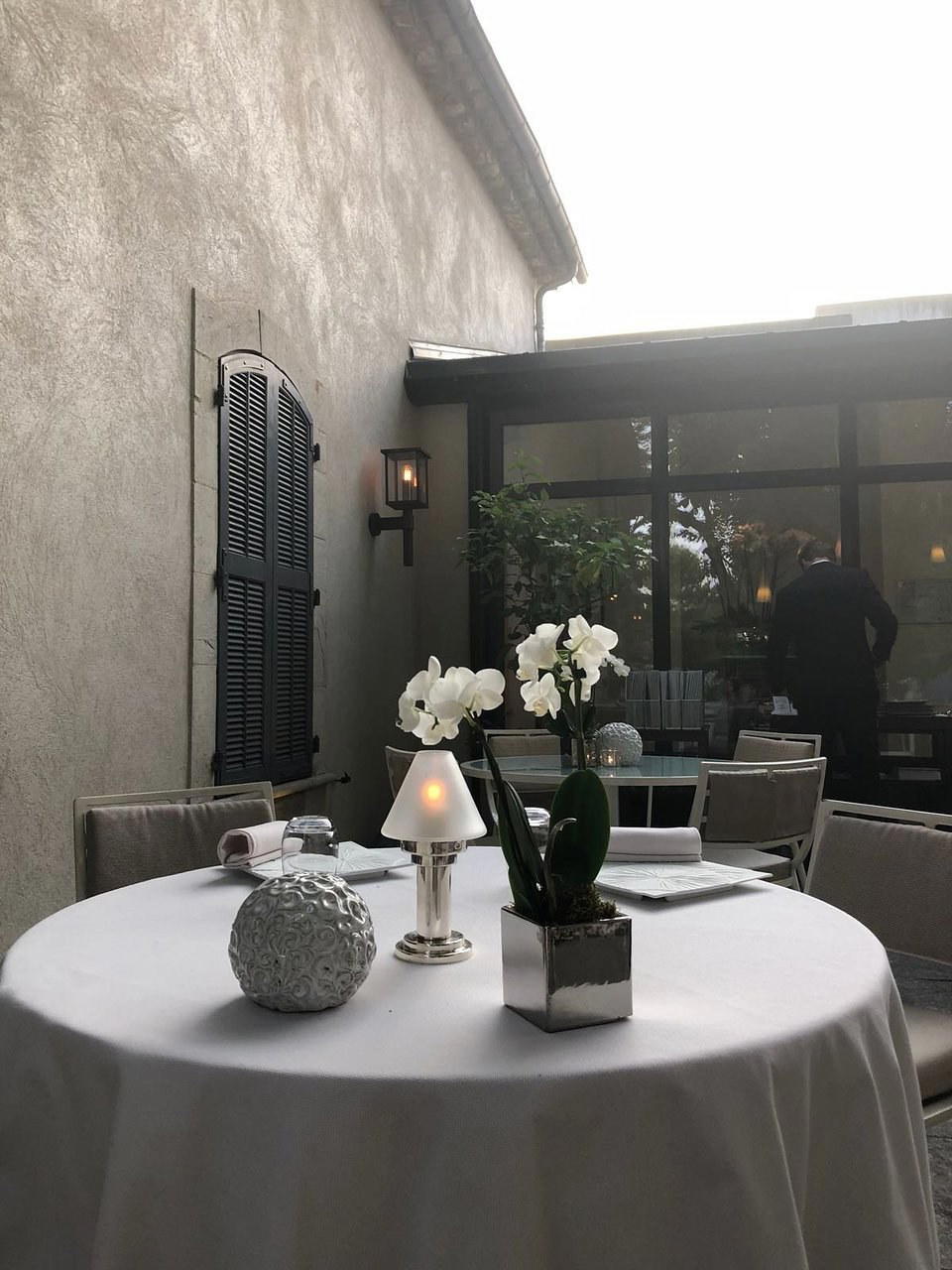
There is a particular category of Côte d'Azur restaurant that announces itself not through a grand boulevard address but through the texture of arrival: a lane, a converted structure, a setting that carries the memory of another function. Les Terraillers, on the Chemin Neuf in Biot, belongs to that category. The building was a potter's workshop, and the clay-rich soil that made Biot synonymous with art glassware and ceramic craft is the same terroir that informs the spirit of the cooking. The original kiln has been retained as a lounge, an architectural decision that compresses centuries of village craft into a single room. In warm months, a shaded trellis over the alfresco patio pulls the dining experience outside, where the light and air of the Alpes-Maritimes complete what the kitchen begins.
Biot sits between Antibes and Cagnes-sur-Mer, a location that places it within comfortable reach of the coastal restaurant circuit without belonging to it. The village's identity has long been shaped by artisan production rather than resort tourism, and that sensibility carries into the dining room at Les Terraillers. For a fuller picture of where this restaurant fits within the local offer, see our full Biot restaurants guide.
The Training Behind the Plate
The French Mediterranean has produced a specific lineage of cooking: technically grounded, market-dependent, and shaped by proximity to Italy and to the Alps. Chefs who trained in this tradition during the 1980s and 1990s absorbed a set of principles that remains influential today, the primacy of provenance, the discipline of classical technique applied to local ingredients, and a willingness to let the season determine the menu rather than the other way around.
Michaël Fulci arrived at Les Terraillers carrying credentials from both ends of that tradition. His formation under Alain Ducasse placed him inside the most technically demanding school of modern French cooking; his time with Roger Vergé, whose Mougins restaurant defined the Provençal fine dining model for a generation, grounded that technical formation in the specific flavours and rhythms of this coast. Those two reference points, Ducasse's rigour, Vergé's regionalism, are not in tension at Les Terraillers. They produce a style of cooking that Michelin's inspectors, who awarded a star in 2024, characterise as sophisticated and flavourful, drenched in sunshine and scent.
That training lineage connects Les Terraillers to a broader network of French kitchens that have shaped the contemporary fine dining conversation. Restaurants such as Alléno Paris au Pavillon Ledoyen, Flocons de Sel in Megève, and Mirazur in Menton each represent a different regional expression of French creative cooking at the highest level. Les Terraillers operates within the same general tradition, with its star placing it in the first tier of Michelin-recognised tables in the Alpes-Maritimes. For broader context, the French culinary landscape also includes reference institutions like Troisgros in Ouches, Paul Bocuse in Collonges-au-Mont-d'Or, Bras in Laguiole, and Auberge de l'Ill in Illhaeusern, all of which illustrate the depth of the tradition Fulci draws from.
What the Menu Signals
The creative category in French fine dining covers considerable ground, from avant-garde technique to loosely interpreted classicism. At Les Terraillers, the creative designation translates into a menu architecture that privileges seasonal produce from local and regional markets. Courgette flowers, Menton lemons, figs: these are not decorative references to locality but the structural ingredients around which dishes are built. The Menton lemon alone represents a specific terroir claim, the fruit grown in that small coastal enclave carries a perfume and acidity distinct from generic citrus, and its appearance on a menu at this level signals intent rather than convenience.
Truffles feature in two registers: black from Vaucluse and white from Alba. The juxtaposition is geographically telling. Vaucluse black truffle is a domestic provenance, rooted in the Provençal hinterland; Alba white truffle crosses the border into Piedmont. The Côte d'Azur has always been a zone of French-Italian culinary exchange, and a menu that holds both varieties simultaneously is making that geography explicit rather than choosing a side.
For comparison, the creative fine dining format appears across several EP Club-listed venues beyond France: AM par Alexandre Mazzia in Marseille represents another southern French expression of the same category, while internationally, Enrico Bartolini in Milan and JAN in Munich show how the creative designation plays out in adjacent European markets. The contrast is useful: Les Terraillers is emphatically a product of its specific coastal-Provençal context in a way that urban creative restaurants rarely achieve.
The Michelin Signal and What It Means Here
A single Michelin star in 2024 places Les Terraillers in a tier that carries particular meaning on the Côte d'Azur, a stretch of coast with more starred tables per kilometre than most regions in Europe. In that competitive context, the star is not simply a quality indicator but a positioning statement: this is a kitchen operating at a level that warrants a dedicated visit, not merely a convenient dinner. Michelin's own characterisation of the food, the reference to sunshine, scent, and flavour alongside technical sophistication, suggests inspectors are reading the cooking as successfully capturing place, which is a harder achievement than technical correctness alone.
The Remarkable category designation from Michelin adds further texture. It signals a restaurant that inspectors find noteworthy within its broader context, not simply competent within its tier.
For those building a broader itinerary around Michelin-recognised tables in the south of France, the EP Club also covers Auberge du Vieux Puits in Fontjoncouse and Assiette Champenoise in Reims, alongside Au Crocodile in Strasbourg, for a sense of how the single-star category maps across different French regions.
Planning Your Visit
Les Terraillers is at 11 Chemin Neuf, Biot. The kitchen runs a schedule that narrows through the week: Monday and Tuesday are closed entirely; Wednesday, Thursday, Saturday, and Sunday offer both a lunch service (noon to 2 PM) and an evening service (7:30 PM to 10 PM); Friday is dinner only. That pattern reflects the rhythms of a serious restaurant rather than a casual bistro, and it shapes how you plan around it. Weekend lunch under the trellis, when the light in the Alpes-Maritimes is at its most direct, is the format that most fully uses the setting. At the €€€€ price level, this is a meal to plan rather than to stumble upon.
Biot itself rewards time beyond the meal. The village's craft identity, the glass studios, the ceramic tradition embedded in the very building you are sitting in, makes it a coherent half-day or full-day destination. For accommodation, drinking, and further exploration, EP Club has guides covering hotels in Biot, bars in Biot, wineries near Biot, and experiences in Biot to help build the visit into something more than a single reservation.
Frequently asked questions
What's the price range at Les Terraillers?
Pricing at Les Terraillers is listed as €€€€.
Is Les Terraillers open every day?
Hours at Les Terraillers: Monday closed Tuesday closed Wednesday 12 PM-2 PM 7:30 PM-10 PM Thursday 12 PM-2 PM 7:30 PM-10 PM Friday 7:30 PM-10 PM Saturday 12 PM-2 PM 7:30 PM-10 PM Sunday 12 PM-2 PM 7:30 PM-10 PM.
Side-by-Side Snapshot
| Venue | Cuisine | Price | Awards | Notes |
|---|---|---|---|---|
| Les TerraillersThis venue (the venue you are viewing) | Modern French Fine Dining | Not listed | 1 Michelin Star · Gault & Millau Remarkable Restaurant | Not listed |
| Alléno Paris au Pavillon Ledoyen | Modern French Fine Dining | $150–200 | 3 Michelin Stars · World's 50 Best #79 | Creative |
| Kei | Contemporary French, Modern Cuisine | Not listed | Michelin 3 Star | Not listed |
| L'Ambroisie | Classic French Haute Cuisine | $300–500 | 2 Michelin Stars · World's 50 Best #23 | French, Classic Cuisine |
| Le Cinq - Four Seasons Hôtel George V | Modern French Fine Dining | $300–500 | 3 Michelin Stars · World's 50 Best #24 | French, Modern Cuisine |
| Plénitude | Modern French Sauce-Led Fine Dining | $300–500 | 3 Michelin Stars · World's 50 Best #14 | Contemporary French |
Recognition history
Dated appearances from independent guides and award organizations, with the underlying list record or original source where available.
Michelin 1 Star
Michelin
Gault & Millau Remarkable Restaurant
Gault & Millau
Full recognition history (4 entries)
Michelin 1 Star
Michelin
Michelin 1 Star
Michelin
Continue exploring
More in Biot
Restaurants in Biot
All restaurants in Biot →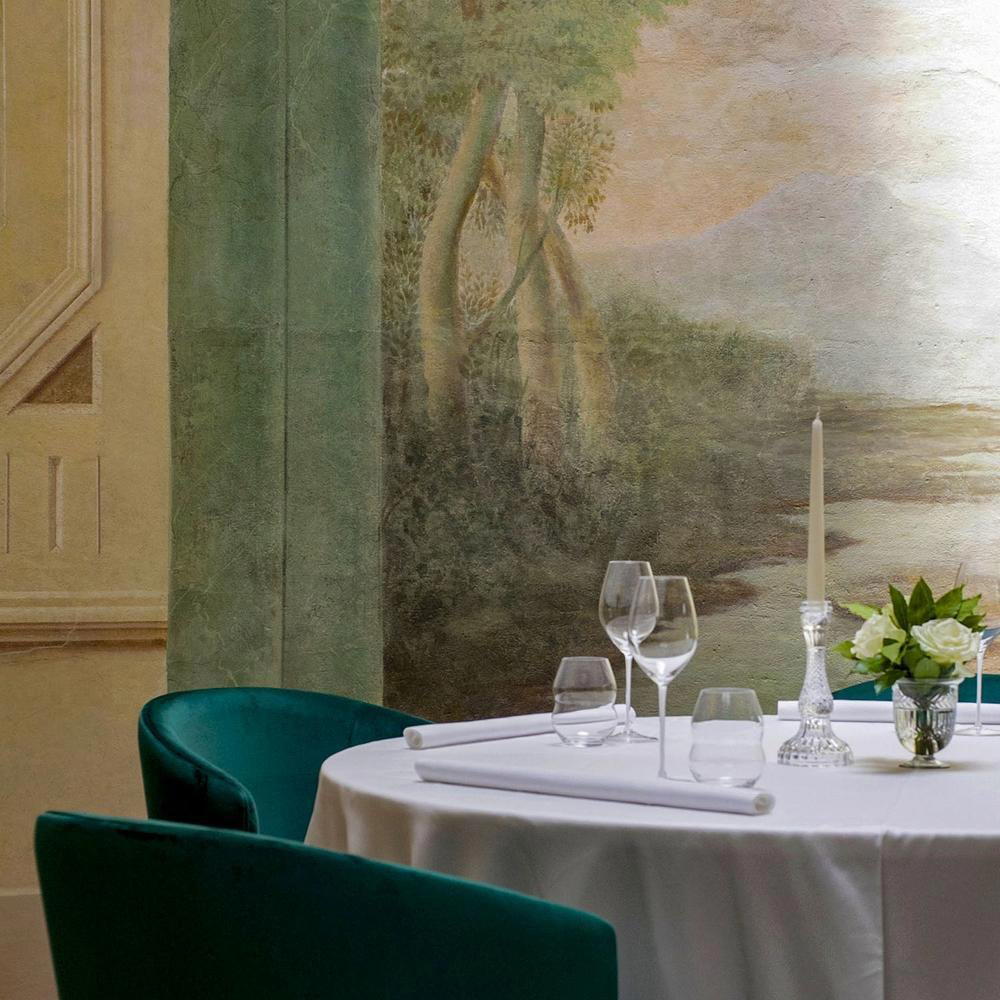
Details
- Rustic
- Elegant
- Cozy
- Intimate
- Scenic
- Date Night
- Special Occasion
- Terrace
- Courtyard
- Open Kitchen
- Extensive Wine List
- Garden
- Tasting Menu
- A La Carte
Current opening hours
- Monday
- Closed
- Tuesday
- Closed
- Wednesday
- 12–2 PM, 7:30–10 PM
- Thursday
- 12–2 PM, 7:30–10 PM
- Friday
- 12–2 PM, 7:30–10 PM
- Saturday
- 12–2 PM, 7:30–10 PM
- Sunday
- 12–2 PM
Hours can change for holidays and private events. Hours as of .
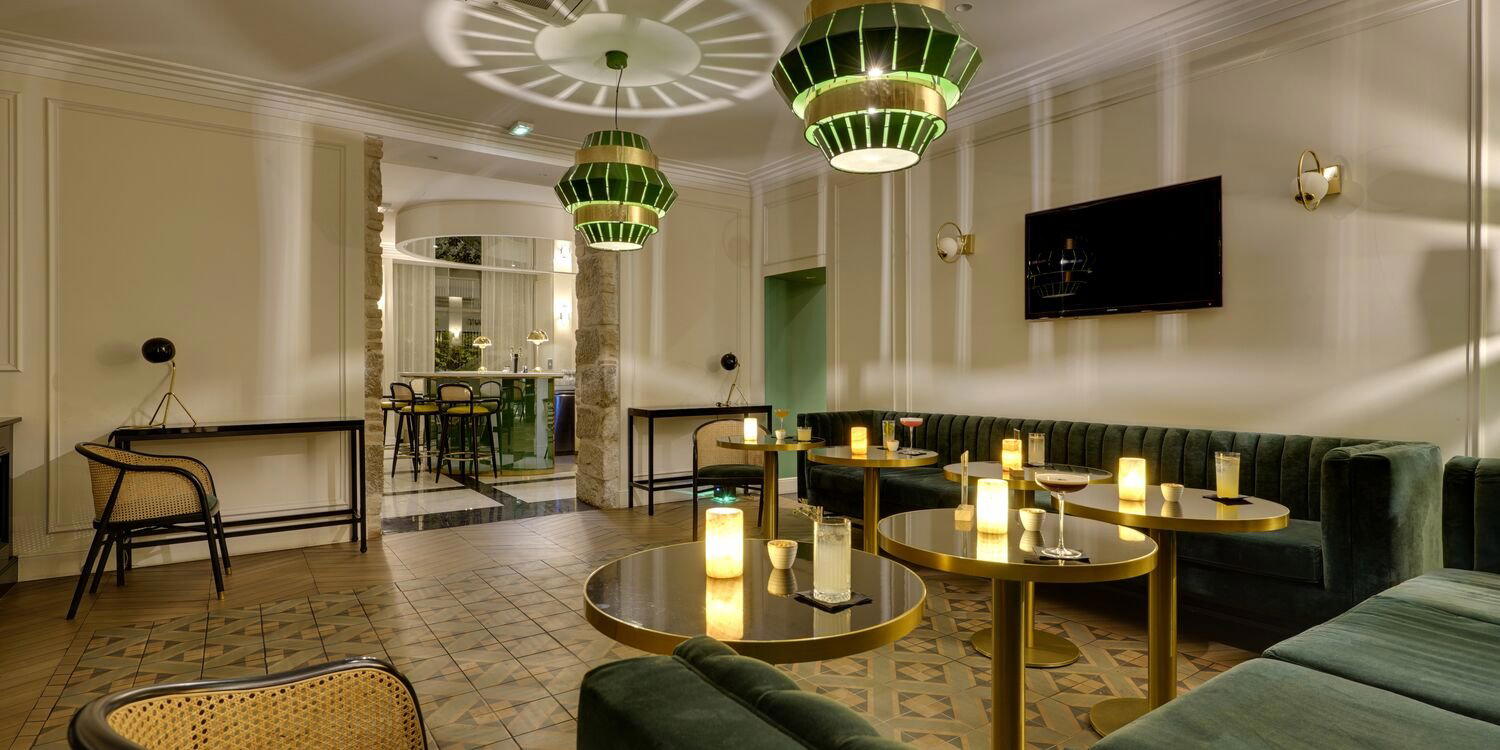
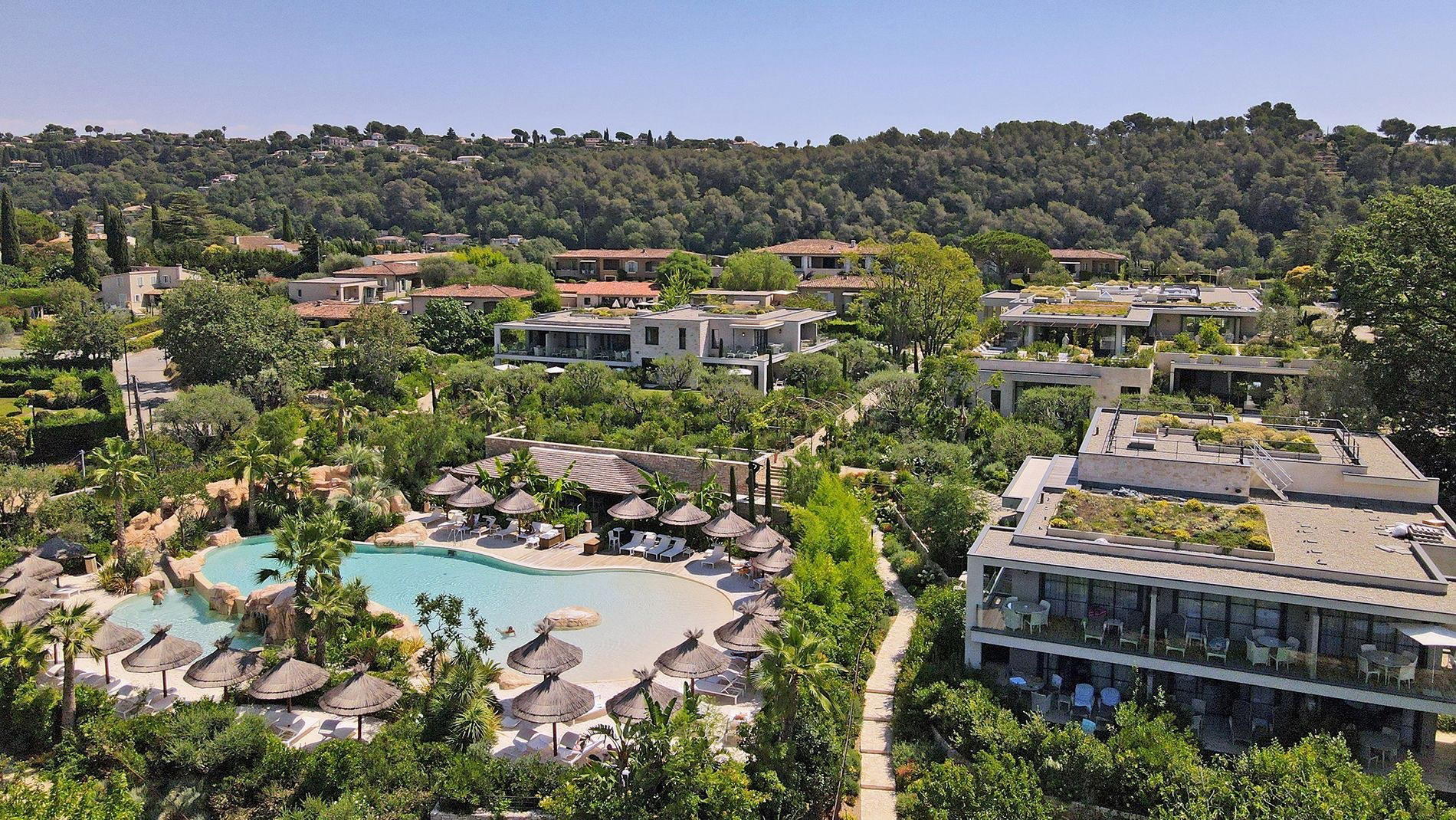
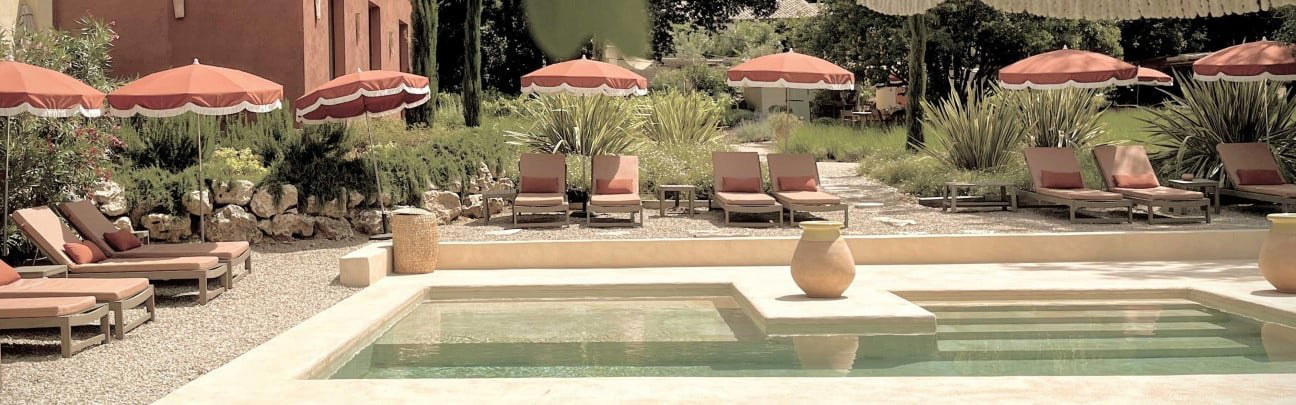
Charming Provençal setting with a vine-shaded courtyard terrace, rustic yet classy atmosphere, cozy and relaxed with beautiful lighting and glass art decor.