Les Clanchistes
Our verdict
Les Clanchistes sits at 99 Rue Dalayrac in Fontenay-sous-Bois, a Val-de-Marne commune that operates at a quieter register than the capital it borders. The address places it within the eastern suburban dining circuit where neighbourhood regulars rather than destination-seekers set the room's tone. For visitors curious about where Paris's appetite for ingredient-led cooking extends beyond the périphérique, this is a useful reference point.

Pearl is the En Primeur Club membership app, where members save venues, book tables and use the concierge.
The menu
What to order
- Burger Clanchistes
- French toast mushrooms parmesan
- Côte de bœuf
Fontenay-sous-Bois and the Suburban Dining Question
The restaurants that matter most to a city's food culture are rarely the ones drawing pilgrims from abroad. France's most decorated tables, from Alléno Paris au Pavillon Ledoyen to Mirazur in Menton, occupy the uppermost tier of a pyramid whose base is built from neighbourhood rooms where the cooking is serious and the clientele is local. Fontenay-sous-Bois, a commune in the Val-de-Marne department roughly twelve kilometres east of central Paris, is precisely that kind of base. It does not trade on spectacle. Its dining rooms serve the people who live there, and they are judged accordingly: consistency matters more than occasion, and sourcing decisions show up plainly on plates that aren't dressed for critics.
Les Clanchistes, at 99 Rue Dalayrac, occupies that register. The address is residential in character, the kind of street where a bakery, a tabac, and a neighbourhood restaurant coexist without competing for the same audience. Approaching the building, the scale is modest and the signage understated. This is not an environment engineered for first impressions; it is one that earns its reputation through repetition, through the regulars who return and the word-of-mouth that spreads quietly through a commune rather than loudly across social media.
Where the Food Comes From
The ingredient-sourcing question is where suburban French restaurants most usefully diverge from one another. At the decorated end of the French spectrum, houses like Bras in Laguiole or Christopher Coutanceau in La Rochelle, provenance is a central editorial statement, communicated through printed menus, supplier relationships made explicit at the table, and cooking philosophies built around a specific terrain. At the neighbourhood level, sourcing operates differently: it is less often announced and more often inferred from what arrives on the plate. Seasonality shows in what is absent as much as what is present. A menu that shifts with the weeks rather than the seasons signals a kitchen paying close attention to what markets are actually offering.
France's regional food traditions have always carried a strong sense of origin. The Île-de-France, despite its urban density, sits within reach of some of the country's better market gardening, the Île-de-France is historically associated with maraîchage, intensive small-plot vegetable cultivation that supplied Paris long before refrigerated logistics changed the supply chain. A neighbourhood kitchen in Fontenay-sous-Bois has geographic access to that tradition, and the best of them use it. The question for a visitor is whether the kitchen at Les Clanchistes treats provenance as an operational habit or merely as a backdrop.
What can be said is that the context in which Les Clanchistes operates, a French suburban commune with a food-literate population and proximity to Paris's wholesale and artisan supply networks, creates conditions where ingredient-conscious cooking is possible without the overhead that makes it exceptional at a destination level. Whether the kitchen meets that opportunity is a question leading answered at the table.
The Suburban Context and the Paris Comparison
Fontenay-sous-Bois belongs to the inner eastern suburbs that Paris's food conversation tends to overlook in favour of the capital's arrondissements. This is a pattern common to major cities: the metropolitan dining press concentrates on the centre while neighbourhoods at the periphery develop their own rhythms independently. The result, in a commune like Fontenay-sous-Bois, is a dining scene shaped more by what residents want repeatedly than by what impresses a one-time visitor.
That distinction has real implications for how you read a room. A table held by a regular at a suburban French restaurant carries different weight than a reservation made for occasion dining. The kitchen knows what those regulars will notice, a slip in sauce consistency, a protein sourced from a different supplier, a dessert that hasn't changed in three seasons. The accountability is quieter but arguably more demanding than the scrutiny applied to a starred room where most guests arrive for a single memorable evening.
For perspective on how France's most serious destination restaurants operate at the other end of the spectrum, the contrast is instructive: Troisgros in Ouches, Auberge de l'Ill in Illhaeusern, and Paul Bocuse's Auberge du Pont de Collonges represent the institutionalised end of French culinary ambition, where sourcing decisions and kitchen lineage are part of the public record. Les Clanchistes operates in a different register entirely, one where the record is local and oral rather than published and starred.
Other decorated French addresses worth considering for comparison include Assiette Champenoise in Reims, Au Crocodile in Strasbourg, Auberge du Vieux Puits in Fontjoncouse, Georges Blanc in Vonnas, L'Oustau de Baumanière in Les Baux, La Marine in Noirmoutier, Flocons de Sel in Megève, and AM par Alexandre Mazzia in Marseille. Outside France, Le Bernardin in New York and Atomix, also in New York, illustrate how French culinary influence maps onto other metropolitan dining cultures.
Planning a Visit
Les Clanchistes is located at 99 Rue Dalayrac, 94120 Fontenay-sous-Bois. The commune is served by the RER A line, with Fontenay-sous-Bois station placing visitors within walking distance of much of the town centre. No current booking method, opening hours, or price range data is available through verified channels, so confirming details directly before visiting is advisable. Our full Fontenay-sous-Bois restaurants guide covers the wider dining context for the commune and is a practical starting point for planning a broader visit to the area.
Frequently asked questions
Would Les Clanchistes be comfortable with kids?
Nothing in the available record for 99 Rue Dalayrac flags a policy either way. Fontenay-sous-Bois is a residential commune rather than a destination-dining strip, which generally correlates with a relaxed, neighbourhood atmosphere tolerant of families.
What's the overall feel of Les Clanchistes?
The address on Rue Dalayrac places this squarely in a residential pocket of Fontenay-sous-Bois, the kind of street where a restaurant earns its clientele from the immediate neighbourhood rather than from cross-city reputation. That context points toward a room built around regulars: unpretentious, conversational, and oriented around the food rather than the setting.
Is Les Clanchistes a good option for dinner near the Fontenay-sous-Bois RER A station?
The restaurant sits at 99 Rue Dalayrac, 94120 Fontenay-sous-Bois, a commune served directly by the RER A line, one of the fastest rail connections between central Paris and the inner eastern suburbs. That accessibility makes it a practical choice for Parisians willing to cross the périphérique for a neighbourhood meal without the pricing pressures of the capital's arrondissements.
What should I order at Les Clanchistes?
Specific menu details are not in the public record for Les Clanchistes. As a French restaurant in the inner eastern suburbs, the kitchen likely follows the pattern common to neighbourhood tables in the Val-de-Marne area: market-driven dishes that change with supply rather than a fixed carte. Arriving without a plan and asking the room what's moving that day is the approach that tends to reward at addresses like this.
Where is Les Clanchistes in Fontenay Sous Bois?
Les Clanchistes is located at 99 Rue Dalayrac, 94120 Fontenay-sous-Bois, France, Fontenay Sous Bois.
Comparable Venues
Comparable venues nearby, for context on price, style, and recognition.
| Venue | Cuisine | Price | Notes |
|---|---|---|---|
| Les ClanchistesThis venue (the venue you are viewing) | Modern French Bistro | $30–50 | Not listed |
| A La Frégate | Classic French Seafood Bistro | $50–100 | Bercy/Nation |
| Cadence | Modern Neo-Bistro with Small Plates | $30–50 | 11th Arr. |
| La Traversée | Modern French Bistro | $30–50 | 18th Arrondissement |
| A Casaluna | Modern Corsican | $50–100 | Palais-Royal |
| Chez Pitou | Classic French Bistro | $30–50 | Montmartre |
Continue exploring
More in Fontenay Sous Bois
Restaurants in Fontenay Sous Bois
All restaurants in Fontenay Sous Bois →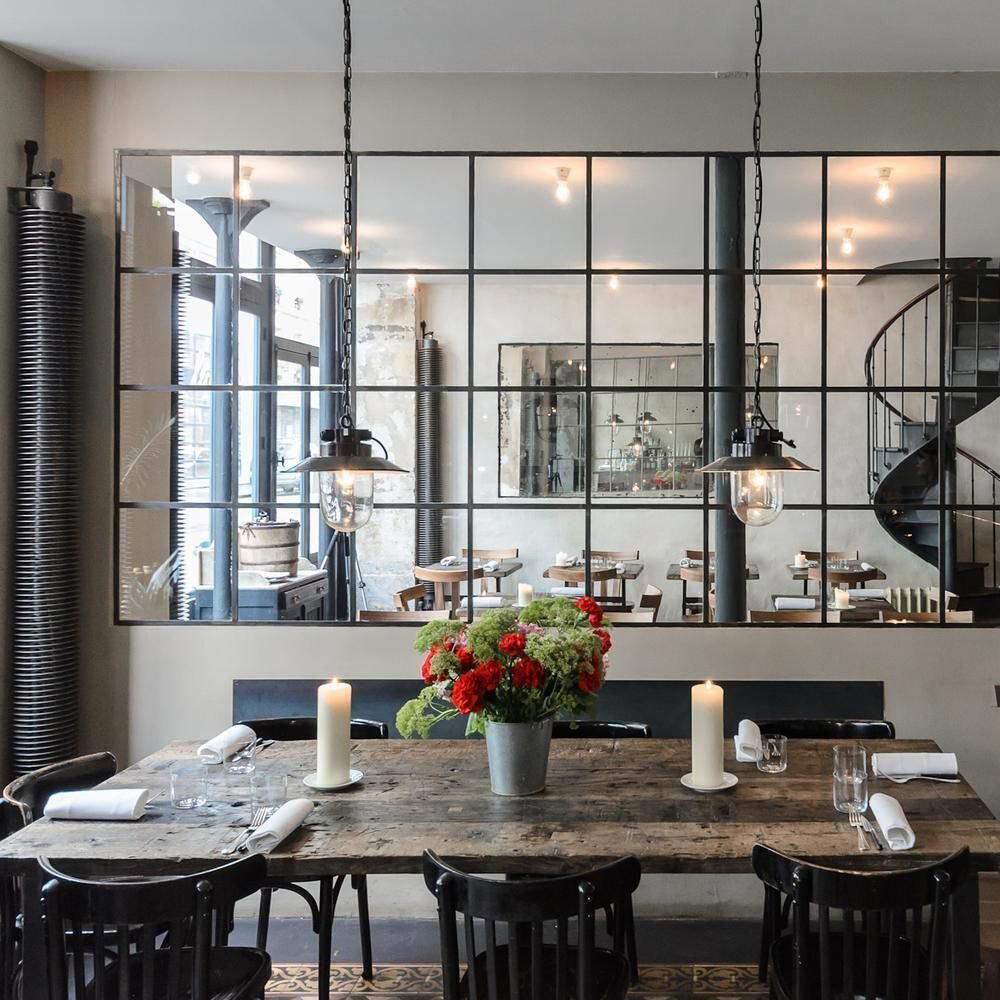
Bars in Fontenay Sous Bois
Browse all →
Hotels in Fontenay Sous Bois
Browse all →
Wineries in Fontenay Sous Bois
Browse all →
Details
- Cozy
- Elegant
- Modern
- Classic
- Date Night
- Family
- Casual Hangout
- Open Kitchen
- A La Carte
Current opening hours
- Monday
- Closed
- Tuesday
- 12–2 PM, 7:30–10 PM
- Wednesday
- 12–2 PM, 7:30–10 PM
- Thursday
- 12–2 PM, 7:30–10 PM
- Friday
- 12–2 PM, 7:30–10 PM
- Saturday
- 12–2 PM, 7:30–10 PM
- Sunday
- Closed
Hours can change for holidays and private events. Hours as of .
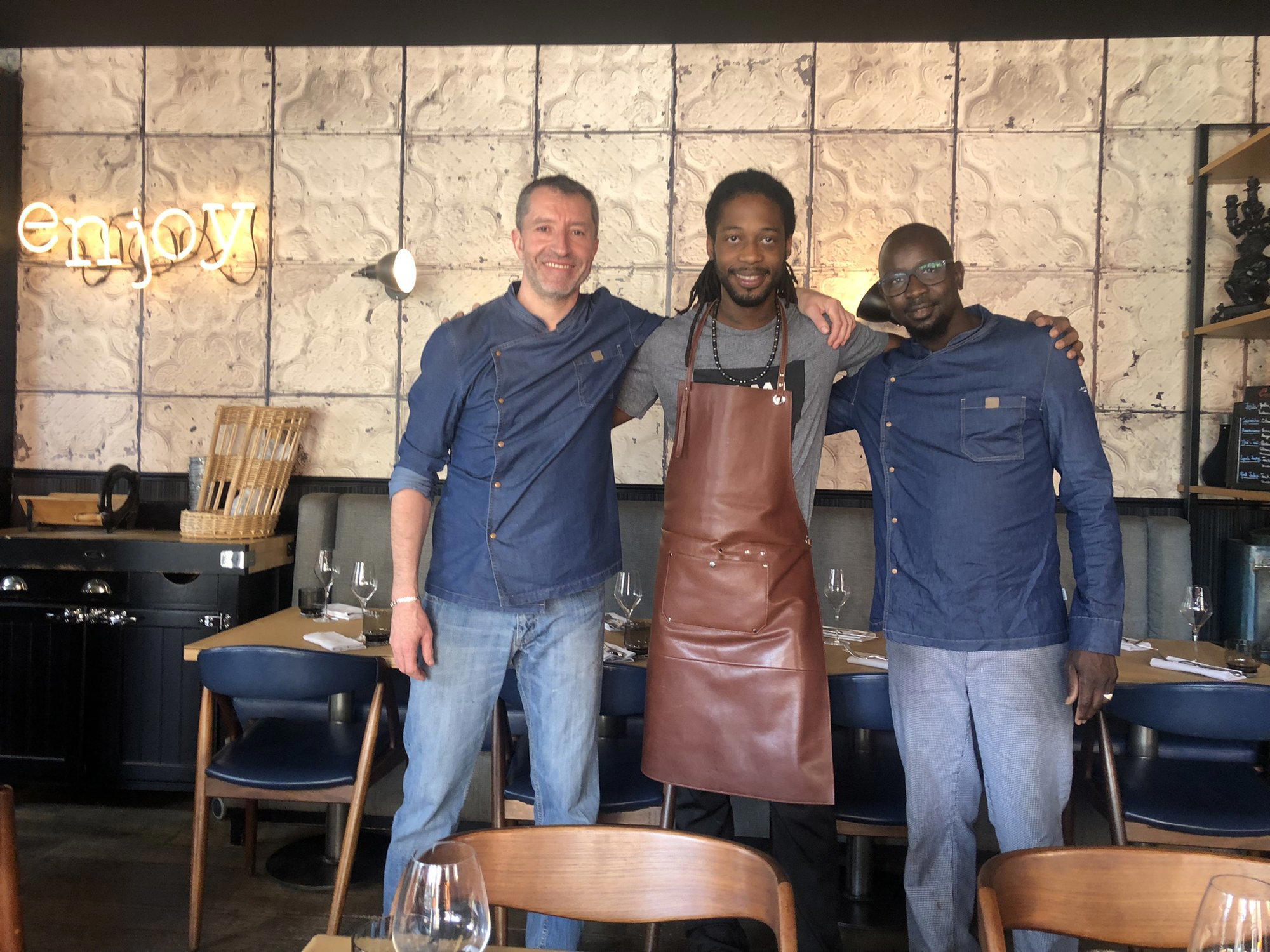
Urban setting with dark ceiling softened by large bay windows, contemporary decor inspired by traditional Parisian bistros, warm and pleasant atmosphere.