Lemonade
Our verdict
Lemonade is a Los Angeles cafeteria-style concept at LAX's Tom Bradley International Terminal, positioned in the tier of fast-casual dining that prioritizes seasonal California produce over airport convenience-food norms. It draws a repeat clientele of frequent flyers who have learned to time their arrivals around it, treating the rotating menu board as a reliable edit of what California cooking does at its most accessible.

Pearl is the En Primeur Club membership app, where members save venues, book tables and use the concierge.
The menu
What to order
- Blood Orange Lemonade
- White Truffle Mac and Cheese
- Ahi Poke
- Thai Chicken Meatballs
The Airport Cafeteria That Rewired Expectations
Airport dining in America operates in two registers: the generic and the resigned. Most travelers accept whichever chain happens to occupy the gate-adjacent real estate, and the industry has largely obliged by filling terminals with the same rotating cast of franchises. Lemonade, the Los Angeles-based cafeteria chain with a location inside LAX's Tom Bradley International Terminal, occupies an unusual position in that context. It is not a destination restaurant by any measure, but it has accumulated a returning clientele that treats it as a reliable marker of California's seasonal, produce-forward cooking tradition, even at 30,000 feet of altitude in mind if not in body.
That loyal following is worth examining. In a city where Kato and Hayato operate in the rarefied $$$$-bracket and demand months of advance planning, and where Somni represents the molecular end of the spectrum, there is a wide and often underexamined middle ground of fast-casual formats that reflect Southern California's food identity more democratically. Lemonade belongs to that middle register, and its regulars are not people who couldn't get into Osteria Mozza that evening. They are frequent travelers who have already calibrated their expectations to the terminal and found something here that holds up.
What the Regulars Know
The format is cafeteria-line service: you move along a counter, select from a rotating array of grain bowls, braised proteins, market salads, and seasonal sides, and pay at the end. The menu rotates with California's agricultural calendar, which means what a frequent flyer found at the counter in January will look different in July. This is not a promise of fine dining; it is a promise of something more modest and, in an airport, more valuable: consistency of approach rather than consistency of dish.
Regulars at Lemonade tend to operate with a mental hierarchy. They know which categories of the menu are strongest, they skip the items that don't travel well through the self-service format, and they have a rough sense of what the seasonal anchors look like. That kind of accumulated knowledge is what distinguishes a regular from a first-time visitor who reads a menu board cold. In a terminal environment where most concepts offer no such depth to discover, the existence of a learning curve is itself a signal of something worth returning to.
This pattern of repeat engagement is not uncommon in Los Angeles's better fast-casual scene. California's agricultural abundance and the state's long-running cultural emphasis on vegetable-forward eating have produced a fast-casual tier that is structurally more interesting than its counterparts in most other American cities. Our full Los Angeles restaurants guide maps the fuller range of what the city offers, from that fast-casual tier up through the Michelin-recognized counters. Lemonade is the entry point of that continuum when you are catching a flight.
California Produce Logic at the Counter
The seasonal-produce model that Lemonade applies is not a marketing position. It is a structural reality of California agriculture: the state's growing regions produce a calendar of ingredients that shifts visibly across seasons, and a concept built around that calendar will naturally look and taste different throughout the year. For travelers flying into or out of LAX who encounter the concept without context, this can read as inconsistency. For regulars, it is the operating logic they have already absorbed.
Compare this to the airport dining norm across comparable international terminals. At the level of transit dining that Le Bernardin in New York City or Alinea in Chicago occupy in their respective fine-dining scenes, the airport-adjacent conversation is entirely separate. But the gap between those reference points and the average terminal sandwich counter is large, and Lemonade occupies a position meaningfully above the latter without attempting to compete with the former. That positioning is what makes it legible to its repeat clientele.
Placing Lemonade in the Broader Los Angeles Context
Los Angeles dining in 2024 and into 2025 has continued to stratify. At the leading end, Providence holds its position as one of California's most recognized seafood-focused rooms, while farm-to-table formats like Single Thread Farm in Healdsburg and Blue Hill at Stone Barns in Tarrytown have established what committed sourcing looks like at the high end. Closer to home, Addison in San Diego represents Southern California's fine-dining ambition at the regional level.
What Lemonade borrows from this broader California ethos is the seasonal-produce orientation and the bowl-centric format that has defined the state's accessible dining culture for the better part of two decades. The concept does not claim Michelin ambition, and framing it against The French Laundry in Napa would be a category error.
For the traveler who has already worked through the full range of what the city offers and wants a reference point for comparable American dining ambition, the conversation extends nationally. Lazy Bear in San Francisco, Bacchanalia in Atlanta, Atomix in New York City, The Inn at Little Washington, and Emeril's in New Orleans each represent a different regional expression of American dining with its own loyal clientele. Lemonade is not in that company critically, but the dynamic of a returning clientele that has learned to read a format and extract value from it is the same dynamic, operating at a different tier.
For the international traveler passing through Los Angeles on the way elsewhere, the instinct to compare might extend even further, to the transit dining available at comparable global hubs. 8 1/2 Otto e Mezzo Bombana in Hong Kong operates in an entirely different register, but it occupies a similar symbolic position as a quality signal within a transit environment. The principle that travelers make decisions about airport stops based on learned preference rather than fresh discovery is universal.
Planning Your Visit
Location: Tom Bradley International Terminal, LAX (1 World Way, Los Angeles, CA 90045), accessible post-security. Format: Cafeteria-line service; no reservations taken or required. Timing: The counter serves through most of the terminal's operating hours; arriving with time to assess the day's rotation is advisable rather than grabbing a quick pass at the last gate call. Budget: Pricing reflects fast-casual positioning; expect to spend meaningfully less than the city's full-service restaurant tier. What to know: The menu rotates seasonally, so repeat visits will encounter a different selection; this is a feature of the model, not a liability.
Frequently asked questions
What do regulars order at Lemonade?
Regulars at Lemonade tend to focus on the rotating grain bowls and braised protein options, which reflect the California seasonal-produce approach most directly. The cafeteria format rewards visitors who move through the line deliberately, assessing what the day's rotation has produced, rather than defaulting to the first familiar item. The sides and salad options vary with the agricultural calendar, so the selection in late summer looks different from what the counter carries in winter.
Do I need a reservation for Lemonade?
No reservation is possible or required. Lemonade operates a walk-up cafeteria line inside LAX's Tom Bradley International Terminal, which means access depends on holding a post-security boarding pass for the terminal rather than any advance booking. In Los Angeles, where restaurants like Kato and Hayato require significant lead time to secure a table, the walk-up format is part of what defines Lemonade's position in the city's dining range.
What has Lemonade built its reputation on?
Lemonade's reputation in the Los Angeles fast-casual context rests on its seasonal California produce orientation and its cafeteria format, which together produce a menu that rotates with the state's agricultural calendar. Within the LAX terminal specifically, it has accumulated a returning clientele of frequent flyers who treat it as a more reliable option than standard airport concepts. That loyalty is the practical measure of what the concept has built over time, in a dining environment where most travelers set expectations low.
Is Lemonade at LAX representative of what the broader Lemonade brand offers across Los Angeles?
Lemonade operates multiple locations across Los Angeles, and the Tom Bradley International Terminal outpost functions within the same cafeteria-line, seasonal-produce framework as the brand's other sites. The LAX location serves a particular kind of regular, the frequent traveler who has calibrated their airport stop around it, which gives it a slightly different character from neighborhood locations. For travelers who encounter the brand for the first time at the terminal and want to explore further, the city's other locations provide the same format outside the airport context.
The Minimal Set
Comparable venues nearby, for context on price, style, and recognition.
| Venue | Cuisine | Price | Notes |
|---|---|---|---|
| LemonadeThis venue (the venue you are viewing) | California Fresh & Healthy Comfort Food | $10–20 | Not listed |
| Nature's Brew by Bacari | American Breakfast Cafe | $10–20 | University Park, American Breakfast Cafe |
| Fred 62 | Retro American Diner | $20–30 | Los Feliz, Retro American Diner |
| Cinnies | Cinnamon roll bakery | $10–20 | Downtown Los Angeles, Cinnamon roll bakery |
| NADC Burger | Wagyu Smashburgers | $20–30 | Westwood, Wagyu Smashburgers |
| Cole's | Not listed | Not listed | Old Bank District, Classic French Dip Sandwiches |
Continue exploring
More in Los Angeles
Restaurants in Los Angeles
All restaurants in Los Angeles →
Bars in Los Angeles
All bars in Los Angeles →

Hotels in Los Angeles
All hotels in Los Angeles →
Wineries in Los Angeles
All wineries in Los Angeles →

Details
- Modern
- Minimalist
- Trendy
- Casual Hangout
- Solo
- Family
- Open Kitchen
- Standalone
- Local Sourcing
- A La Carte
- Fresh Pressed Lemonade
- Specialty Lemonades
- Vegetarian Friendly
- Vegan Options
- Gluten Free Options
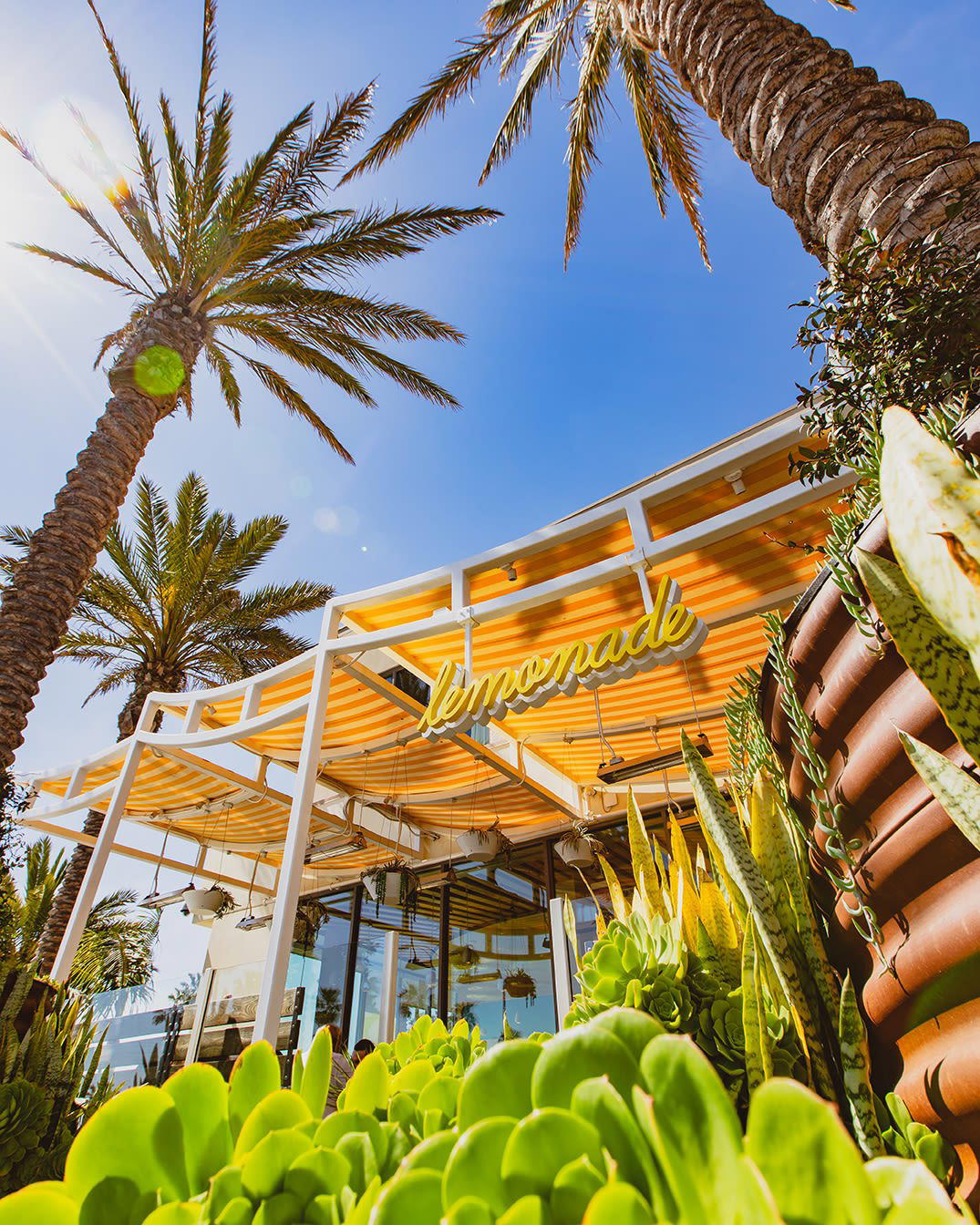
Bright, welcoming, and minimalist with a chic aesthetic; described as friendly and hip with a modern marketplace feel.