

Michelin Plate · Relais Chateaux Award
Our verdict
Le Prieuré occupies a stone-walled room beside Megève's central church, holding a Michelin Plate (2025) for traditional French cooking that sits at the accessible end of the village's dining spectrum.

Pearl is the En Primeur Club membership app, where members save venues, book tables and use the concierge.
The menu
What to order
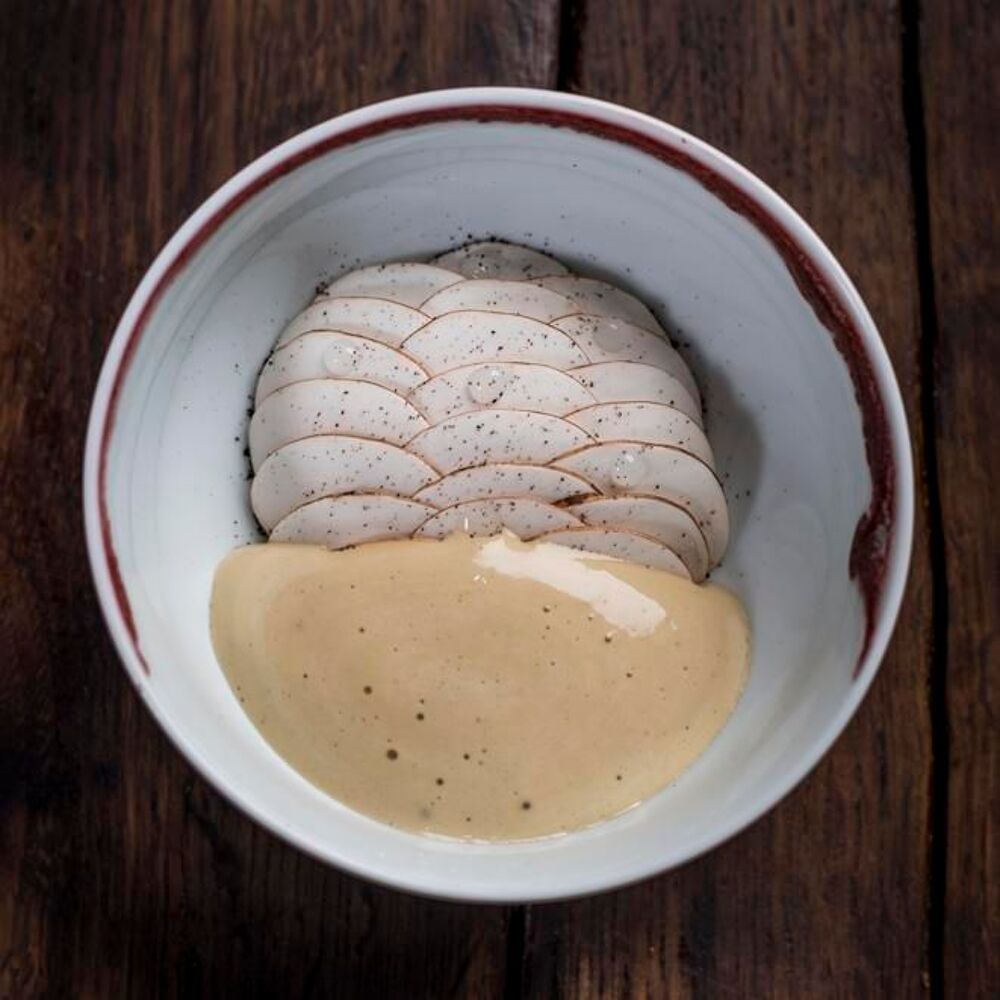
- Œuf mollet aux cèpes
- Pâté en croûte
- Fondue savoyarde
- Omble chevalier
- Ravioles au fromage de montagne
Where the Village Eats Like It Always Has
Place de l'Église is Megève's gravitational centre: the baroque church, the horse-drawn sleighs in winter, the morning market stalls in summer. Le Prieuré sits directly on this square, and that address is not incidental to what happens inside. Restaurants that occupy the civic heart of French alpine villages tend to carry a particular obligation, to the locals who eat there through every season, not just the skiers who fill the resort in January. That obligation, more than any stated philosophy, tends to shape a menu.
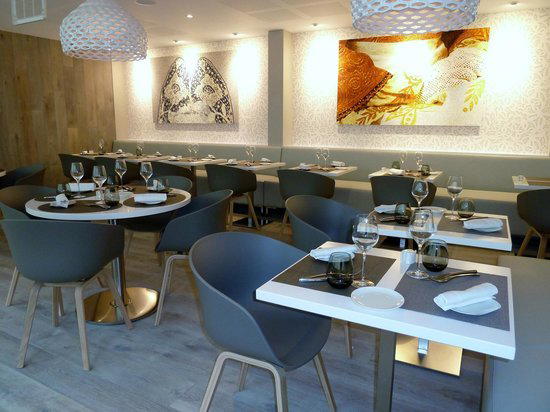
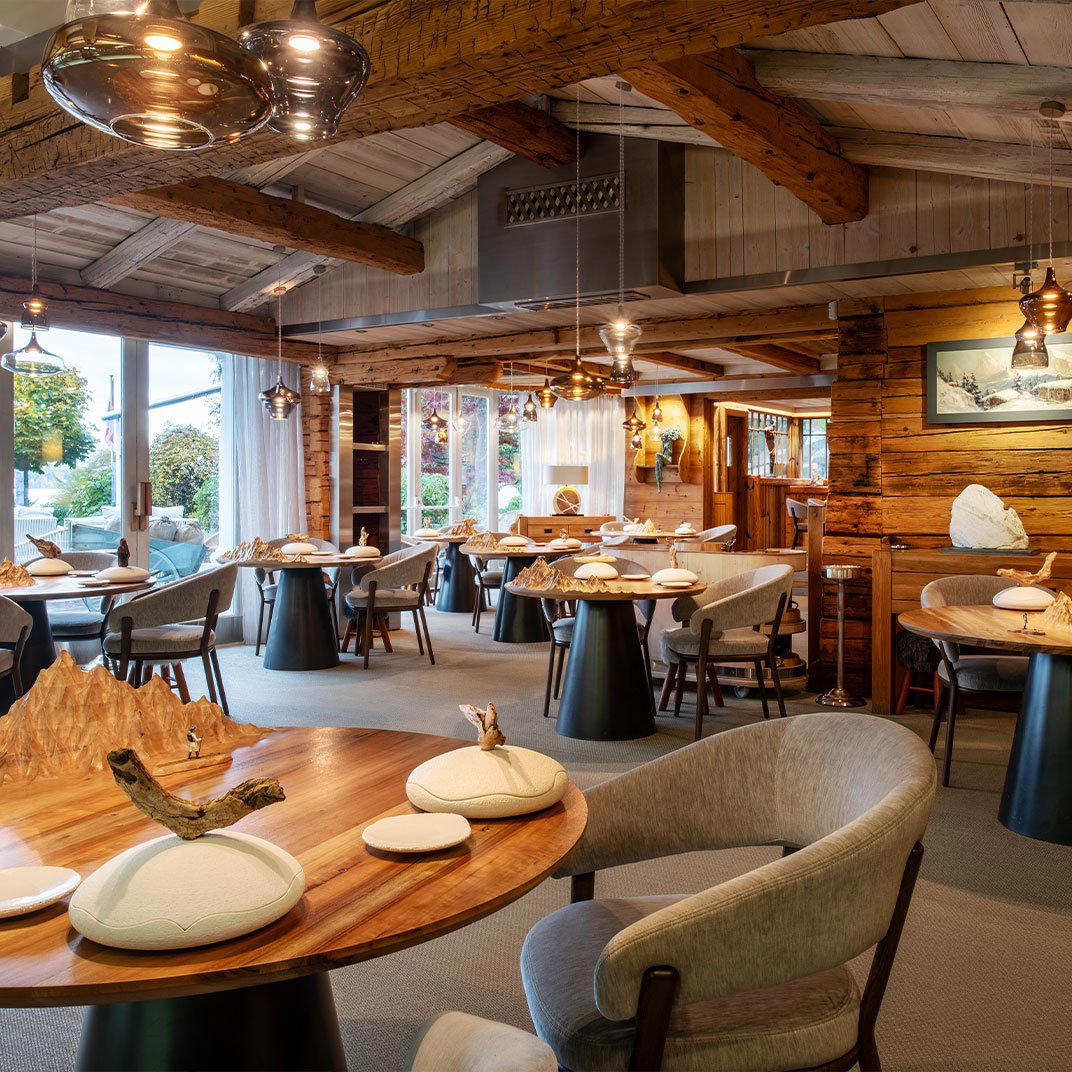
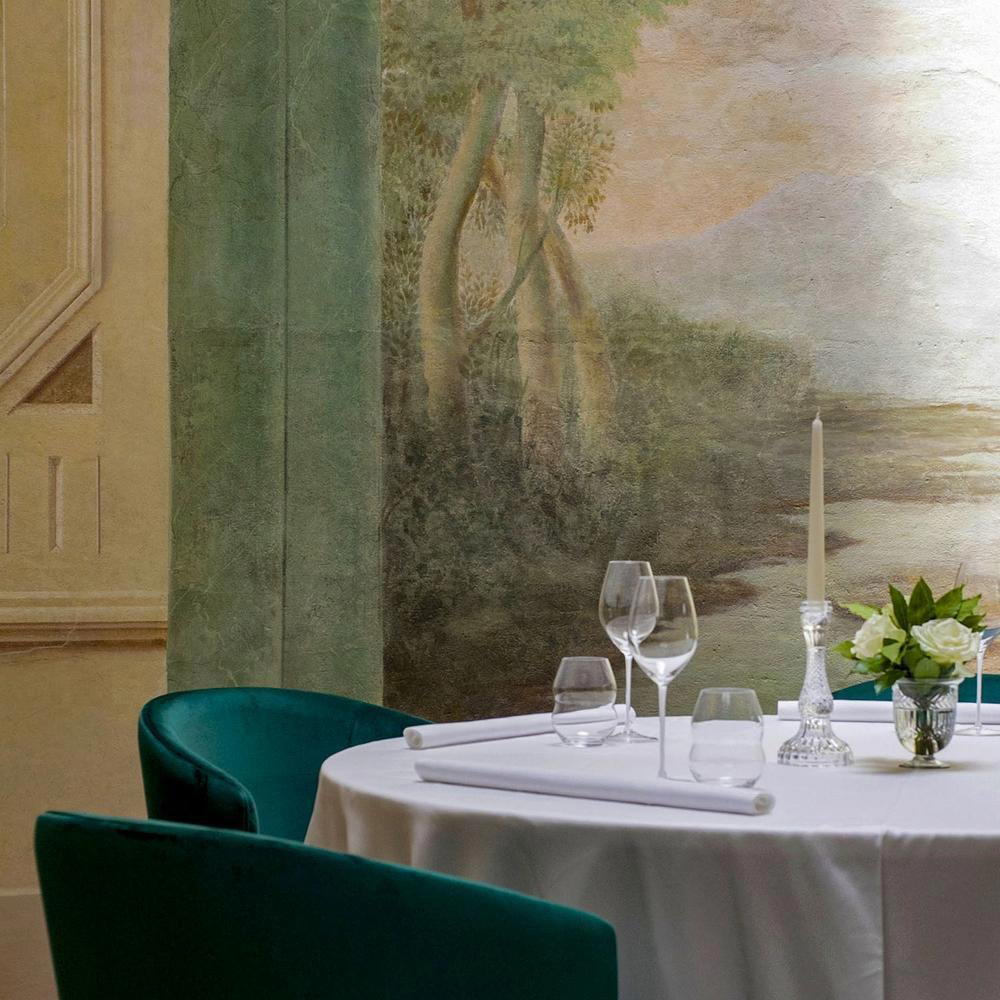
Inside, the architecture does the work that elsewhere gets delegated to interior designers. Stone walls, ceiling beams, and the kind of proportions that predate the resort era: this is a room that was old before Megève became a byword for high-altitude luxury. The physical environment pushes the cooking in a specific direction. You do not open a modernist tasting menu in a priory beside a medieval church. You cook French regional food, and you cook it well.
Reading the Menu: What Traditional Cuisine Looks Like Here
Megève's dining scene in 2025 covers a wider range than its ski-resort reputation suggests. At one end, Flocons de Sel operates at the summit of contemporary French technique, and La Table de l'Alpaga runs a modern kitchen inside one of the village's design-led hotels. 1920 pulls French and Japanese traditions into the same menu. Vous represents the lighter, more contemporary end of the village's mid-range offer. Le Prieuré occupies a different position: traditional French cooking, priced at €€€, with no apparent interest in repositioning itself within that broader evolution.
The Michelin Plate recognition in 2025 is a meaningful signal here. The Plate is not a star, Michelin awards it to restaurants that serve food worth eating, without the formal technique or consistency demands required for star candidacy. It is the recognition given to restaurants that know what they are and do it without compromise.
The menu architecture at this kind of address follows a legible logic. Traditional French cuisine at the €€€ price point in an alpine village means the Savoyard register sits alongside classical French bistro and brasserie dishes. Expect the structural staples of mountain cooking: dishes built around local dairy, cured and braised meats, seasonal vegetables shaped by altitude and climate. The menu does not need to surprise, it needs to satisfy the recurring visitor as much as the first-timer, and that recurring-visitor pressure is what produces depth rather than novelty. France has built a substantial tradition of this kind of cooking at this kind of address. The houses along the Loire and in Brittany that hold similar positions in their own villages, Auberge Grand'Maison in Mûr-de-Bretagne and Auga in Gijón slightly further afield, operate on the same premise: regional fidelity as a long-term competitive position.
Where Le Prieuré Fits in the Wider French Tradition
France's traditional cuisine category covers an enormous range. At the far end, you have the multi-generational institutions: Paul Bocuse's Auberge du Pont de Collonges outside Lyon, Auberge de l'Ill in Alsace, Bras in Laguiole, Troisgros in Ouches. These are historically documented houses that changed how French cooking was understood. At the contemporary end, Alléno Paris au Pavillon Ledoyen and Mirazur in Menton represent the internationalist, technique-driven present. Le Prieuré sits in neither of those brackets. It belongs to the much larger middle layer of French regional cooking: competent, place-specific, and sustained by a village community that needs somewhere reliable to eat year-round, not just during the high season.
That middle layer is, arguably, the most honest expression of what French cuisine actually is outside the capital and the starred dining circuit. A 4.4 score from 380 reviews at a restaurant on a village square is a stronger indicator of sustained local confidence than any single high-season review. The number of reviews also suggests a dining room that runs through multiple seasons, not one that captures only the January ski crowd.
Planning Your Visit
Le Prieuré's address at 116 Place de l'Église puts it at the walkable centre of Megève, reachable on foot from most of the village's hotels and chalets. The square itself is most animated in winter, when the church and surrounding buildings frame a scene that reads as quintessentially alpine, which makes the room's traditional cooking feel less like a menu decision and more like a correct response to its surroundings.
At the €€€ price point, Le Prieuré sits below the €€€€ tier occupied by Flocons de Sel, La Table de l'Alpaga, and Anata, and aligns with Le Refuge in the village's mid-range traditional bracket. For visitors building a multi-day dining programme in Megève, the practical approach is to use Le Prieuré as the traditional anchor of the week alongside one or two evenings at the village's more progressive kitchens. Check the full Megève restaurants guide for the complete tier-by-tier breakdown. The village's hotels, bars, and experiences are covered separately in the Megève hotels guide, bars guide, wineries guide, and experiences guide.
During peak weeks, a reservation is the safer approach for any sit-down lunch or dinner in the village centre.
Frequently asked questions
What should I budget for a meal at Le Prieuré?
Pricing at Le Prieuré is listed as €€€.
Can I walk in to Le Prieuré?
The address at 116 Place de l'Église puts Le Prieuré at the walkable centre of the village, reachable on foot from most hotels and chalets without needing a taxi or shuttle.
Similar Picks
Comparable venues nearby, for context on price, style, and recognition.
| Venue | Cuisine | Price | Awards | Notes |
|---|---|---|---|---|
| Le PrieuréThis venue (the venue you are viewing) | Traditional Savoyard Bistro | $50–100 | Michelin Plate · Relais Chateaux Award | Not listed |
| Le Trappeur Restaurant | Traditional French & Savoyard fine dining in a cozy alpine bistro | $50–100 | Relais Chateaux Award | Megève |
| Le Refuge | Traditional Savoyard Bistro | $30–50 | Michelin Plate | Leutaz |
| Flocons Village | Alpine French Fondue and Bistro | $50–100 | Not listed | village center |
| Le Saint-Nicolas - Au Coin du Feu | Modern French Gastronomic | $100–150 | Michelin Plate · Gault & Millau Remarkable Restaurant | Le Village |
| Brasserie Benjamin | Alpine-Inspired French Brasserie | $150–200 | Michelin Plate · Wine Spectator Best of Award of Excellence | Mont d’Arbois |
Recognition history
Dated appearances from independent guides and award organizations, with the underlying list record or original source where available.
Michelin Plate
Michelin
Relais Chateaux Award
Relais Chateaux
Full recognition history (3 entries)
Michelin Plate
Michelin
Continue exploring
More in Megève
Restaurants in Megève
All restaurants in Megève →
Bars in Megève
Browse all →

Details
- Cozy
- Rustic
- Classic
- Elegant
- Date Night
- Family
- Casual Hangout
- Celebration
- Terrace
- Historic Building
- Standalone
- Local Sourcing
- A La Carte
- Prix Fixe
- Wine
- Local Spirits
- Vegetarian Friendly
- Allergy Accommodating
Current opening hours
- Monday
- Closed
- Tuesday
- Closed
- Wednesday
- 12–11 PM
- Thursday
- 12–11 PM
- Friday
- 12–11 PM
- Saturday
- 12–11 PM
- Sunday
- 12–11 PM
Hours can change for holidays and private events. Hours as of .
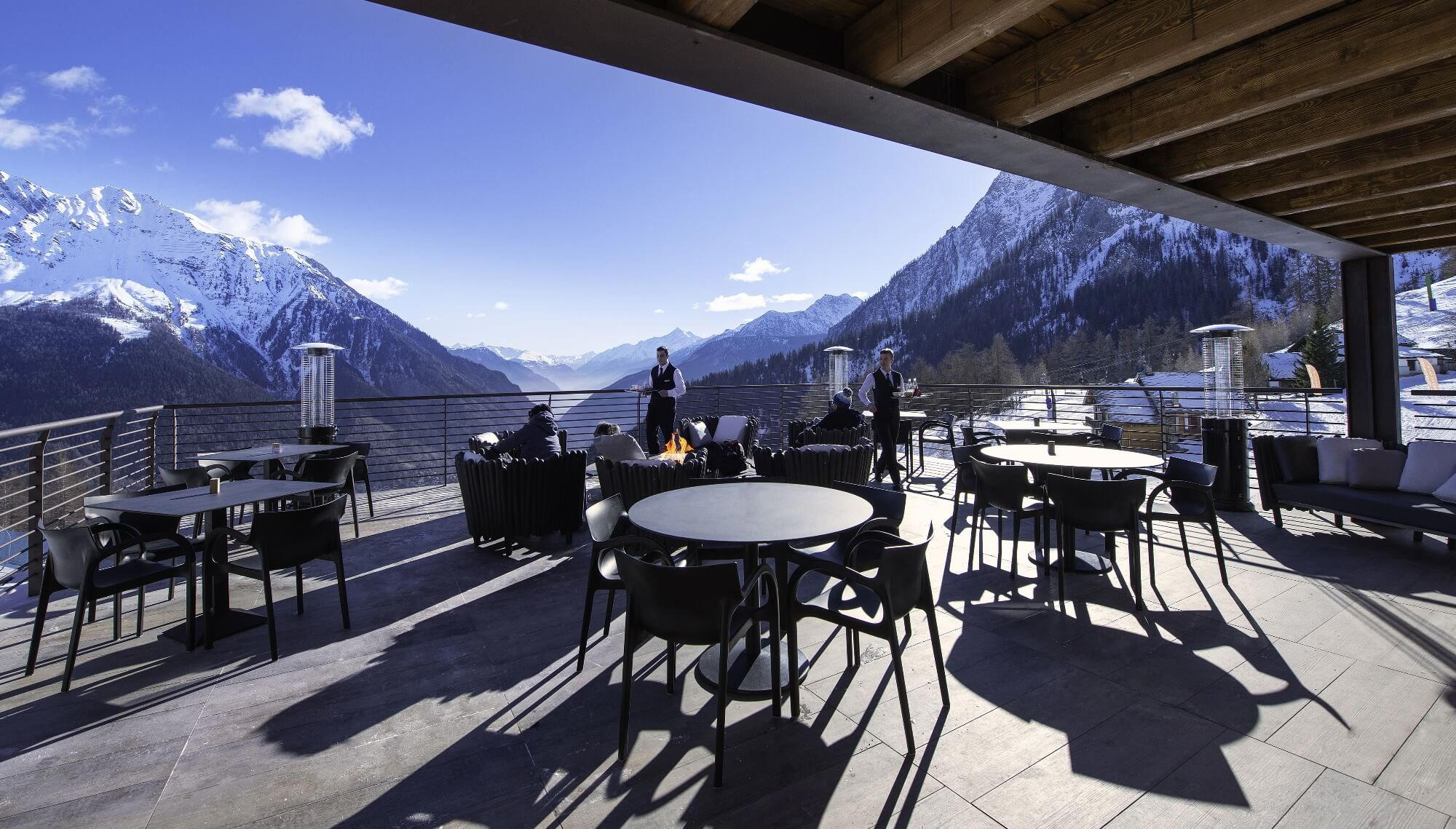
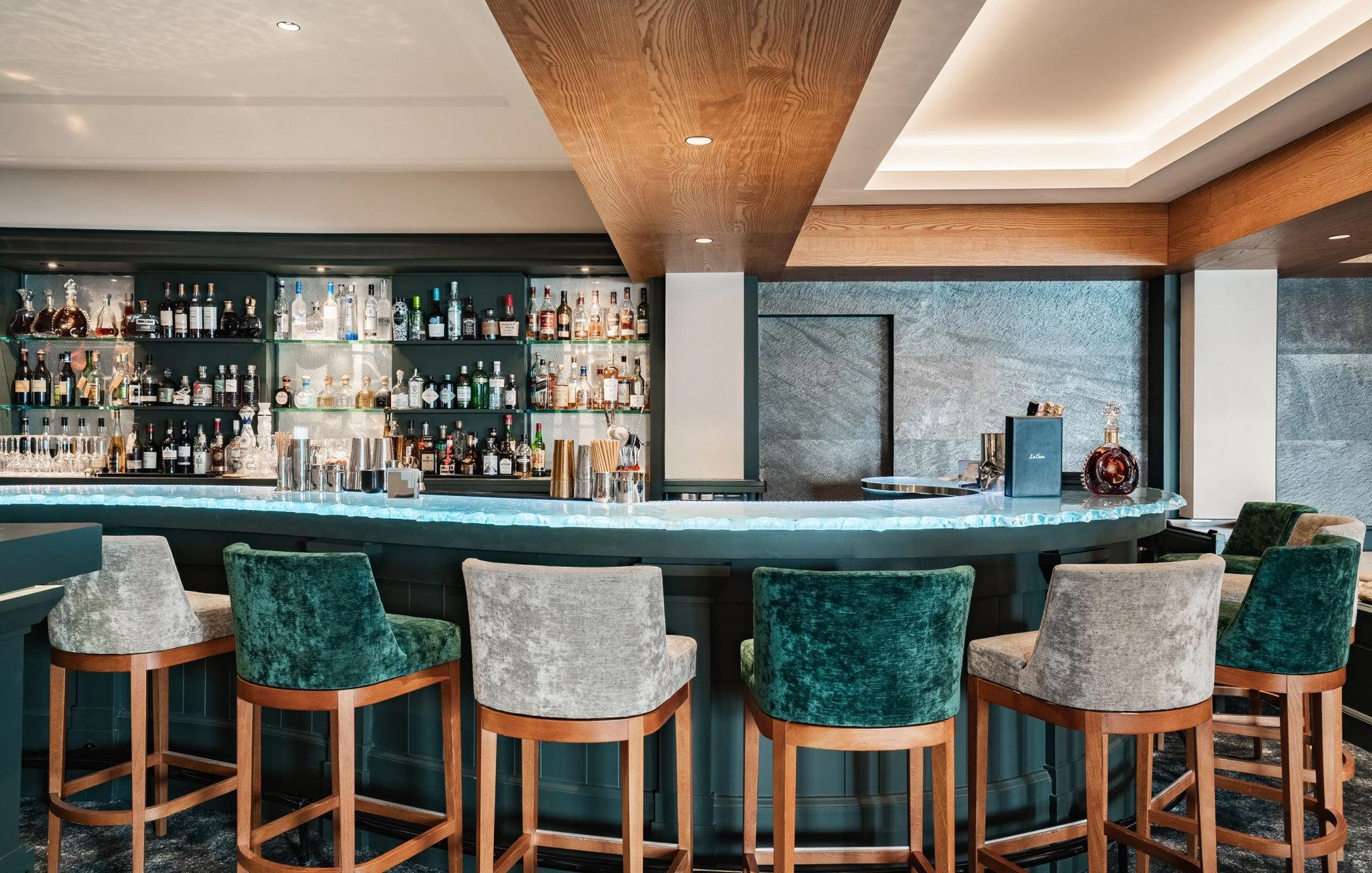
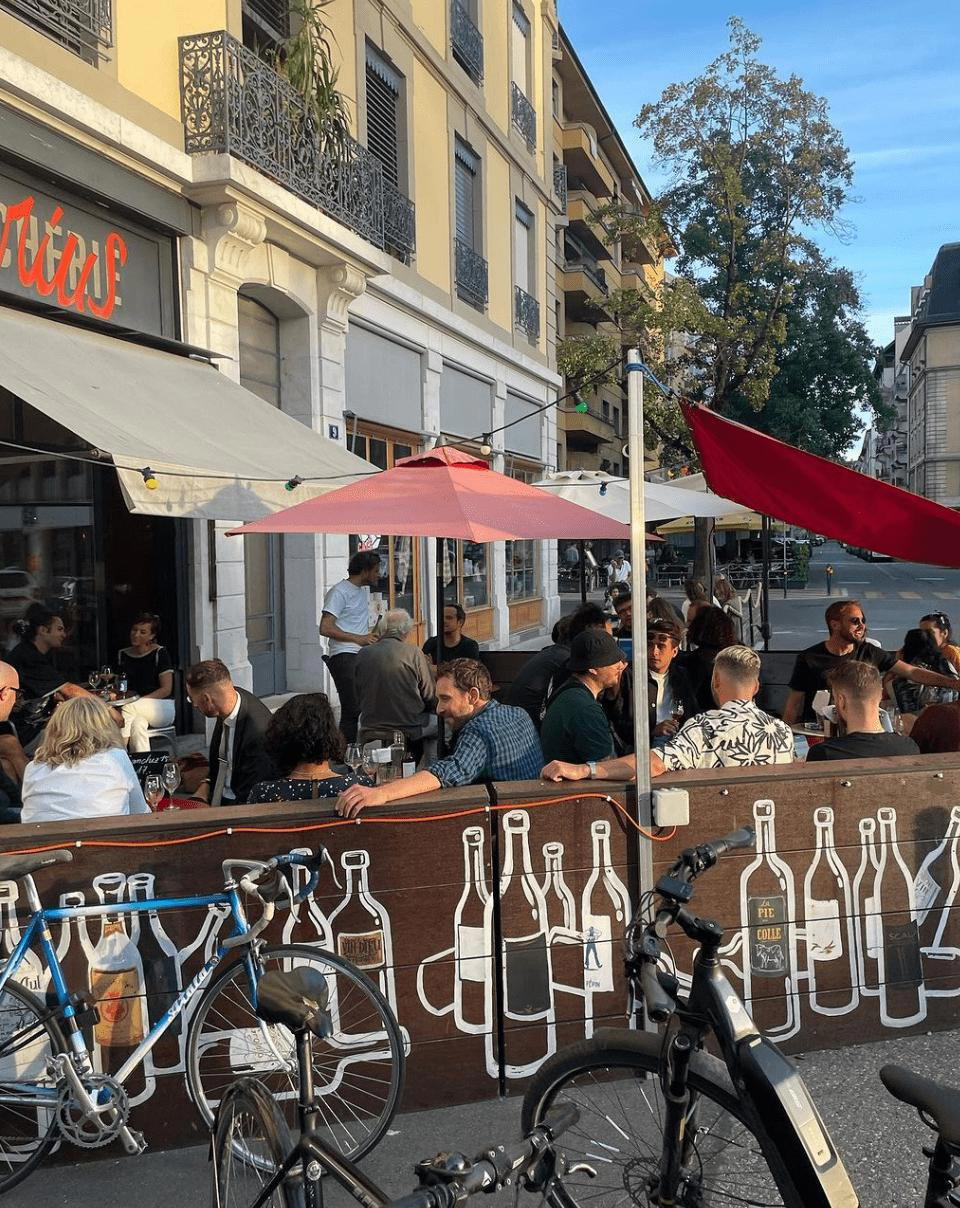
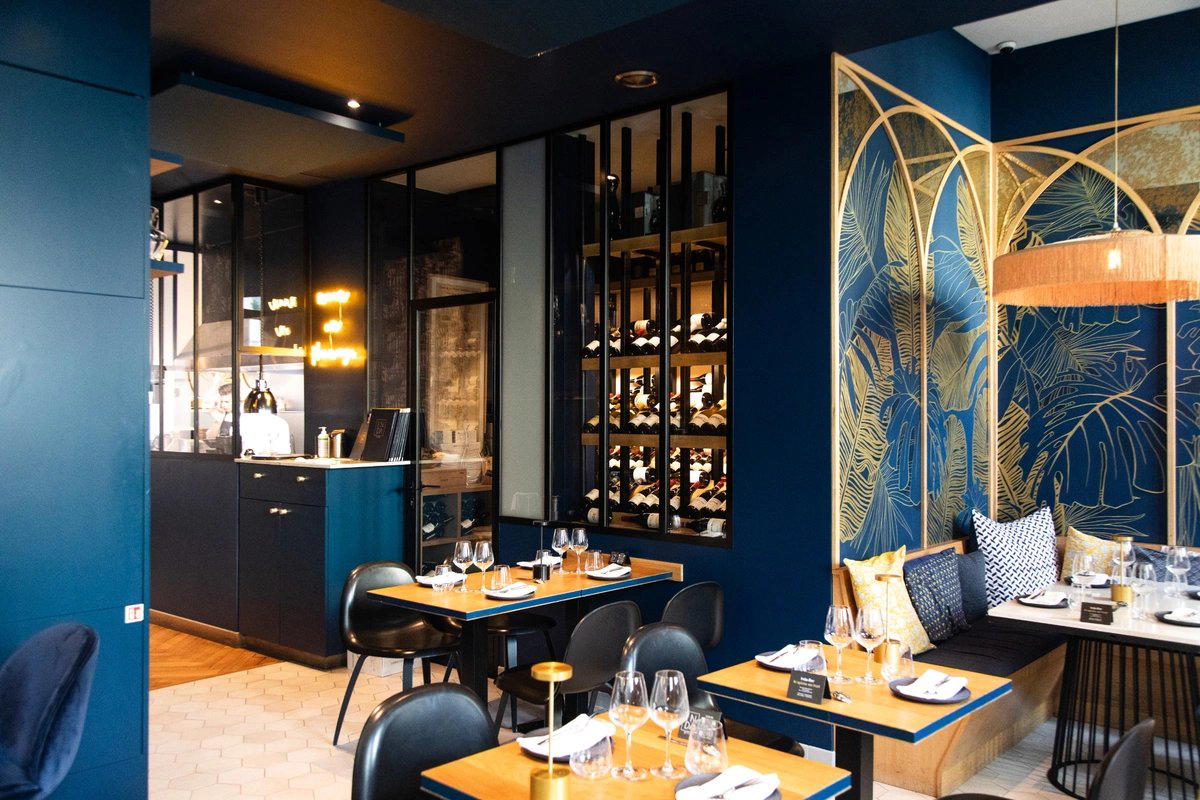
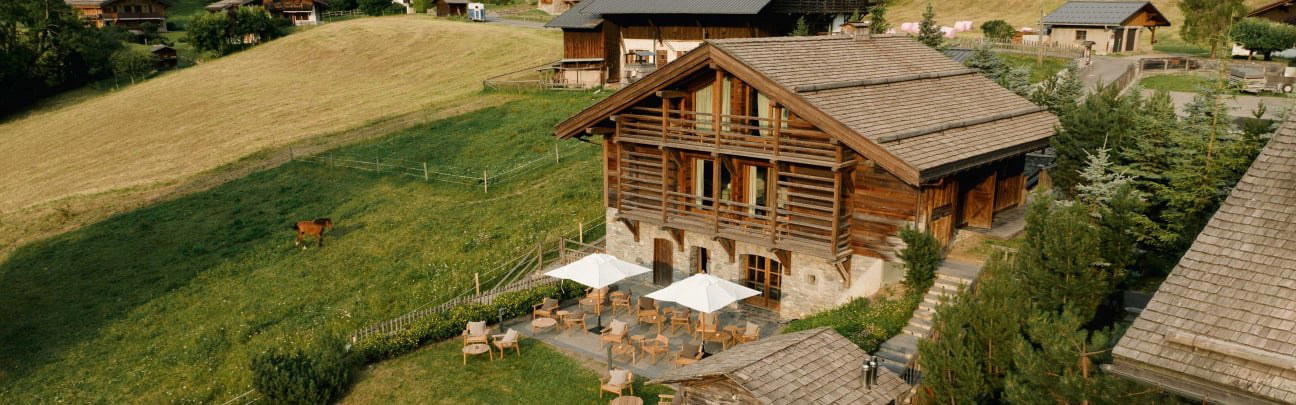
Warm and luminous contemporary chalet atmosphere with exposed beams, fireplace, light wood, and natural daylight; sunny terrace with mountain village views.