
A Hibiya bread-and-cafe counter with Tabelog Bread TOKYO 100 selections in 2019, 2020, and 2022, Le Petitmec HIBIYA Hibiya ten sits in Tokyo’s rare value lane: serious bakery credentials at everyday prices. The format is casual, take-out friendly, and useful for breakfast, lunch, or a theatre-district pause rather than a long restaurant sitting.
Pearl is the En Primeur Club membership app — saves, bookings, and concierge access live there. Same editors, same standards.
- Address
- 1 Chome-2-2 Yurakucho, Chiyoda City, Tokyo 100-0006, Japan
- Phone
- +81 3-6811-2203
- Website
- lepetitmec.com
 Saves & bookings on Pearl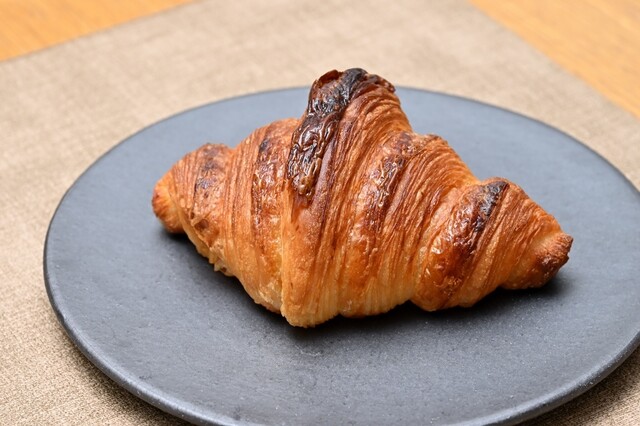
Hibiya’s food traffic has a clear rhythm: office workers between Yurakucho and the government district, theatre crowds folding into shopping floors, and commuters using the area as a hinge between Ginza, Marunouchi, and Kasumigaseki. Here, a bread counter needs speed, consistency, and enough craft to beat the convenience-store pastry a few escalators away.
Le Petitmec HIBIYA Hibiya ten fits a practical Tokyo category: a bakery-cafe where spend stays low, recognition is real, and value sits between everyday access and specialist execution. Its Tabelog Bread TOKYO 100 selections in 2019, 2020, and 2022 place it among the city’s closely watched bread addresses, but the appeal is not awards theatre. It is using a serious bakery as an ordinary stop.
Tokyo bakery credibility without restaurant-level spending
Tokyo is unusually strong at premium bread culture because it treats bakeries with the same sorting instinct it applies to sushi counters, ramen shops, and kissaten: neighbourhood loyalty matters, but so do rankings, queues, and repeatable craft. With listed average spend under JPY 999, this is not a luxury detour disguised as casual food, but a low-commitment way to sample the city’s competitive bread scene.
That matters in Hibiya, where nearby dining can swing from everyday cafes to Ginza-adjacent expense accounts. Compared with Chinese Raika Shikunshiso, where dinner pricing sits in the JPY 10,000 to JPY 14,999 bracket, this bakery-cafe occupies a different decision point: not a planned evening, but a small purchase with selection-list credibility. Coffee Kan Benishika, with its JPY 1,000 to JPY 1,999 range, sits closer to daily-use cafe territory, but Le Petitmec HIBIYA Hibiya ten undercuts even that bracket on published average spend.
The format explains the reputation. Bread and cafe operations in Tokyo depend on turnover, visibility, and serving customers who may not want a full meal. Take-out service and counter seating suit this district: the customer is heading to a matinee, a meeting, or the JR gates at Yurakucho. This is not the drawn-out rhythm of omakase at Sushi Namba, nor the after-work grill logic of 焼肉Coco Nemaru Ginza. It is a bakery built for movement.
Hibiya makes the case for small, efficient eating
The location gives the place its editorial relevance. Hibiya sits at the edge of several Tokyos: old theatre culture, office towers, imperial-palace formality, and Ginza’s shopping gravity. Food here rewards precision over sprawl. A compact bakery-cafe can be more useful than a full-service restaurant when the day is built around transit and appointments.
42-seat count is best read as a format signal, not a comfort promise. It suggests capacity for a pause, but not a dining room designed for lingering. Expect a transactional rhythm: choose, pay, sit if timing works, or take the bag and keep moving. Tokyo has many restaurant genres that reward patience; this one rewards timing and decisiveness.
Opening date, 23 March 2018, places the shop in a recent wave of central Tokyo food retail shaped by mixed-use buildings and station-adjacent flows. Strong operators in these settings know visibility is not enough. A bakery in a commercial building competes with department-store food halls, station kiosks, coffee chains, and destination restaurants within a short walk. Tabelog Bread TOKYO 100 recognition gives this address a filter most mall-floor bakeries lack.
For visitors building a Tokyo food itinerary, this is the useful counterweight to meals requiring advance planning. A day might include a formal restaurant, a bar reservation, and a hotel lobby meeting; a bakery like this fills the gap between fixed points. For broader planning across the city, see Our full Tokyo restaurants guide, alongside Our full Tokyo hotels guide, Our full Tokyo bars guide, Our full Tokyo wineries guide, and Our full Tokyo experiences guide.
How to use it in a Tokyo itinerary
The smartest read is not as a substitute for a destination dinner, but as a calibrated low-spend stop with stronger credentials than the price suggests. Its category is bread and cafe, service includes take-out, and reservations are unavailable, so the emphasis is walk-in timing rather than planning bureaucracy. The daily 8 AM to 8 PM schedule makes it flexible for breakfast, a late-morning reset, or a pre-evening snack before Ginza or Marunouchi.
The broader lesson is that Tokyo value often hides in formats international visitors under-schedule. Travellers may prioritise sushi, kaiseki, and cocktail bars, then leave daytime eating to chance. That is a mistake in a city where bakeries, curry counters, kissaten, and specialist cafes often deliver sharper value than mid-tier restaurants. Nearby or thematically adjacent alternatives across the guide include 3 Chome no Curry Ya San, 2D Cafe, 12/10 Shinjuku ten, 124. KAGURAZAKA (Yakitori), and. 鮪と炭火焼き うお炭 秋葉原店.
Outside Tokyo, the same value question plays out differently: -Grilled beef Sukiyaki- KAMAKURA TANUKIAN 鎌倉 たぬき庵 in Kamakura sits in a more meal-driven register, while.cafe in Osaka.know in Kumamoto, (Shoku) Vietnam in Kawasaki, [Curry Senmon Ten] Maruyama Kyoju. in Sapporo, and [ki:] in Kyoto show how casual formats can carry serious regional identity. Even outside Japan, compact specialist concepts such as Jōdo Saké Bar in Los Angeles and Onigiri Time in Pasadena point to the same pattern: narrow focus, accessible spend, and a clearer reason to go than general-purpose dining.
Le Petitmec HIBIYA Hibiya ten is strongest on that basis. It offers a credible bakery stop in a high-traffic central district, with repeated Tabelog Bread 100 recognition and pricing that keeps the risk low. In a city where dining ambition often requires reservations, queues, or high spend, that combination is more useful than it first appears.
Credentials Lens
Comparable venues at the same tier.
| Venue | Cuisine | Price | Notes |
|---|---|---|---|
| Le Petitmec HIBIYA Hibiya tenThis venue — the venue you are viewing | Traditional French bakery & café | $ | Not listed |
| Le Pan de Joel Robuchon Shibuya hikarie ShinQs ten | French bakery by Joël Robuchon | $ | Shibuya |
| VIRON Shibuya ten | French bakery and patisserie | $ | Shibuya |
| BOULANGERIE SEIJI ASAKURA | French-Japanese bakery | $ | Minato |
| Patisserie la glycine | French-style patisserie & cake shop | $ | Meguro |
| Le Coin Vert PATRICK LEMESLE | French Patisserie & Café | $ | Shinjuku |
Recognition history
Dated appearances from independent guides and award organizations, with the underlying list record or original source where available.
Tabelog 100 #21 · No. 21
Tabelog · Tabelog 100 - Bread - TOKYO - 2022










At a Glance
- Cozy
- Classic
- Lively
- Solo
- Casual Hangout
- After Work
- Brunch
- Standalone
- Design Destination
- Local Sourcing
- Street Scene
Current opening hours
- Monday
- 8 AM–8 PM
- Tuesday
- 8 AM–8 PM
- Wednesday
- 8 AM–8 PM
- Thursday
- 8 AM–8 PM
- Friday
- 8 AM–8 PM
- Saturday
- 8 AM–8 PM
- Sunday
- 8 AM–8 PM
Hours can change for holidays and private events. Last verified .
A cozy bakery-café with a classic French patisserie feel inside a shopping complex, featuring display cases full of breads and pastries, counter ordering, and a relaxed atmosphere suited to solo visits or casual meetups rather than long, formal meals.