Le Petit Léon

1 Michelin Star
Our verdict
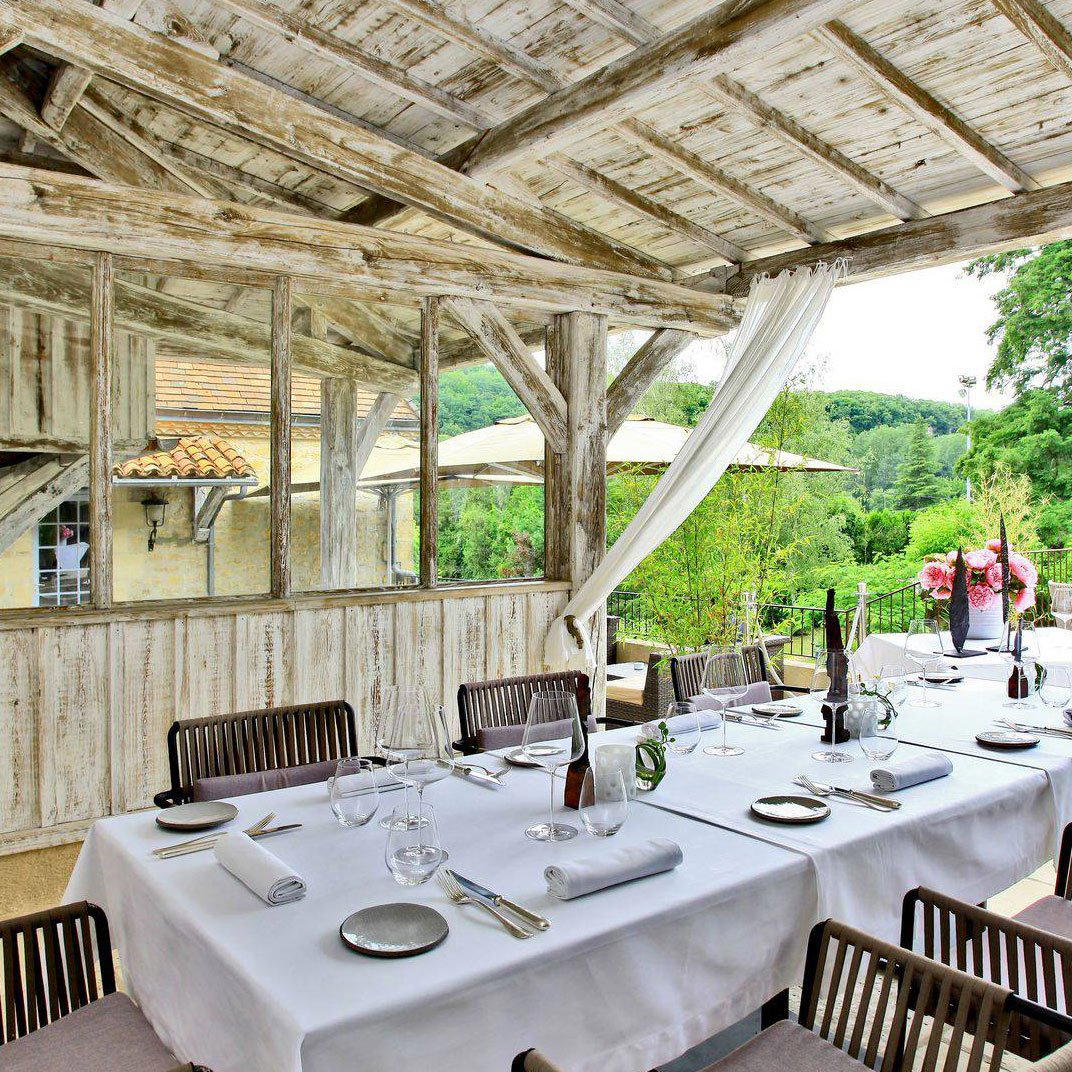
Tucked within the postcard-perfect village of Saint-Léon-sur-Vézère, Le Petit Léon is the seasonal stage for chef Nick Honeyman’s exquisitely composed cuisine. A globetrotting talent shaped by Arpège and Astrance, Honeyman orchestrates an intelligent dance of emulsions, brightness, and contrast—plates that shimmer with precision and feel effortless. From May to September, settle onto the leafy terrace overlooking a manicured lawn, while in the dining room Sina—Honeyman’s German-born wife and trained sommelière—guides you through local treasures, storied vintages, and the occasional New Zealand jewel. It’s a rarified, quietly luxurious experience where the purity of France’s produce meets a cosmopolitan palate.

Pearl is the En Primeur Club membership app — saves, bookings, and concierge access live there. Same editors, same standards.
- Address
- Le Bourg, Saint-Léon-sur-Vézère, 24290, France
- Phone
- +33 5 53 51 18 04
- Website
- restaurantlepetitleon.fr
- Directions
- Get directions
- Booking
- Book on ResDiary
The menu
What to order
- Foie gras with beetroot and pear
- Market fish with browned butter brioche
- Quasi de veau
- Beef cheeks with cep sauce
- Chocolate pear dessert
A Dordogne Village, a Global Pantry
Saint-Léon-sur-Vézère is the kind of place that slows everything down. The medieval village sits along the Vézère river in the Périgord Noir, surrounded by walnut groves, limestone cliffs, and the unhurried rhythms of a region that has been producing exceptional ingredients since long before fine dining became a category. Into this setting, Le Petit Léon has established itself as the kind of restaurant that makes destination dining in rural France coherent rather than eccentric: a one-Michelin-star kitchen operating out of a village bistro, open from May through September, drawing serious eaters willing to plan around its schedule.
The Périgord Noir is one of France's great ingredient territories. Black truffles from Périgueux, walnuts pressed into oils with genuine depth, foie gras from birds raised on maize in the surrounding farms, ceps gathered from oak and chestnut forest floors in autumn — the region's produce has historically been the raw material for the grand brasseries and market tables of Sarlat and Périgueux rather than for destination restaurants of this calibre. Le Petit Léon represents a different approach: a kitchen that draws on that ingredient wealth but processes it through a technique set shaped by time at Arpège under Alain Passard and at Astrance under Pascal Barbot, two Paris addresses with different philosophies but a shared commitment to precision and seasonal discipline. For context on how that Paris training translates to rural execution, consider what kitchens like Alléno Paris au Pavillon Ledoyen or AM par Alexandre Mazzia represent in their respective cities — then recalibrate for a terrace overlooking a garden in the Dordogne.
Where the Produce Comes From, and Why It Registers
The editorial case for ingredient sourcing as a frame for Le Petit Léon is not about marketing language. It is about geography and decision-making. Périgord Noir produce is not obscure: the region's truffles, walnuts, and duck products are well-documented in French culinary literature. What the kitchen at Le Petit Léon does is apply an emulsion-forward, contrast-led technique set to that hyperlocal material, a combination that rarely occurs at this level of technical execution outside urban environments. The seasonal window (May through September) is itself an ingredient sourcing decision: the menu is shaped by what grows, ripens, and is available in the Dordogne during those specific months, which means spring vegetables, early stone fruits, and the particular intensity that herbs reach in limestone-rich southern French soils during long summer days.
Wine program reinforces this sourcing logic. Sina Honeyman, a trained sommelière, works the dining room and manages a list weighted toward local and regional French bottles, with selective additions from further afield, including, on occasion, New Zealand producers. Bergerac and Cahors, both within reasonable distance, produce wines that pair with the fat-rich, emulsion-led cooking that defines the menu. The decision to anchor the list locally is both philosophically consistent and practically intelligent: the Dordogne wine country is seriously underrated relative to its Bordeaux neighbours, and a list that reflects that reality teaches the diner something about the region rather than simply reassuring them with recognisable appellations. For restaurants in other parts of rural France that have built similarly sourcing-conscious programs, Auberge du Vieux Puits in Fontjoncouse and Bras in Laguiole offer useful comparison points, kitchens that have built Michelin-recognised programs around the specific ingredient logic of their terroir.
The Room and the Setting
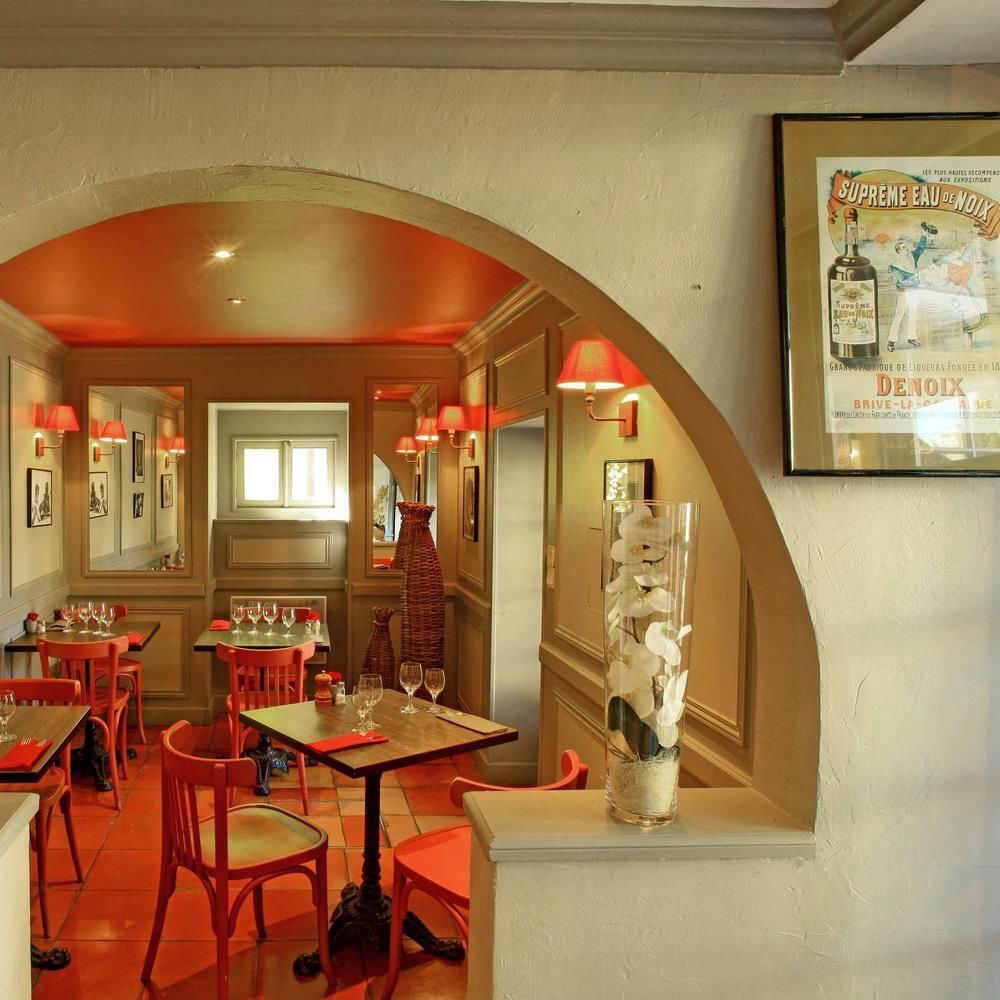
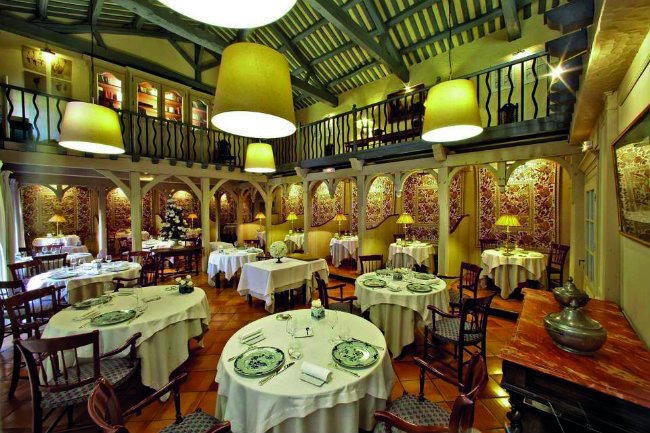
Physical experience of dining at Le Petit Léon is specific to its village context. The terrace overlooks a garden, which in a village this size and in a setting this rural is not incidental decoration but a material part of what makes the proposition coherent. The dining room interior operates within the scale and proportions of a village bistro that has been steadily refined rather than rebuilt. That physical constraint is a creative one: the kitchen works within limits that urban restaurants don't face, and the menu's focus, emulsions, seasonal contrasts, precision plating, reads partly as a response to those limits. This is not a kitchen with the infrastructure of a city property; it is one that has concentrated its resources on the plate.
Comparison set for Le Petit Léon is not other Périgord restaurants. It sits closer, conceptually, to the group of rural destination restaurants in France that operate as deliberate journeys: places like Flocons de Sel in Megève or Auberge de l'Ill in Illhaeusern, where the drive is built into the experience and the surrounding landscape is inseparable from the meal. At the three-star level, Troisgros in Ouches and Mirazur in Menton occupy similar territory philosophically. Le Petit Léon operates at one star and at the €€€ price tier, which places it at a more accessible entry point within that same tradition of deliberate, landscape-embedded destination dining.
The Chef's Route to the Périgord
Backstory here is relevant primarily as credential context, not as the editorial point. Nick Honeyman's training at Arpège and Astrance establishes the technique baseline, two Paris restaurants with different idioms but a shared seriousness about seasonal produce and technical refinement. Pascal Barbot's influence is specifically credited with Honeyman's path to this village and this building. The South African-born, New Zealand- and Australia-raised trajectory that preceded the Paris years explains the restlessness of the cooking, the emulsions and contrasting flavours read as an outsider's engagement with French produce rather than a native's habit, but the produce itself is deeply of the Dordogne. That tension between global technique and local ingredient is not unusual in contemporary French cooking, and it is visible at scale in urban kitchens like Assiette Champenoise in Reims or Au Crocodile in Strasbourg. At Le Petit Léon, the village scale makes it more concentrated and more visible.
A village restaurant open five months of the year, closed Sundays and Mondays, with service windows of 90 minutes at lunch and 90 minutes at dinner, accumulates reviews slowly and deliberately. A score at that level, across that volume, suggests consistent execution rather than occasional brilliance. The Michelin star, awarded in 2024, formalises what the review record had been indicating.
Planning Your Visit
Le Petit Léon operates Thursday through Saturday for both lunch (noon to 2 PM) and dinner (7:30 to 9 PM), with Tuesday and Wednesday offering dinner service only. Sunday and Monday are closed. The restaurant is seasonal, running May through September, so a visit requires advance planning around that window. The €€€ price tier positions it above standard bistro pricing but below the four-symbol tier that defines Paris palace dining: a meaningful investment in context, representing the region's serious engagement with the table. Saint-Léon-sur-Vézère is accessible by road from Sarlat-la-Canéda (approximately 25 kilometres northeast) and from Périgueux further north. Given the village's scale, arriving by car is the practical approach; the area's infrastructure does not support casual drop-ins for a restaurant at this level. For hotels, bars, and other restaurant options in the area, see our full Saint-Léon-sur-Vézère restaurants guide, our hotels guide, and our bars guide. For wineries and experiences across the region, our wineries guide and our experiences guide cover the broader Vézère valley context.
For those building a wider France itinerary around Michelin-recognised rural cooking, the comparison set is instructive: Paul Bocuse in Collonges-au-Mont-d'Or represents the historical template for the French destination restaurant outside a major city, while international counterparts like Frantzén in Stockholm and FZN by Björn Frantzén in Dubai show how the same seasonal-produce-driven modern cuisine format translates across very different urban and climate contexts. Le Petit Léon occupies a specific and less-travelled position in that conversation: a one-star kitchen in a medieval Dordogne village, open five months of the year, where the local ingredient logic and the global technique set arrive at the same table simultaneously.
Frequently asked questions
Is Le Petit Léon child-friendly?
Le Petit Léon is a Michelin-starred (2024) gourmet establishment operating dinner service from 7:30 PM, with a focused seasonal menu that reflects serious culinary intent. The village terrace setting is relaxed by fine-dining standards, but the format and pace are better suited to adults. Families with older children who are comfortable at a longer, composed dinner would likely find it more rewarding than those with young children.
What should I expect atmosphere-wise at Le Petit Léon?
The dining room sits inside a medieval village along the Vézère river, and the terrace overlooks a manicured garden lawn — the scale is intimate rather than grand. Sina Honeyman, trained sommelière and Nick's wife, manages the floor and the wine list, which runs from local Dordogne bottles to fine vintages and the occasional New Zealand selection. The result is a low-key room with a serious kitchen behind it, closer in feel to a village bistro elevated by technical ambition than to a formal city restaurant.
What awards or recognition does Le Petit Léon have?
Le Petit Léon has received recognition including: Born in South Africa and raised in New Zealand and Australia where he learnt the craft, Nick Honeyman fell in love with France and its produce following stints at Arpège and above all Astrance. In fact, it was thanks to Pascal Barbot that o….
What's the signature dish at Le Petit Léon?
The Michelin guide describes Nick Honeyman's cooking as a festival of emulsions and contrasting flavours, with a focus on seasonal Périgord produce shaped by his time at Arpège and Astrance under Pascal Barbot. Specific menu items change with the season — the restaurant operates May through September — so no single dish is fixed across the calendar. The defining quality is the interplay of texture and acidity built through technically precise sauces and emulsions, rather than any one plate.
Comparable Spots, Quickly
| Venue | Cuisine | Price | Awards |
|---|---|---|---|
| Le Petit LéonThis venue — the venue you are viewing | Modern French Fine Dining | $100–150 | 1 Michelin Star |
| Alléno Paris au Pavillon Ledoyen | Creative | Not listed | Michelin 3 Star |
| Kei | Contemporary French, Modern Cuisine | Not listed | Michelin 3 Star |
| L'Ambroisie | French, Classic Cuisine | Not listed | Michelin 3 Star |
| Le Cinq - Four Seasons Hôtel George V | French, Modern Cuisine | Not listed | Michelin 3 Star |
| Plénitude | Contemporary French | Not listed | Michelin 3 Star |
Recognition history
Dated appearances from independent guides and award organizations, with the underlying list record or original source where available.
Michelin 1 Star
Michelin
Full recognition history (3 entries)
Michelin 1 Star
Michelin
Michelin 1 Star
Michelin
Continue exploring
More in Saint-Léon-sur-Vézère
Restaurants in Saint-Léon-sur-Vézère
Browse all →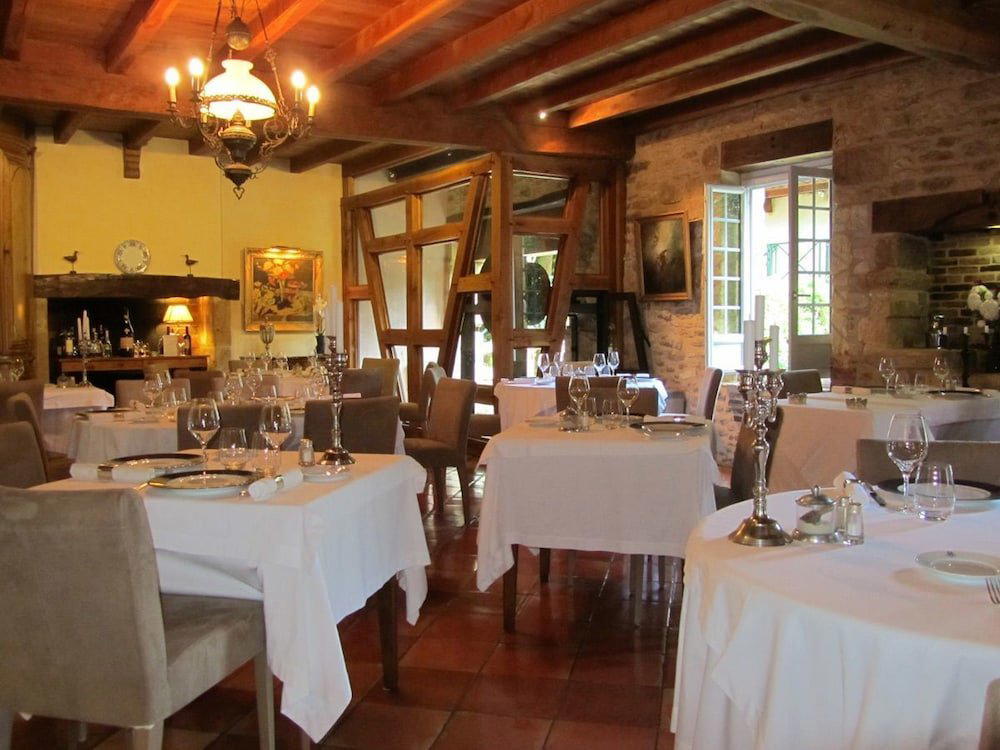
Bars in Saint-Léon-sur-Vézère
Browse all →
Hotels in Saint-Léon-sur-Vézère
Browse all →
Wineries in Saint-Léon-sur-Vézère
Browse all →

Details
- Romantic
- Cozy
- Elegant
- Rustic
- Intimate
- Date Night
- Special Occasion
- Celebration
- Garden
- Open Kitchen
- Extensive Wine List
- Local Sourcing
- Tasting Menu
- Vegetarian Friendly
- Allergy Accommodating
Relaxed bucolic garden atmosphere with warm, welcoming lighting and a refined yet friendly vibe.