Le Fatra
Le Fatra occupies a quayside address on Quai George V in Les Sables-d'Olonne, where the Vendée Atlantic coast shapes what lands on the plate. The restaurant sits within a town better known for offshore racing than fine dining, which makes its commitment to local sourcing all the more pointed. For visitors working through the Atlantic seaboard's restaurant circuit, it offers a grounded alternative to the region's coastal spectacle.
Pearl is the En Primeur Club membership app — saves, bookings, and concierge access live there. Same editors, same standards.
- Address
- 21 Quai George V, 85100 Les Sables-d'Olonne, France
- Phone
- +33251326873
- Website
- le-fatra.com
- Directions
- Get directions
 Saves & bookings on Pearl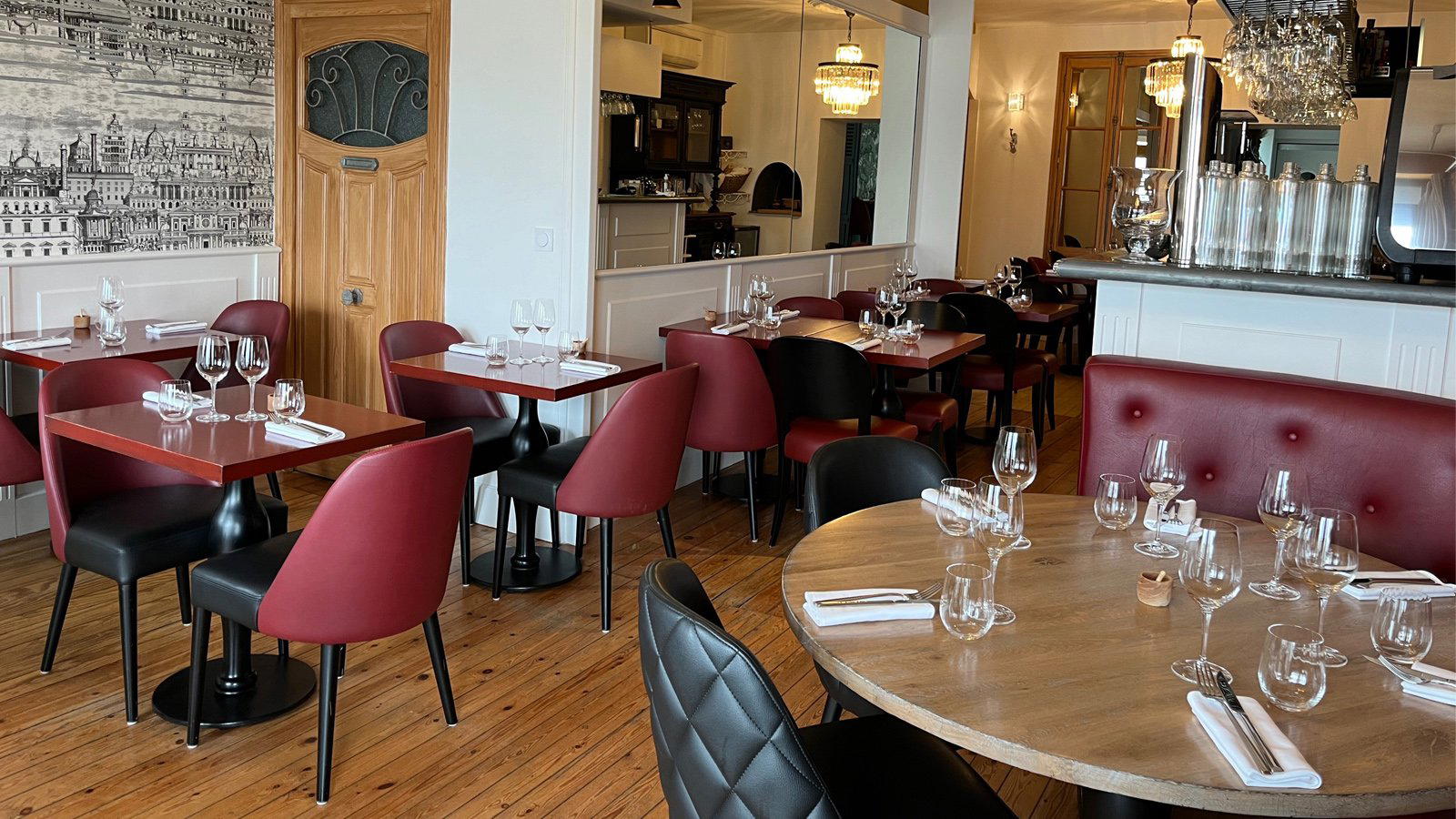
The Quayside Context: Dining Where the Boats Come In
Les Sables-d'Olonne is most legible to the outside world as the start and finish line of the Vendée Globe, the solo round-the-world sailing race that departs from its harbour every four years. What that origin story means for the town's food scene is underappreciated: this is a working Atlantic port, and the sourcing chain from sea to kitchen is shorter here than in most coastal cities that have been smoothed for tourism. Le Fatra, positioned at 21 Quai George V along the harbour front, sits directly inside that supply logic. The address is not incidental. In port towns across the French Atlantic coast, a quayside location has historically signalled access rather than atmosphere — proximity to the day's catch rather than a view of it framed through picture windows.
The broader Vendée coastline occupies a distinct position in French regional cuisine. It is neither the glamour of the Basque coast to the south nor the prestige circuit of Brittany to the north. That positioning has kept its restaurants grounded in local product rather than destination-dining theatre. Compared to Christopher Coutanceau in La Rochelle, which has built a nationally recognised case for sustainable Atlantic seafood over many years, or the French Atlantic's most technically ambitious rooms, the dining culture in Les Sables-d'Olonne operates at a more direct register. That directness is the point.
Ingredient Logic on the Atlantic Coast
The sourcing argument for cooking in this part of western France is a strong one. The Bay of Biscay delivers sole, sea bass, cuttlefish, and shellfish to local markets with a frequency that shapes menus in real time rather than by season. Vendée itself, the surrounding department, is also significant agricultural territory: its salt marshes produce fleur de sel that reaches tables across France, its bocage landscape supports livestock, and its market gardens supply the fine herbes and vegetables that appear in classical French preparation. For a kitchen committed to proximity sourcing, the Vendée offers rare breadth — salt, sea, and land produce within a compact radius.
This is the culinary tradition that French regional cooking at its most coherent has always drawn on: the idea that the leading argument for a dish is its address. Bras in Laguiole built an international reputation on exactly this premise applied to the Aubrac plateau. Auberge de l'Ill in Illhaeusern draws its identity from the Alsatian riverbank it has occupied since the 1870s. The logic scales down to restaurant-level, too: knowing where a kitchen sources tells you more about what will arrive at the table than any menu description. On the Quai George V, the sourcing geography does much of the editorial work.
The Les Sables-d'Olonne restaurant scene divides between places that trade primarily on seafood views and those that treat the coast as a supply chain. Loulou Côte Sauvage and La Pilotine represent different positions in that split, as does La Pancarte - Crêperie face à la mer, which anchors the traditional Breton-adjacent end of the local offer. Le Fatra's quayside address places it in a different register: harbour-adjacent dining in French coastal towns has conventionally meant either tourist-facing brasserie volume or the quieter, more considered rooms that serve locals and returning visitors who already know what the town produces.
For the full picture of what's available across town, the EP Club Les Sables-d'Olonne restaurants guide maps the local offer by style and neighbourhood. The Quai George V strip rewards walking in both directions from Le Fatra's address, particularly in the early evening when the harbour is active and the light off the Atlantic turns the stone facades amber.
French Regional Dining and What It Requires of the Kitchen
The pressure on regional French restaurants has shifted significantly in the past decade. Paris remains the centre of gravity for the country's highest-profile dining, as rooms like Alléno Paris au Pavillon Ledoyen confirm, but the more interesting movement has been in the provinces. Mirazur in Menton demonstrated that a location far from the capital could become a global dining reference point. Flocons de Sel in Megève did the same in an Alpine context. In both cases, the argument rested on product specificity: what grows or swims here, processed with enough technique to honour it rather than obscure it.
That standard applies with particular force to Atlantic coastal cooking. The French Atlantic already has one internationally cited benchmark in Le Bernardin in New York City, which built its reputation on French Atlantic seafood technique transplanted to Manhattan. What the coast itself produces in terms of kitchen ambition is a quieter, less exported story. AM par Alexandre Mazzia in Marseille and Assiette Champenoise in Reims illustrate how French regional kitchens can build serious technical reputations outside Paris. The Vendée's moment in that conversation has been slower to arrive, which makes the serious restaurants operating here now worth tracking.
Planning a Visit
Les Sables-d'Olonne is reachable by TGV from Paris Montparnasse with a change at La Roche-sur-Yon, or direct by regional rail depending on the timetable. The town is compact and the Quai George V is walkable from the central station. Visiting between June and September aligns with the warmest weather and the fullest local produce calendar, though the shoulder months of May and October offer fewer crowds and the same access to Atlantic catch. For a town that scales up significantly during summer events, arriving mid-week avoids the weekend pressure on harbour-front tables.
For further context on what kitchens along this coastline are producing, Auberge du Vieux Puits in Fontjoncouse, Troisgros - Le Bois sans Feuilles in Ouches, Paul Bocuse - L'Auberge du Pont de Collonges in Collonges-au-Mont-d'Or, Au Crocodile in Strasbourg, and Atomix in New York City offer instructive points of comparison for how regional identity and technical ambition interact at the table.
How Le Fatra Les Sables-d'Olonne compares with similar nearby venues.
| Venue | Cuisine | Price |
|---|---|---|
| Bistro'Quai | Traditional Cuisine | €€ |
| La Suite S'il Vous Plaît | Modern Cuisine | €€ |
| La Cotriade | Seafood | €€ |
| L'Abissiou | Modern Cuisine | €€€€ |
Continue exploring
More in Les Sables-d'Olonne
Restaurants in Les Sables-d'Olonne
Browse all →
Bars in Les Sables-d'Olonne
Browse all →
Hotels in Les Sables-d'Olonne
Browse all →
Wineries in Les Sables-d'Olonne
Browse all →
At a Glance
- Cozy
- Classic
- Intimate
- Date Night
- Special Occasion
- Waterfront
- Terrace
- Extensive Wine List
- Local Sourcing
- Waterfront
Current opening hours
- Monday
- Closed
- Tuesday
- 12–2 PM, 7–9 PM
- Wednesday
- 12–2 PM, 7–9 PM
- Thursday
- 12–2 PM, 7–9 PM
- Friday
- 12–2 PM, 7–9 PM
- Saturday
- 12–2 PM, 7–9 PM
- Sunday
- Closed
Hours can change for holidays and private events. Last verified .
Warm and simple setting with parquet flooring, mirrors, and convivial atmosphere.