La Cuisine de Bertrand

On the quayside in Les Sables-d'Olonne, La Cuisine de Bertrand holds a Michelin Plate for 2024 and 2025, signalling kitchen consistency in a town where seafood dominates the dining conversation. The menu reads from French traditional foundations, positioned in the mid-range tier alongside peers such as Bistro'Quai and Alice, le bistrot..
Pearl is the En Primeur Club membership app — saves, bookings, and concierge access live there. Same editors, same standards.
- Address
- 22 Quai Ernest de Franqueville, 85100 Les Sables-d'Olonne, France
- Phone
- +33 2 51 95 37 07
- Website
- facebook.com
- Directions
- Get directions
 Saves & bookings on Pearl
Where the Quay Sets the Tone
Arriving at 22 Quai Ernest de Franqueville, the visual logic of Les Sables-d'Olonne's dining scene becomes immediately clear. The working port and pleasure harbour create a backdrop against which most restaurants in town position themselves: seafood-forward, salt-air casual, or somewhere between the two. La Cuisine de Bertrand operates on this same quayside, which means it competes directly with waterfront addresses that lean into catch-of-the-day simplicity. The restaurant's recognition in both 2024 and 2025 signals a kitchen rooted in traditional French technique rather than raw ingredient spectacle.
The Michelin Plate sits below the star tiers but above the crowd. In a mid-sized Atlantic coast town like Les Sables-d'Olonne, holding that recognition consecutively matters more than it might in a city where Plates are clustered across dozens of addresses. The consistency signal is the point: the same kitchen, producing the same quality, across two inspection cycles. For comparison, the town's upper-end modern address, L'Abissiou (Modern Cuisine), carries a full Michelin star and prices at €€€€, placing it in an entirely different category. La Cuisine de Bertrand, priced at €€, occupies the tier where French traditional cooking does its most important work: accessible enough for regular visits, serious enough to reward attention.
The Architecture of a Traditional French Menu
Traditional French cuisine as a menu category carries specific structural expectations. Starter, main, and dessert in clearly separated courses. Sauces built from reduction and butter rather than emulsification and foam. Proteins from land and sea treated with equal seriousness, neither subordinated to the other. Seasonal produce acknowledged but not fetishised. The menu at a restaurant operating in this tradition tends to read as a series of deliberate commitments, each dish declaring an allegiance to a method rather than a trend.
That structure is precisely what distinguishes the traditional category from the creative tier above it and from bistro-casual below. At Bistro'Quai or Alice, le bistrot - Le Manoir de la Mortière, the register is more relaxed. At the Michelin-starred creative end, the architecture inverts: the chef's concept organises the meal rather than the diner's preference. La Cuisine de Bertrand sits in the zone where the menu speaks directly to classical French expectations, a format that builds trust through familiarity and distinguishes itself through execution quality.
On France's Atlantic coast, this positioning carries particular resonance. The region's own culinary tradition, drawing from both the sea and the bocage hinterland, maps naturally onto classical technique. The cotriade, the local fish stew, belongs to the same tradition of long-cooked, carefully layered flavour that underpins French classical cooking more broadly. Restaurants here that commit to the traditional format are, in a sense, working with the grain of the place rather than against it. La Cotriade (Seafood) approaches the local ingredient set from a different angle, and L'Estran (Modern Cuisine) moves further toward contemporary interpretation. The traditional format that La Cuisine de Bertrand occupies is a specific editorial choice about what this coast's food should be.
Consistency as a Critical Metric
. In a resort and fishing town that draws seasonal visitors alongside a resident population, review pools tend to skew volatile: summer tourists arriving with high expectations, locals forming habitual opinions, visiting food writers looking for a narrative hook. Sustaining a high average across that breadth of reviewer profiles requires kitchen consistency that goes beyond any single service.
The broader French traditional cuisine category, when it works at a similar level elsewhere in France, tends to operate on comparable principles. Consider how Auberge Grand'Maison, Traditional Cuisine in Mûr-de-Bretagne or Auga, Traditional Cuisine in Gijón anchor their respective coastal towns as reliable references within the traditional format. The pattern holds: classical cooking, in the right hands, converts repeat visitors at a higher rate than trend-driven menus because the benchmarks are clear and the execution is verifiable. You know what a well-made beurre blanc should taste like; either it succeeds or it does not.
France's highest-profile traditional and classical addresses, from Auberge de l'Ill in Illhaeusern to Troisgros - Le Bois sans Feuilles in Ouches, define what stronger examples from the category can achieve. The distance between those multi-starred institutions and a Plate-recognised address in Les Sables-d'Olonne is large, but the underlying logic is shared: classical technique applied with precision and repeated without compromise. The recognition places the restaurant inside that continuum, however far from its summit.
Positioning in the Les Sables-d'Olonne Dining Scene
Les Sables-d'Olonne's restaurant scene has become more layered in recent years. The town is known internationally as the start and finish of the Vendée Globe round-the-world race, which generates periodic surges of media attention and visitor traffic. Outside of those windows, the dining economy runs on a combination of summer tourism, weekend visitors from Nantes and beyond, and a resident population large enough to support year-round operations. That last group is the foundation audience for a restaurant like La Cuisine de Bertrand: local diners who return because the cooking rewards repetition, not because a marketing moment brought them through the door once.
The €€ price point places the restaurant in the broadest access tier of quality dining in the town. At this level, the competition is real: Bistro'Quai and Alice, le bistrot both operate in the same price band and the same traditional format. The differentiating factor at the restaurant is the Michelin Plate, which represents independent third-party quality validation that neither peer currently holds. In the mid-range traditional tier, that signal functions as a practical shortcut for first-time visitors choosing between addresses they do not already know.
Planning Your Visit
Summer on the Atlantic coast concentrates demand significantly. Les Sables-d'Olonne in July and August operates at a different pace than in spring or autumn, and quayside restaurants in particular fill quickly during the early evening window. Booking ahead is the practical answer, and the Michelin Plate recognition means that informed visitors will seek this address out specifically, adding external demand to the regular local base. The shoulder months, April to June and September to October, offer the restaurant in a quieter register: the room less crowded, service more attentive to the table, the full logic of a traditional French lunch or dinner easier to appreciate without the ambient pressure of peak season. Current opening hours are Monday, Thursday to Sunday 12 to 1:30 PM and 7 to 9:30 PM; Tuesday and Wednesday are closed.
- L'Abissiou, the town's Michelin-starred modern cuisine address, for a different register entirely
- La Cotriade, seafood-focused, same price tier, different format emphasis
- L'Estran, modern cuisine for those seeking a more contemporary approach
- Les Sables-d'Olonne wineries, for context on the regional wine offer alongside your meal planning
Similar Picks
Comparable venues nearby, for context on price, style, and recognition.
| Venue | Cuisine | Price | Notes |
|---|---|---|---|
| La Cuisine de BertrandThis venue — the venue you are viewing | Classic French Fine Dining | $$$ | Not listed |
| La Cotriade | French Seafood and Fish | $$$$ | Port de Pêche |
| La Table de Villeneuve | French Fine Dining | $$$$ | La Pironnière |
| L'Estran | Modern French Bistronomic | $$$ | Port |
| La Suite S'il Vous Plaît | Modern French Gastronomique | $$$ | Les Sables-d'Olonne |
| Le Fatra | Seasonal French Bistronomic Seafood | $$$ | La Chaume |
Recognition history
Dated appearances from independent guides and award organizations, with the underlying list record or original source where available.
Michelin Plate
Michelin
Michelin Plate
Michelin
Michelin Plate
Michelin
Continue exploring
More in Les Sables-d'Olonne
Restaurants in Les Sables-d'Olonne
Browse all →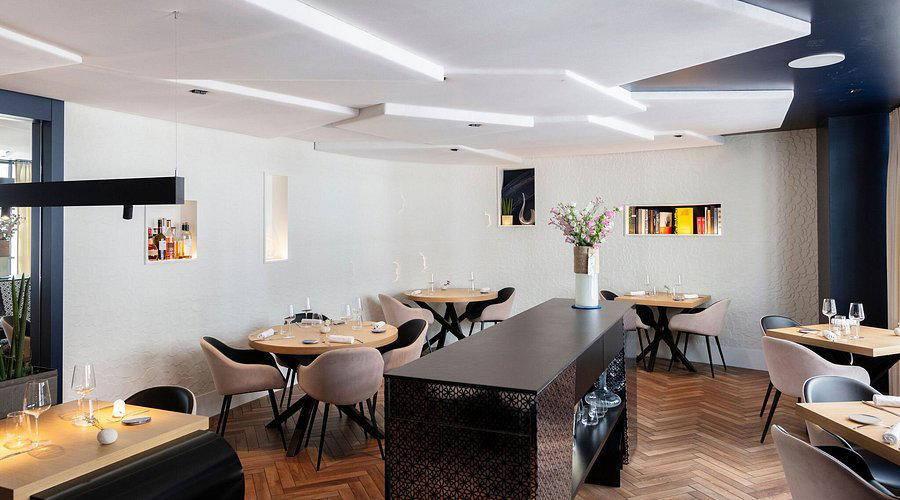
Bars in Les Sables-d'Olonne
Browse all →
Hotels in Les Sables-d'Olonne
Browse all →
Wineries in Les Sables-d'Olonne
Browse all →
At a Glance
- Elegant
- Intimate
- Classic
- Quiet
- Cozy
- Date Night
- Special Occasion
- Business Dinner
- Waterfront
- Open Kitchen
- Extensive Wine List
- Sommelier Led
- Local Sourcing
- Waterfront
Current opening hours
- Monday
- 12–1:30 PM, 7–9:30 PM
- Tuesday
- Closed
- Wednesday
- Closed
- Thursday
- 12–1:30 PM, 7–9:30 PM
- Friday
- 12–1:30 PM, 7–9:30 PM
- Saturday
- 12–1:30 PM, 7–9:30 PM
- Sunday
- 12–1:30 PM, 7–9:30 PM
Hours can change for holidays and private events. Last verified .
Warm and refined with parquet flooring, white tablecloths, and elegant tableware creating a calm, controlled atmosphere that feels both welcoming and sophisticated.