Google: 4.2 · 1,128 reviews
.png)
In the medieval heart of Perpignan, Le Divil runs one of the Roussillon's most focused meat programs: choose your cut from rib steak, entrecôte, or sirloin, watch it weighed and grilled to order, then pair it from a wine list spanning 300 references. At the €€ price point, the format trades restaurant ceremony for transparency and substance.
 Discover on Pearl
Pearl is the En Primeur Club membership app — saves, bookings, and concierge access live there. Same editors, same standards.
Fire, Weight, and the Cut: How Le Divil Works
The grill-and-weigh format is one of the oldest honest contracts in European dining: you see the raw cut, you agree on its weight and price, and the kitchen's job is to execute. There is no tasting menu architecture, no amuse-bouche sequence, no theatrical service to pad the bill. What the format demands, in return, is that the meat itself be good enough to carry the meal, and that whoever is working the grill understands that the difference between a properly rested rib steak and a rushed one is not a matter of preference — it is a matter of technique. Le Divil, positioned between Le Castillet and the prefecture in the historic centre of Perpignan, operates exactly this kind of program: rib steak, entrecôte, or sirloin, each piece chosen by the diner, weighed, and then grilled.
In the broader context of Roussillon dining, this is a specific and deliberate niche. The city's better-known addresses tend toward modern French registers — La Galinette works the creative end of the spectrum at €€€, while La Passerelle, Lazare, Le Garriane, and Manat all operate in modern cuisine territory at €€ and €€€ price points. Le Divil does not compete with any of them on those terms. It is a specialist, and the format announces that immediately.
The Grill as the Kitchen's Statement
Across Europe, the most credible meat-focused restaurants share a structural commitment: the grill is not a side station, it is the kitchen's primary instrument. At addresses like Carcasse in Sint-Idesbald and Damini Macelleria & Affini in Arzignano, the emphasis on maturation, sourcing, and fire management carries as much weight as ingredient provenance does in French fine dining. The logic is the same: a well-aged cut, handled with precision over the right heat for the right duration, requires no additional intervention. The accompaniment at Le Divil, home-made fries alongside the grilled cut, follows this same discipline , the side dish supports the meat rather than competing with it.
Maturation is the specific variable that separates this kind of specialist from a generic steak house. Fine matured meats, as noted in Le Divil's own description, develop more concentrated flavour and looser fibres through controlled aging, which changes what the grill needs to do. The cook has less margin for error on a well-aged piece: a properly matured rib steak is already biochemically transformed, and the grill's job is to set a crust without driving out the moisture that aging has redistributed through the tissue. It is a narrower technical window than cooking fresh beef, which is precisely why weigh-and-grill formats tend to attract diners who know what they are ordering.
A Wine List Built Around the Cut
Three hundred wine references on a list at a €€ establishment is a significant investment in curation. In most French cities at this price tier, a wine program of that scope would be the dominant talking point for a modern bistro or natural wine bar. At Le Divil, it functions in service of the main event: each bottle on the list is a potential pairing for grilled red meat, and the range suggests a serious attempt to give diners real choice across regions, styles, and price points rather than a token selection of crowd-pleasers.
Roussillon itself is relevant context here. The region produces some of France's more characterful reds , Grenache, Carignan, and Syrah-based wines that carry enough structure and depth to hold up against beef fat and char. Whether the list leans into those local references or draws more widely from Bordeaux, the Rhône, or further afield is a question the depth of 300 references raises naturally. The format encourages that kind of engagement: when the menu offers three cuts and one accompaniment, the wine becomes the primary variable a returning diner can adjust.
For those who want to explore the regional wine production behind these pairings, EP Club's full Perpignan wineries guide maps the broader Roussillon producer scene in detail.
Location and Context in the Old City
The address on Rue Fabriqués d'en Nabot places Le Divil in one of Perpignan's more historically dense quarters, within reach of the 14th-century Le Castillet gate and the prefecture buildings that define this part of the city centre. Restaurants in this zone benefit from a mix of lunch trade from the administrative and commercial area and evening diners drawn to the old town's compact dining density. The foot traffic profile suits a format that does not require lengthy advance booking infrastructure, though a reservation is advisable given the Google review volume , 1,090 ratings averaging 4.2 reflects consistent use across a wide diner base.
That review scale, at a €€ price point, is a meaningful indicator: it suggests the format is working for a broad cross-section of diners rather than a narrow specialist audience. Compared to the more ambitious French tables in the city, Le Divil is attracting volume alongside its specialist credentials, which at the grill-and-weigh price tier is exactly the commercial model it needs to sustain the wine list and maturation program.
Planning a Visit
Le Divil sits at the €€ price tier, which means the weigh-and-grill format delivers meaningful value relative to the quality of the matured cuts and the wine list depth. The address, 9 Rue Fabriqués d'en Nabot, is walkable from the main central landmarks and accessible on foot from most accommodation in the old city. Given the review volume, walk-ins are possible but a reservation removes any uncertainty, particularly at peak dinner service. For anyone building a wider Perpignan itinerary, the full EP Club Perpignan restaurants guide covers the city's dining range across formats and price tiers, and the Perpignan hotels guide, bars guide, and experiences guide give the broader picture of what the city offers.
For reference against France's more ambitious table-focused addresses, Mirazur in Menton, Bras in Laguiole, Flocons de Sel in Megève, Alléno Paris au Pavillon Ledoyen, Troisgros in Ouches, and Paul Bocuse's Auberge du Pont de Collonges represent the longer arc of French restaurant ambition , the kind of context that makes a focused, honest grill specialist its own distinct argument.
What Regulars Order at Le Divil
The rib steak is the reference cut in the weigh-and-grill tradition: the larger bone-in format retains heat more evenly across the cook, and the fat distribution in a well-matured rib section rewards high-heat grilling more consistently than leaner cuts. At a specialist focused on fine matured meats, the rib steak is typically where the kitchen's technique shows most clearly. The entrecôte offers a faster-cooking, slightly leaner profile suited to those who prefer a cleaner plate rather than bone-in weight, while the sirloin gives a firmer texture and more uniform lean-to-fat ratio. The home-made fries complete the plate without complicating it. From the wine side, the 300-reference list means there is enough range to choose by region, weight, and price rather than defaulting to whatever the server recommends , which, at a place where the menu is three cuts long, is where the real decision-making happens.
A Minimal Peer Set
These are the closest comparables we have in our database for quick context.
| Venue | Notes | Price |
|---|---|---|
| Le Divil | This venue | €€ |
| La Galinette | Creative, €€€ | €€€ |
| Le Garriane | Modern Cuisine, €€ | €€ |
| Manat | Modern Cuisine, €€ | €€ |
| La Passerelle | Modern Cuisine, €€€ | €€€ |
| Lazare | Modern Cuisine, €€ | €€ |
Continue exploring
More in Perpignan
Restaurants in Perpignan
Browse all →
Hotels in Perpignan
Browse all →
Wineries in Perpignan
Browse all →
At a Glance
- Cozy
- Rustic
- Intimate
- Business Dinner
- Group Dining
- Casual Hangout
- Open Kitchen
- Extensive Wine List
- Local Sourcing
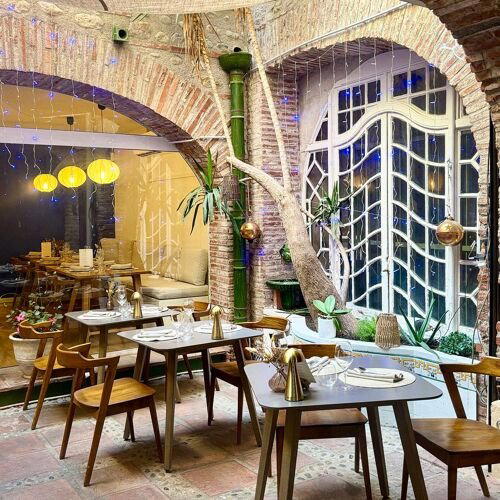
Warm and convivial with brick walls, stone floors, bull-themed decor, and authentic historic setting.