Le Bretagne
Le Bretagne occupies a corner of Sillé-le-Guillaume's central square, where the rhythms of a small Sarthe market town shape what ends up on the plate. The address places it squarely in the tradition of the French provincial table: local sourcing, unhurried service, and a room that has absorbed decades of ordinary and extraordinary meals alike. For visitors passing through the Pays de la Loire, it represents the kind of grounded, place-specific dining that larger cities rarely sustain.
Pearl is the En Primeur Club membership app — saves, bookings, and concierge access live there. Same editors, same standards.
- Address
- 1 Place Croix D'or, 72140 Sillé-le-Guillaume, France
- Phone
- +33243201010
- Website
- hotelsarthe.com
- Directions
- Get directions
 Saves & bookings on Pearl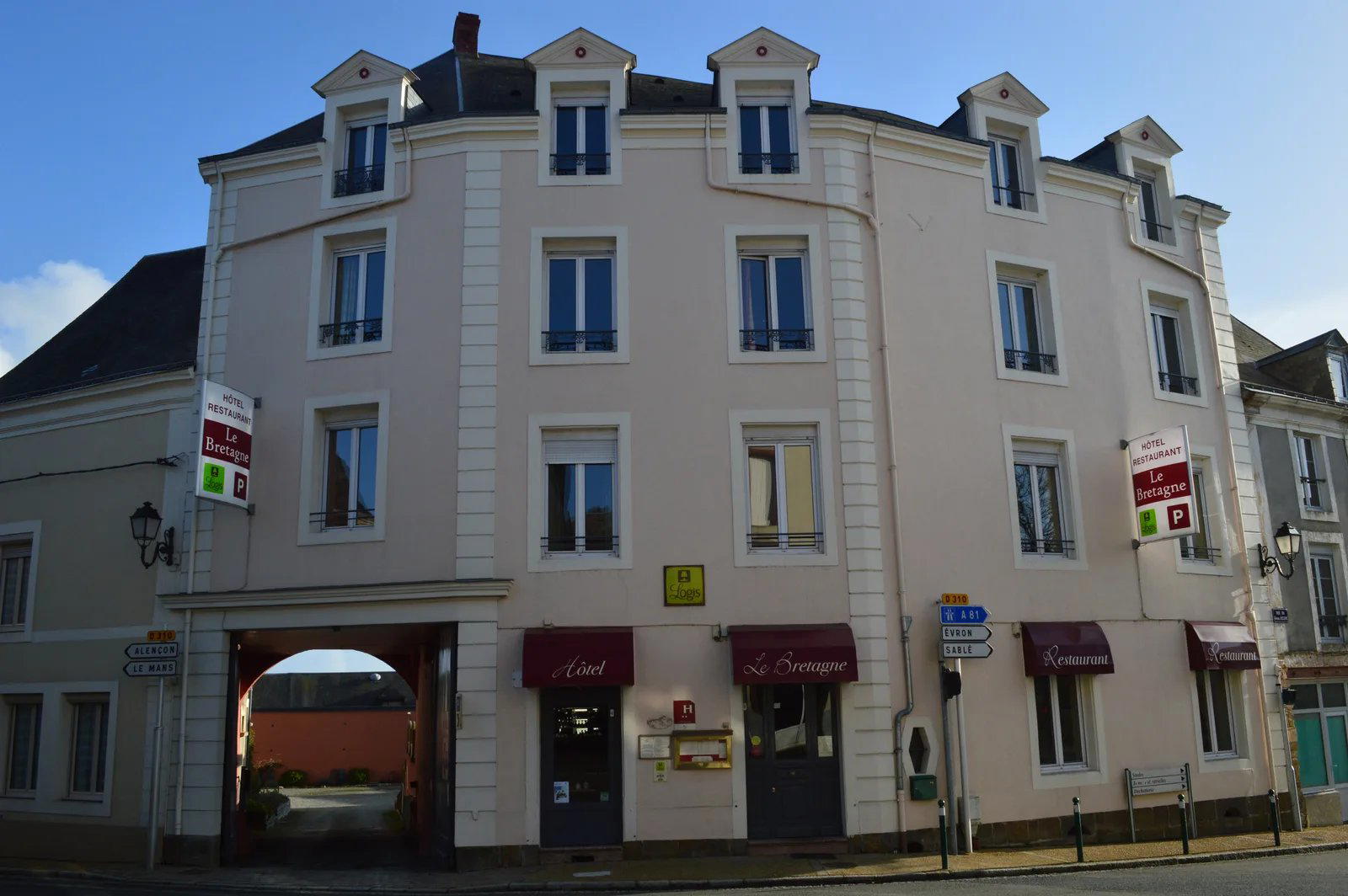
Where the Sarthe Countryside Meets the Table
Le Bretagne is a restaurant at 1 Place Croix D'or in Sillé-le-Guillaume, France. Place de la Croix d'Or is the kind of square that French market towns have built their civic life around for centuries: a modest stone geometry anchored by a church, ringed by commerce, and animated by the daily rhythms of a community that has not yet been smoothed into anonymity by tourism. Le Bretagne sits on that square at number one, and the address is not incidental. In the Sarthe department, proximity to local producers is not a marketing posture but a structural fact of how restaurants have always worked. The farms are close, the markets are weekly, and the supply chain between a field and a kitchen is short enough to be genuinely legible.
France's most discussed restaurants, places like Mirazur in Menton or Flocons de Sel in Megève, have built reputations partly on their ability to articulate a specific terroir through ingredients. The same logic applies at the provincial level. In a town of roughly 2,500 people, a restaurant survives on regulars who know exactly where the duck came from and will notice if it changes. That accountability is its own form of quality control.
The Provincial Table as Sourcing Discipline
The Sarthe sits at the confluence of several distinct agricultural traditions. To the north, the bocage landscape supports cattle and game. The river valleys supply freshwater fish. Market gardens in the surrounding communes produce the vegetables and herbs that define the seasonal cadence of a regional menu. Any kitchen in Sillé-le-Guillaume drawing on that geography is working with ingredients that carry genuine provenance, not because provenance is fashionable but because the alternative, importing at scale, would be economically irrational at this level of the French restaurant trade.
This is the context that separates a rooted provincial address from a city restaurant playing at regionalism. When Bras in Laguiole built a vocabulary around the Aubrac plateau, it was translating something geographically specific into a format. The provincial table in towns like Sillé-le-Guillaume operates on a different register: the sourcing is embedded, unremarkable to locals, and largely invisible to outside observers precisely because it predates the contemporary obsession with supply-chain storytelling. The food reflects the land because it always has, not because a chef decided to make that the restaurant's identity.
Comparable addresses in France's smaller towns, the kind of auberge or brasserie that anchors a market square, tend to cluster in that middle zone between the destination restaurant and the purely functional. Auberge du Vieux Puits in Fontjoncouse and Auberge de l'Ill in Illhaeusern represent what happens when that middle zone earns formal recognition; Le Bretagne operates in the broader tradition those restaurants emerged from.
What the Room Tells You Before the Menu Arrives
French provincial dining rooms carry information. The tablecloths, the distance between covers, the presence or absence of a prix-fixe board near the entrance, these details signal whether a kitchen is cooking for the rhythm of a local lunch or the extended ceremony of a destination meal. A square-facing address in a Norman or Manceau town typically indicates the former: a room calibrated for the two-hour midday meal that remains, in rural France, a genuinely practised institution rather than a nostalgic affectation.
The Pays de la Loire's restaurant culture does not perform regionalism. Compared to the theatricality of a tasting menu at Alléno Paris au Pavillon Ledoyen or the ingredient-as-concept approach of AM par Alexandre Mazzia in Marseille, a Sarthe bistro or brasserie presents its cooking as a given rather than an argument. That restraint is not a limitation; it is the format's logic. The cuisine earns authority through repetition and consistency across seasons, not through novelty.
Planning a Visit
Sillé-le-Guillaume sits approximately 35 kilometres northwest of Le Mans, making it accessible by road from the A28 motorway. For visitors arriving from Paris, Le Mans is served by TGV, with the town reachable by local transport or hire car. Given the scale of the town, dining at the restaurant is most naturally folded into a broader itinerary through the Sarthe, the medieval centre of Le Mans and the surrounding countryside justify a half-day or full-day excursion. The Sarthe's restaurant culture concentrates the main meal at lunch; visiting midweek during market days, when local produce is freshest in circulation, aligns with how the region has always organised its table. Specific hours, booking arrangements, and current menu formats are best confirmed directly with the venue.
The Wider French Provincial Context
France's formal restaurant hierarchy, the world documented by Paul Bocuse's Auberge du Pont de Collonges, Troisgros in Ouches, or Georges Blanc in Vonnas, grew out of exactly the kind of provincial inn and market-town brasserie that restaurant represents. The auberge format, in particular, carried French cooking from region to region long before the guide system codified prestige. Recognising that lineage matters for understanding what a room like this one offers: not a step on the way to somewhere more serious, but a direct continuation of the tradition that produced the serious places.
For travellers whose French dining frame of reference runs toward coastal addresses like Christopher Coutanceau in La Rochelle or La Marine in Noirmoutier-en-l'île, the inland Sarthe table operates on a different register of ingredient and technique: heavier, more land-anchored, less reliant on the immediacy that seafood forces on a kitchen. Neither is more French than the other; they are different expressions of the same underlying discipline of cooking what the place produces rather than what a concept requires.
Quick Comparison
Comparable venues nearby, for context on price, style, and recognition.
| Venue | Cuisine | Price | Notes |
|---|---|---|---|
| Le BretagneThis venue — the venue you are viewing | Traditional French Terroir Bistro | $$ | Not listed |
| La Table de Laurène | Traditional French Bistro | $$ | La Flèche |
| Le Bellifontain | French Bistronomique | $$ | near gare du Mans |
| Bistrot des Halles | Traditional French Bistro | $$ | Place Gaston-Paillhou |
| DAR DAR | Modern French Bistrot | $$ | Centre Ville |
| Le Relais des Renards | Traditional French Bistro | $$ | Piacé |
Continue exploring
More in Sille Le Guillaume
Restaurants in Sille Le Guillaume
Browse all →
Wineries in Sille Le Guillaume
Browse all →
At a Glance
- Cozy
- Classic
- Rustic
- Family
- Casual Hangout
- Terrace
- Historic Building
- Local Sourcing
Current opening hours
- Monday
- 12–2 PM, 7:30–8:30 PM
- Tuesday
- 12–2 PM, 7:30–8:30 PM
- Wednesday
- 12–2 PM, 7:30–8:30 PM
- Thursday
- 12–2 PM, 7:30–8:30 PM
- Friday
- 12–2 PM
- Saturday
- 7:30–8:30 PM
- Sunday
- 12–2 PM
Hours can change for holidays and private events. Last verified .
Chaleureuse salle with a cosy and calm setting, featuring a bistro atmosphere for lunches and a more gourmet experience in the evenings.