.png)
Le Baan Thaï holds back-to-back Michelin Bib Gourmand recognition for 2024 and 2025, placing it among the most consistent value-led restaurants in Gent's competitive dining scene. Under chef Seiji Inomoto, the kitchen delivers Thai cooking on Corduwaniersstraat that earns serious Michelin attention at a €€ price point — a combination that puts it in a narrow peer set across the whole of Belgium.
 Discover on Pearl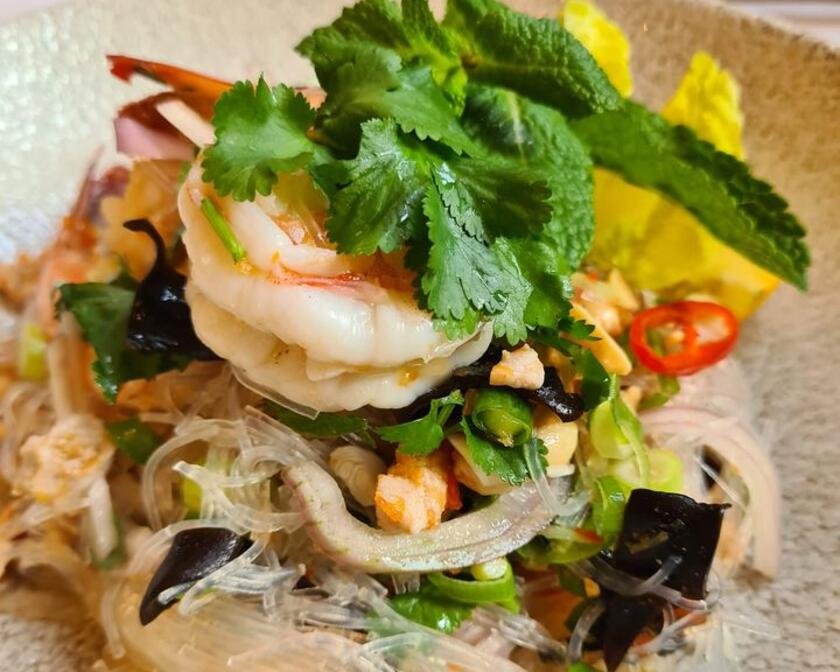
Thai Cooking at Michelin Level, Without the Michelin Price
Gent's dining scene has shifted considerably over the past decade. The city that once drew visitors primarily for Flemish classics now sustains a range of serious kitchens across multiple cuisines and price tiers — from the creative Flemish work at Vrijmoed and Souvenir to the modern European formats at Oak Gent and Publiek. Within that expansion, a smaller category has quietly consolidated: Asian kitchens with genuine technical depth and Michelin recognition to match. Le Baan Thaï sits at the centre of that shift, operating from Corduwaniersstraat 57 in the older part of the city centre, where the streets narrow and the architecture leans medieval.
Approaching on foot, the address reads as understated relative to the cooking inside. That gap between exterior modesty and interior seriousness is something Bib Gourmand-recognised restaurants in European cities tend to share — the guide's criteria explicitly favour quality-to-price ratio over theatrical presentation, and kitchens that earn it typically reflect that priority in how they present themselves from the street inward.
The shortlist, unlocked.
Hard-to-book tables, cellar releases, and concierge-planned trips.
Get Exclusive Access →Rice and the Architecture of a Thai Table
To understand what Thai cooking at this level is trying to do, it helps to think about rice , specifically, its structural role rather than its supporting one. In much of the Western reading of Thai cuisine, rice arrives as backdrop: the neutral base against which curries and stir-fries perform. That framing inverts the Thai culinary logic. In the tradition from which dishes like this emerge, rice is the meal's centre of gravity. Jasmine rice, cooked to a specific texture and fragrance, or sticky rice in the northern and northeastern traditions, anchors the table. Everything else , the heat, the acidity, the herbaceous lift of a nam prik, the fat richness of a coconut-based curry , functions in relationship to that rice.
Restaurants in Bangkok operating at the level of Nahm or Samrub Samrub Thai have made this logic explicit, structuring menus around how dishes interact with rice rather than around individual showpiece preparations. The question for any Thai kitchen operating in Europe is how much of that structural thinking survives the translation , and whether diners accustomed to European sequencing (appetiser, main, dessert) receive dishes in an order that preserves the rice-centred balance or disrupts it.
At a kitchen earning sustained Michelin recognition for the quality of what it produces at a €€ price point, that balance is clearly being maintained at a level the guide's inspectors find worth flagging two years running. The 2024 and 2025 Bib Gourmand awards represent consecutive confirmation, not a single-year outlier, which carries different weight in how seriously to take the recognition.
Chef Seiji Inomoto and the Cross-Cultural Kitchen
The presence of chef Seiji Inomoto in a Thai kitchen in Belgium points to a pattern that has become more common in European cities since the mid-2010s: Japanese-trained cooks applying precision-led technique to cuisines from elsewhere in Asia. The combination tends to sharpen the technical execution of dishes that are already demanding , Thai cooking requires balancing competing intensity levels simultaneously, not sequentially, and the kind of palate discipline that Japanese culinary training develops translates usefully to that challenge.
What this cross-cultural kitchen model does not do is flatten the source cuisine into something more familiar. The Bib Gourmand designation, applied twice, suggests the kitchen is cooking Thai food that reads as Thai to inspectors with enough regional reference to assess it credibly, not a softened adaptation for local palatability. That distinction matters. Gent now has serious Asian dining in the a food affair format alongside Le Baan Thaï, but the category is still small enough that each kitchen operates in a relatively uncrowded local peer set.
Where Le Baan Thaï Sits in Belgium's Recognised Kitchens
Belgium's Michelin map skews heavily toward fine dining in the French and modern European traditions. The country's three-star kitchens , including Hof van Cleve in Kruishoutem and Zilte in Antwerp , operate in a different register and at a different price tier. The same applies to celebrated coastal addresses like Bartholomeus in Heist and Willem Hiele in Oudenburg, or Boury in Roeselare. Against that backdrop, the Bib Gourmand category performs a different function: it identifies kitchens that deliver cooking the guide considers worth a detour at a price most diners can absorb without planning around a special occasion.
At the €€ tier, Le Baan Thaï is pricing against neighbourhood bistros and casual European dining rather than against the city's tasting-menu establishments. Earning Michelin recognition within that tier, in a cuisine category where the guide has historically applied stricter scrutiny in European contexts, positions the restaurant as the most formally validated Thai kitchen in Gent by a considerable margin. For comparison, Bozar Restaurant in Brussels illustrates how Belgian cities have developed recognised dining at multiple price levels, but Thai cooking with this level of consecutive formal recognition remains rare in the country's Flemish cities specifically.
Planning a Visit
Corduwaniersstraat 57 sits within Gent's walkable historic core, accessible from the main train station in under fifteen minutes on foot or by tram. The €€ price point means dinner here lands well below what comparable Michelin-recognised cooking costs in the city's tasting-menu tier, and that arithmetic, combined with the awards visibility, means tables at this scale of recognition typically require advance planning rather than spontaneous walk-in decisions. Contact details are not currently listed publicly, so checking Google Maps or local reservation platforms for current booking arrangements is the practical approach. For those building a broader Gent itinerary, our full Gent restaurants guide, hotels guide, bars guide, wineries guide, and experiences guide cover the full city across categories.
The shortlist, unlocked.
Hard-to-book tables, cellar releases, and concierge-planned trips.
Get Exclusive Access →Frequently Asked Questions
At-a-Glance Comparison
A quick peer snapshot; use it as orientation, not a full ranking.
| Venue | Cuisine | Price | Awards | Notes |
|---|---|---|---|---|
| Le Baan Thaï | Thai | €€ | Bib Gourmand | This venue |
| Vrijmoed | Modern Flemish, Creative | €€€€ | Michelin 2 Star | Modern Flemish, Creative, €€€€ |
| Oak Gent | Modern European | €€€€ | Michelin 1 Star | Modern European, €€€€ |
| Souvenir | Modern Flemish, Creative | €€€ | Michelin 1 Star | Modern Flemish, Creative, €€€ |
| Bar Bask | Basque, Spanish Contemporary | €€€ | Basque, Spanish Contemporary, €€€ | |
| Publiek | Modern Cuisine | €€€ | Michelin 1 Star | Modern Cuisine, €€€ |
Need a table?
Our members enjoy priority alerts and concierge-led booking support for the world's most difficult tables.
Get Exclusive AccessThe shortlist, unlocked.
Hard-to-book tables, cellar releases, and concierge-planned trips.
Get Exclusive Access →