
Michelin Plate
Our verdict
On Rue Poissonnière in central Lorient, Le 26-28 holds a Michelin Plate for the second consecutive year, placing it inside the city's small tier of formally recognised modern kitchens.

Pearl is the En Primeur Club membership app — saves, bookings, and concierge access live there. Same editors, same standards.
- Address
- 26 Rue Poissonnière, 56100 Lorient, France
- Phone
- +33 2 97 50 29 13
- Hours
- Mon ClosedTue 7:45–9:30 PMWed–Sat 12:15–2:30 PM, 7:45–9:30 PMSun Closed
- Website
- le2628.com
- Directions
- Get directions
- Booking
- Book on the venue's website
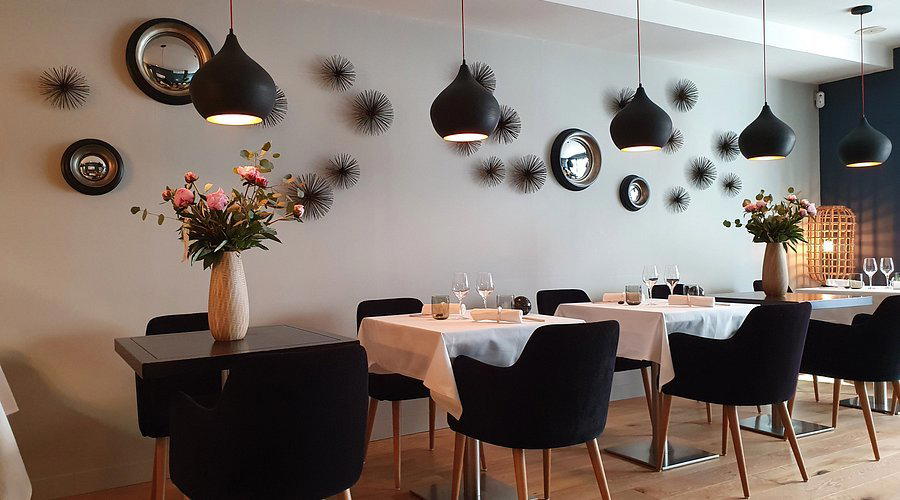
A Street, a Number, a Certain Kind of Meal
Rue Poissonnière runs through a part of Lorient that carries the ordinary texture of a working port city — which is precisely why an address like Le 26-28 registers as a considered choice rather than an inherited one. The name itself is just a street number, and that literalism is telling. In a regional dining scene where self-presentation can veer toward the promotional, naming a restaurant after its address signals a preference for the plate to do the talking. You arrive expecting the room to earn its reputation through the meal, not the other way around.
Lorient sits at the southern edge of Brittany, a city rebuilt from near-total destruction after the Second World War and carrying that postwar pragmatism in its bones. Its dining culture reflects the same disposition: less theatrical than Rennes, more focused on the raw quality of local produce than on elaborate technique for its own sake. The Atlantic coast supplies the obvious ingredients, but the more interesting restaurants here tend to use those ingredients as a starting point for modern cooking rather than a reason to avoid ambition. Le 26-28 occupies that space.
What the Michelin Plate Tells You
Two consecutive Michelin Plates, in 2024 and 2025, position Le 26-28 within a specific tier of the French dining hierarchy. The Plate designation, reinstated by Michelin in recent years, identifies kitchens where the cooking is consistently good enough to warrant attention but where the star threshold has not yet been crossed. In a city the size of Lorient, that distinction matters: it separates restaurants operating with genuine culinary intent from those coasting on local goodwill. For context, Lorient's more formally decorated neighbour in the French restaurant firmament, Amphitryon, represents the city's highest-end tier; Le 26-28 sits at a more accessible level while still carrying external validation.
The sustained recognition across two guide cycles also implies something about consistency, which is often harder to maintain than the initial burst of quality that earns first notice. French regional kitchens at the €€ price point face real operational pressure, and holding a Plate year-on-year at that price level is a more meaningful signal than a single listing. For comparison, similar modern cuisine kitchens in Lorient — Gare aux Goûts operates in the contemporary register at the same price tier, while Le Tire Bouchon anchors the traditional end, so the Michelin-recognised modern option at this price occupies a distinct position in the city's offer.
The Shape of the Meal
Modern French cuisine at the €€ level in a Breton port city tends to follow a particular rhythm. The meal is structured but not ceremonial: courses arrive with enough pace to feel deliberate without tipping into the slow-burn choreography of a starred tasting menu. This is not the format of Mirazur in Menton or Troisgros in Ouches, where the evening is organised around an extended progression with multiple acts. At Le 26-28, the expectation is a meal that respects the diner's time as well as their appetite, a distinction that French regional kitchens at this tier have become increasingly skilled at managing.
What defines the dining ritual at this level of modern French cooking is the relationship between technique and restraint. The cooking vocabulary is contemporary, reduction-led saucing, seasonal produce structured through modern preparation, but the underlying logic remains classical French. Dishes are finished with precision rather than novelty, and the sequence of a meal is designed so that each course reads clearly rather than requiring explanation.
The €€ designation places the restaurant in a price band where Lorient diners can engage without the occasion-only arithmetic of high-end dining. It sits alongside Le Yachtman on the seafood side of the city's offer, a different register, but the same accessible price point, which collectively suggests that Lorient's mid-market is meaningfully competitive in quality terms.
Lorient and the Broader French Modern Kitchen
Brittany has historically occupied an interesting position in French gastronomy: the region's produce identity is strong (the coast, the salt marshes, the dairy), but its culinary prestige has always been somewhat overshadowed by the Loire to its south and Normandy to its north. Modern kitchens in the region have responded to that gap in different ways. Some lean heavily into regional identity; others operate more as outposts of contemporary French technique that happen to have access to Breton ingredients. Le 26-28's classification as Modern Cuisine rather than specifically Breton or regional cooking places it in the latter group, which means it's drawing on a broader French culinary language while working within a specific geographic supply chain.
For readers who track French modern cuisine across scales and contexts, the contrast is informative. At the top of the French modern hierarchy, restaurants like Alléno Paris au Pavillon Ledoyen, Flocons de Sel in Megève, or Bras in Laguiole represent the apex of long-established French fine dining traditions. Further afield, Auberge de l'Ill in Illhaeusern demonstrates how provincial French kitchens can sustain decades of recognition. The modern cooking format has also migrated internationally: Frantzén in Stockholm and FZN by Björn Frantzén in Dubai each represent the format operating far outside its French origins. Le 26-28 operates at a different scale and ambition level than any of these, but understanding where it sits relative to that broader continuum helps calibrate what the Michelin Plate designation means in practice. It is a regionally significant restaurant, recognised by the guide that still sets the benchmark for French dining at every tier. Among the historic French institutions, Paul Bocuse's L'Auberge du Pont de Collonges remains the reference point for what French culinary legacy can mean at its most formalised.
Planning the Visit
Le 26-28 is located at 26 Rue Poissonnière in central Lorient, accessible on foot from the city centre. For broader orientation in the city, the full Lorient restaurants guide maps the dining scene across categories, and the city's accommodation, bar, and experience options are covered in the Lorient hotels guide, Lorient bars guide, Lorient wineries guide, and Lorient experiences guide.
Frequently asked questions
Is Le 26-28 a family-friendly restaurant?
The €€ price range makes Le 26-28 financially accessible for a family dinner, and a Michelin Plate restaurant in a working port city like Lorient rarely operates with the formality that would make children uncomfortable. That said, the modern French cuisine format — structured courses, a focused room — suits older children and teenagers more naturally than young families with toddlers.
How would you describe the vibe at Le 26-28?
Two consecutive Michelin Plates point to a kitchen with consistent intent, and the €€ positioning places Le 26-28 in the register of serious neighbourhood dining rather than occasion-only formality. On Rue Poissonnière in central Lorient, the setting reads as a place locals return to rather than one that performs for tourists — purposeful, without being stiff.
What awards or recognition does Le 26-28 have?
Le 26-28 has received recognition including: Michelin Plate (2025); Michelin Plate (2024).
What do people recommend at Le 26-28?
At the €€ price point, the value proposition is part of what earns repeat visits — Brittany's coastal produce tends to anchor menus in this tier, though confirmed details should be verified directly with the restaurant.
What does dinner at Le 26-28 typically cost?
Pricing at Le 26-28 is listed as €€.
What It’s Closest To
| Venue | Cuisine | Price | Awards | Notes |
|---|---|---|---|---|
| Le 26-28This venue — the venue you are viewing | Modern French Bistronomique | $30–50 | Michelin Plate | Not listed |
| Gare aux Goûts | Modern French Bistro | $30–50 | Michelin Bib Gourmand | Contemporary |
| Le Tire Bouchon | Refined Traditional French Seafood | $50–100 | Michelin Bib Gourmand | Traditional Cuisine |
| Le Yachtman | Traditional Breton Seafood | $30–50 | Michelin Plate | Seafood |
| Amphitryon | Modern French Fine Dining | Not listed | Not listed | Not listed |
Recognition history
Dated appearances from independent guides and award organizations, with the underlying list record or original source where available.
Michelin Plate
Michelin
Full recognition history (3 entries)
Michelin Plate
Michelin
Michelin Plate
Michelin
Details
- Romantic
- Cozy
- Elegant
- Date Night
- Special Occasion
- Open Kitchen
- Local Sourcing
- A La Carte
- Vegetarian Friendly
Current opening hours
- Monday
- Closed
- Tuesday
- 7:45–9:30 PM
- Wednesday
- 12:15–2:30 PM, 7:45–9:30 PM
- Thursday
- 12:15–2:30 PM, 7:45–9:30 PM
- Friday
- 12:15–2:30 PM, 7:45–9:30 PM
- Saturday
- 12:15–2:30 PM, 7:45–9:30 PM
- Sunday
- Closed
Hours can change for holidays and private events. Last verified .
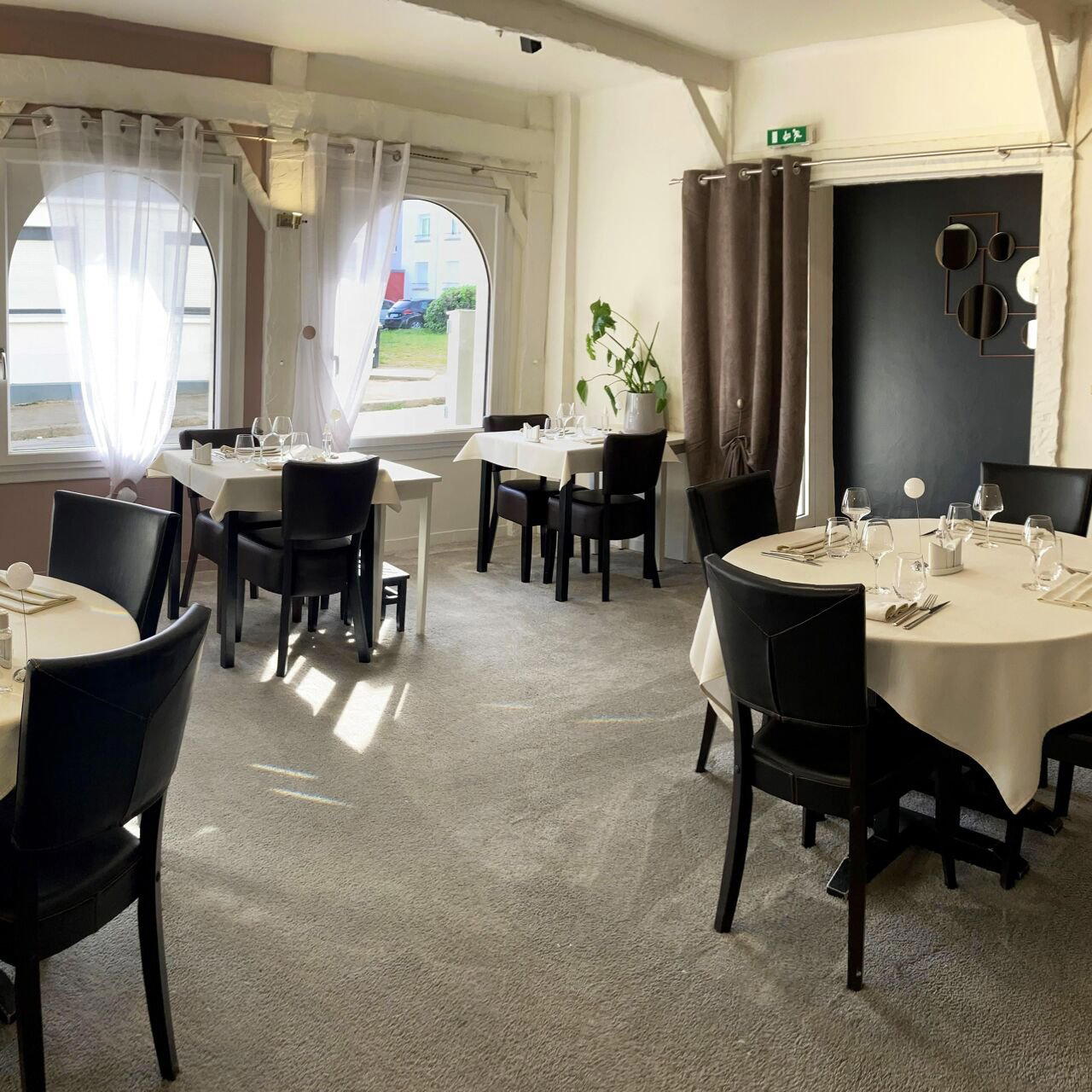
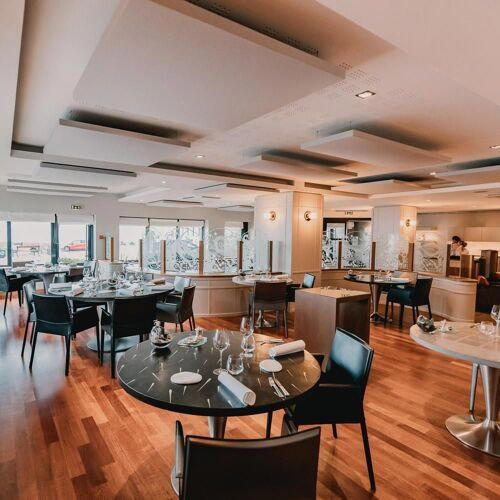
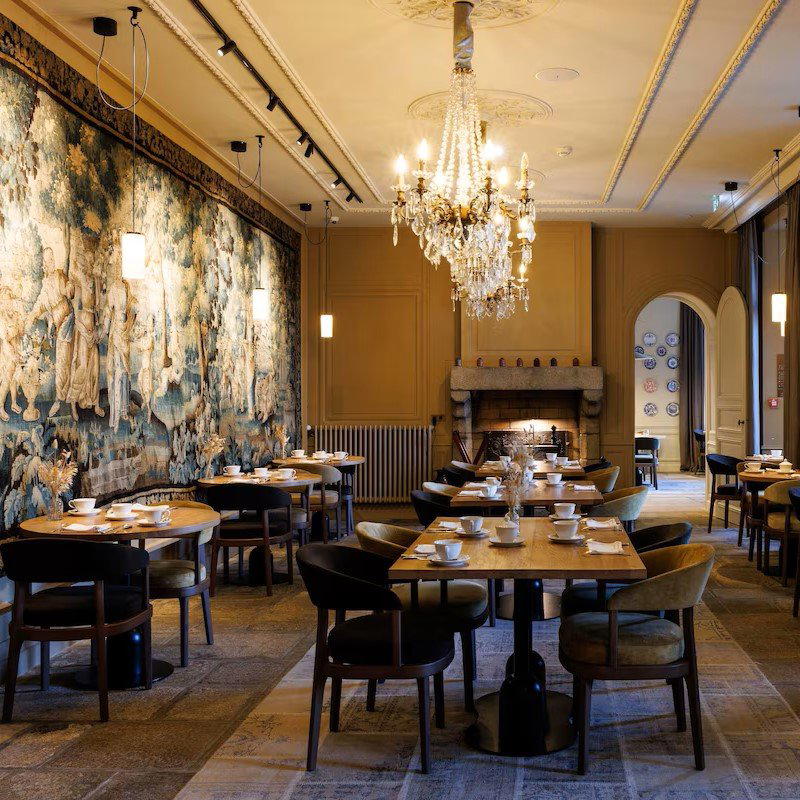
Chaleureuse et décontractée with contemporary design, open kitchen, spacious salle, and welcoming service.