LB Social
Our verdict
On Long Beach's West Park Avenue corridor, LB Social occupies the space where neighborhood bar culture and ingredient-conscious cooking intersect. The menu draws on regional sourcing traditions that have shaped Long Island's dining scene, positioning it as a casual but considered option on the Long Beach restaurant circuit. For visitors mapping the city's food scene, it belongs in the same conversation as the area's broader shift toward locally rooted cooking.

Pearl is the En Primeur Club membership app — saves, bookings, and concierge access live there. Same editors, same standards.
- Address
- 62 W Park Ave, Long Beach, NY 11561
- Phone
- (516) 431-7846
- Hours
- Mon ClosedTue–Thu 4–10 PMFri–Sat 4–11 PMSun 3–9 PM
- Website
- lbsocialny.com
- Directions
- Get directions
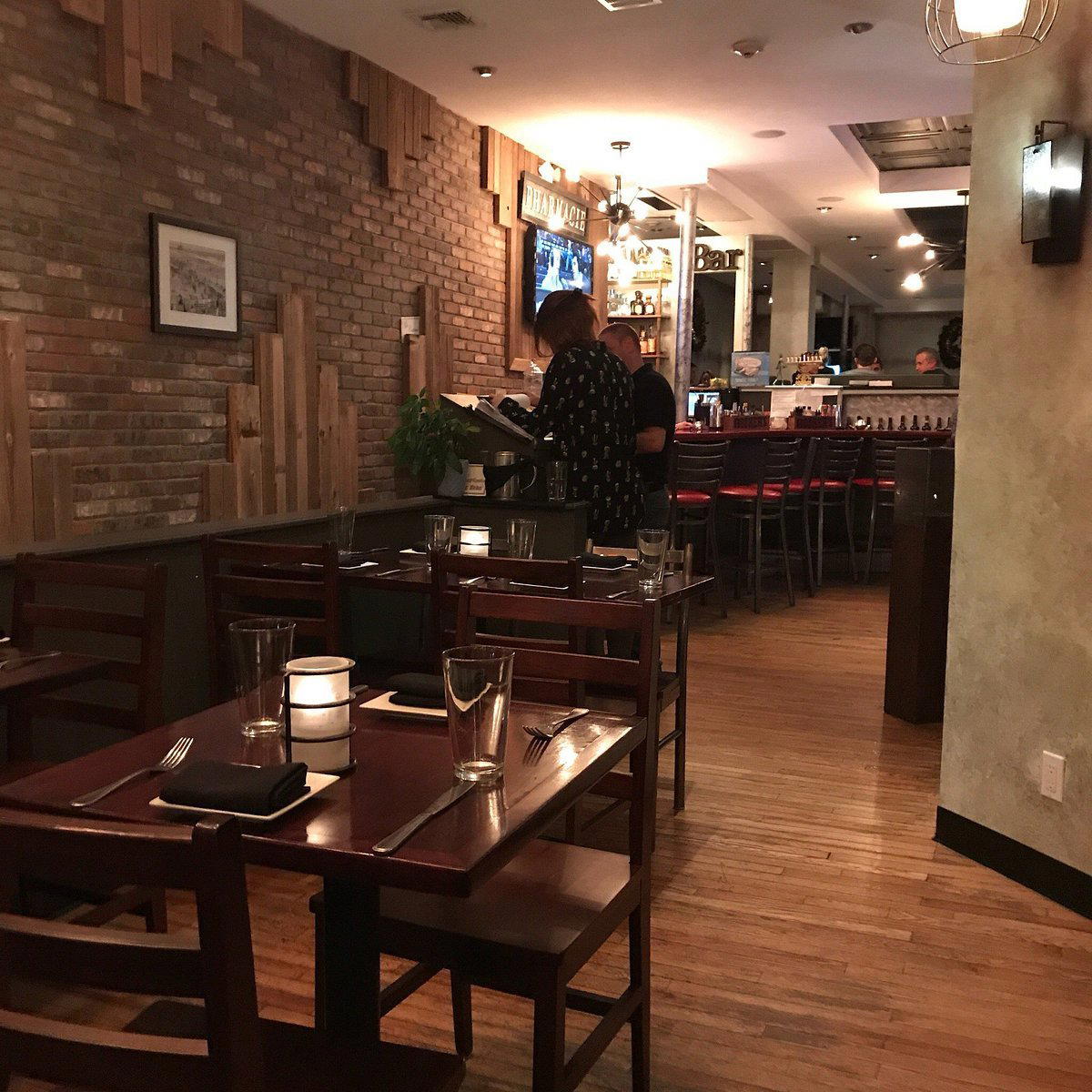
The menu
What to order
- Grilled norwegian salmon
- Boneless beef short ribs
- Grilled skirt steak
- Chicken meatballs
West Park Avenue and the Social Dining Shift
Long Beach, New York sits at an interesting inflection point in the broader Long Island dining story. The barrier island city has spent the better part of the last decade building out a restaurant identity that sits somewhere between the white-tablecloth aspirations of the North Fork wine corridor and the unpretentious fish shack tradition of the South Shore. LB Social, at 62 West Park Avenue, occupies that middle register: a neighborhood-facing operation on one of Long Beach's more active commercial stretches, where the foot traffic comes from locals rather than destination diners.
West Park Avenue functions as Long Beach's informal main street, and the dining options along it reflect the city's demographic mix: year-round residents who want good food without ceremony, and seasonal visitors from the New York metro area who arrive with higher baseline expectations than the postcode might suggest. That dual audience has pushed several operators in this zip code toward a format that prioritizes accessibility in price and tone while still taking the sourcing question seriously.
Sourcing as the Operative Frame
The ingredient sourcing conversation in American restaurant culture has moved well past the point of being a differentiator and into the territory of baseline expectation. At the premium end of the national spectrum, operations like Single Thread Farm in Healdsburg and Blue Hill at Stone Barns in Tarrytown have built their entire identities around controlling the supply chain from soil to plate. Smyth in Chicago takes a similarly rigorous approach at the tasting menu level. These are purpose-built sourcing programs with documented farm relationships and seasonal menus that shift in direct response to harvest cycles.
The more instructive comparison for a neighborhood operation like LB Social is what happens when that sourcing ethic gets translated into a casual-format setting. Long Island's East End farms, particularly those in the Riverhead and Calverton corridors, have become reliable supply networks for New York City restaurants willing to pay freight costs. A restaurant in Long Beach has a geographical argument: the farms are closer, the fish landed at local docks is genuinely local, and the seasonal produce window on the South Shore aligns with what ends up on the plate. Whether a given operation exploits that proximity fully is always the operative question.
For reference, the sourcing programs at ambitious urban operations like Providence in Los Angeles or Le Bernardin in New York City are built around documented supplier relationships and are publicly verifiable through press coverage and menu language. At the neighborhood level, the signals are subtler: menu language that names regions rather than generic categories, seasonal item rotation, and the presence of local seafood species that only appear when the boats are running.
Long Beach in the Long Island Dining Context
Long Beach's restaurant scene is smaller and more compressed than its North Fork or Hamptons counterparts, but it has developed a coherent identity around a few recurring themes: seafood proximity, a bar-forward social culture, and a pricing structure that stays accessible relative to the Hamptons corridor. Operations like Boathouse on the Bay lean into the waterfront seafood format explicitly. 555 East occupies the steakhouse register. Heritage takes a Californian approach, which in this context means a produce-forward menu philosophy that sits somewhat against the grain of Long Island's traditionally protein-heavy dining culture.
LB Social positions itself in the social dining format, a category that has expanded significantly across American mid-sized cities over the past decade. The format prioritizes shareable plates, a drinks program that can carry an evening, and a room that functions as much as a gathering place as a restaurant. Alli Kaphiy and Benley represent other nodes in Long Beach's casual dining circuit, each with their own format logic. For a broader map of how these operations relate to each other, the full Long Beach restaurants guide provides useful orientation.
What the Social Format Asks of the Kitchen
Social dining formats make specific demands on a kitchen that tasting menu operations do not. The plate count is higher, the table turn is faster, and the food needs to hold its integrity across a wider window of timing variability. Sourcing discipline becomes harder to maintain at volume, which is why the sourcing question matters more, not less, in casual formats. A shareable plate of fried local calamari or a board of Long Island duck charcuterie communicates sourcing intent in a language that a bar crowd can receive without a server explanation. The ingredient tells the story.
The national comparison set for this format includes operations like Lazy Bear in San Francisco, which takes the communal dining premise to its logical extreme in a prix fixe format, and Emeril's in New Orleans, which built its reputation on making regional sourcing legible to a broad audience. At the fine dining end, The Inn at Little Washington and Addison in San Diego demonstrate how sourcing narratives anchor high-investment dining experiences. LB Social operates well below that investment level, but the underlying question is the same: does the food on the plate reflect where you are?
For readers interested in how sourcing-driven formats play out at the tasting menu level internationally, Atelier Moessmer Norbert Niederkofler in Brunico and Atomix in New York City represent the format's most rigorous expressions. The gap between those operations and a neighborhood social bar in Long Beach is significant in investment and ambition, but the sourcing logic that animates both ends of the spectrum is the same in principle.
Planning Your Visit
LB Social is located at 62 West Park Avenue in Long Beach, accessible via the Long Beach branch of the Long Island Rail Road from Penn Station, making it a realistic option for a day trip or early evening excursion from Manhattan. The West Park Avenue strip is walkable from the Long Beach station, which puts several dining options within a short radius for a comparative evening. Specific booking details, current hours, and any reservations policy are best confirmed directly with the venue, as those operational parameters were not available at time of writing.
Frequently asked questions
Where exactly is LB Social?
LB Social is located at 62 W Park Ave, Long Beach, NY 11561, Long Beach.
Is LB Social a practical stop coming in from New York City by train?
LB Social sits at 62 West Park Avenue in Long Beach, which is served directly by the Long Beach branch of the Long Island Rail Road from Penn Station. The walk from Long Beach station to the restaurant is short, making it one of the more transit-accessible dining options on the South Shore of Long Island. That rail connection makes it a reasonable choice for a group day trip or an evening out from the city without the need for a car.
What do people recommend at LB Social?
Regulars at LB Social tend to gravitate toward the shareable plates, which anchor the menu and suit the bar-forward, communal format the restaurant has built its identity around on West Park Avenue in Long Beach. The approach prioritizes flexibility over formality, so the table typically orders across the menu rather than working through a fixed progression. Given the social format, ordering broadly as a group is the standard move.
What's the best way to book LB Social?
Long Beach operates as both a year-round residential community and a seasonal destination, so availability can shift considerably between summer weekends and quieter winter evenings.
What has LB Social built its reputation on?
LB Social has established its place in the Long Beach dining scene through the social dining format: a bar-forward, shareable-plate structure that sits at the more accessible end of the Long Island restaurant spectrum. Where North Fork and Hamptons venues often compete on tasting menus and wine programming, LB Social operates with a different priority set, one oriented toward neighborhood regulars and accessible group dining on West Park Avenue.
How It Stacks Up
| Venue | Cuisine | Price | Awards | Notes |
|---|---|---|---|---|
| LB SocialThis venue — the venue you are viewing | Modern American | Not listed | Not listed | Not listed |
| Heritage | California Fine Dining | $150–200 | 1 Michelin Star | Californian |
| Chiang Rai | Northern Thai Street Food | $20–30 | Michelin Plate | Thai |
| The Attic | Modern Southern Cajun & Creole | $30–50 | Michelin Plate | Southern |
| Schooner Or Later | Classic American Breakfast & Lunch | $20–30 | Diners, Drive-Ins and Dives Featured Restaurant | Not listed |
| L'Opera Italian Restaurant | Authentic Italian Ristorante | $50–100 | Wine Spectator Best of Award of Excellence | Not listed |
Continue exploring
More in Long Beach
Restaurants in Long Beach
Browse all →
Bars in Long Beach
Browse all →
Hotels in Long Beach
Browse all →




Details
- Rustic
- Cozy
- Warm
- Date Night
- Group Dining
- Special Occasion
- Craft Cocktails
- Local Sourcing
- A La Carte
- Beer Program
- Wine
- Cocktails
- Vegetarian Friendly
- Gluten Free Options
Current opening hours
- Monday
- Closed
- Tuesday
- 4–10 PM
- Wednesday
- 4–10 PM
- Thursday
- 4–10 PM
- Friday
- 4–11 PM
- Saturday
- 4–11 PM
- Sunday
- 3–9 PM
Hours can change for holidays and private events. Last verified .
Rustic, warm, and inviting atmosphere with focus on quality ingredients and great service.