Our verdict
In Garcia, one of Salvador's most characterful neighbourhoods, Larriquerrí occupies a plaza address that pulls the city's Bahian ingredient traditions into close focus. The restaurant sits at a mid-range price point where the broader Salvador dining scene is doing its most interesting work, placing it in direct conversation with the neighbourhood-rooted kitchens reshaping the city's culinary identity.
The menu
What to order
- Ceviche peruano
- Dadinhos de tapioca
- Trouxinhas de carpaccio
Garcia, Salvador, and the Ingredient Logic Behind Bahia's Neighbourhood Kitchens
The neighbourhood of Garcia sits inland from the tourist corridor of the Pelourinho, closer to the organic markets and residential streets where Salvador's actual food culture has always been reproduced rather than performed. Praça Alexandre Fernandes, where Larriquerrí is addressed at number 26, is the kind of plaza that functions as a social anchor for its surrounding blocks: not a formal square designed for visitors, but a lived-in open space that gives the restaurant a genuinely local frame of reference. That address matters more than it might first appear. In Salvador, where you eat is often an indication of what you are eating and why.
Bahian cuisine is one of Brazil's most ingredient-driven culinary traditions, shaped by the convergence of West African cooking knowledge, Portuguese pantry staples, and the extraordinary biodiversity of the northeastern coast and its hinterland. Dendê palm oil, fresh coconut milk, dried shrimp, vatapá paste, and pimenta-de-cheiro are not decorative flourishes; they are structural ingredients that define the logic of the cuisine. Restaurants that take that logic seriously tend to locate themselves near the supply chains that sustain it, whether that means proximity to the Mercado São Joaquim on the waterfront or relationships with smallholders in the Recôncavo region that rings the Bay of All Saints. Garcia, as a neighbourhood, has the residential density and the market infrastructure to support that kind of sourcing orientation.
Where Larriquerrí Sits in Salvador's Current Restaurant Scene
Salvador's restaurant scene has split in the past decade into at least three recognisable tiers. At one end, a small group of destination-level addresses, some with national recognition comparable to D.O.M. in São Paulo or Lasai in Rio de Janeiro, are making explicit arguments about Brazilian ingredient sovereignty and technique. Amado and Manga operate in this register. At the other end, the city's street food and market economy remains one of the most compelling in South America, requiring no critical apparatus to appreciate. The middle tier, neighbourhood restaurants with genuine culinary ambition but without the pricing or ceremony of the destination category, is where the most interesting daily-life dining is happening. Larriquerrí occupies territory in this middle register, in a part of the city where the audience is predominantly local rather than tourist, and where kitchens are measured by their fidelity to the flavours residents already know well.
That peer context matters for how to read the restaurant. Comparison with Casa Castanho or Boi Preto Prime maps a different competitive set than comparison with the higher-ceremony end of the market. Alfredo'Ro represents yet another variant of Salvador's dining range. Larriquerrí's Garcia address signals a kitchen oriented toward neighbourhood regulars, which in practice means consistency and ingredient quality are more likely to be the operating priorities than presentation theatre or tasting-menu format.
The Sourcing Logic That Defines Bahian Cooking at This Level
In Brazilian food writing, the sourcing conversation has accelerated since the early 2010s, when chefs associated with the broader São Paulo avant-garde began making explicit what smallholder producers and Amazonian ingredient traders had always known: the country's biodiversity is a competitive asset that most of its restaurant industry had been systematically ignoring in favour of European-model ingredients. In Salvador, that conversation has a different character than in São Paulo or Rio, because Bahian cuisine never abandoned its local ingredient base in the way that mid-century Brazilian bourgeois cooking did. The challenge for contemporary Bahian kitchens is not recovery of a lost tradition but honest maintenance of one that survived.
Ingredients like fresh okra, dried caju, tamarind, and the full range of Bahian pimentas appear in a functioning supply chain that runs through the city's public markets. Garcia's proximity to these networks, and the neighbourhood's own feira culture, means a kitchen at Praça Alexandre Fernandes has access to the same ingredients that have defined the cuisine for generations. Whether a given restaurant uses that access with discipline is a question answered by eating there, not by address alone, but the geography is a precondition for the sourcing conversation to be meaningful at all.
For visitors coming from the international restaurant circuit, where sourcing claims have sometimes become more marketing apparatus than operational reality, the Bahian neighbourhood kitchen offers a useful corrective. The ingredients are local not because a mission statement requires it, but because the market infrastructure for anything else is less convenient and the local customer base has a precise palate for what those ingredients should taste like. That is a different kind of quality control than a Michelin inspector's visit.
Planning a Visit to Larriquerrí
Garcia is accessible from the historic Pelourinho district and from the beachfront neighbourhoods of Barra and Ondina by taxi or app-based car service; the journey from either area typically runs under fifteen minutes depending on traffic. The neighbourhood has its own street life and a feira rhythm that rewards arriving with time to walk the surrounding blocks before or after eating. Praça Alexandre Fernandes itself functions as a neighbourhood meeting point, which shapes the atmosphere around the restaurant's entrance. As with most neighbourhood-tier restaurants in Salvador, reservations made directly or through walk-in are likely to be the operating model, though specific booking arrangements should be confirmed before arrival. For a broader map of where Larriquerrí sits among Salvador's dining options, see our full Salvador restaurants guide.
Frequently asked questions
Can I bring kids to Larriquerrí?
Garcia is a residential neighbourhood in Salvador, and Larriquerrí sits on Praça Alexandre Fernandes, a square setting that tends toward a relaxed, community-facing atmosphere rather than a formal dining room. That format generally suits families with older children comfortable in a sit-down meal. Specific family policies are not confirmed in available documentation, so contacting the venue directly before arrival is the practical step.
What should I expect atmosphere-wise at Larriquerrí?
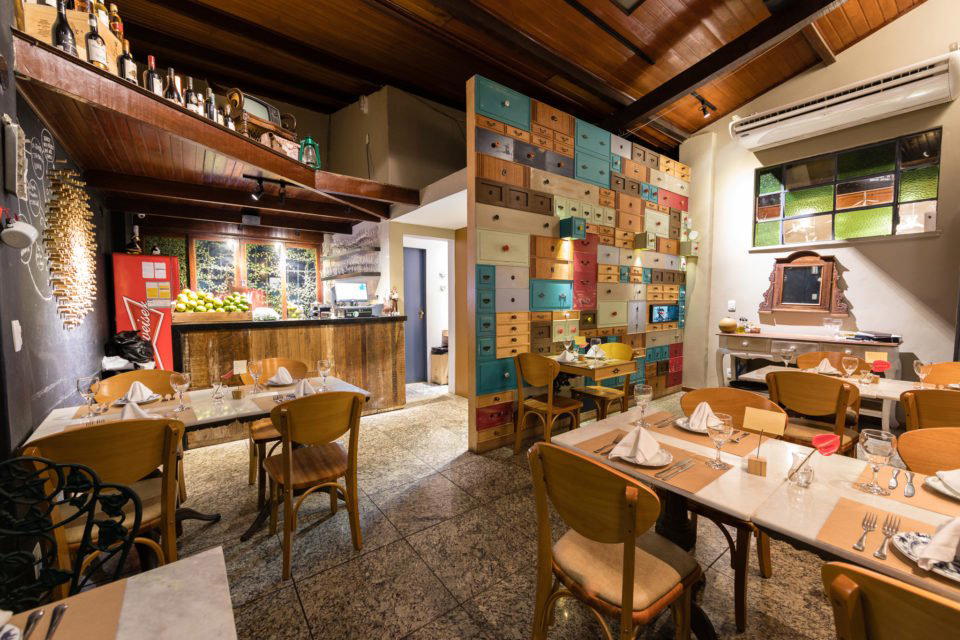
The address on Praça Alexandre Fernandes in Garcia places Larriquerrí squarely in residential Salvador, away from the amplified tourism of the Pelourinho. Expect a neighbourhood pace: lower ambient noise than beachfront dining strips, a local rather than transient crowd, and a room that earns its identity from the surrounding streets rather than from designed spectacle.
Is Larriquerrí a good option for visitors specifically seeking authentic Bahian neighbourhood cooking rather than tourist-facing restaurants in Salvador?
Larriquerrí's location on Praça Alexandre Fernandes in Garcia positions it within the residential and market-adjacent interior of Salvador, a part of the city where kitchens draw from local sourcing networks rather than catering to beachfront visitor traffic. Salvador's restaurant scene has developed a recognisable tier of neighbourhood addresses that prioritise Bahian ingredient traditions over international crossover menus, and Garcia sits within that geography. For visitors who have already covered the Pelourinho circuit and want a different register of the city's food culture, this address is the kind of place worth tracking down.
What dish is Larriquerrí famous for?
What the Garcia location and Salvador context do signal is a kitchen likely anchored in Bahian ingredient logic, where dendê oil, fresh seafood, and produce from organic markets close to the neighbourhood inform the menu. Visiting without a fixed expectation of a single dish tends to serve the experience better here.
Where is Larriquerrí in Salvador?
Larriquerrí is located at Praça Alexandre Fernandes, 26 - Garcia, Salvador - BA, 40100-130, Brazil, Salvador.
How hard is it to get a table at Larriquerrí?
Garcia operates at a neighbourhood cadence rather than a high-volume tourist circuit, which typically means less competition for tables than at destination-tier addresses in Salvador's Barra or Pelourinho zones. Reaching out directly through local channels or app-based services before your visit is the most reliable approach.
| Venue | Cuisine | Price | Awards |
|---|---|---|---|
| LarriquerríThis venue (the venue you are viewing) | French-Italian Bistro | Not listed | Not listed |
| Manga | Modern Brazilian with German Influences | $50–100 | World's 50 Best #99 · The Best Chef One Knife |
| Origem | Modern Bahian Fine Dining | $100–150 | World's 50 Best #52 · The Best Chef Two Knives |
| Boi Preto Prime | Brazilian Churrascaria with Japanese Influences | $50–100 | Not listed |
| Alfredo'Ro | Classic Italian Seafood | Not listed | Not listed |
| Casa Castanho | Brazilian Cafe Brunch | Not listed | Not listed |
Continue exploring
More in Salvador
Restaurants in Salvador
All restaurants in Salvador →
Bars in Salvador
All bars in Salvador →


Details
- Intimate
- Charming
- Romantic
- Elegant
- Date Night
- Special Occasion
- Waterfront
- Prix Fixe
- A La Carte
intimate and charming atmosphere