
Lapin Noir belongs to Japan’s serious bread culture rather than the destination-dining circuit: small-format, daytime, and built around repeat buying as much as café use. Its Tabelog Bread EAST 100 selections in 2020 and 2022 place it in a category where regulars judge consistency by the loaf, the sandwich, and the weekly habit.
Pearl is the En Primeur Club membership app — saves, bookings, and concierge access live there. Same editors, same standards.
- Address
- 1 Chome-18-12 Nosakamachi, Chichibu, Saitama 368-0033, Japan
- Phone
- +81 494-25-7373
- Website
- lapin-noir.co.jp
 Saves & bookings on Pearl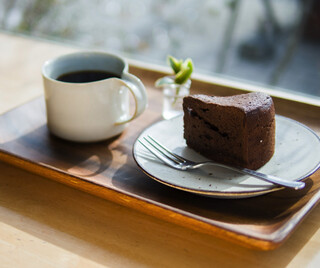
A small bakery-café changes the rhythm of a food day. The room is table-led rather than counter-theatrical, built for bread, coffee, sandwiches, and takeaway, not a long tasting menu. Lapin Noir is best read as a serious bread address with café function: somewhere for food carried home, eaten on the train, or saved for the next morning.
Japan’s bread culture rewards quiet precision. Repeat customers are sharp critics because bread reveals inconsistency quickly: fermentation, crumb, crust, storage, and how well a loaf survives after purchase. Lapin Noir sits in that repeat-use category. Tabelog Bread EAST 100 recognition in 2020 and 2022 gives it a trust signal, but the clearer point is the format: bread, café, and sandwich under one roof, with takeaway and a small eat-in footprint.
Bread culture judged by regulars, not ceremony
In Japan, a loyal bakery must serve several jobs: morning errand, family stop, gift purchase, and modest café pause rather than formal meal. Lapin Noir’s appeal belongs to that practical spectrum. Its category listing, bread, café, and sandwich, places it between daily provisions and light dining, not patisserie-as-luxury.
The price band says the same. This is not premium dining disguised as a bakery; it occupies the lower everyday spend tier for both lunch and dinner, where customers return because value is repeatable. Nearby comparison addresses in the wider out-of-metro set, including Asami Reizo Kanasaki honten and Asami Reizo Houdosandou ten, sit in a similar JPY 1,000 to JPY 1,999 bracket, while Takasago Horumon runs higher. That frames the restaurant as a disciplined casual stop with award recognition, not a splurge.
Its vegetarian and allergy-aware notes matter. Bread in Japan often contains dairy, egg, or other enrichments, so guidance for vegetarians and people with allergies, plus bread without eggs or milk, meets a practical demand. The point is usability, not dietary branding: regulars return to places that solve repeat problems without negotiation.
For Osaka-focused readers building a wider food map, this contrasts with city eating built on queues, heat, and density. 551 Horai (551蓬莱) represents the portable Osaka staple at mass scale, while 52CHO-ME BAKERY and .cafe point to quieter daytime formats. The restaurant belongs with the latter instinct: lower drama, higher repeatability.
A ten-seat café format keeps the focus on buying well
The small room matters. Ten table seats mean the experience is not designed for lingering crowds or elaborate pacing. Customers buy first, sit if space allows, and treat the café element as an extension of the bread program. No private rooms or private-use framing reinforces the point: this is a public, everyday format with narrow capacity and a practical takeaway spine.
Payment flexibility changes how a place works for regulars. Credit cards, transport IC cards, electronic money, and QR code payments make the stop routine rather than occasional. In Japan, that matters for small, fast, repeated bakery and café purchases. A shop accepting Suica-style transit cards fits commuter behavior and weekend errands.
The family-friendly positioning is another signal. Children are welcome across age groups, and the listing includes a kids’ menu. The restaurant is closer to local-life bread culture than to the hushed pastry salon. A serious bread address need not be severe; the daily bakeries often become household infrastructure.
There is also an online and gifting dimension. Local shipping, gift use, and online sales extend the shop beyond its ten seats. For regulars, that creates a second menu: bread for home, something for a child, a sandwich, a gift, an order sent elsewhere. The shop earns loyalty by fitting different moments without changing category.
How to place it in a Japan food itinerary
The restaurant is not the address to compare with a long-form Osaka dinner. It belongs beside daytime cafés, bakeries, sandwich shops, and casual specialists. Travelers building a broader Kansai plan can use Our full Osaka restaurants guide for the city’s dining range, then separate bread-and-coffee stops from reservation-led meals such as a canto (Italian) or casual specialists like 99 Pizza Napoletana Gourmet. The distinction keeps expectations clean.
That sorting helps across Japan. A casual bread stop has little in common with -Grilled beef Sukiyaki- KAMAKURA TANUKIAN 鎌倉 たぬき庵 in Kamakura. 鮪と炭火焼き うお炭 秋葉原店 in Tokyo, or (Shoku) Vietnam in Kawasaki, which is precisely why it is useful. It fills the low-pressure, high-frequency part of a trip, keeping an itinerary from becoming heavy meals in sequence.
Readers looking beyond restaurants can pair this daytime planning with Our full Osaka hotels guide, Our full Osaka bars guide, Our full Osaka wineries guide, and Our full Osaka experiences guide. For further casual-format comparison.know in Kumamoto, [Curry Senmon Ten] Maruyama Kyoju. in Sapporo, [ki:] in Kyoto, Jōdo Saké Bar in Los Angeles, and Onigiri Time in Pasadena show how focused, modest-format venues can carry as much editorial interest as higher-ceremony dining.
The verdict is simple: the restaurant is valuable for travelers who understand bread as daily culture, not filler between reservations. The Tabelog Bread EAST 100 selections supply the external credential; small seating, takeaway service, family usability, dietary guidance, and gifting options explain why regulars keep it in rotation.
Awards and Standing
Comparable venues for orientation by cuisine and category.
| Venue | Cuisine | Price | Notes |
|---|---|---|---|
| Lapin NoirThis venue — the venue you are viewing | Casual cafe & bakery | $ | Not listed |
| JouEt BoIte | Bakery / Bread Shop | $ | Takatsuki |
| Cantegrande Curry San hiroba ten | Curry House | $ | Kita |
| Danke Shinsaibashi | Japanese kissaten coffee shop | $ | Chūō |
| Human beings everybody noodles (人類みな麺類) | Traditional Shoyu Ramen | $ | Nishinakajima, Yodogawa-ku |
| Le Sucre Coeur Kishibe | Artisan French-style bakery & cafe | $ | Suita / Kishibe |
Recognition history
Dated appearances from independent guides and award organizations, with the underlying list record or original source where available.
Tabelog 100 #14 · No. 14
Tabelog · Tabelog 100 - Bread - EAST - 2022
Continue exploring
More in Osaka
Restaurants in Osaka
Browse all →
Hotels in Osaka
Browse all →
Wineries in Osaka
Browse all →
At a Glance
- Cozy
- Classic
- Rustic
- Quiet
- Solo
- Casual Hangout
- After Work
- Standalone
Current opening hours
- Monday
- 10 AM–5 PM
- Tuesday
- Closed
- Wednesday
- 10 AM–5 PM
- Thursday
- 10 AM–5 PM
- Friday
- Closed
- Saturday
- 10 AM–5 PM
- Sunday
- 10 AM–5 PM
Hours can change for holidays and private events. Last verified .
Reviews describe a simple, unfussy cafe with a calm, low-key atmosphere suited to a quiet coffee break rather than a busy restaurant experience.