
Lai Ching Heen at Regent Hong Kong belongs to the polished end of Hong Kong Cantonese dining, where seafood sourcing, dried goods, and banquet-level technique carry more weight than theatrics. Its Black Pearl Restaurant Guide 2026 two-diamond recognition places it in a serious regional conversation, especially for diners reading Cantonese cuisine through ingredient quality rather than novelty.
 Request Booking on Pearl
Pearl is the En Primeur Club membership app — saves, bookings, and concierge access live there. Same editors, same standards.
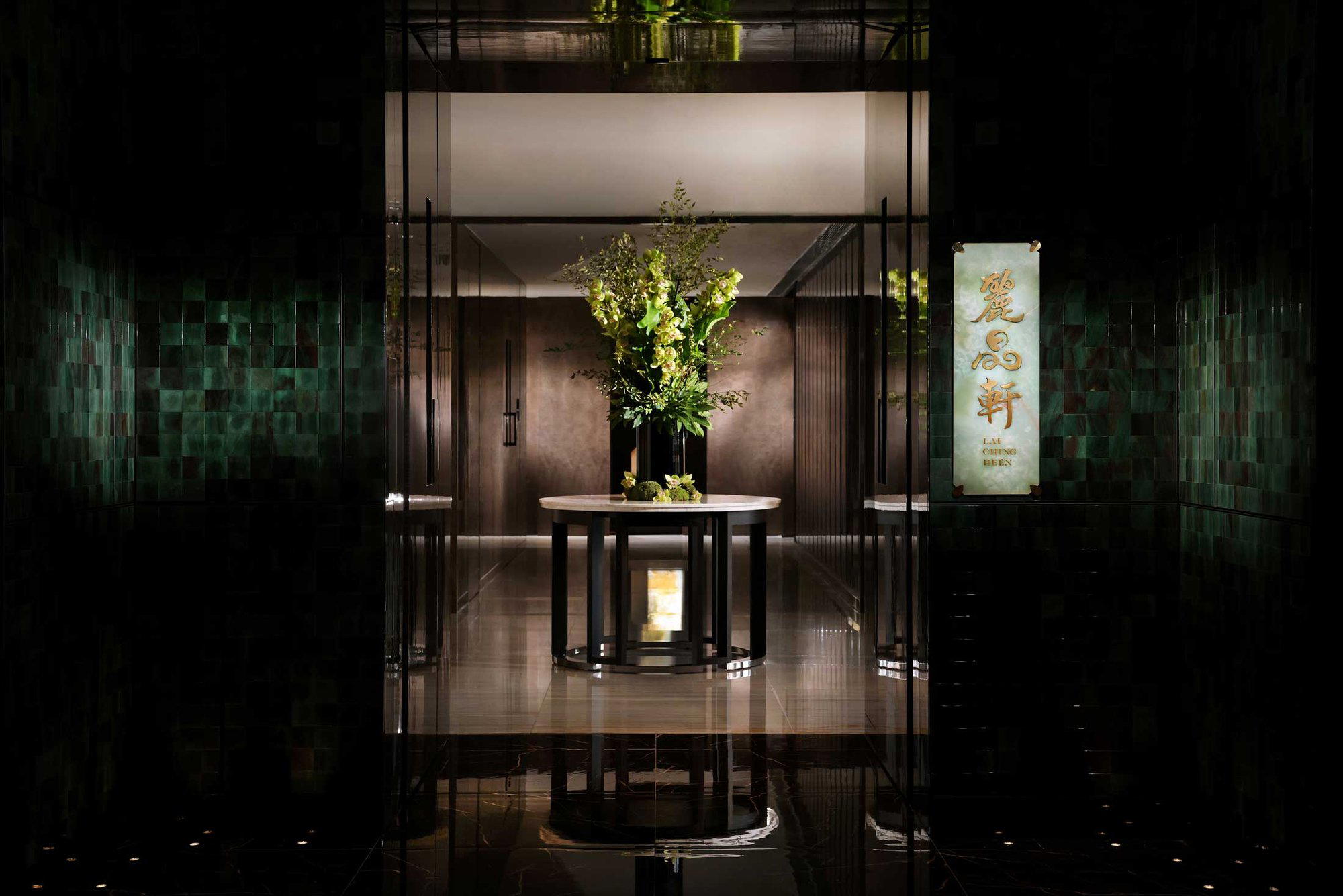
The room signals old Hong Kong luxury before the first course arrives: hotel polish, measured service, and the kind of calm that makes Cantonese dining feel architectural rather than decorative. In this city, the serious Cantonese table has always depended on procurement as much as cooking. Fresh seafood, dried seafood, superior stocks, seasonal greens, and the disciplined handling of texture form the grammar; the kitchen’s job is to protect those materials rather than disguise them.
Lai Ching Heen (Regent Hong Kong) sits inside that tradition. Its Black Restaurant Guide 2026 two-diamond recognition matters because Black reads Chinese fine dining with a regional lens, giving weight to service formality, ingredient hierarchy, and cultural fluency. For Hong Kong, that is a more relevant signal than a generic luxury label. The city’s Cantonese dining culture is not built on excess alone; it is built on knowing when a steamed fish, a soup, or a dried-seafood preparation has been handled with restraint.
Cantonese luxury here is measured through sourcing, not spectacle
Hong Kong’s high-end Cantonese restaurants operate within a demanding supply culture. The city has long been a clearing house for live seafood, dried abalone, fish maw, superior mushrooms, aged citrus peel, and regional produce moving through South China and the wider Asia-Pacific trade. At this level, the question is rarely whether the menu sounds elaborate. The more useful question is whether the kitchen has access to ingredients that justify slower cooking, cleaner steaming, and sauces built for depth rather than sweetness.
That sourcing logic explains the appeal of a formal Cantonese meal in a hotel setting. A strong kitchen can move between dim sum, seafood, soups, roasts, and banquet dishes without turning the experience into a tasting-menu performance. The sequence is usually less rigid than Western fine dining, but the standards are no looser: heat control, stock clarity, knife work, and timing are exposed in dishes that leave little room for camouflage.
For readers mapping Hong Kong dining by category, the contrast is useful. Spanish small plates at 22 Ships (Spanish-Tapas), Italian fine dining at 8 1/2 Otto e Mezzo Bombana (Hong Kong) (Italian), and address-led local entries such as 15-27 Cannon St or 208 Hollywood Rd all sit in different parts of the city’s restaurant map. Lai Ching Heen belongs to the Cantonese luxury lane, where ingredient access and service ritual do the heavy lifting.
Why the Black signal matters in Hong Kong
Black ’s two-diamond tier is a serious marker for Chinese dining, particularly in a market where local prestige and international recognition do not always overlap neatly. In Hong Kong, Cantonese restaurants can be judged by several audiences at once: hotel guests, local families booking celebration meals, corporate hosts, and diners who follow regional award systems. A two-diamond listing tells the reader that the restaurant is being assessed inside a Chinese fine-dining framework rather than only through Western restaurant language.
This distinction matters because Cantonese food at the premium end rewards different instincts. A luxury meal may hinge on the quality of seafood, the depth of a double-boiled soup, the sourcing of dried goods, or the consistency of dim sum technique. None of that requires theatrical plating. In fact, the stronger signal is often confidence without visual noise. The room, service cadence, and menu breadth support a style of dining where the table shares responsibility for the meal, rather than each guest following a fixed solo progression.
The broader Hong Kong scene is unusually wide. A reader can move from district-specific local cooking such as Block 18 Doggie's Noodle in Yau Tsim Mong, Chin Sik in Tsuen Wan, or Habib's Indian & Middle Eastern Food in Kwun Tong to hotel dining, theme-park restaurants such as Enchanted Garden Restaurant in Islands, and historical curiosities like Former Jumbo Floating Restaurant in Aberdeen. That range is the point: Hong Kong’s food culture is not a single hierarchy, but a set of parallel systems with different forms of credibility.
How to read the meal: texture, season, and restraint
The better way to approach a Cantonese meal of this type is to think in textures and sourcing categories. Seafood should be read for freshness and handling; soups for clarity and patience; roasted or braised dishes for heat management; dim sum for wrapper thickness, filling balance, and timing. Seasonal ingredients matter because Cantonese cooking often uses narrow windows rather than loud reinvention. The kitchen’s restraint is part of the value proposition: the ingredient should remain legible.
Lai Ching Heen is therefore a stronger choice for diners who want Hong Kong Cantonese dining in a formal hotel register than for those seeking a loose neighbourhood meal. The setting suits celebration dining, business hosting, and travellers who want to understand why Cantonese luxury is so tied to procurement. Readers building a broader itinerary can cross-reference Our full Hong Kong restaurants guide, then widen the trip through Our full Hong Kong hotels guide, Our full Hong Kong bars guide, Our full Hong Kong wineries guide, and Our full Hong Kong experiences guide.
For adjacent dining research, EP Club also tracks city and neighbourhood entries such as 8½ Otto e Mezzo BOMBANA in Central And Western, immersive formats like 7 Paintings, and out-of-market references including Jōdo Saké Bar in Los Angeles and Onigiri Time in Pasadena. The useful takeaway is not that these belong to the same category. It is that Hong Kong rewards precise reading: know whether the meal is about locality, format, ceremony, or ingredient hierarchy before judging it.
Comparable Venues Nearby
Comparable venues nearby, for context on price, style, and recognition.
| Venue | Cuisine | Price | Notes |
|---|---|---|---|
| Lai Ching Heen (Regent Hong Kong)This venue — the venue you are viewing | Cantonese Chinese Fine Dining | $$$$ | Not listed |
| The Legacy House (Rosewood Hong Kong) | Shunde-style Cantonese Fine Dining | $$$$ | Tsim Sha Tsui |
| Imperial Court | Modern Lingnan Cantonese Fine Dining | $$$$ | NAPE |
| Flower Drum | Modern Cantonese Fine Dining | $$$$ | Wan Chai |
| Man Ho Chinese Restaurant (JW Marriott Hotel Hong Kong) | Michelin-starred Cantonese Fine Dining | $$$$ | Admiralty |
| Stellar House (Chuang’s Enterprise Building) | Traditional Cantonese / Shunde banquet cuisine | $$$$ | Wan Chai |
Recognition history
Dated appearances from independent guides and award organizations, with the underlying list record or original source where available.
Black Pearl 2 Diamond
Black Pearl
Continue exploring
More in Hong Kong
Restaurants in Hong Kong
Browse all →
Bars in Hong Kong
Browse all →
At a Glance
- Elegant
- Sophisticated
- Classic
- Scenic
- Ornate
- Intimate
- Business Dinner
- Date Night
- Group Dining
- Celebration
- Special Occasion
- Waterfront
- Panoramic View
- Design Destination
- Hotel Restaurant
- Sommelier Led
- Zero Proof
- Waterfront
- Skyline
Quiet, polished, and theatrical, with a jade-themed approach, silk-lined dining room, and floor-to-ceiling windows overlooking Victoria Harbour.