We're Smart World 1 Radish
Our verdict
La Timbale occupies a quiet corner of Montmartre's upper village, where the 18th arrondissement settles into a residential rhythm far removed from the tourist circuit below. The restaurant holds affiliation with Bon pour le Climat, signalling a documented commitment to seasonal French produce and vegetable-forward cooking that places it within a growing cohort of climate-conscious dining rooms reshaping how Paris eats.

Pearl is the En Primeur Club membership app, where members save venues, book tables and use the concierge.
Where the 18th Arrondissement Eats, Away from the Postcard
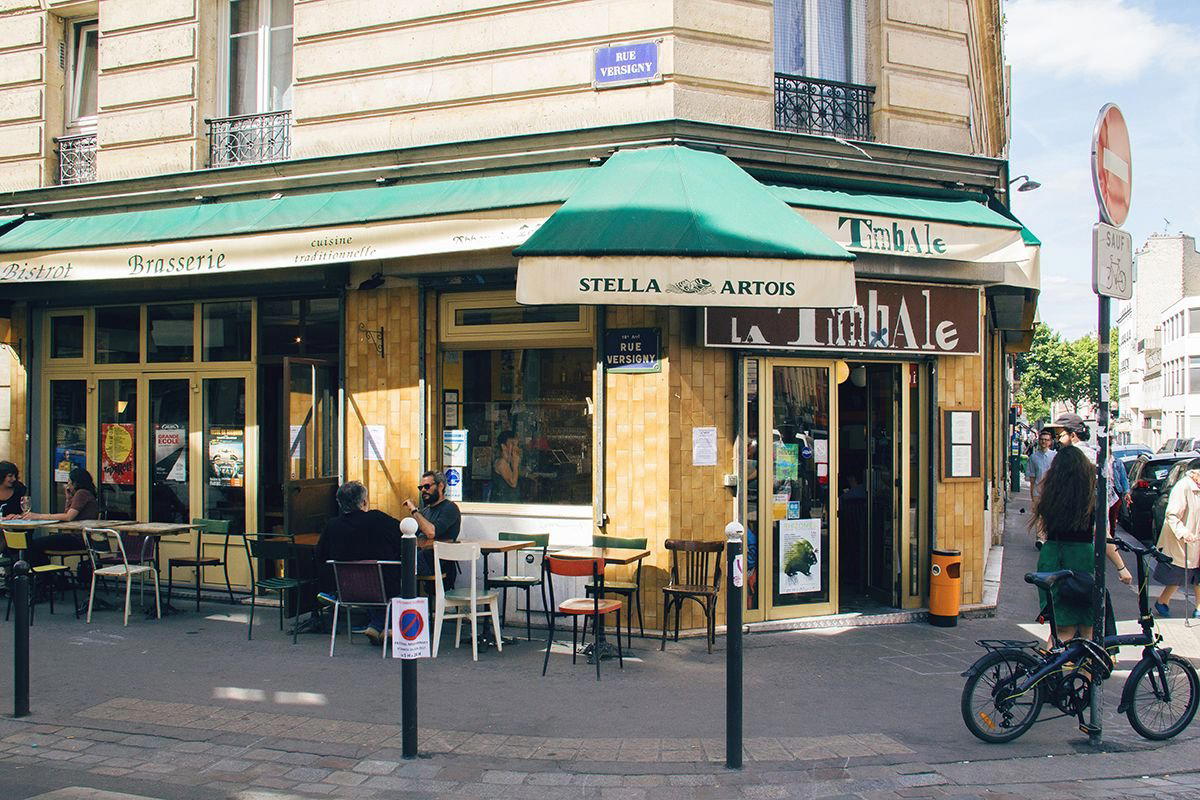
The upper reaches of Montmartre, around Rue du Mont-Cenis and the quieter streets that thread between the Sacré-Cœur crowds and the residential hinterland, have long housed the kind of restaurant that serves the neighbourhood rather than performs for it. La Timbale sits at this junction, on a stretch of the 18th arrondissement where the pavement narrows, the tourist flow thins, and the cooking tends toward the honest rather than the theatrical. This is not the Paris of Alléno Paris au Pavillon Ledoyen or the grand-room formality of Le Cinq at the Four Seasons George V. It is closer in character to the neighbourhood bistrot tradition that still anchors Paris dining for those who live here rather than visit.
Approaching from Rue Versigny, the address at 2 Rue Versigny places La Timbale in a residential block that functions as the working texture of Montmartre, apartment buildings, local commerce, no particular landmark drawing foot traffic. That context matters. Restaurants in this zone succeed or fail on word of mouth and returning custom, not on location premiums or destination traffic. It is a harder proving ground than a celebrated arrondissement, and a more reliable signal of genuine local standing.
The Bon pour le Climat Affiliation and What It Means in Practice
La Timbale holds affiliation with Bon pour le Climat, a French organisation that audits and recognises restaurants committed to reducing their environmental footprint through sourcing, menu design, and waste practices. In a city where climate credentials are increasingly claimed but unevenly substantiated, that affiliation carries specific weight. It means the restaurant's preference for local seasonal produce and its emphasis on vegetables are not marketing positions but documented operational choices.
The Bon pour le Climat designation places La Timbale within a cohort of Parisian restaurants that approach vegetable-forward cooking not as a trend accommodation but as a structural menu commitment. This stands in meaningful contrast to the dominant mode of Parisian fine dining, where protein centrality and classical sauce work remain the organising logic, as they do at L'Ambroisie on the Place des Vosges or the seafood precision of Kei near the Palais-Royal. La Timbale's frame of reference is different: seasonality and vegetable primacy as the organising logic, with sourcing geography as a deliberate constraint rather than an afterthought.
Across France, the restaurants that have built the most durable reputations for produce-led cooking tend to anchor themselves to place and season with unusual discipline. Bras in Laguiole built its reputation over decades on the gargouillou principle, treating the vegetable garden as the kitchen's primary creative source. Mirazur in Menton works from its own gardens with a similar conviction. La Timbale operates at a different scale and without that tier of international recognition, but the underlying orientation, cooking from what the season and the locality offer, belongs to the same lineage of thinking.
Climate-Conscious Dining as a Credentialling System in Paris
Paris has accumulated a dense layer of sustainability-oriented restaurant affiliations over the past decade, from the Ecotable label to Bon pour le Climat to various organic certification schemes. The Bon pour le Climat label specifically addresses carbon impact across the supply chain, which means it functions less as a quality signal and more as an operational one. What it tells a diner is not that the food will be good, but that the sourcing decisions are subject to external scrutiny and documented criteria.
In the broader context of Parisian dining, this kind of credentialling system is gaining traction as a way to differentiate within a crowded mid-market. The city's high-end tier, where restaurants like Arpège have built reputations on garden-to-table sourcing at considerable price points, has long made a virtue of provenance. The more interesting development is the emergence of neighbourhood restaurants with documented sustainability credentials operating outside that luxury register. La Timbale appears to occupy that space in the 18th: a local room with an external quality signal that is not tied to Michelin recognition or celebrity-chef lineage.
For comparison, some of the most decorated names in French regional cooking, including Flocons de Sel in Megève, Troisgros in Ouches, and Auberge de l'Ill in Illhaeusern, have built their authority over generations through a combination of family continuity, regional rootedness, and critical recognition. La Timbale's affiliation with Bon pour le Climat is a different kind of signal, more recent and more specifically environmental, but it functions similarly as an external validator that a restaurant's stated commitments are subject to review beyond its own marketing.
Montmartre's Dining Character and Where La Timbale Fits
The 18th arrondissement divides sharply in dining terms. The lower slopes, around Abbesses and Pigalle, have seen significant investment in destination restaurants and natural wine bars over the past decade, drawing the same demographic that frequents the 11th's more established bistrots. The upper village, above the funicular line, operates on different rhythms: slower turnover, more residential custom, less interest in the opening-night economy.
La Timbale at its Rue Versigny address sits in this upper register of the arrondissement, where the expectation is a room that feeds the neighbourhood with consistency rather than one that rotates its audience through a hype cycle. That positioning, combined with its climate affiliation and vegetable-emphasis approach, suggests a kitchen oriented toward regulars who share its sourcing values and return for the seasonal progression of the menu rather than for a one-time occasion.
For those planning time in Paris across multiple categories, our full Paris restaurants guide maps the city's dining tiers in detail. The Paris hotels guide, bars guide, wineries guide, and experiences guide cover the adjacent categories. For a sense of how French seasonal cooking has developed at the highest levels internationally, the work coming out of Le Bernardin in New York and Paul Bocuse's Auberge du Pont de Collonges offer useful context on how French culinary tradition travels and adapts. Even Emeril's in New Orleans reflects the long reach of French technique as a foundational grammar in restaurant kitchens beyond France's borders.
Planning a Visit
La Timbale is located at 2 Rue Versigny, 75018 Paris, in the upper Montmartre neighbourhood. The area is accessible via the Lamarck-Caulaincourt metro station on line 12, a short walk from the restaurant. The seasonal and climate-affiliated nature of the kitchen suggests that the menu shifts with the calendar, making repeat visits across different seasons a reasonable approach for those who eat in the neighbourhood regularly.
Frequently asked questions
Where is La Timbale located?
La Timbale is located at 2 Rue Versigny, 105 Rue du Mont-Cenis, 75018 Paris, France, Paris.
Has La Timbale won any awards?
La Timbale has received recognition including: This restaurant is affiliated with the organization 'Bon pour le climat' and prefers local seasonal products and emphasizes vegetables.
What do regulars order at La Timbale?
La Timbale's Bon pour le Climat affiliation signals a kitchen built around vegetables and local seasonal produce, so the menu rotates with what's available from nearby suppliers. Expect plant-forward plates to anchor most of the menu rather than appearing as an afterthought alongside heavier protein courses.
Is La Timbale reservation-only?
Reservation details are not published online for La Timbale. Given its position on a quieter residential stretch of upper Montmartre at 2 Rue Versigny, booking ahead is the sensible approach, particularly on weekends when the neighbourhood draws visitors away from the Sacré-Cœur crowds.
What's La Timbale best at?
La Timbale's affiliation with Bon pour le Climat is the most concrete credential on record, meaning the kitchen is audited for environmental practice, not just self-declared green. That places it within a credentialled tier of Paris restaurants where seasonal, vegetable-led cooking is a structural commitment rather than a menu trend.
How It Stacks Up
Comparable venues nearby, for context on price, style, and recognition.
| Venue | Cuisine | Price | Awards | Notes |
|---|---|---|---|---|
| La TimbaleThis venue (the venue you are viewing) | Traditional French Brasserie | $20–30 | We're Smart World 1 Radish | Not listed |
| Café Albert | French Café-Bistro | $20–30 | Not listed | 18th Arrondissement |
| Le 975 | Modern French Bistro | $30–50 | Not listed | Montmartre (18th/17th arrondissement border) |
| Galinette Bistrot | French Bistro | $30–50 | Not listed | 8ème arrondissement |
| L'Alsace | Alsatian Brasserie | $30–50 | Not listed | 8th Arr. |
| La Parenthèse | Classic French Brasserie | $30–50 | Not listed | Montparnasse |
Recognition history
Dated appearances from independent guides and award organizations, with the underlying list record or original source where available.
We're Smart World 1 Radish
We're Smart World