La Teresita
La Teresita occupies a strip-mall address on 66th Street North that Pinellas Park regulars treat as a reliable neighbourhood anchor. The kitchen leans into Cuban-American cooking traditions that prioritize ingredient-forward preparation over novelty. For a city more often associated with chain dining, it represents a committed independent presence in the local food scene.
Pearl is the En Primeur Club membership app — saves, bookings, and concierge access live there. Same editors, same standards.
- Address
- 7101 66th St N, Pinellas Park, FL 33781
- Phone
- +17275465785
- Website
- lateresitapinellas.com
- Directions
- Get directions
 Saves & bookings on Pearl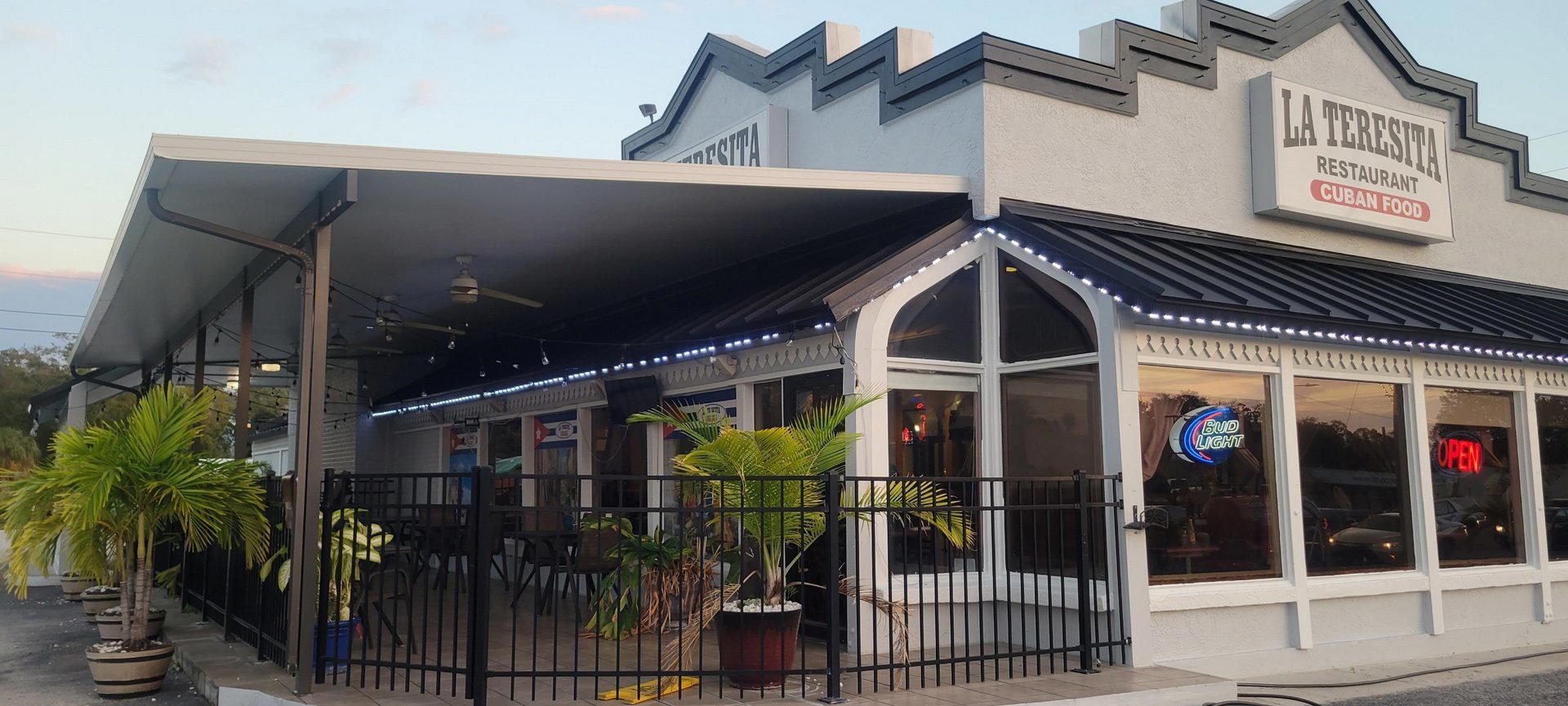
Where Pinellas Park Sits Down for Real Food
Strip-mall dining in Florida's mid-Pinellas corridor has a reputation problem. The dominant format along corridors like 66th Street North skews toward chain redundancy: familiar logos, standardised sourcing, portion engineering calibrated for throughput rather than flavour. La Teresita, at 7101 66th St N, operates in the same physical register but inside a different culinary logic. The room is unpretentious, the lighting functional, and the crowd largely local.
Cuban-American cooking, the tradition La Teresita draws from, has always been ingredient-led by structural necessity. Dishes like ropa vieja, picadillo, and roast pork derive their character not from technique complexity but from the quality and preparation of the base materials: the cut of meat, the ripeness of the tomatoes, the fat content of the lard, the freshness of the mojo ingredients. You cannot disguise weak sourcing behind a braise the way you can behind a sauce reduction. The protein and aromatics are the sauce. In this sense, Cuban-American home cooking and the restaurant traditions it spawned represent one of the more ingredient-honest food cultures in the American canon.
Sourcing in a Sun Belt Context
Florida's agricultural position is frequently underestimated by diners who associate sourcing credibility with Northern California operations like Single Thread Farm in Healdsburg or Blue Hill at Stone Barns in Tarrytown. In practice, Florida is among the largest producers of fresh vegetables and citrus in the country. The state's growing calendar extends year-round in ways the Midwest cannot match, and the Cuban-American kitchen's reliance on citrus, specifically sour orange and lime for mojo and marinades, benefits directly from regional proximity. A Tampa Bay area restaurant drawing on Cuban traditions sits physically close to the citrus-producing belts of central Florida in a way that, say, a comparable restaurant in Chicago cannot replicate without cold-chain compromise.
This matters because mojo, the garlic-citrus marinade central to Cuban pork cookery, is one of those preparations where freshness of citrus shifts the result meaningfully. Bottled sour orange concentrate and fresh-pressed juice from locally grown fruit are not equivalent products. The decision a kitchen makes at that juncture, whether driven by cost, convenience, or conviction, is legible in the finished dish in a way that most diners register intuitively without being able to name it.
The Pinellas Park Context
Pinellas Park sits in a part of the Tampa Bay region that serious food coverage tends to bypass in favour of St. Petersburg's more photogenic dining districts. That editorial neglect does not reflect the density of working neighbourhood restaurants along corridors like 66th Street. The city's dining scene is predominantly composed of independents serving local populations who return weekly rather than tourist visitors seeking a single marquee experience. This creates a different performance pressure than the one operating at, say, Le Bernardin in New York City or Alinea in Chicago. The repeat-customer base is unforgiving about consistency and value in ways that one-time destination diners are not, because regulars notice when something changes.
That competitive pressure is actually a quality signal. Restaurants like La Teresita survive in neighbourhood markets not because of awards cycles or critical attention but because the food earns return visits. Among Pinellas Park's independent operators, including nearby options like Campanella's Italian Restaurant & Pizzeria and Sonny's BBQ, the restaurant occupies the Cuban-American niche without direct competition at the same address or format. Da Sesto serves a different culinary tradition and clientele, illustrating how Pinellas Park's independent dining tier, while not as concentrated as St. Pete's central districts, covers a broader range of food cultures than its commercial aesthetic suggests.
What the Cuban-American Kitchen Teaches About Simplicity
At the high end of the American dining spectrum, farm-to-table sourcing has become a framework that restaurants from The French Laundry in Napa to Providence in Los Angeles have institutionalised into something closer to a design language. The Cuban-American neighbourhood tradition predates that framing entirely and operates without its vocabulary. The sourcing discipline, where it exists, is embedded in recipe logic rather than announced on menus. Pork slow-cooked in mojo does not require a sourcing statement to demonstrate that the quality of the citrus and the garlic matters. The dish itself makes the argument.
This positions places like La Teresita in an interesting comparative frame when set against destination kitchens such as Emeril's in New Orleans, Bacchanalia in Atlanta, or Addison in San Diego, all of which have built sourcing into their public-facing identity. The neighbourhood Cuban-American kitchen is doing something related without the institutional apparatus. There is no other layer to focus on.
For readers accustomed to the tasting-menu format at venues like Lazy Bear in San Francisco, Atomix in New York City, or Brutø in Denver, the Cuban-American counter model represents a useful recalibration. The cooking is direct, the portions generous, and the margin for error relatively low because there is no complexity to hide behind. That directness is the point, and it is a different kind of discipline than what 8½ Otto e Mezzo Bombana in Hong Kong or The Inn at Little Washington exercises, but it is not less demanding.
Planning Your Visit
The restaurant operates at 7101 66th St N in Pinellas Park, Florida, accessible by car from both central St. Petersburg and Clearwater. The format is neighbourhood casual; no dress expectations apply, and the clientele reflects the working-community character of the corridor. Given the restaurant's local-regular orientation rather than tourist traffic, weekday visits typically offer a quieter, more consistent experience than weekends. The restaurant is open Monday through Thursday and Sunday from 11 AM to 9 PM, and Friday and Saturday from 11 AM to 10 PM. The restaurant is walk-in friendly, with casual dress the norm.
- Ropa Vieja
- Cuban Sandwich
- Roasted Pork
- Palomilla Steak
- Fried Whole Red Snapper
- Ceviche
Fast Comparison
Comparable venues nearby, for context on price, style, and recognition.
| Venue | Cuisine | Price | Notes |
|---|---|---|---|
| La TeresitaThis venue — the venue you are viewing | Authentic Cuban & Latin American | $ | Not listed |
| Sonny's BBQ | Southern BBQ | $$ | Pinellas Park |
| Campanella's Italian Restaurant & Pizzeria | Authentic Italian Pizza & Pasta | $$ | Pinellas Park |
| Da Sesto | Authentic Italian Trattoria with Marche Influences | $$$ | Pinellas Park |
| Cha Cha Coconuts | Caribbean Tropical Grill | $$ | St. Armands Circle |
| Paya | Island-Inspired Caribbean Fusion | $$$ | South Beach |
Continue exploring
More in Pinellas Park
Restaurants in Pinellas Park
Browse all →
Bars in Pinellas Park
Browse all →




At a Glance
- Casual
- Classic
- Lively
- Group Dining
- Family
- Casual Hangout
- After Work
- Standalone
Current opening hours
- Monday
- 11 AM–9 PM
- Tuesday
- 11 AM–9 PM
- Wednesday
- 11 AM–9 PM
- Thursday
- 11 AM–9 PM
- Friday
- 11 AM–10 PM
- Saturday
- 11 AM–10 PM
- Sunday
- 11 AM–9 PM
Hours can change for holidays and private events. Last verified .
Casual, welcoming atmosphere with good ambience and ample parking; family-oriented dining environment.