La Quête
Our verdict
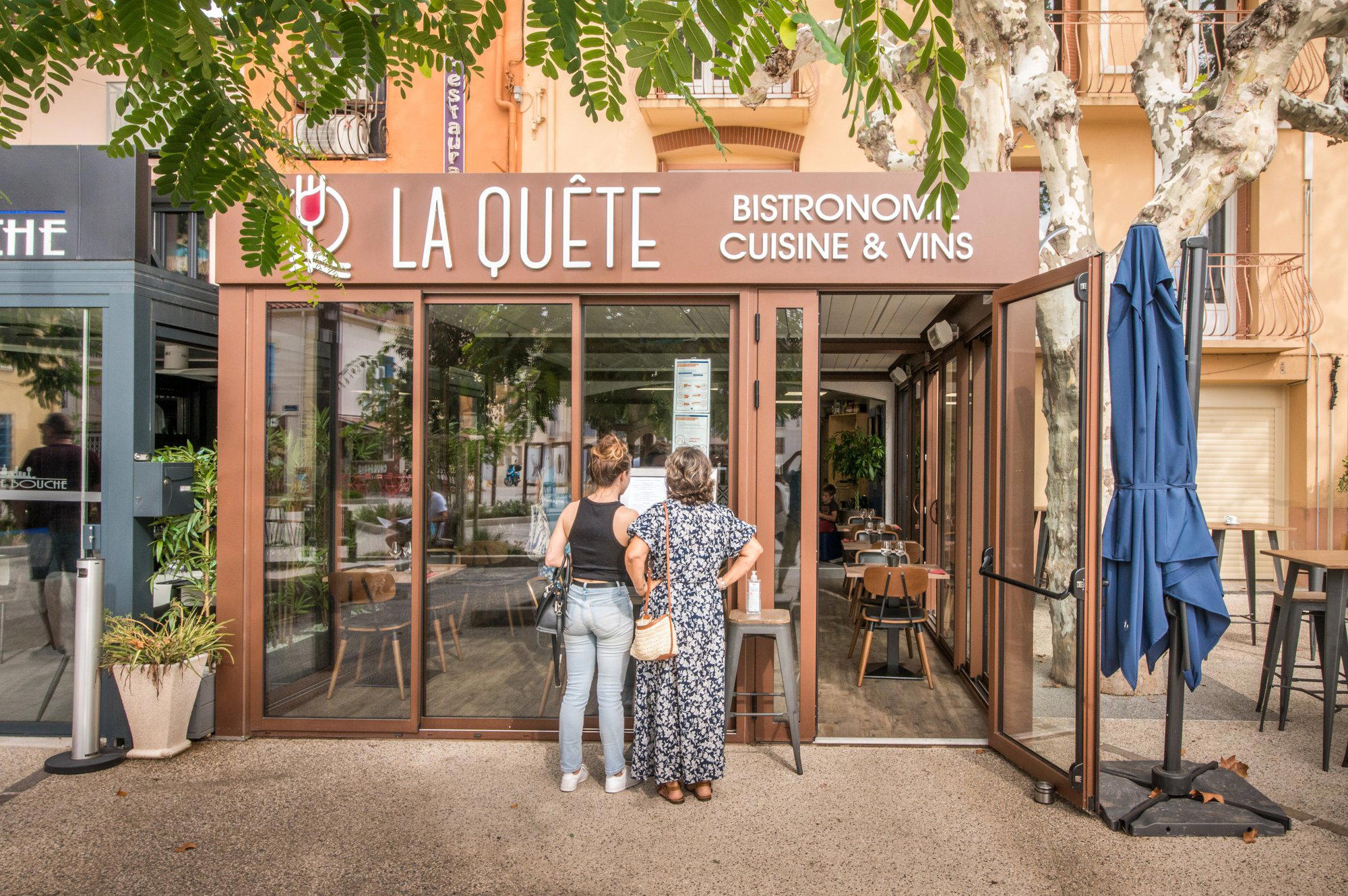
On Place Gambetta in the heart of Argelès-sur-Mer, La Quête occupies one of the town's most historically rooted addresses, where the rhythms of a proper French sit-down meal still govern the pace of an evening. The restaurant draws a local-leaning crowd that returns for the ritual as much as the food, placing it in a quieter, more deliberate tier of the town's dining scene.

Pearl is the En Primeur Club membership app — saves, bookings, and concierge access live there. Same editors, same standards.
- Address
- 9 Pl. Gambetta, 66700 Argelès-sur-Mer, France
- Phone
- +33468082319
- Hours
- Mon ClosedTue–Sat 12–1:30 PM, 7:30–9 PMSun Closed
- Directions
- Get directions
The menu
What to order
- Ceviche de dorade
- Magret de canard aux figues
- Risotto de fruits de mer
Place Gambetta and the Pace of a Southern French Evening
Argelès-sur-Mer sits at the southern edge of Roussillon, where the Pyrenees fold down toward the Mediterranean and the cooking carries traces of both Catalan tradition and French bistro habit. Place Gambetta, the town's central square, operates as the social anchor of old Argelès: market stalls in the morning, aperitif crowds in the early evening, and the unhurried dinner hour that defines small-town French life in the Languedoc-Roussillon corridor. La Quête, at number 9 on the square, positions itself within that civic rhythm rather than against it. The address alone signals something about the restaurant's orientation: this is a place that belongs to the town, not a destination engineered for seasonal tourist traffic.
That distinction matters more than it might appear. The dining scene in and around Argelès splits fairly cleanly between restaurants built around summer beach-season volume and those that maintain a year-round identity oriented toward residents and returning visitors. La Quête reads as the latter. For comparative reference on the broader local scene, Arbor & Sens and La Table de Valmy represent different positions within the same small market, while L'Abrazia and Menje E Caille offer further points of contrast across format and price tier. Our full Argelès-sur-Mer restaurants guide maps those distinctions in detail.
The Dining Ritual in a Southern French Square
In much of provincial France, the rituals of a sit-down meal carry as much meaning as the food itself. The sequence matters: an aperitif that acknowledges you've arrived, a starter that sets the register of the kitchen, a main that arrives without hurry, and a dessert that signals the kitchen has earned the table's time. This pacing is a cultural convention as much as a culinary one, and it's the kind of convention that restaurants on town squares in the south of France have traditionally upheld more faithfully than resort-facing establishments running two-hour turnaround covers.
La Quête operates within that tradition. The setting on Place Gambetta enforces a certain tempo by default: there is nowhere to rush to, and the square's architecture encourages lingering. The French provincial dining ritual depends on mutual consent between kitchen and table — neither pushing the other — and a central square in a town like Argelès, where the local population eats late by northern French standards, provides the social conditions for that contract to hold. Visitors accustomed to mealtimes structured around hotel check-in windows or ferry schedules should recalibrate expectations before sitting down.
This approach to pacing places La Quête in a recognizable lineage of southern French restaurants that treat the meal as an event with a beginning, middle, and end rather than a service transaction. The broader French tradition of this kind of deliberate dining has its most celebrated expressions at establishments like Bras in Laguiole and Auberge du Vieux Puits in Fontjoncouse, the latter practically a neighbour in regional terms, less than an hour inland through the Corbières. Those are three-Michelin-star operations with international reputations; La Quête operates at a different scale entirely. But the underlying cultural logic, that a meal in the south of France deserves time and attention, runs through the same tradition.
The Roussillon Context: Where Catalan Cooking Meets French Form
Argelès-sur-Mer sits in the Pyrénées-Orientales département, where the cooking vocabulary draws from both sides of a border that culinary tradition has never treated as particularly fixed. Catalan ingredients and flavour logic, anchovy, olive oil, piment d'Espelette in its Basque cousin form further north, but here more often local varietals, slow-cooked meat preparations, and the region's distinctive fruit and vegetable production, operate beneath a French service structure and menu architecture. This is not fusion in any contrived sense; it's a regional cuisine that has absorbed geographic reality over centuries.
Restaurants in this part of Roussillon that take the local tradition seriously tend to work with producers from the immediate hinterland: market gardens in the Vallespir, fishing boats out of Collioure and Banyuls-sur-Mer, the wine appellations of Banyuls and Collioure just a few kilometres south along the coast.
For context on how French cooking at the formal end of the spectrum handles regional identity, the Michelin-starred examples worth knowing in the south include Mirazur in Menton, which has built an international reputation on Mediterranean-coastal produce logic, and AM par Alexandre Mazzia in Marseille, whose approach to southern French ingredients has attracted consistent recognition. Further afield, the formal French tradition finds its most documented expressions at institutions like Auberge de l'Ill in Illhaeusern, Troisgros in Ouches, Flocons de Sel in Megève, Alléno Paris au Pavillon Ledoyen, Paul Bocuse in Collonges-au-Mont-d'Or, Assiette Champenoise in Reims, and Au Crocodile in Strasbourg. Those are reference points for the tradition La Quête inhabits at a local, non-starred scale. For international comparison of how French culinary discipline travels, Le Bernardin in New York City and Atomix in New York City show how disciplined tasting formats at opposite ends of the cultural spectrum handle pacing and ritual.
Planning a Visit
La Quête is located at 9 Place Gambetta in central Argelès-sur-Mer, walkable from the old town and accessible from the beach resort area via a short drive or taxi. The town is served by the Argelès-sur-Mer train station on the Perpignan–Cerbère line, making it reachable from Perpignan in under thirty minutes without a car. As with most restaurants on French town squares, summer evenings bring heavier foot traffic to the area, and demand on the square itself peaks between July and mid-August. Booking ahead during those months is advisable.
Frequently asked questions
Where do I go for La Quête?
La Quête is located at 9 Pl. Gambetta, 66700 Argelès-sur-Mer, France, Argeles Sur Mer.
Is La Quête suitable for a meal that captures the local Roussillon food culture rather than generic tourist fare?
La Quête sits on Place Gambetta in the old town of Argelès-sur-Mer, a square that functions as the social anchor of the neighbourhood rather than its resort fringe. Argelès-sur-Mer falls within the Pyrénées-Orientales, where the cooking tradition draws from both Catalan and southern French sources, giving restaurants in this part of Roussillon a distinct regional character. For cuisine that reflects the area's cross-border food culture, the old town addresses tend to be more grounded in that tradition than spots oriented toward beach tourism.
What's the must-try dish at La Quête?
What the restaurant's position on Place Gambetta in Argelès-sur-Mer does suggest is a kitchen working within the Roussillon tradition, where Catalan influences and southern French technique overlap. Checking directly with the restaurant before your visit will give you the most accurate picture of what the kitchen is focused on that season.
Do they take walk-ins at La Quête?
Argelès-sur-Mer runs on a sharp seasonal rhythm, and restaurants on Place Gambetta tend to fill quickly during summer months when the resort population surges. Contacting the restaurant in advance is the safer approach, particularly between June and August.
Cuisine Lens
Comparable venues nearby, for context on price, style, and recognition.
| Venue | Cuisine | Price | Awards | Notes |
|---|---|---|---|---|
| La QuêteThis venue — the venue you are viewing | Modern French Bistro | $20–30 | Not listed | Not listed |
| Menje E Caille | French Mediterranean Seafood | $30–50 | Not listed | Le Racou |
| Le Bistrot à la Mer | French Mediterranean Bistro | $50–100 | Michelin Plate | Argelès-sur-Mer |
| La Table de Valmy | Mediterranean Fusion with Iberian Influences | $50–100 | Not listed | Argelès-sur-Mer |
| Le Relais de la Massane | French Regional Bistro | $30–50 | Michelin Plate | centre ville |
| L'Abrazia | French Grillades & Rôtisserie | Not listed | Not listed | Argelès-sur-Mer |
Continue exploring
More in Argelès-sur-Mer
Restaurants in Argelès-sur-Mer
Browse all →
Bars in Argelès-sur-Mer
Browse all →
Hotels in Argelès-sur-Mer
Browse all →

Details
- Cozy
- Elegant
- Classic
- Date Night
- Casual Hangout
- Open Kitchen
- Terrace
- Extensive Wine List
- Local Sourcing
- A La Carte
- Vegetarian Friendly
Current opening hours
- Monday
- Closed
- Tuesday
- 12–1:30 PM, 7:30–9 PM
- Wednesday
- 12–1:30 PM, 7:30–9 PM
- Thursday
- 12–1:30 PM, 7:30–9 PM
- Friday
- 12–1:30 PM, 7:30–9 PM
- Saturday
- 12–1:30 PM, 7:30–9 PM
- Sunday
- Closed
Hours can change for holidays and private events. Last verified .
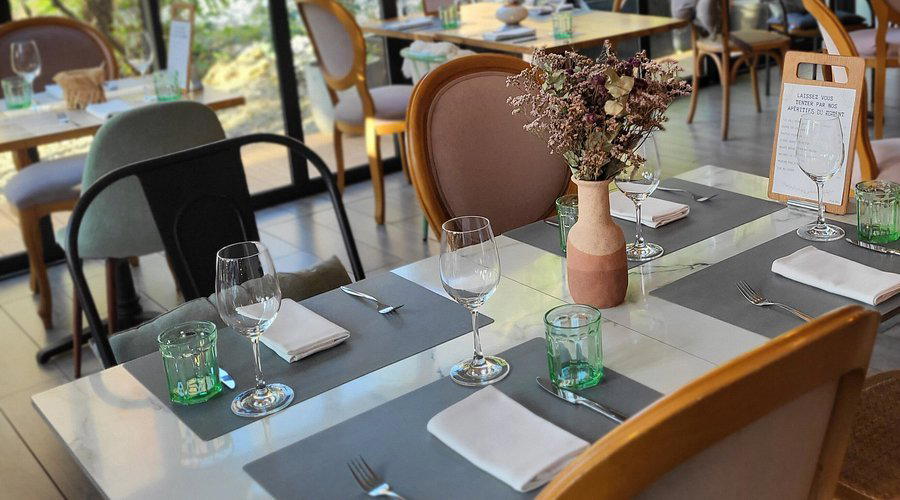
Warm and welcoming bistro ambiance with an open kitchen, good humor, and a pleasant terrace.