La Mercerie



Michelin Plate
Our verdict
Among SoHo's French bistros, La Mercerie occupies a specific register: Roman and Williams-designed dining rooms, a Michelin Plate recognition, and a menu rooted in classical technique. Chef Marie-Aude Rose's kitchen runs from consommé to crème brûlée with the seriousness of a Paris address, while the room itself draws a crowd that returns as much for the atmosphere as the food.

Pearl is the En Primeur Club membership app, where members save venues, book tables and use the concierge.
The menu
What to order
- Chicken consommé with foie gras
- Cod steamed in donabe with grain mustard
- Lobster and asparagus quiche
- Duck confit
- Profiteroles
- Tarte tatin
- Crème brûlée
The Room That Earns Its Reputation
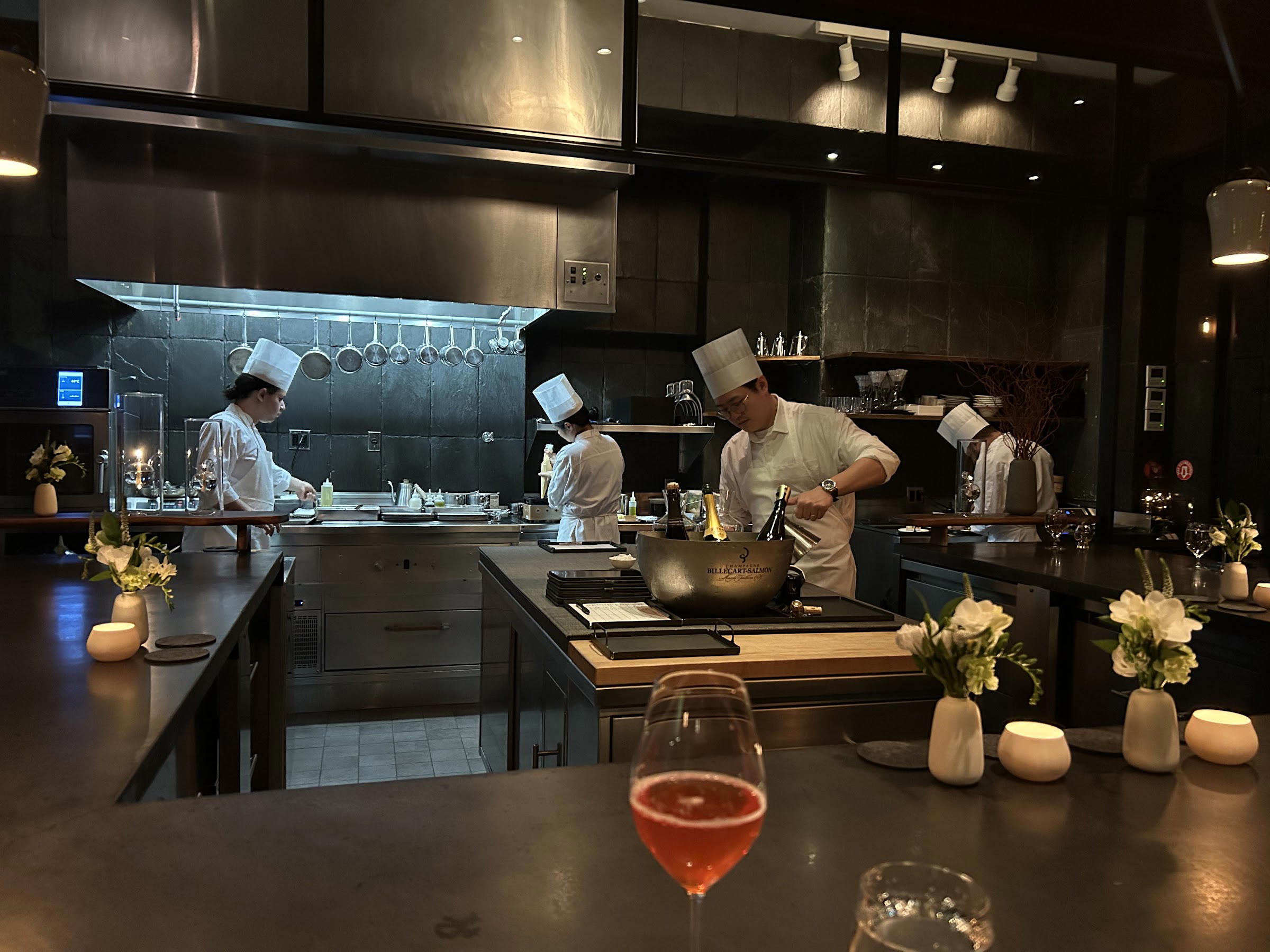
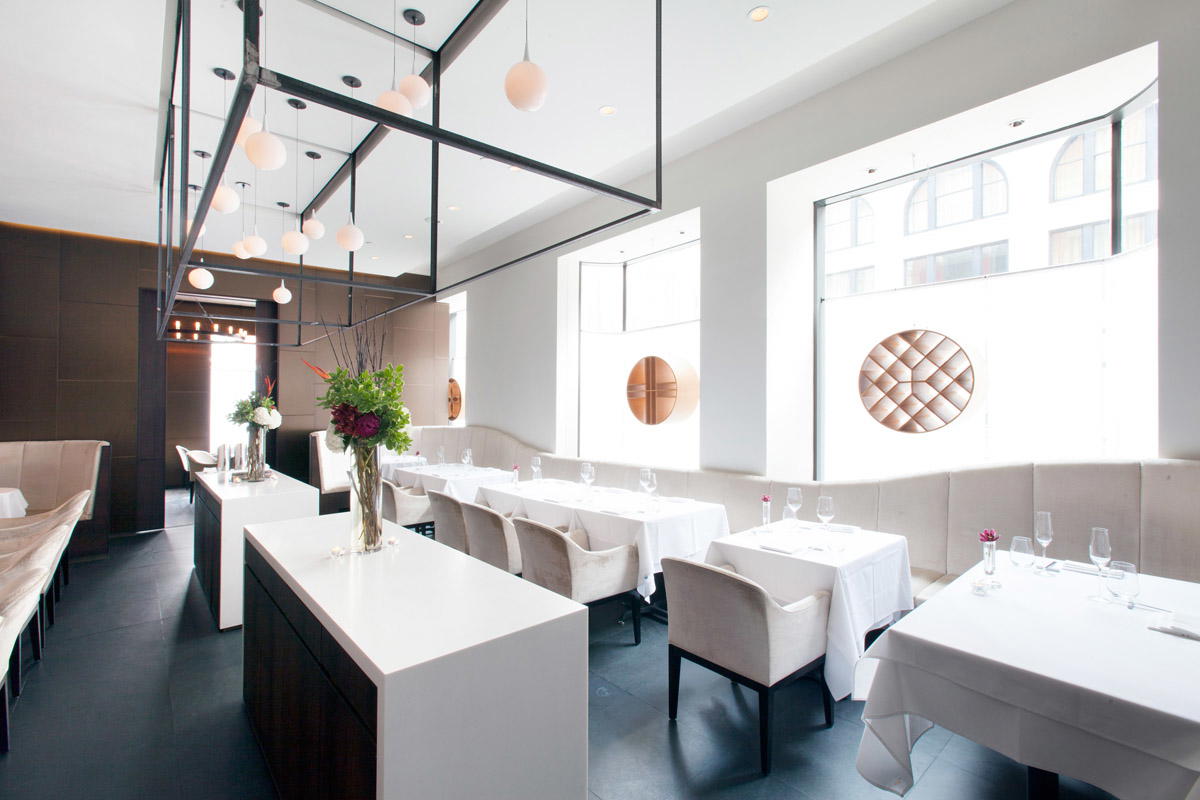
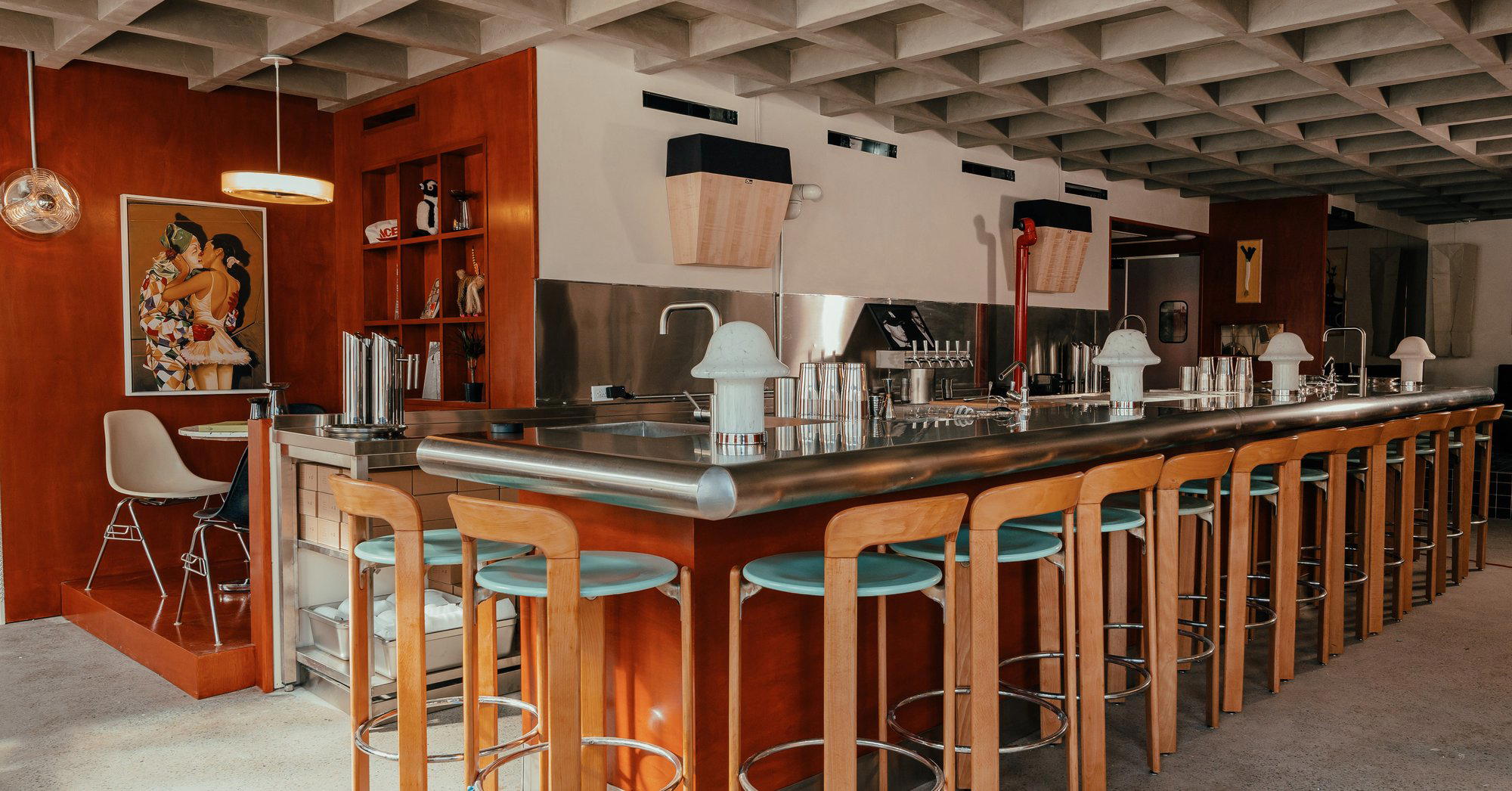
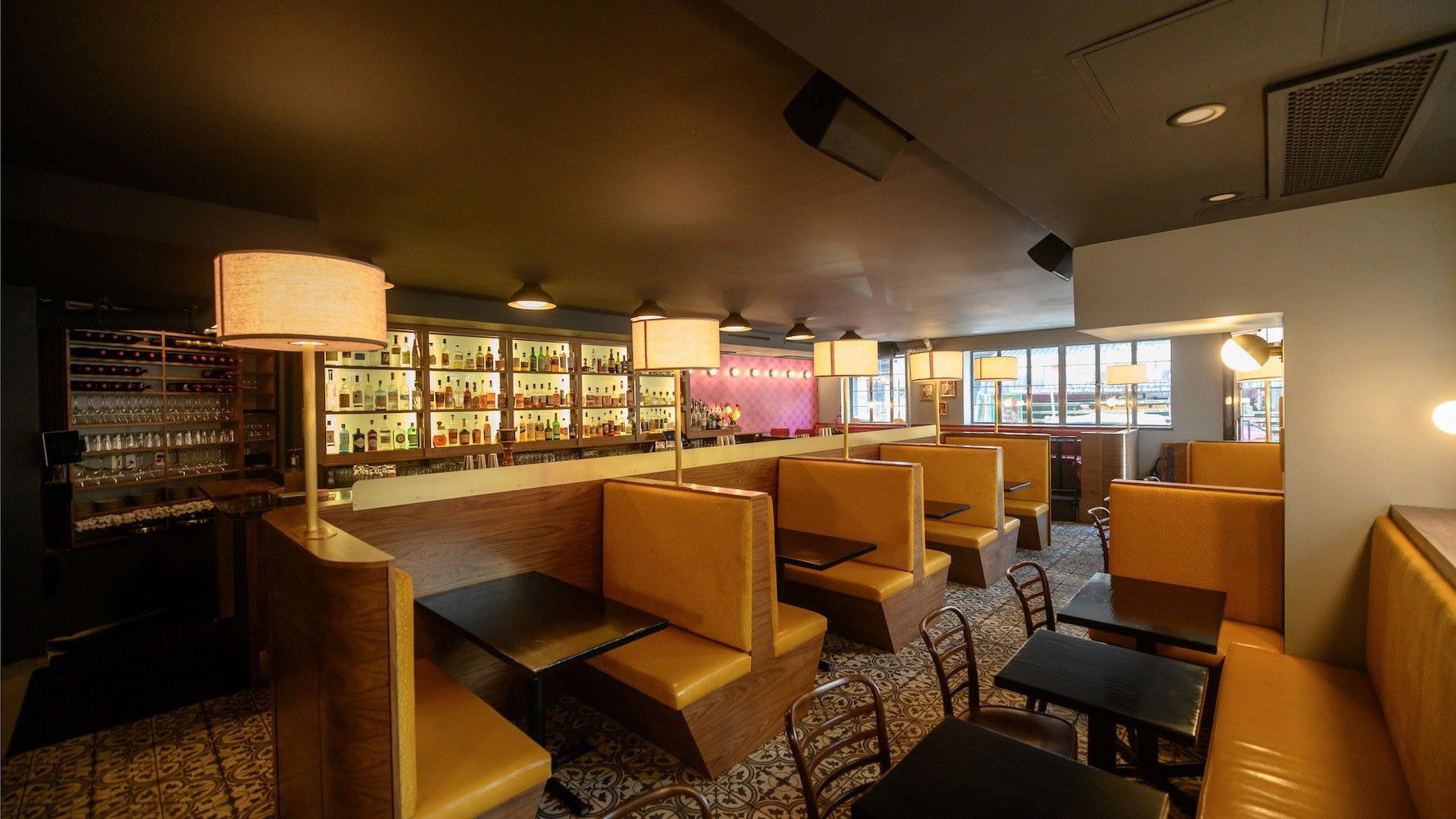
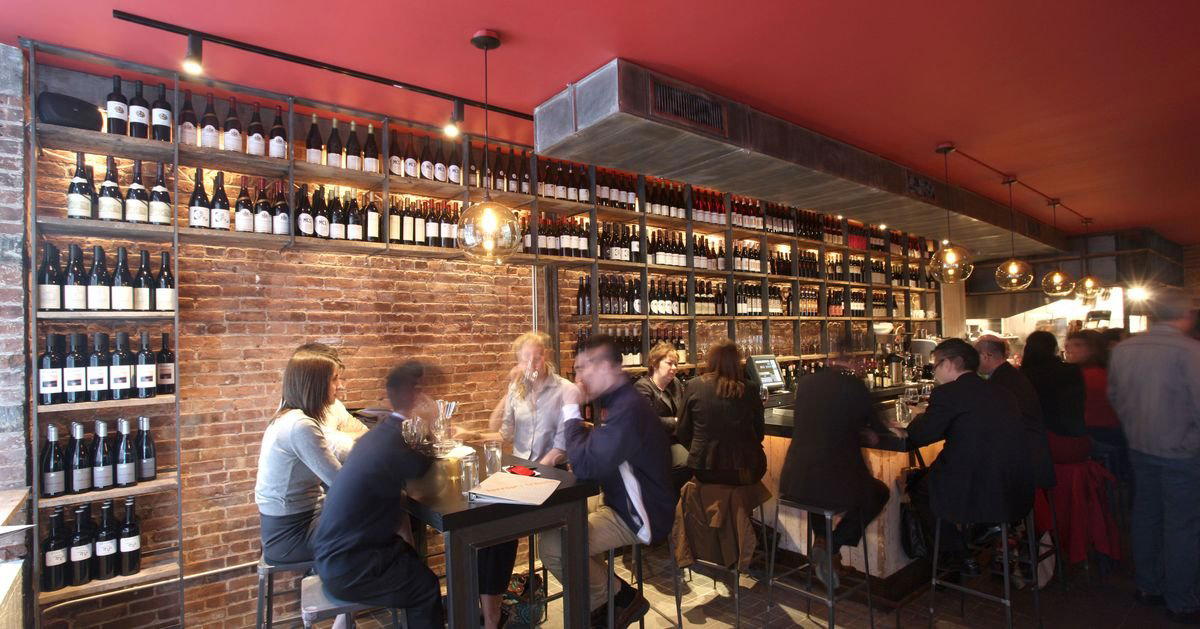
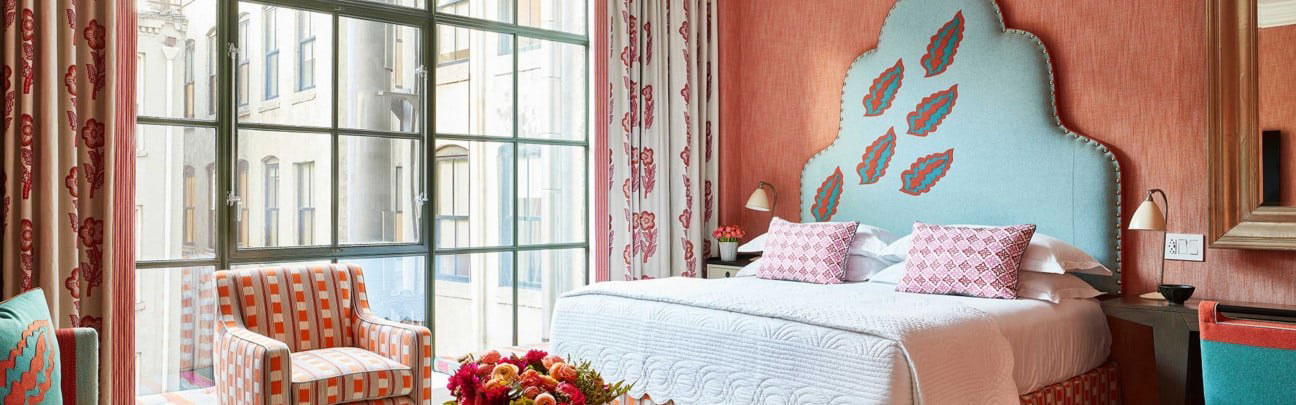
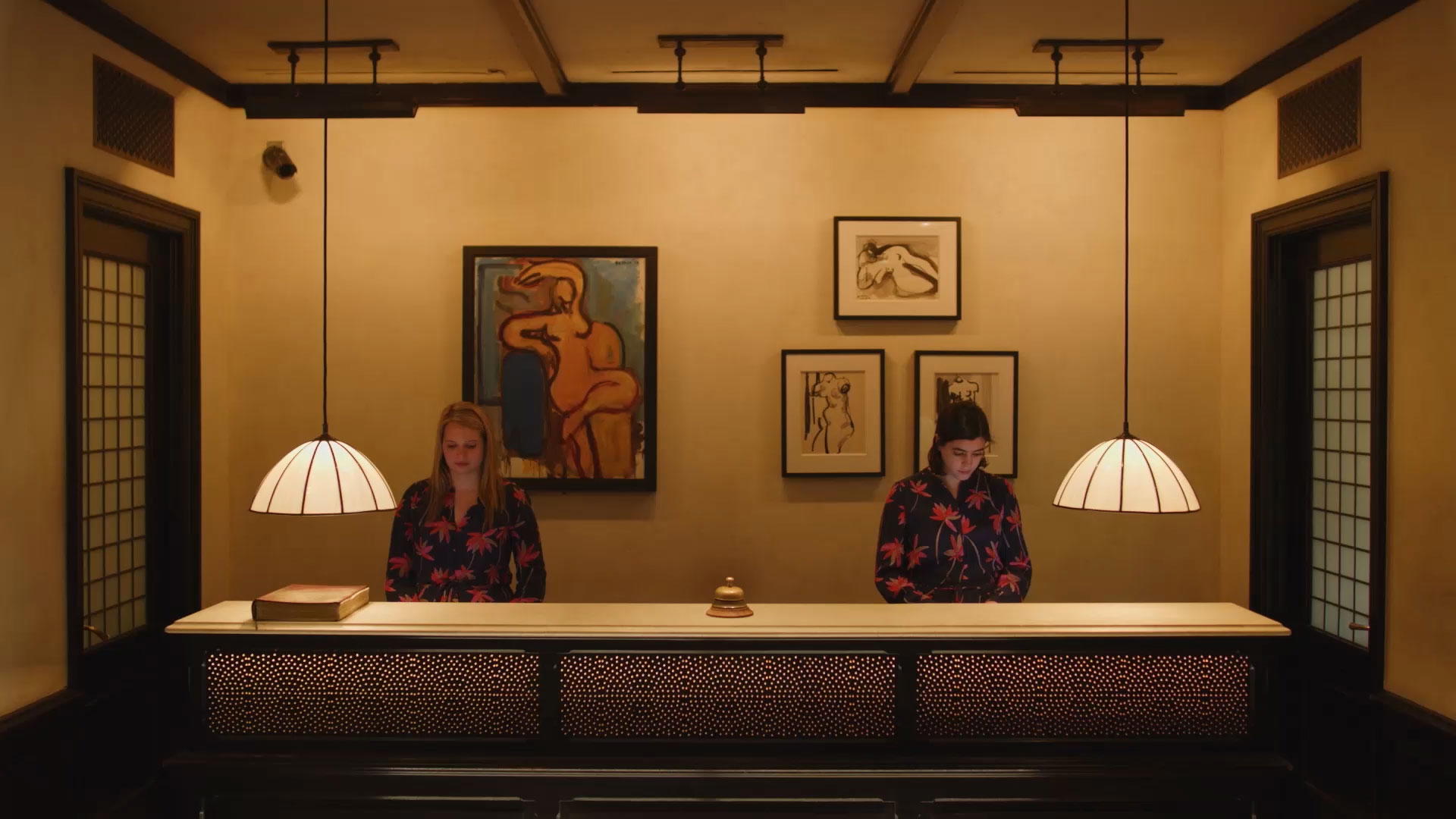
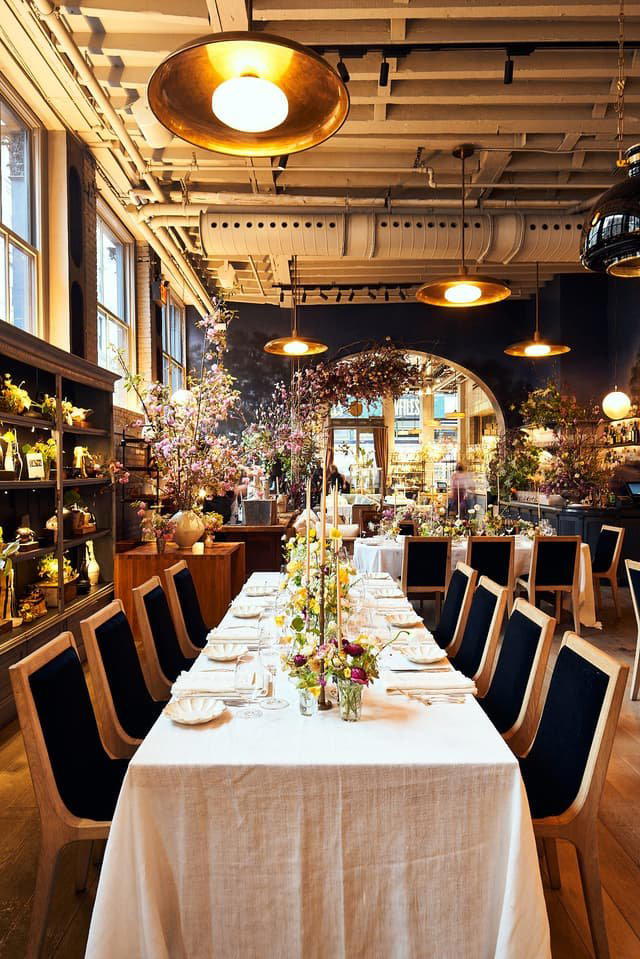
Certain dining rooms in New York do more work than the menu. The space was designed by Roman and Williams, the firm behind several of New York's most photographed interiors, and the result is a room that reads as a considered argument for a particular kind of French aesthetic: sage-green tiles lining the open kitchen, gleaming copper cookware overhead, small tables with fresh florals. At lunch, natural light falls across the room in a way that rewards the well-dressed regulars who have been coming here long enough to know which table to request. This is not a room that whispers its intentions. It states them clearly, and the crowd that fills it is largely composed of people who agree.
SoHo's French dining options occupy a range of registers. At the formal end, the neighbourhood's proximity to Tribeca means serious French kitchens are within a short walk. At the casual end, a dozen neighbourhood spots serve steak frites to tourists and office lunchers without much ambition. La Mercerie positions itself between those poles, in the territory once held by places like Raoul's, where the room, the crowd, and the food all matter equally, and where regulars build a relationship with the address rather than treating it as a destination for a single occasion.
What the Menu Is Actually Doing
French bistro cooking in New York has a credibility problem. Too many addresses invoke the category as shorthand for a certain visual identity, butter-heavy sauces and zinc bar tops, without the kitchen discipline to back it up. La Mercerie, under Chef Marie-Aude Rose, approaches the format differently. The kitchen draws on classical French technique applied to a menu that runs across the full arc of a meal, from consommé to tarte tatin, without the self-conscious nostalgia that can make French bistro cooking feel like a museum exhibit.
The Michelin Plate recognition (2024) signals a kitchen operating at a level of technical consistency that separates it from the neighbourhood's more casual French addresses. Michelin's Plate designation does not carry the star weight of the three-starred rooms at Le Bernardin, Eleven Madison Park, or Masa, but it marks a kitchen that executes its stated program reliably. For a bistro format, reliability is the metric that matters most. The promise of a good chicken consommé every time, a crème brûlée with the right crack and temperature, profiteroles served with the right ratio of choux to cream, is more valuable to the regular than a single spectacular meal.
New York Magazine's inclusion of La Mercerie in its list of the 43 Best Restaurants in New York (2025) provides the second layer of editorial positioning. That range of recognition suggests the kitchen is doing something that reads across critical registers.
The Regulars' Calculus
The editorial angle on La Mercerie is most honestly approached from the perspective of repetition.enprimeurclub.com/restaurants/atomix">Atomix redefining what a high-end tasting meal means? The answer, at La Mercerie, is a combination of factors that only compound with repeat visits.
The room, first. Roman and Williams interiors age well, which is not always the case with design-forward spaces. The sage tiles and open kitchen that read as fresh on opening have settled into something that feels established rather than trendy. Regulars are not returning to a space that is still announcing itself; they are returning to a room that has found its register and stayed there. The Saturday and Sunday brunch service, running from 10 am to 3 pm before the dinner service begins at 5 pm, draws a different crowd than the weekday lunch, and both crowds have their own internal social logic. Knowing which service suits your rhythm is part of what separates the regular from the first-timer.
Menu's classical architecture also rewards familiarity. French bistro cooking at this level builds on a repertoire that does not rotate aggressively. Cod prepared in a donabe with grain mustard, leeks, and potatoes; foie gras in a chicken consommé; the rotation of classic desserts. These are not dishes designed to generate social media coverage through visual spectacle. They are dishes that taste better the third time you order them than the first, because you know what to look for. That quality, the cooking that rewards attention rather than novelty, is what the most loyal regulars at any serious bistro are actually paying for.
Where La Mercerie Sits in New York's French Ecosystem
Comparing La Mercerie to the three-starred French rooms in New York, Le Bernardin or Eleven Madison Park, is a category error. Those addresses are built around extended tasting experiences, formal service architecture, and price points that reflect a different kind of ambition. The more useful comparisons are the French bistros that have maintained editorial relevance across multiple years in a city that discards restaurant trends quickly, addresses like Bouchon Bistro in Napa, which occupies a similar position of classical French technique in a room with genuine design weight.
Internationally, the French bistro format that La Mercerie most closely references, a serious kitchen inside a beautiful room, drawing a crowd that treats the address as a social fixture rather than a special occasion destination, is the model that has sustained addresses like bistro simba in Tokyo. New York's version adds the SoHo social layer, the presence of the fashion and design adjacent crowd that gives the room its particular energy during the weekday lunch.
For readers building a mental map of New York's French options, La Mercerie occupies the space between neighbourhood comfort and genuine critical recognition. It is not the place to go for the kind of high-concept French cooking that defines rooms like The French Laundry or Alinea. It is the place to go when the question is where to have the right lunch in the right room, and to mean it enough to come back.
For the full range of New York dining, see our full New York City restaurants guide. For hotels, bars, wineries, and experiences across the city, EP Club maintains separate guides: hotels, bars, wineries, and experiences.
Planning Your Visit
La Mercerie operates Monday through Friday from 11:30 am to 10 pm, with a split service on Saturday and Sunday: brunch from 10 am to 3 pm, and dinner from 5 pm to 10 pm. The price range falls at the $$$$ tier, consistent with the room's positioning. Mon–Fri 11:30 am–10 pm; Sat–Sun brunch 10 am–3 pm, dinner 5–10 pm. Price range: $$$$. Michelin Plate 2024.
What Should I Eat at La Mercerie?
La Mercerie's menu follows classical French bistro architecture across the full arc of a meal. The chicken consommé with foie gras and the cod steamed in a donabe with grain mustard, leeks, and potatoes have drawn specific editorial attention from Michelin inspectors and New York Magazine critics. The dessert roster, running to profiteroles, tarte tatin, and crème brûlée, is the kind of programme that regulars return to for consistency rather than novelty. Chef Marie-Aude Rose's kitchen holds a Michelin Plate (2024) and a spot on New York Magazine's 43 Best Restaurants in New York (2025), both of which point toward a kitchen that executes its classical programme with discipline rather than improvisation. Order across the full menu rather than treating it as a single-course stop.
Frequently asked questions
What's the cuisine at La Mercerie?
Who is the chef at La Mercerie?
The chef associated with La Mercerie is Marie-Aude Rose.
What should I eat at La Mercerie?
The chicken consommé with foie gras and the cod steamed in a donabe with grain mustard, leeks, and potatoes are the dishes most referenced by critics, with Michelin noting the latter for both sophistication and richness. For dessert, the classic French programme includes profiteroles, tarte tatin, and crème brûlée. La Mercerie holds a Michelin Plate (2024), which situates it in the tier of restaurants where the food is the point, not just the setting.
What should I budget for a meal at La Mercerie?
Pricing at La Mercerie is listed as $$$$.
When is La Mercerie open?
Hours at La Mercerie: Hours: Monday 11:30 am–10 pm Tuesday 11:30 am–10 pm Wednesday 11:30 am–10 pm Thursday 11:30 am–10 pm Friday 11:30 am–10 pm Saturday 10 am–3 pm, 5–10 pm Sunday 10 am–3 pm, 5–10 pm.
The Quick Read
A quick snapshot of similar venues for side-by-side context.
| Venue | Cuisine | Price | Awards | Notes |
|---|---|---|---|---|
| La MercerieThis venue (the venue you are viewing) | Classic French Bistro | $50–100 | Michelin Plate | Not listed |
| Le Bernardin | French Seafood Fine Dining | $300–500 | 3 Michelin Stars · World's 50 Best #13 | French, Seafood |
| Atomix | Modern Korean Tasting Menu | $300–500 | 2 Michelin Stars · World's 50 Best #7 | Modern Korean, Korean |
| Masa | Seasonal Hokkaido Tempura Omakase | $150–200 | Tabelog 100 #34 | Sushi, Japanese |
| Per Se | French Fine Dining Tasting Menu | $300–500 | 3 Michelin Stars · World's 50 Best #40 | French, Contemporary |
| Eleven Madison Park | Contemporary Plant-Based Fine Dining | $300–500 | 3 Michelin Stars · World's 50 Best #4 | French, Vegan |
Recognition history
Dated appearances from independent guides and award organizations, with the underlying list record or original source where available.
Michelin Plate
Michelin
Opinionated About Dining Casual in North America Ranked #150
Opinionated About Dining
New York Magazine The 43 Best Restaurants in New York
New York Magazine
Full recognition history (4 entries)
Michelin Plate
Michelin