Le Gigot

On a narrow Village block that has housed French bistros longer than most New York restaurants have existed, Le Gigot delivers classic bistro fare with the kind of warmth that large French addresses rarely sustain. The petit bouillabaisse carries a North African accent, the cassoulet runs Toulousaine-traditional, and the apple tarte tatin closes the meal on a properly calibrated note..
Pearl is the En Primeur Club membership app — saves, bookings, and concierge access live there. Same editors, same standards.
- Address
- 18 Cornelia St #1, New York, NY 10014
- Phone
- (212) 627-3737
- Website
- legigotrestaurant.com
- Directions
- Get directions
 Saves & bookings on Pearl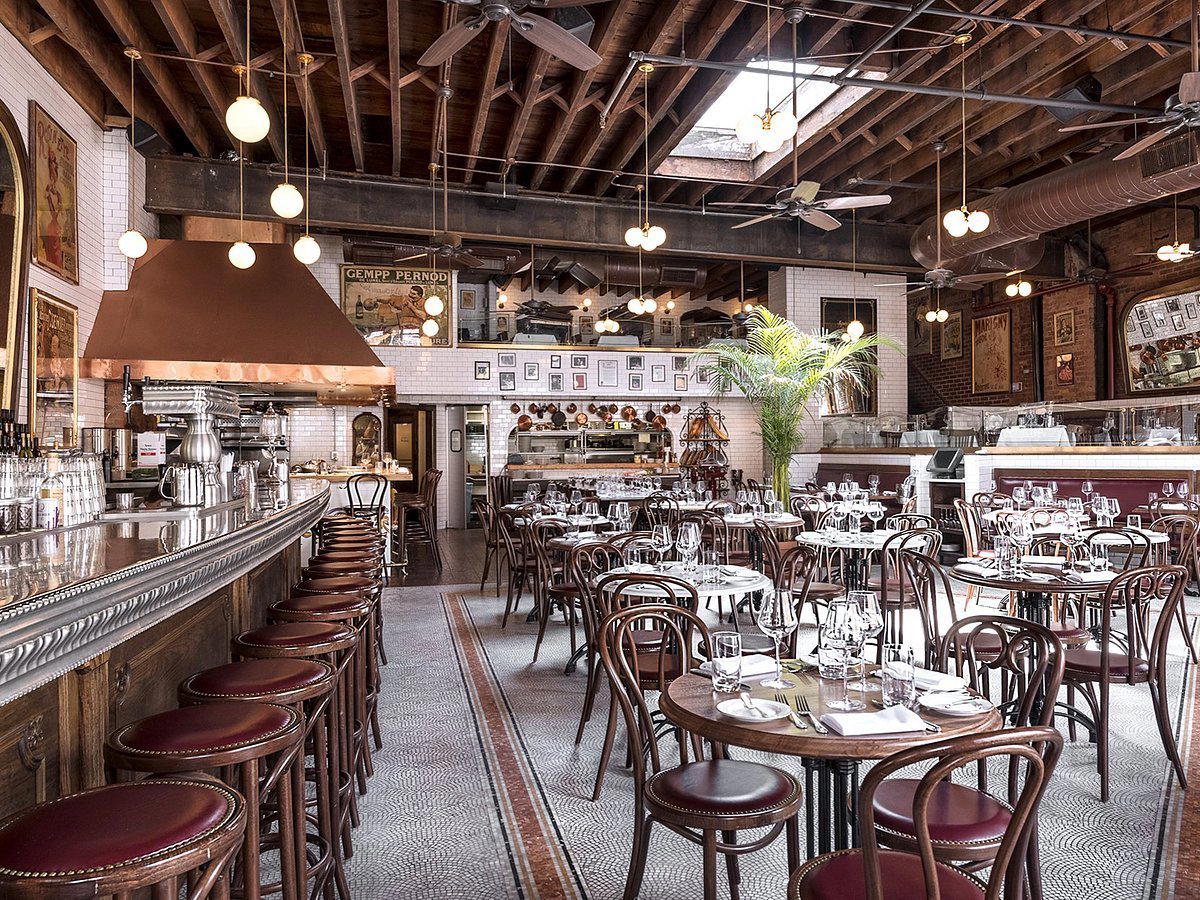
Cornelia Street and the Case for the Small French Bistro
There is a particular kind of French restaurant that New York has always struggled to sustain at scale: small, without theatrical ambition, built around the classics rather than around a chef's personal mythology. The city's most-discussed French addresses, from Daniel on the Upper East Side to Le Coucou in SoHo, operate in a higher-pressure register, where prix-fixe architecture, formal service hierarchies, and tasting-menu pricing define the experience. At the other end of the spectrum sit the neighbourhood bistros, and Cornelia Street in the West Village has long been one of the few blocks in Manhattan where that lower-pressure model has held. Le Gigot, at number 18, is the clearest example of why the format endures.
The physical approach matters here. Cornelia is a short, residential side street running off Bleecker, narrow enough that the buildings close in overhead and foot traffic thins to a pace that the rest of the Village rarely allows. Entering Le Gigot, the room reads immediately as a translation project: red banquettes, close-set tables, the low amber light that Parisian bistros deploy to make conversation feel more private than it is. The effect is deliberate and executed without irony..
Where This Sits in the New York French Hierarchy
New York's French restaurant spectrum in 2024 runs from the $$$$-tier formality of Daniel, Le Coucou, and Per Se down through a middle tier of bistro-brasserie formats, many of which have struggled to hold their identity as rents and labor costs pushed menus toward more profitable contemporary directions. The $$$ bracket, where Le Gigot sits, is increasingly occupied by venues that call themselves bistros but operate more like casual modern European restaurants with French-adjacent menus. Le Gigot runs against that drift. The menu stays anchored in regional French tradition, cassoulet and bouillabaisse and tarte tatin rather than duck confit reimagined as a contemporary small plate.
For comparison, Benoit on West 55th represents a more corporate version of the same tradition, operating under the Ducasse umbrella with corresponding price architecture. Café Boulud occupies a transitional register between brasserie and fine dining. Chez Fifi works a more recent and tighter iteration of the neighbourhood bistro format. The restaurant's position in this field is that of a long-standing independent with a track record of consistency, which in the current New York restaurant environment is a more meaningful credential than it might initially appear.
The Menu as Argument
The bistro canon is a usefully narrow frame. Its dishes, bouillabaisse, cassoulet, tarte tatin, steak frites, are so codified that the cooking is evaluated almost entirely on execution rather than invention. This is a demanding standard: there is no novelty to distract from technical shortcomings, and diners who know the reference points will notice immediately when a cassoulet leans too dry or a tarte tatin has been held too long.
At the restaurant, the bouillabaisse starts with saffron fish broth and carries a North African accent through what reads as harissa or a red-pepper rouille variation, adding a secondary register to the traditional Provençal base without displacing it. The cassoulet follows a Toulousaine template: duck confit, bacon, cannellini beans, and pork, cooked to the point where the fat from the duck has fully integrated into the bean layer. Apple tarte tatin, served warm with crème fraîche and blueberries, closes in the classical mode. These are not experimental departures from the tradition; they are the tradition, executed with care.
The service tone reinforces this. Reviews consistently note warmth that exceeds what the price point typically delivers, a characteristic that French bistros in Paris maintain more easily than their New York equivalents, where front-of-house costs and turnover pressure frequently produce more transactional interactions. At the restaurant, the warmth appears to be structural rather than incidental.
The Wine Question at a Neighbourhood Bistro
The editorial angle most often applied to serious French restaurants in New York focuses on cellar depth: how many bottles, how far back the vintages run, whether there is a dedicated sommelier shaping a program with genuine curation. That conversation applies naturally to addresses like Le Coucou, where the wine program is an explicit part of the value proposition, or to destination-level French houses such as Hotel de Ville Crissier in Switzerland or Sézanne in Tokyo, where French wine culture is a central component of the experience regardless of geography.
At a neighbourhood bistro in the $$$ tier, the wine question shifts. The expectation is not a deep cellar with allocation bottles; it is a list that pairs honestly with cassoulet and bouillabaisse, priced to support multiple glasses per sitting rather than a single prestige pour. French regional wines, particularly from the Rhône and Languedoc, serve the food here better than Burgundy grand cru, and a well-managed bistro list typically leans on those regions without requiring a sommelier-led program to justify it.
How Le Gigot Compares to the American Fine Dining Context
It is worth placing the restaurant in a wider American frame. The technically rigorous end of French-influenced cooking in the United States runs through addresses like The French Laundry in Napa, Alinea in Chicago, and Providence in Los Angeles, where the format and ambition operate at a different altitude entirely. Lazy Bear in San Francisco and Single Thread Farm in Healdsburg represent the hyper-seasonal, produce-driven branch of the same tradition. Emeril's in New Orleans holds a different kind of French-adjacent lineage rooted in Louisiana Creole technique.
The restaurant operates in none of these registers. Its value is not technical ambition or conceptual novelty; it is the reliable delivery of a specific and well-understood dining format that New York's restaurant economics make harder to sustain with each passing year. The West Village location, the price tier, and the consistency of the cooking position it as the kind of address that fills on a Tuesday in November not because of a recent review, but because its regulars have a standing reason to return.
Planning a Visit
The restaurant is located at 18 Cornelia Street in the West Village, Manhattan. The $$$ price range positions it as a mid-spend evening out rather than a special-occasion address, though the quality of the cassoulet and the warmth of the service make it viable for both. Cornelia Street has limited foot traffic compared to Bleecker or Hudson, which means the walk from the subway involves a short detour but also that the block itself feels less pressured than the surrounding Village streets.
What do regulars order at Le Gigot?
The petit bouillabaisse draws attention for its saffron fish broth with a North African red-pepper accent, separating it from standard versions around the city. The cassoulet follows the Toulousaine line: duck confit, bacon, cannellini beans, and pork. Apple tarte tatin served warm with crème fraîche and fresh blueberries closes the meal for most regulars. These dishes appear consistently in reviews as the clearest evidence of why the kitchen's commitment to the bistro tradition rather than contemporary reinvention remains the restaurant's defining characteristic.
Awards and Standing
Comparable venues nearby, for context on price, style, and recognition.
| Venue | Cuisine | Price | Awards | Notes |
|---|---|---|---|---|
| Le GigotThis venue — the venue you are viewing | Provençal French Bistro | $$$ | Michelin Plate | Not listed |
| Cluny Café | French Bistro | $$$ | Not listed | West Village |
| L’abeille à Côté | French with Japanese influences | $$$ | Michelin Plate | Tribeca-Civic Center |
| Bibliotheque | French Wine Bar & Café | $$$ | Not listed | SoHo-Little Italy-Hudson Square |
| French Louie | Modern French-American Bistro | $$$ | Not listed | Downtown Brooklyn-DUMBO-Boerum Hill |
| Match 65 | French Brasserie | $$$ | Not listed | Upper East Side-Carnegie Hill |
Recognition history
Dated appearances from independent guides and award organizations, with the underlying list record or original source where available.
Michelin Plate
Michelin
Continue exploring
More in New York City
Restaurants in New York City
Browse all →
Bars in New York City
Browse all →
Hotels in New York City
Browse all →






At a Glance
- Romantic
- Cozy
- Elegant
- Intimate
- Classic
- Date Night
- Special Occasion
- Standalone
- Extensive Wine List
- Local Sourcing
Current opening hours
- Monday
- Closed
- Tuesday
- Closed
- Wednesday
- 5–10 PM
- Thursday
- 5–10 PM
- Friday
- 5–10:30 PM
- Saturday
- 12–3 PM, 5–10 PM
- Sunday
- 12–3 PM, 5–8:30 PM
Hours can change for holidays and private events. Last verified .
Cozy and romantic with dim lighting, rustic decor, nostalgic Parisian bistro feel, and warm welcoming atmosphere.