La Mar Cocina Peruana
La Mar Cocina Peruana brings the ceviche-forward cooking tradition of Lima to the San Francisco waterfront, occupying a prime Embarcadero address at Pier 1½. The restaurant sits in a mid-to-upper price tier that draws a loyal local following rather than a purely tourist crowd, with a menu anchored in Peruvian coastal technique. For San Francisco diners seeking an alternative to the city's Euro-centric fine dining circuit, it represents a confident, sustained argument for Lima as a serious culinary reference point.
 Discover on Pearl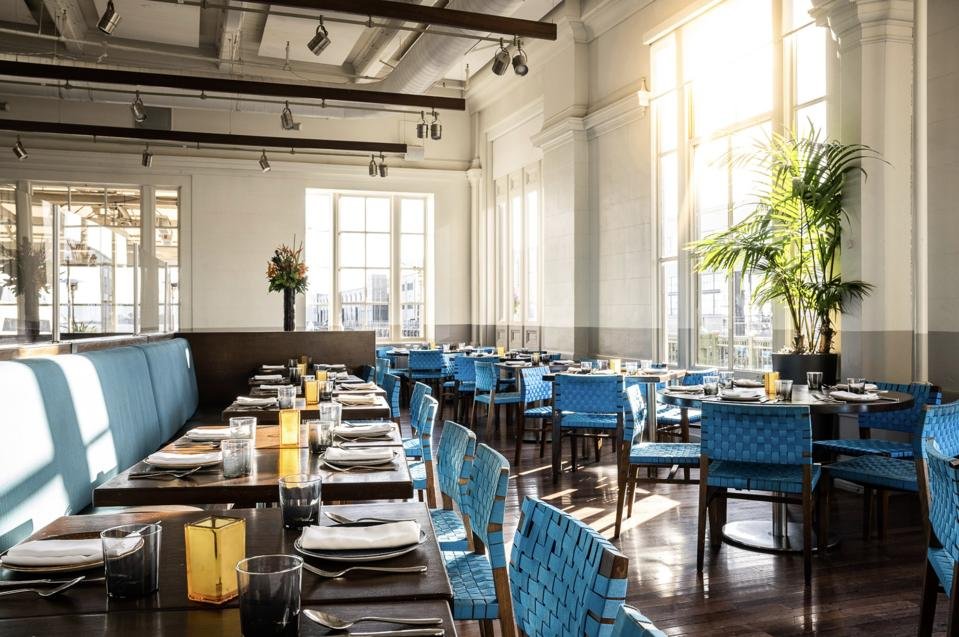
The Embarcadero as Context: Why Location Shapes the Meal
There is a particular kind of restaurant that only makes sense against water. The Embarcadero's Pier 1½ is one of San Francisco's more exposed dining addresses — bay light, ferry traffic, the occasional fog horn working its way through the glass. La Mar Cocina Peruana occupies that position deliberately, and the setting does real editorial work: ceviche and tiradito, the two pillars of Lima's coastal cooking tradition, arrive with a geographic logic they might lack in a landlocked dining room. The Pacific runs through both cuisines, one literally, one by proximity. Sitting at the waterfront with a leche de tigre in hand, the connection is less metaphorical than it might sound.
San Francisco's premium dining circuit has long been weighted toward European technique and Californian produce — the four-star tier represented by operations like Atelier Crenn, Benu, and Quince shares a common vocabulary of refinement that owes more to France and Japan than to Latin America. La Mar sits outside that conversation by design. Its reference points are Lima rather than Lyon, its acidity comes from ají amarillo rather than champagne vinegar, and its texture register , raw fish cured in citrus, rice cooked to yield rather than resistance , is distinctly Peruvian coastal rather than Californian farm-to-table.
The shortlist, unlocked.
Hard-to-book tables, cellar releases, and concierge-planned trips.
Get Exclusive Access →What Keeps the Regulars Coming Back
The restaurants that develop genuine repeat clientele in a city like San Francisco tend to share a particular quality: they do not require explanation on the second visit. The menu's internal logic is apparent, the ordering rhythm becomes familiar, and the experience stops being exploratory and becomes habitual. La Mar has built exactly that kind of following in its Embarcadero location. Peruvian cooking at this level of execution has a layered complexity , the interplay of acid, heat, and richness in a well-made anticucho, the structural precision of a properly cold-cured tiradito , that rewards repetition rather than exhausting it.
Regulars at this kind of restaurant rarely come for novelty. They come because the kitchen executes a known repertoire at a consistent level. In San Francisco's dining culture, which has produced tasting-menu destinations like Lazy Bear and Saison on one end of the formality spectrum, La Mar occupies a different register entirely: it is a restaurant where you can order to your appetite rather than to a predetermined sequence, return the following month with different companions, and find the same kitchen doing the same things well. That consistency is rarer than it looks.
The ceviche itself functions as the anchor. In Lima, ceviche is not a single dish but a category , fish-forward, citrus-cured preparations that vary by protein, pepper, and the precise balance of the leche de tigre. A kitchen that takes that tradition seriously produces multiple variants rather than a single house version. For returning guests, working through those variants across visits is its own kind of program, less structured than a tasting menu but no less intentional.
Peruvian Cooking and the San Francisco Context
Peru's culinary influence has spread further and faster than almost any other South American tradition over the past two decades. Nikkei cooking, the Japanese-Peruvian fusion developed by the large Japanese immigrant community in Lima, has generated serious restaurants from London to Tokyo. The broader Peruvian pantry , ají peppers in their many forms, huacatay, purple corn, the country's extraordinary potato diversity , has given internationally trained chefs a new set of technical and flavor references. Operations like Le Bernardin in New York City have long demonstrated that rigorous sourcing and technical precision applied to seafood can produce some of the most serious cooking in any city; La Mar makes a parallel argument from a different tradition entirely.
San Francisco is a particularly interesting city for Peruvian cooking to take root. The Bay Area has one of the largest Peruvian diaspora communities on the West Coast, which creates a baseline of informed diners who know what a properly made lomo saltado should taste like and will not accept a diluted version. That audience pressure tends to keep kitchens honest in a way that purely tourist-facing restaurants often are not. When locals who grew up eating the food keep returning, the kitchen cannot coast on novelty or the forgiveness extended to visitors encountering a cuisine for the first time.
Across the broader American dining circuit, few restaurants have anchored the Peruvian tradition as consistently in major cities. The contrast with destinations like Alinea in Chicago, Providence in Los Angeles, or Addison in San Diego is instructive: those rooms are built around formal progression and Euro-American fine dining vocabulary. La Mar is built around a different proposition , communal ordering, seafood-forward abundance, and a culinary tradition that treats the sea as the primary pantry.
The Waterfront Address and What It Demands
Pier 1½ is not a neighborhood in the conventional sense. The Embarcadero draws a mixed crowd of office workers, tourists, and San Francisco residents who treat the waterfront as a destination rather than a local strip. For a restaurant at this address, the challenge is serving all three audiences without becoming purely transactional on one end or too formal on the other. The restaurants that manage this well tend to have a strong enough culinary identity to self-select their clientele. A Peruvian kitchen doing serious ceviche work is not trying to be everything; it is trying to be one thing with conviction.
Planning a visit from outside the city is direct in logistical terms. The Embarcadero is accessible by BART and the F Market streetcar, and Pier 1½ sits within walking distance of the Ferry Building, which makes it a natural anchor for a waterfront afternoon. For travelers already exploring San Francisco's broader dining circuit, our full San Francisco restaurants guide maps the city's dining tiers from the Michelin-heavy upper bracket down to the neighborhood operations that define the city's day-to-day eating culture. La Mar sits in the mid-to-upper range of that guide, priced above casual but below the tasting-menu tier occupied by The French Laundry in Napa or Single Thread Farm in Healdsburg.
For diners whose frame of reference is the formal tasting-menu circuit , whether that's Blue Hill at Stone Barns, The Inn at Little Washington, Bacchanalia in Atlanta, Atomix in New York City, or 8½ Otto e Mezzo Bombana in Hong Kong , La Mar is the counterargument: a kitchen operating without the structure of a fixed menu or the theater of a chef's counter, making a case that communal, à la carte Peruvian cooking deserves serious critical attention on its own terms. And in San Francisco, at least, it has earned that attention by doing the same things well for long enough that the regulars stopped needing to explain why they keep coming back.
FAQs: La Mar Cocina Peruana
- What dish is La Mar Cocina Peruana famous for?
- La Mar's reputation is anchored in its ceviche program. Peruvian ceviche, in its proper form, is citrus-cured raw fish finished in leche de tigre, the acid-forward marinade that defines Lima's coastal cooking tradition. A kitchen serious about this dish produces multiple variants rather than a single house version, and La Mar's position on the San Francisco waterfront gives the format geographic coherence. The tiradito, a related preparation with Japanese-Peruvian Nikkei roots, rounds out the raw fish category.
- Is La Mar Cocina Peruana reservation-only?
- La Mar's waterfront address at Pier 1½ on the Embarcadero draws a combination of local regulars and visitors to San Francisco, which means demand can be high on evenings and weekends. Booking ahead is advisable for dinner, particularly for groups, given the location's appeal to both the Bay Area's Peruvian community and the broader dining public. Walk-in availability tends to be more reliable at lunch on weekdays.
- What's the standout thing about La Mar Cocina Peruana?
- The most coherent argument for La Mar is that it makes Peruvian coastal cooking legible to a San Francisco dining public that has been shaped largely by European and Japanese culinary reference points. The combination of a serious ceviche program, a waterfront address that reinforces the cuisine's Pacific orientation, and a loyal local following that extends well beyond tourist traffic distinguishes it from casual Latin American dining and places it in a more considered, technique-driven tier.
- How does La Mar Cocina Peruana compare to other Latin American restaurants in San Francisco?
- La Mar operates in a relatively uncrowded tier. Serious Peruvian cooking in San Francisco is rarer than Mexican or broader Latin American dining, and the kitchen's focus on coastal technique, raw preparations, and the full Peruvian pantry of peppers, grains, and proteins gives it a distinct identity. Compared to the city's Euro-centric fine dining circuit , the Michelin-heavy rooms that define San Francisco's upper bracket , La Mar represents a different culinary tradition with equal technical ambition, making it a meaningful counterpart to the city's dominant dining narrative rather than a footnote to it.
Comparison Snapshot
A quick peer snapshot; use it as orientation, not a full ranking.
| Venue | Cuisine | Price | Awards | Notes |
|---|---|---|---|---|
| La Mar Cocina Peruana | This venue | |||
| Lazy Bear | Progressive American, Contemporary | $$$$ | Michelin 2 Star | Progressive American, Contemporary, $$$$ |
| Atelier Crenn | Modern French, Contemporary | $$$$ | Michelin 3 Star | Modern French, Contemporary, $$$$ |
| Benu | French - Chinese, Asian | $$$$ | Michelin 3 Star | French - Chinese, Asian, $$$$ |
| Quince | Italian, Contemporary | $$$$ | Michelin 3 Star | Italian, Contemporary, $$$$ |
| Saison | Progressive American, Californian | $$$$ | Michelin 2 Star | Progressive American, Californian, $$$$ |
Need a table?
Our members enjoy priority alerts and concierge-led booking support for the world's most difficult tables.
Get Exclusive AccessThe shortlist, unlocked.
Hard-to-book tables, cellar releases, and concierge-planned trips.
Get Exclusive Access →