



La Manduca de Azagra brings the agricultural traditions of Navarra into the heart of Madrid's Alonso Martínez neighbourhood, anchored by vegetables still sourced from the family plot in Azagra. Chef Juan Miguel Sola has held Opinionated About Dining recognition since 2023, with a 2025 ranking of #790 in Casual Europe. The kitchen's signature is restraint: artichokes, cardoon, white asparagus, and cristal peppers treated with charcoal and little else.
Pearl is the En Primeur Club membership app — saves, bookings, and concierge access live there. Same editors, same standards.
- Address
- C. de Sagasta, 14, Centro, 28004 Madrid, Spain
- Phone
- +34 915 91 01 12
- Website
- lamanducadeazagra.com
- Directions
- Get directions
 Saves & bookings on Pearl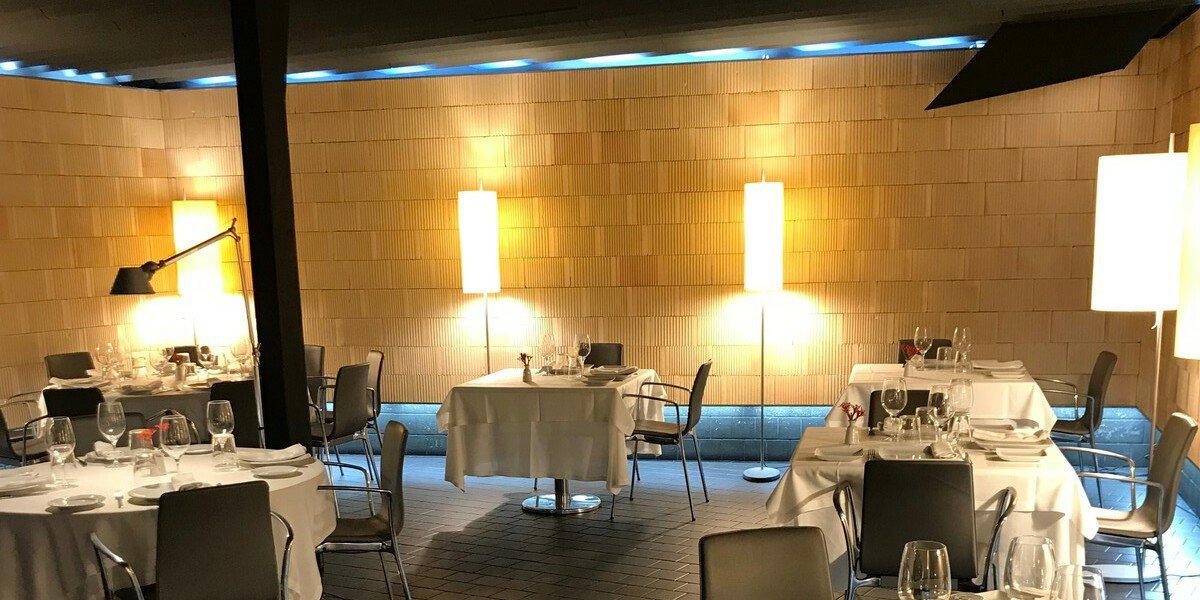
Where Madrid Meets the Navarrese Countryside
Calle de Sagasta runs through one of central Madrid's quieter residential stretches, a few blocks north of Gran Vía's noise and well clear of the tourist corridors around Sol. The buildings here are late-nineteenth-century apartment blocks, their ground floors occupied by the kind of neighbourhood restaurants that serve a regular lunch crowd rather than a passing one. La Manduca de Azagra occupies exactly that register: a room that signals seriousness through restraint rather than theatre, where the light is steady and the tables are set for people who have booked, not wandered in.
That physical modesty is part of the editorial point. In a Madrid dining scene where the upper tier is dominated by tasting-menu ambition, venues like DiverXO, Coque, Deessa, DSTAgE, and Paco Roncero all operating at the €€€€ end of the spectrum with elaborate multi-course formats, La Manduca de Azagra occupies a different position entirely. Its recognition comes from Opinionated About Dining's Casual Europe list, where it ranked #790 in 2025. That peer group rewards ingredient fidelity and culinary honesty over production value, and the kitchen here is calibrated precisely for that audience.
Navarra on a Plate: What the Vegetable Garden Argument Actually Means
The relationship between Navarrese cuisine and its vegetables is not incidental. Navarra, in northern Spain, occupies a transitional zone between the wet Atlantic coast and the drier Ebro valley, a geography that produces particularly cited produce in Spanish cooking: white asparagus from Tudela, cardoon from the Ebro lowlands, piquillo peppers from Lodosa, artichokes from the villages along the river. These are not background ingredients dressed up with technique. In Navarrese tradition, they are the main event.
What distinguishes La Manduca de Azagra inside that tradition is the supply chain. The restaurant originated in Azagra, a small municipality in the Ribera Navarra zone, and relocated to Madrid without severing its agricultural connection. The vegetables on the menu, artichoke, cardoon, white asparagus, and the cristal peppers, still come from the family vegetable garden in Azagra. That is a specific claim with logistical weight behind it: a Madrid kitchen sourcing from a named family plot in a named Navarrese village is making a different kind of commitment than one buying from a regional wholesaler. The distance from Azagra to Madrid is roughly 300 kilometres, which means the supply chain requires active management, not convenience.
The editorial angle worth noting here is the intersection between indigenous product and deliberate restraint of technique. The cristal peppers, a variety prized for their thin skin and concentrated sweetness, are described as being merely peeled and grilled on charcoal. The artichokes and cardoon receive comparably minimal intervention. This is not a kitchen applying imported methods to local produce in the sense of technical elaboration, it is a kitchen whose sophistication lies in knowing when not to add. That position places it in a broader Spanish tradition, running from the Basque asador to the vegetable-forward cooking of modernist houses like Arzak in San Sebastián and Azurmendi in Larrabetzu, where respect for raw material is treated as the primary discipline.
Charcoal as Method, Not Decoration
Across the broader Spanish fine dining circuit, at places like Aponiente in El Puerto de Santa María, El Celler de Can Roca in Girona, Quique Dacosta in Dénia, or Disfrutar in Barcelona, fire and smoke have become part of a more theatrical vocabulary, used to signal primalism alongside elaborate plating. At La Manduca de Azagra, the charcoal grill operates differently: it is the technique by which the cristal peppers are prepared, full stop. The cooking is direct and the presentation reflects that directness.
This places the kitchen in a niche but coherent tier of Madrid dining: restaurants where the product is the argument and the room is calm enough to let you make it. That breadth of approval, across a large review base, points to reliability over novelty, a restaurant delivering on its premise repeatedly rather than occasionally.
The Navarrese Tradition in a Capital Context
Regional Spanish cuisines have long maintained outposts in Madrid, but the quality of those outposts varies considerably. Some function as nostalgia operations for regional ex-pats; others treat their source region as a marketing frame while the kitchen drifts toward generic Spanish fare. The Navarrese case is complicated by the fact that the cuisine has received less international attention than Basque or Catalan cooking, despite the quality of its produce and the depth of its vegetable traditions.
The restaurant represents the more rigorous end of that regional Madrid presence. The kitchen's connection to Azagra is not nominal, it shapes what appears on the menu and how it is cooked. In the context of a capital city that has absorbed many regional cuisines with varying degrees of fidelity, that specificity is a meaningful distinction. It also connects to a wider shift visible in high-attention kitchens internationally, from Le Bernardin in New York City to Atomix in New York City, toward provenance transparency as a core part of the dining proposition rather than an afterthought on a menu footer.
Planning Your Visit
The restaurant operates Tuesday through Saturday for both lunch and dinner, with a lunch service running 1:30 to 6 pm and an evening service from 9 pm to 1 am. The restaurant is closed on Sundays. The extended lunch window reflects Madrid's dining rhythms, where the midday meal can run well into mid-afternoon. The late closing time on dinner service, 1 am across all weekday and weekend evenings, aligns with the capital's standard schedule rather than any particular late-night ambition.
The address on Calle de Sagasta 14 is within walking distance of the Alonso Martínez metro station, in the Centro district. For broader context on where this restaurant fits within Madrid's dining offer, see our full Madrid restaurants guide. For accommodation near the Sagasta area, consult our Madrid hotels guide. The neighbourhood also has a strong bar culture; our Madrid bars guide covers nearby options. Additional city context is available through our Madrid wineries guide and our Madrid experiences guide.
| Venue | Format | Price Tier | Recognition | Booking Lead Time |
|---|---|---|---|---|
| The restaurant | À la carte, regional Navarrese | Casual | OAD Casual Europe #790 (2025) | Moderate; book ahead for dinner |
| DiverXO | Progressive tasting menu | €€€€ | 3 Michelin stars | Several months ahead |
| Coque | Creative tasting menu | €€€€ | 2 Michelin stars | Several weeks ahead |
| DSTAgE | Modern Spanish tasting menu | €€€€ | 2 Michelin stars | Several weeks ahead |
What to Order
The vegetables sourced from the Azagra family garden are one direct expression of what this kitchen does. The cristal peppers, prepared by peeling and charcoal grilling with minimal addition, represent a cooking philosophy from the time chef Juan Miguel Sola has sustained since the restaurant's origins in Navarra. White asparagus, cardoon, and artichoke arrive in season and receive comparably direct treatment.that chef Juan Miguel Sola has sustained since the restaurant's origins in Navarra. White asparagus, cardoon, and artichoke arrive in season and receive comparably direct treatment. These are not supporting characters on a menu built around meat or fish, at the restaurant, the vegetables recognized by Opinionated About Dining in both 2023 and 2025 are the central argument. Ordering around them, rather than treating them as sides, is the correct approach to the menu.
- crystal peppers
- monkfish
- beef cheeks
- torrija
- piquillo peppers
- scrambled eggs with foie
- menestra of seasonal vegetables
Budget Reality Check
Comparable venues nearby, for context on price, style, and recognition.
| Venue | Cuisine | Price | Notes |
|---|---|---|---|
| La Manduca de AzagraThis venue — the venue you are viewing | Chueca, Navarrese Farm-to-Table | $$$ | Not listed |
| Cuenllas | Not listed | $$$ | Arguelles, Traditional Spanish with Notable Wines |
| Sala de despiece | Not listed | $$$ | Rios Rosas, Modern Spanish Avant-Garde Tapas |
| La Mi Venta | Palacio, Traditional Spanish Castilian | $$$ | Not listed |
| Casa Julian de Tolosa | La Latina, Basque Steakhouse | $$$ | Not listed |
| Verdejo | Not listed | $$$ | Salamanca, Seasonal Spanish Taberna with Modern Touches |
Recognition history
Dated appearances from independent guides and award organizations, with the underlying list record or original source where available.
Guía Repsol 1 Sol
Guía Repsol
Macarfi 8.4 Food Rating
Macarfi
Opinionated About Dining Casual in Europe Recommended
Opinionated About Dining
Opinionated About Dining Casual in Europe Ranked #790
Opinionated About Dining
We're Smart World 3 Radishes
We're Smart World
Opinionated About Dining Casual in Europe Recommended
Opinionated About Dining
Continue exploring
More in Madrid
Restaurants in Madrid
Browse all →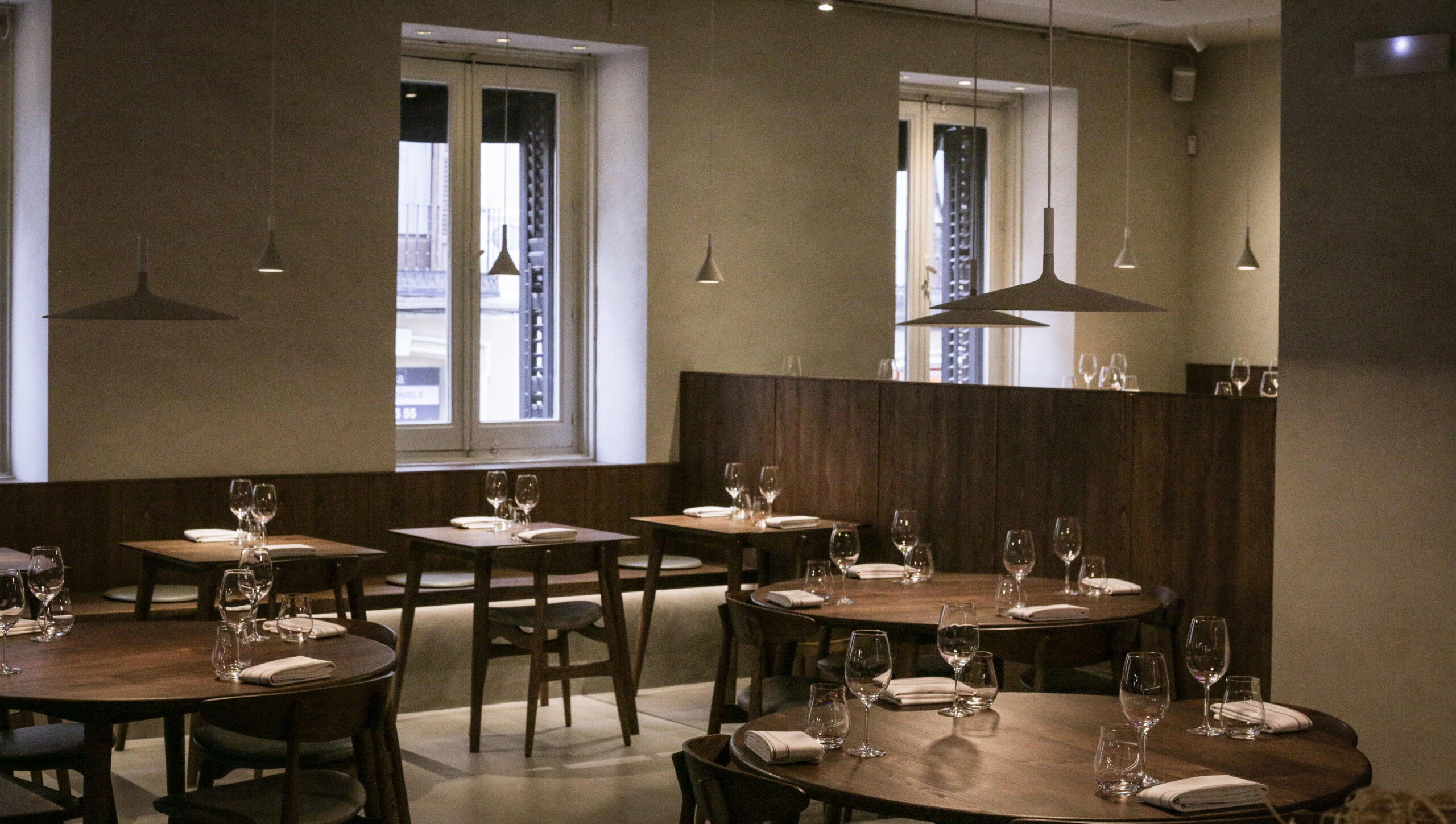
Bars in Madrid
Browse all →
Hotels in Madrid
Browse all →


At a Glance
- Elegant
- Intimate
- Sophisticated
- Minimalist
- Cozy
- Date Night
- Business Dinner
- Celebration
- Special Occasion
- Family
- Standalone
- Open Kitchen
- Farm To Table
- Local Sourcing
Current opening hours
- Monday
- 1:30–6 PM, 9 PM–1 AM
- Tuesday
- 1:30–6 PM, 9 PM–1 AM
- Wednesday
- 1:30–6 PM, 9 PM–1 AM
- Thursday
- 1:30–6 PM, 9 PM–1 AM
- Friday
- 1:30–6 PM, 9 PM–1 AM
- Saturday
- 1:30–6 PM
- Sunday
- Closed
Hours can change for holidays and private events. Last verified .
Modern minimalist interior with warm, inviting lighting and spacious table separation that creates an intimate yet lively atmosphere filled with local Madrileños and hushed conversations.