Our verdict
Positioned on Place des Halles in the heart of Tours, La Maison des Halles occupies one of the city's most market-adjacent addresses, placing it directly within the Loire Valley's tradition of produce-driven dining. The restaurant draws on a location that has fed the city for generations, situating each meal within the rhythm of the covered market and the seasonal logic that defines cooking in this part of the Touraine.

Pearl is the En Primeur Club membership app, where members save venues, book tables and use the concierge.

Place des Halles and the Dining Tradition It Anchors
In French provincial cities, the relationship between a covered market and its surrounding restaurants is rarely accidental. The halles format, still functioning in cities like Tours, Lyon, and Reims, has long acted as the culinary spine of a neighbourhood, with kitchens organizing their weeks around what the market stalls carry rather than around fixed supplier catalogues. La Maison des Halles, addressed directly onto Place des Halles at number 19, sits inside that tradition in a way that is geographic before it is gastronomic. The physical proximity to the market is a statement about sourcing logic, not just a pleasant postcode.
Tours occupies a particular position in the French dining conversation. It is the largest city in the Loire Valley, a region whose wines, from Vouvray to Chinon to Sancerre, provide some of the most food-complementary bottles in France, and whose agricultural output, covering everything from white asparagus and rillettes to freshwater fish and Loire goat cheeses, gives local kitchens a seasonal larder of unusual depth. Against that backdrop, a restaurant on the city's central market square enters the meal with context already established before a menu arrives.
How a Meal Here Tends to Take Shape
The multi-course format that defines serious French provincial restaurants generally follows a logic of escalation: lighter, more acidic preparations early, then a structural mid-course, then weight and richness in the main sequence, and a gradual cooling into dessert. At a market-adjacent address like this one, that progression tends to reflect what arrived that morning more than what a standing menu prescribes. The opening moves in such a meal often involve the most ephemeral produce: early greens, whatever shellfish are at their leading, or a light preparation that would not survive a day's delay.
This is the rhythm that characterises the better end of Touraine cooking at the moment. Restaurants like Case. (Modern Cuisine) and Casse-Cailloux (Modern Cuisine) have built their reputations on exactly this kind of seasonal sequencing, where the arc of the meal mirrors the arc of the season rather than a fixed tasting architecture. Bistrot des Halles takes a more brasserie-inflected approach to the same market territory, while Au Martin Bleu and Bistrot des Belles Caves each occupy a different register within the city's mid-market dining tier.
The address does that work.
Loire Valley Wine and the Meal's Structural Logic
One of the underappreciated aspects of dining in Tours is the way the local wine list can function as the meal's secondary architecture. Where many French regional restaurants use a national wine list with a local section appended, Tours kitchens that take the Loire seriously will often build their pairing sequence around the valley's natural progressions. A dry Vouvray Chenin Blanc carries enough tension and mineral depth to work across two or three early courses. Chinon and Bourgueil, the Loire's Cabernet Franc expressions, carry a coolness that positions them better with mid-weight proteins than with heavily sauced dishes.
That regional wine logic matters more at a market-square restaurant than at a destination address. The wine is not the occasion here; it is the supporting architecture, and a well-chosen Loire list allows the food's seasonal progression to read more clearly rather than competing with it. For comparison, the kind of wine-to-food integration that defines multi-starred French properties, as seen at Mirazur in Menton, Flocons de Sel in Megève, or Troisgros - Le Bois sans Feuilles in Ouches, operates at a different scale and investment level, but the underlying principle of regional coherence is the same. A Loire Valley meal should taste like one.
Where This Fits in the French Provincial Dining Argument
France's serious provincial dining tier has never been purely a Michelin story. Properties like Auberge de l'Ill in Illhaeusern, Bras in Laguiole, and Paul Bocuse - L'Auberge du Pont de Collonges in Collonges-au-Mont-d'Or represent the monumental end of that tradition. At the other end, market restaurants in smaller French cities have always carried a different kind of authority: one based on geography, regularity, and the discipline of cooking what is available rather than what is conceptually intended.
The Touraine, as a culinary region, sits in the second category more than the first. It is not a destination for tasting-menu theatre of the kind you find at Alléno Paris au Pavillon Ledoyen in Paris or the technical ambition of AM par Alexandre Mazzia in Marseille. It is a region whose dining authority is quieter and more repetitive, grounded in seasonal produce cycles that have run for centuries. La Maison des Halles, positioned where it is, participates in that quieter tradition. The comparison point is not a starred counter in Paris or the structured progression of Assiette Champenoise in Reims or Au Crocodile in Strasbourg. The comparison is with a city's own market and the meals that have been built around it for a long time.
Planning Your Visit
Place des Halles sits in the centre of Tours, walkable from the main train station and from the older Vieux-Tours neighbourhood that lines the south bank of the Loire. The covered market itself operates on regular morning hours, so lunch service at a market-adjacent restaurant like this one follows naturally from a market visit rather than requiring a separate trip. For those arriving by train from Paris, Tours is under an hour on the TGV from Gare Montparnasse, which makes it a practical day-trip or short-break destination from the capital. Given the lack of publicly confirmed booking details and current hours for La Maison des Halles, checking directly at the address on Place des Halles or with local tourism resources before visiting is the reliable path. Tours as a whole is well-served by the EP Club Tours restaurants guide, which maps the city's dining tiers from market-adjacent bistros to the few properties operating in a more formal register.
Frequently asked questions
Where exactly is La Maison des Halles?
La Maison des Halles is located at 19 Pl. des Halles, 37000 Tours, France, Tours.
Where exactly is La Maison des Halles located in Tours, and how easy is it to reach?
La Maison des Halles is at 19 Place des Halles, 37000 Tours, the central market square in the heart of the city. The address puts it within walking distance of Tours railway station and the Vieux-Tours neighbourhood to the south, making it a practical choice whether you are arriving by TGV from Paris or exploring the old quarter on foot.
What's the signature dish at La Maison des Halles?
Given the restaurant's address at 19 Place des Halles in Tours, proximity to the covered market strongly suggests a kitchen built around seasonal, market-sourced ingredients, but exact dishes should be confirmed directly with the venue before visiting.
Do I need a reservation for La Maison des Halles?
For any restaurant anchoring a central market square in a city like Tours, walk-in availability at peak lunch and dinner service is rarely guaranteed. Booking ahead is the practical approach, particularly for weekend sittings.
What has La Maison des Halles built its reputation on?
La Maison des Halles sits at Place des Halles, the historic market square at the centre of Tours, a location that, in French provincial dining, carries its own logic. Restaurants in this position typically earn their standing through consistent relationship with local producers and a multi-course format that reflects the rhythm of the market. No specific awards are currently documented in EP Club's records.
Is La Maison des Halles good for vegetarians?
Traditional French provincial kitchens tend to centre on meat and fish, with vegetarian options varying considerably by season and kitchen philosophy. Contacting the restaurant directly before booking is the surest way to clarify.
Is a meal at La Maison des Halles worth the investment?
For context, Tours sits in the Loire Valley, where serious provincial French restaurants typically offer better value per course than their Paris counterparts, a structural advantage of the French regional dining tier. Confirming the current menu price with the venue directly will give the clearest picture.
Awards and Standing
Comparable venues nearby, for context on price, style, and recognition.
| Venue | Cuisine | Price | Notes |
|---|---|---|---|
| La Maison des HallesThis venue (the venue you are viewing) | Traditional French Bistro Gourmand | $30–50 | Not listed |
| Au Martin Bleu | Traditional Touraine French Bistro | $30–50 | Tours Centre |
| Bistrot des Halles | Traditional French Bistro | $30–50 | Place Gaston-Paillhou |
| La Chope | Classic French Brasserie with Seafood | $30–50 | Tours center |
| Comme à La Maison Côté Sud | French Bistro with Mediterranean Influences | $30–50 | Vieux Tours |
| Restaurant Le Turon | Traditional French Bistro | $30–50 | Historic Center |
Continue exploring
More in Tours
Restaurants in Tours
All restaurants in Tours →

Bars in Tours
Browse all →

Details
- Cozy
- Classic
- Lively
- Elegant
- Special Occasion
- Historic Building
- Extensive Wine List
- Local Sourcing
- Street Scene
- A La Carte
- Vegetarian Friendly
Current opening hours
- Monday
- Closed
- Tuesday
- 12–1:30 PM, 7:30–10 PM
- Wednesday
- 12–1:30 PM, 7:30–10 PM
- Thursday
- 12–1:30 PM, 7:30–10 PM
- Friday
- 12–1:30 PM, 7:30–10:30 PM
- Saturday
- 12–1:30 PM, 7:30–10:30 PM
- Sunday
- Closed
Hours can change for holidays and private events. Hours as of .
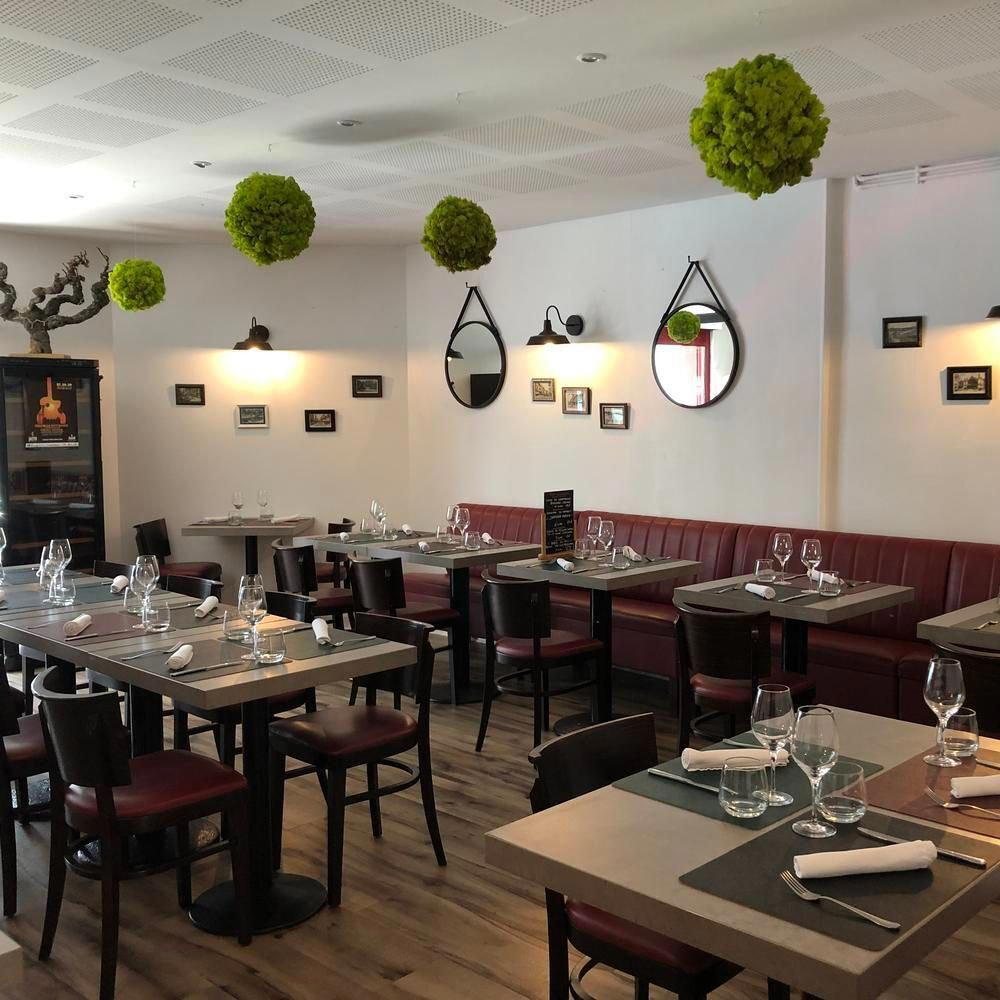
Warm, friendly, and cozy atmosphere balancing conviviality and liveliness, well-suited for lingering meals.