


1 Michelin Star · Macarfi 8.3 Food Rating · Guía Repsol 1 Sol
Our verdict
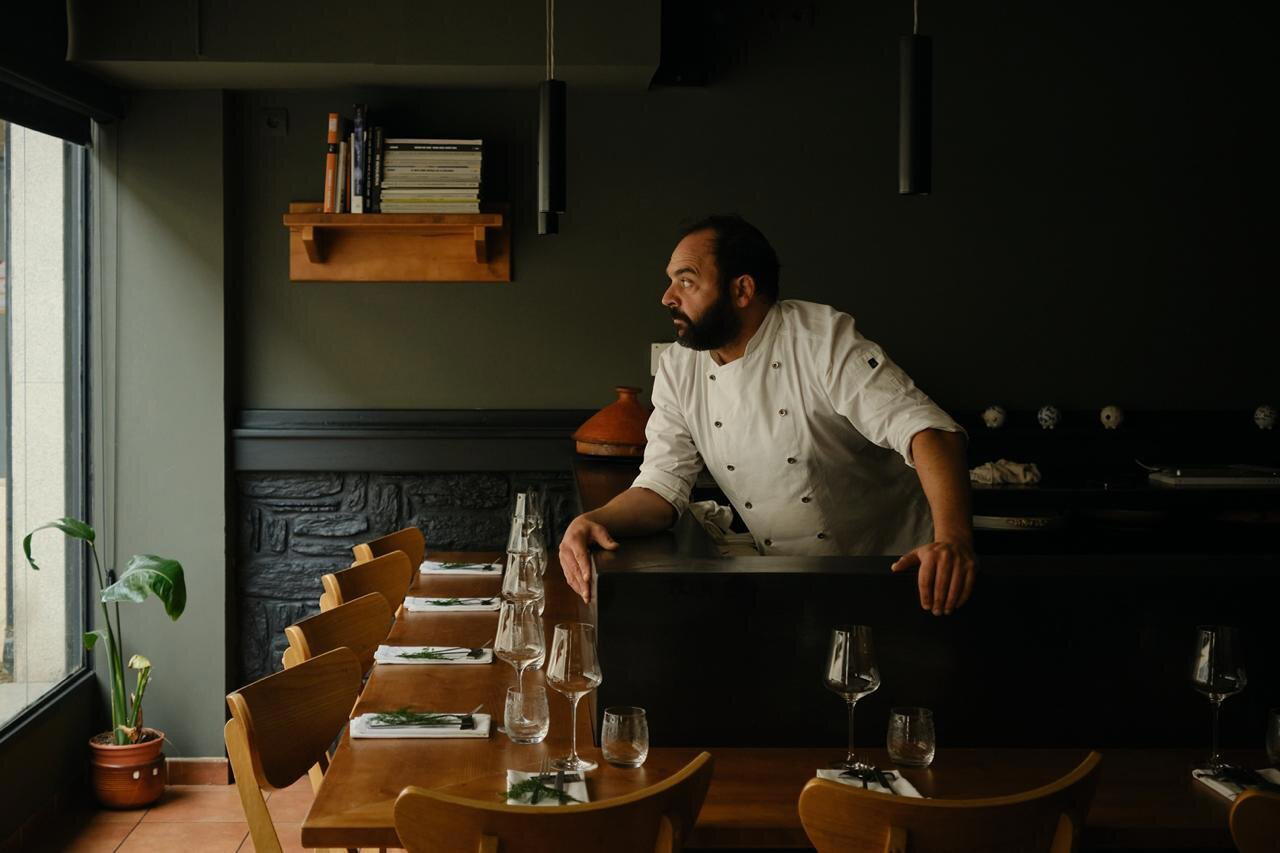
A Michelin-starred address in the Pyrenean village of Gombrèn, La Fonda Xesc operates from a stone inn dating to 1730, where the cooking draws on the Ripollès territory's seasonal produce: wild mushrooms, mountain meats, and local sausages. Chef Francesc Rovira trained under Santi Santamaria and translates that lineage into three set menus rooted in the region's landscape and larder.

Pearl is the En Primeur Club membership app — saves, bookings, and concierge access live there. Same editors, same standards.
- Address
- Plaça del Roser, 1, 17531 Gombrèn, Girona, Spain
- Phone
- +34 972 73 04 04
- Hours
- Mon–Wed ClosedThu 1:30–3:30 PMFri–Sat 1:30–3:30 PM, 8:30–9:30 PMSun 1:30–3:30 PM
- Website
- fondaxesc.com
- Directions
- Get directions
A Pyrenean Village and the Produce That Defines It
The pre-Pyrenean comarca of Ripollès occupies a stretch of inland Girona that most visitors skip in favour of the Costa Brava coast or the city of Girona itself. That oversight has a consequence: the food culture here remains rooted in what the land actually produces rather than what a tourist economy demands. Wild mushrooms push through forest floors in autumn. Mountain pigs are raised slowly and cured into dense, aromatic sausages. Potatoes grown at altitude carry more starch and flavour than lowland varieties. These are the raw materials that define cooking in this corner of Spain, and they are the materials around which the kitchen at La Fonda Xesc in Gombrèn has built its identity.
Gombrèn itself is a small village in the Gerona municipality of Ripollès, the kind of settlement that functions at a different register from Spain's dining capitals. There are no adjacent hotel strips, no competition for footfall. A restaurant here survives on the strength of its cooking alone, which makes the presence of a Michelin star — awarded and confirmed through 2024 — a more pointed signal than the same distinction in Barcelona or San Sebastián. Earning that recognition from a remote mountain village speaks directly to ingredient quality and technical conviction rather than to address or occasion-dining positioning.
For context on where La Fonda Xesc sits within Spain's starred landscape, consider the tier it shares space with. Spain's three-star table count includes houses like El Celler de Can Roca in Girona, Arzak in San Sebastián, Azurmendi in Larrabetzu, Mugaritz in Errenteria, and DiverXO in Madrid, all operating at €€€€ price points with large teams and international profiles. La Fonda Xesc holds one star at a €€€ price point, which positions it as a serious regional table rather than a destination spectacle. The comparison matters because it signals what kind of meal to expect: one grounded in place and season, not one engineered for global attention.
The Building as Argument
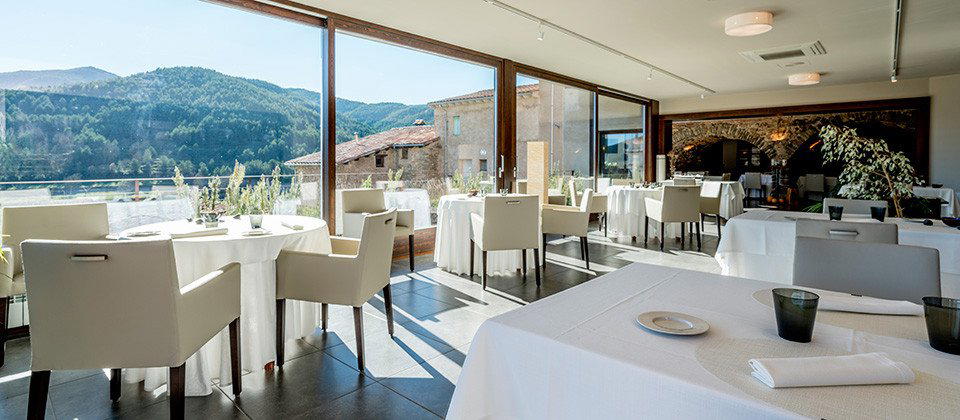
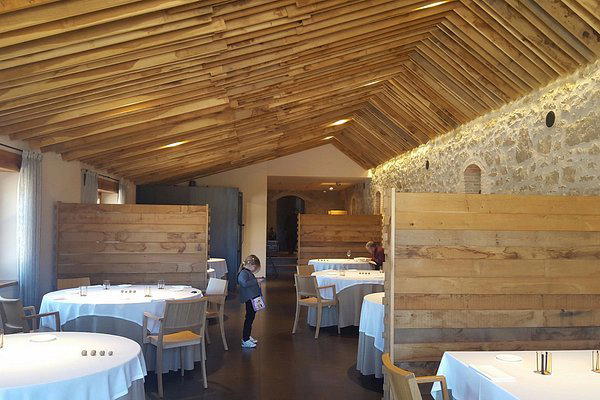
The inn at Plaça del Roser, 1 has been standing since 1730. That history is not decorative, it is structural. Gombrèn's most historic inn carries the accumulated weight of a building that has fed travellers and locals across several centuries, and the current kitchen operates within that continuum. The physical space divides into two distinct sections: an older part where stone arches create a low, enclosed atmosphere, and a newer extension where panoramic windows open directly onto the mountain terrain surrounding the village. The two zones offer genuinely different dining experiences within the same address. One feels anchored to the past of the place; the other positions the surrounding landscape as a live reference for the food being served inside.
That architectural contrast, enclosed stone against open glass and mountain views, is, in its own way, an editorial statement about how the kitchen thinks. The ingredients on the plate come from the terrain visible through those windows. The tradition behind the cooking has roots as deep as the stone beneath the arches. Neither element is incidental.
Ingredient Sourcing as Method
Spain's most discussed kitchens tend to frame their sourcing in terms of philosophy: a commitment to local provenance stated as principle. At La Fonda Xesc, the sourcing argument is more concrete than philosophical, because the ingredients in question are specific to this micro-region and carry characteristics that cannot simply be replicated through supply-chain substitution. Wild mushrooms from the Ripollès forests, mountain-reared meats, locally produced sausages, and high-altitude potatoes are not interchangeable with their commercial equivalents. Their appearance on the menu is therefore both a quality decision and a territorial one.
This approach connects directly to the lineage running through the kitchen. Chef Francesc Rovira trained under Santi Santamaria, the late Catalan chef whose work at Can Fabes in Sant Celoni helped define what rigorous regional sourcing could look like at the highest level of Spanish fine dining. That training instilled an emphasis on the quality of primary ingredients as the foundation of the cooking rather than as a supporting element to technique. In Rovira's kitchen, that inheritance translates into cuisine that is described as creative and contemporary while remaining explicitly identified with the Ripollès territory. The techniques used are characterised as modest rather than elaborate, which reflects a kitchen confident enough in its raw materials to resist over-processing them.
The Menu Structure
The kitchen offers three menus. The format is consistent with how serious tasting-menu restaurants in rural Spain tend to operate: a structured progression rather than à la carte, allowing the kitchen to control sourcing, waste, and seasonal precision simultaneously. Among the three options, the menu dedicated to Rovira's sister Dolors Rovira is identified as the centrepiece offering. That kind of personal dedication is relatively uncommon in fine-dining menu naming and signals something about the intimacy of scale at which this restaurant operates. It is a family business running at Michelin level, which is itself a distinct and increasingly rare category within Spanish gastronomy.
The broader Spanish context for creative menus rooted in regional ingredients includes houses like Ricard Camarena in València, Quique Dacosta in Dénia, and Atrio in CáceresAponiente in El Puerto de Santa María takes a comparable approach to marine-sourced ingredients from its own specific estuary. La Fonda Xesc occupies the same peer logic applied to an inland mountain context: the sourcing specificity of the region becomes the kitchen's clearest point of distinction.
For those tracing the creative cuisine tradition across borders, Frantzén in Stockholm and FZN by Björn Frantzén in Dubai represent how Scandinavian-rooted ingredient sourcing translates across different contexts, a useful comparison point for understanding how regional identity functions within contemporary fine-dining internationally. Closer to home, Cocina Hermanos Torres in Barcelona and Martin Berasategui in Lasarte-Oria illustrate what Catalan and Basque creative traditions look like at three-star scale, the frame against which La Fonda Xesc's one-star, village-scale achievement should be read.
Planning a Visit
La Fonda Xesc operates on a tight weekly schedule that reflects both the remoteness of its location and the logistics of running a serious kitchen far from urban supply chains. Lunch service runs Thursday through Sunday from 1:30 PM to 3:30 PM; dinner service on Friday and Saturday runs from 8:30 PM to 9:30 PM. The restaurant is closed Monday, Tuesday, and Wednesday. Those operating hours are narrow enough that planning a trip specifically around a booking is the practical reality rather than the exception. Gombrèn is not a village where you arrive and hope for a table.
The €€€ price point is consistent with serious tasting-menu cooking in provincial Spain, meaningful expenditure, but occupying a lower bracket than the €€€€ tier associated with Spain's most internationally publicised tables. For those building a broader Girona-area itinerary, the city of Girona itself, home to El Celler de Can Roca, sits within reach of Gombrèn, making a two-stop trip across the region's dining range entirely feasible.
For more on what the area offers beyond the table, see our full Gombrèn restaurants guide, our full Gombrèn hotels guide, our full Gombrèn bars guide, our full Gombrèn wineries guide, and our full Gombrèn experiences guide.
Frequently asked questions
Is La Fonda Xesc a family-friendly restaurant?
Is La Fonda Xesc formal or casual?
What do regulars order at La Fonda Xesc?
Quick Comparison
| Venue | Cuisine | Awards |
|---|---|---|
| La Fonda XescThis venue — the venue you are viewing | Creative Catalan | 1 Michelin Star · Macarfi 8.3 Food Rating |
| Aponiente | Progressive - Seafood, Creative | Michelin 3 Star |
| Arzak | Modern Basque, Creative | Michelin 3 Star |
| DiverXO | Progressive - Asian, Creative | Michelin 3 Star |
| El Celler de Can Roca | Progressive Spanish, Creative | Michelin 3 Star |
| Quique Dacosta | Creative | Michelin 3 Star |
Recognition history
Dated appearances from independent guides and award organizations, with the underlying list record or original source where available.
Michelin 1 Star
Michelin
Guía Repsol 1 Sol
Guía Repsol
Macarfi 8.3 Food Rating
Macarfi
Full recognition history (5 entries)
Michelin 1 Star
Michelin
Michelin 1 Star
Michelin
Continue exploring
More in Gombrèn
Restaurants in Gombrèn
Browse all →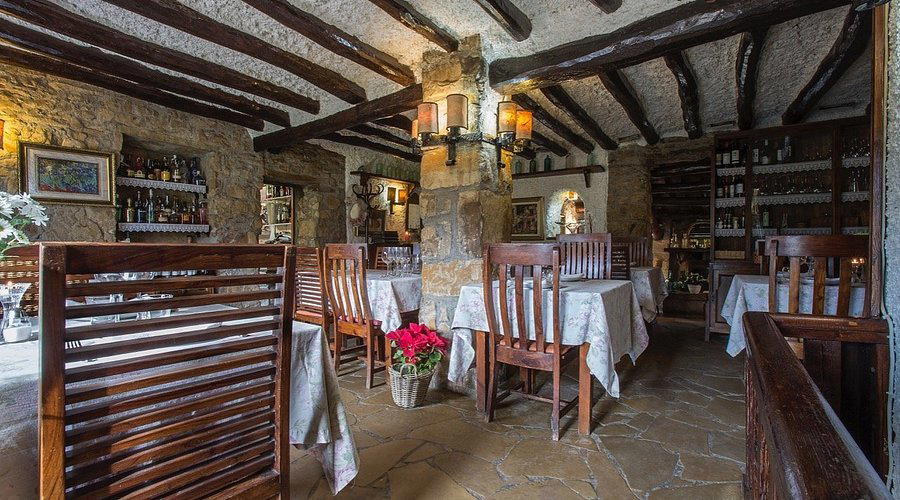
Bars in Gombrèn
Browse all →
Hotels in Gombrèn
Browse all →
Wineries in Gombrèn
Browse all →
Details
- Rustic
- Cozy
- Elegant
- Scenic
- Intimate
- Date Night
- Special Occasion
- Historic Building
- Panoramic View
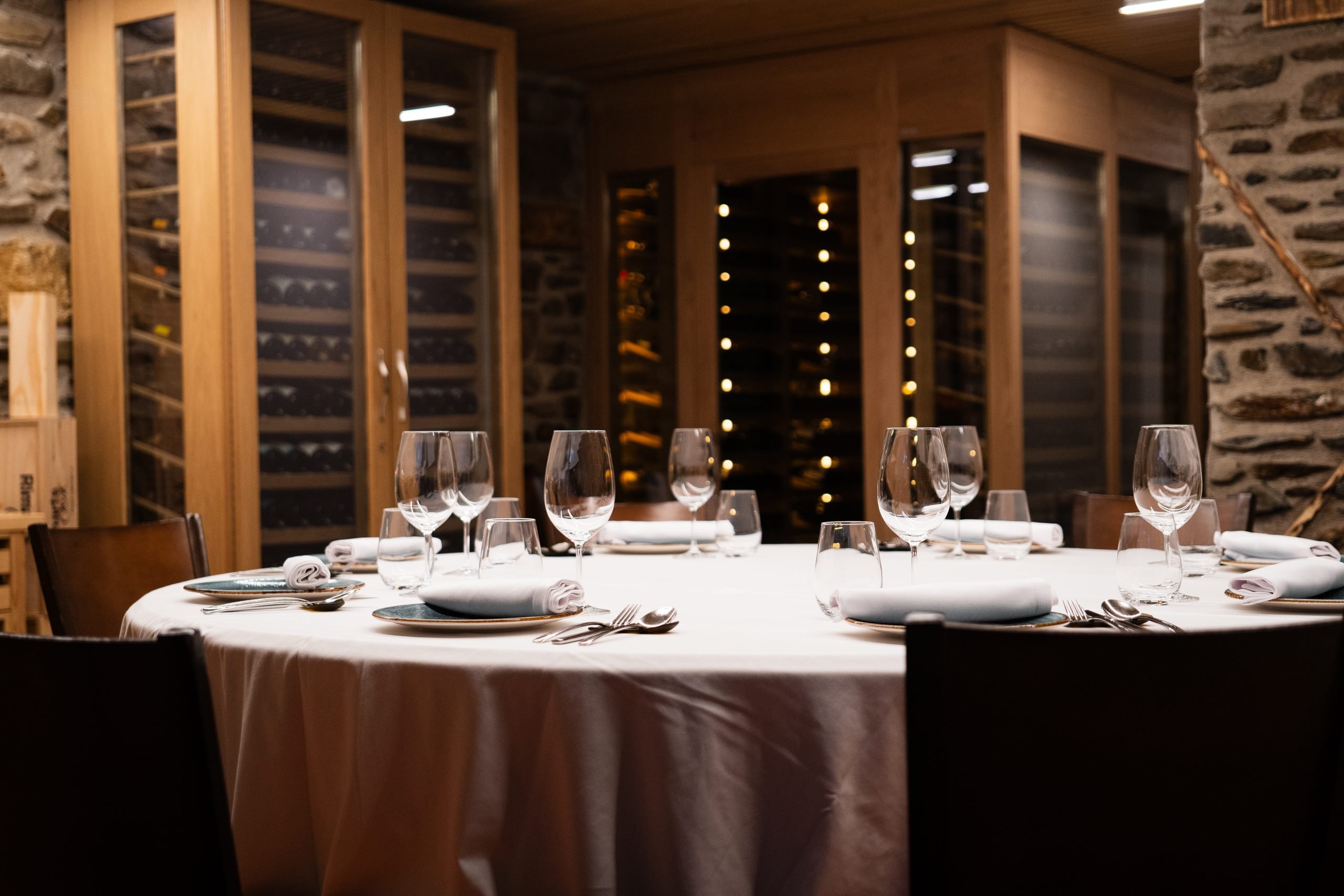
- Extensive Wine List
- Local Sourcing
- Mountain
- Tasting Menu
Current opening hours
- Monday
- Closed
- Tuesday
- Closed
- Wednesday
- Closed
- Thursday
- 1:30–3:30 PM
- Friday
- 1:30–3:30 PM, 8:30–9:30 PM
- Saturday
- 1:30–3:30 PM, 8:30–9:30 PM
- Sunday
- 1:30–3:30 PM
Hours can change for holidays and private events. Last verified .
Bright space with panoramic mountain views through oversized windows, elegant yet understated decor, relaxed and friendly atmosphere.