La Distillerie

La Liste Top Restaurants
Our verdict
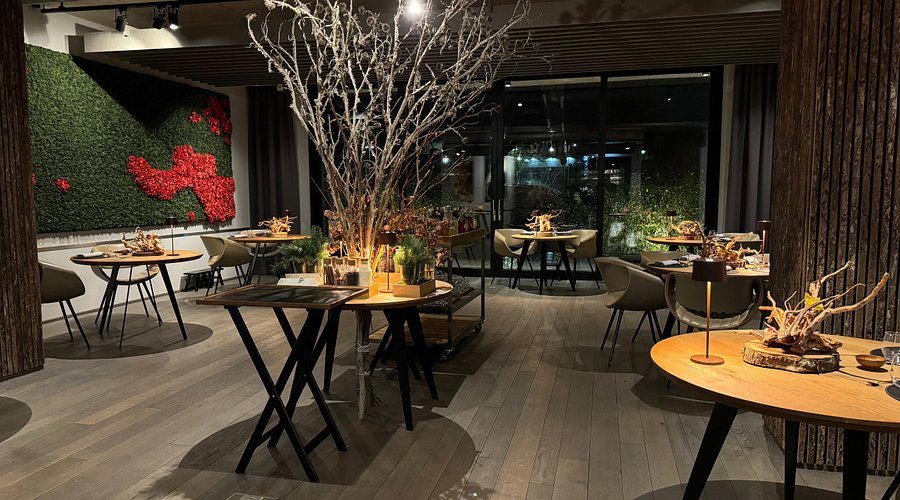
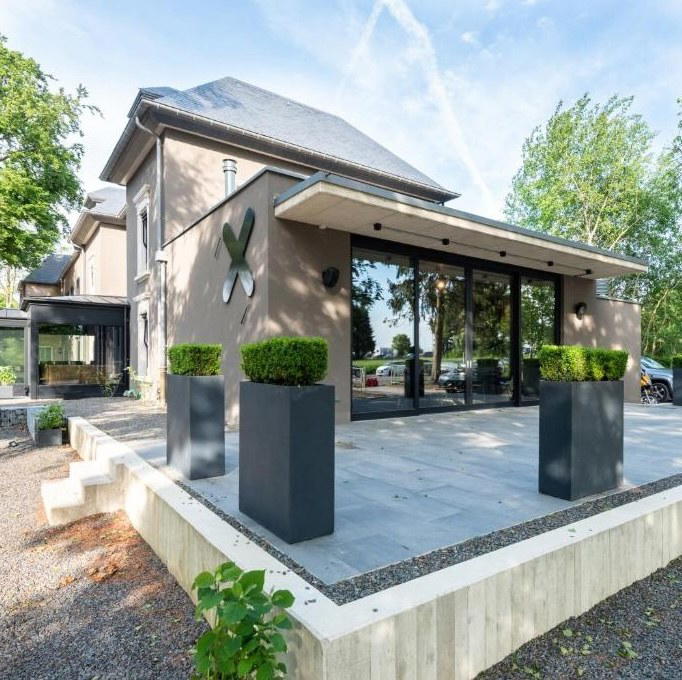
Set within a historic castle complex in Bourglinster, roughly 20 kilometres east of Luxembourg City, La Distillerie earns 83.5 points on the 2025 La Liste ranking alongside. The kitchen works a Luxembourgish-French register, and the setting alone — stone walls, vaulted rooms, a wine programme rooted in both local and French appellations — makes it one of the country's most discussed special-occasion addresses.

Pearl is the En Primeur Club membership app — saves, bookings, and concierge access live there. Same editors, same standards.
- Address
- 7 Pl. Du Village, 6161 Bourglinster Junglinster, Luxembourg
- Phone
- +352 621 420 282
- Website
- facebook.com
- Directions
- Get directions
Castle Dining and the Franco-Luxembourgish Table
There is a particular kind of dining that only makes sense inside a historic structure: where the weight of stone walls, the height of vaulted ceilings, and the specific quality of candlelight in an old room become inseparable from what arrives on the plate. Bourglinster Castle, a fortified complex east of Luxembourg City, provides exactly that frame. La Distillerie, housed within the castle grounds, sits in a tradition of grand European restaurant dining where the architectural context is not decoration but an argument — a statement that the food and wine offered here belong to a longer, more considered story than a purpose-built dining room could suggest.
Luxembourg's fine dining scene has consolidated around a small group of kitchens that operate at the €€€€ tier and hold Michelin recognition. Ma Langue Sourit and Léa Linster both carry two Michelin stars and define the upper tier of contemporary French cooking in the country. Apdikt, Archibald De Prince, and Fani each hold one star and cover creative, organic, and Italian territory respectively.
The Wine Programme: Moselle, Burgundy, and the Space Between
In Luxembourg's most serious restaurants, the wine programme is often where the real editorial statement gets made. The country sits on the northern edge of the Moselle valley, producing Riesling, Auxerrois, Pinot Gris, and Pinot Blanc from the local stretch of river — wines that share structural DNA with Alsace but carry a lighter, more mineral profile. Any kitchen operating in the Luxembourgish-French register has a natural duty of care toward this local production, and the strongest cellars here treat the Moselle appellation not as a token local addition but as a genuine pairing currency alongside French references from Burgundy, the Loire, and the Rhône.
The castle context at La Distillerie reinforces this: a cellar housed within historic stone walls, where temperature and humidity already skew toward natural preservation, is the right environment for a programme that takes both depth and regional breadth seriously. Internationally, the restaurants that have defined wine-forward dining in their respective cities, from Le Bernardin in New York City to Alain Ducasse at Louis XV in Monte Carlo, demonstrate that sommelier expertise and cellar curation are as responsible for a restaurant's long-term reputation as the kitchen itself. La Distillerie's sustained recognition in a small, competitive market points toward a similar commitment at the service level.
For visitors whose primary reference is French fine dining, the Luxembourgish Moselle represents a genuine discovery tier: producers working with varieties and terroir conditions that rarely appear on wine lists outside the region. A well-constructed programme here should reward the guest who asks the sommelier for a local pairing as much as the one who defaults to Burgundy.
The Cuisine: Luxembourgish-French as a Specific Register
The Luxembourgish-French kitchen tradition is not simply French cooking with local ingredients appended. It draws on a culinary history shaped by proximity to France, Belgium, and Germany while maintaining its own local products, river fish, game from the Ardennes, locally produced charcuterie, and the seasonal produce of a temperate central European climate. This means a kitchen working honestly in this register has a genuine vocabulary to draw from, distinct from the pan-European contemporary French mode that dominates much of the region's high-end dining.
Across the international range of La Liste's recognized addresses, from Atomix in New York City to 8½ Otto e Mezzo Bombana in Hong Kong, what distinguishes the restaurants that hold their scores over time is specificity: kitchens that have a clear, defensible identity rather than a generic fine-dining mode. An 83.5 La Liste score represents a meaningful level of international recognition for a restaurant in a city the size of Luxembourg, and it implies a kitchen with that kind of specificity, one making deliberate decisions about what belongs on the plate rather than simply executing technique for its own sake.
Location and Planning
Bourglinster is approximately 20 kilometres east of Luxembourg City, placing La Distillerie outside the capital's immediate dining circuit. The drive from the city follows the Alzette and Ernz rivers through a series of small villages and forested hillsides, the kind of approach that begins the meal before you arrive. For visitors already exploring the broader country, pairing the restaurant with a night in the region makes more sense than a round trip from the city on the same evening; Luxembourg's compact scale means the castle is accessible but the journey merits planning. The address, 7 Place du Village, 6161 Bourglinster, sits within the village of Junglinster municipality and is most practically reached by car. Booking in advance is advisable given the restaurant's sustained reputation; specific lead times are best confirmed directly. For those building a wider itinerary, the full Luxembourg hotels guide covers accommodation options, and the full Luxembourg restaurants guide maps the broader dining picture across the country, including bars, wineries, and experiences.
Where La Distillerie Sits in the Wider Conversation
Fine dining at this tier, whether at Lazy Bear in San Francisco, Alinea in Chicago, or Alléno Paris au Pavillon Ledoyen, earns its position through a combination of kitchen consistency, service depth, and a clear sense of identity. In a country where the fine dining market is small enough that every restaurant at this level is visible to every other, maintaining that kind of sustained recognition is a genuine competitive signal. For guests arriving from cities where this tier is crowded, New York, London, Paris, Luxembourg's scale means the attention to each table is disproportionately high, and a restaurant like La Distillerie, operating in a historic castle outside the capital, commands a particular kind of focus that a busy urban room rarely delivers. The combination of Luxembourgish-French cuisine, a wine programme rooted in the local Moselle, and a setting that predates modern restaurant culture by several centuries makes La Distillerie a case for scheduling a specific trip east from the city rather than treating it as a fallback option. See also: Emeril's in New Orleans for a comparable study in how a restaurant's identity is shaped by its regional culinary inheritance.
Frequently asked questions
Is La Distillerie child-friendly?
La Distillerie operates at the fine dining tier recognised by La Liste 2025 with a score of 83.5 points, which typically implies a formal register not calibrated for young children. The castle setting in Bourglinster adds a degree of ceremony that suits adults and older teenagers more naturally. Families with very young children would likely find the format a poor fit, though the venue's own policy should be confirmed directly before booking.
What is the atmosphere like at La Distillerie?
The restaurant occupies a historic castle in Bourglinster, roughly 20 kilometres east of Luxembourg City, and the architecture sets the tone before any food arrives: stone, height, and a remove from the capital's pace. The Luxembourgish-French kitchen tradition lends the meal a seriousness without the detachment of purely technical fine dining. A La Liste score of 83.5 points in 2025 places it firmly in the category where formality and warmth are expected to coexist.
Has La Distillerie won any awards?
La Distillerie has received recognition including: La Liste Top Restaurants (2025): 83.5pts.
What do regulars order at La Distillerie?
The kitchen works within the Luxembourgish-French register, a tradition shaped by proximity to both French culinary discipline and local produce from the Moselle corridor. Returning guests tend to anchor their visits to whatever reflects that intersection most directly on the current menu. Specific dish details are best confirmed with the restaurant, as the programme evolves with season and sourcing.
What cuisine category does La Distillerie fall under?
Price and Positioning
Comparable options at a glance, pulled from our tracked venues.
| Venue | Cuisine | Price | Awards | Notes |
|---|---|---|---|---|
| La DistillerieThis venue — the venue you are viewing | Modern French Vegetable Fine Dining | Not listed | La Liste Top Restaurants | Not listed |
| Ma Langue Sourit | Modern French Fine Dining | $150–200 | 2 Michelin Stars · La Liste Top Restaurants | Contemporary French, Modern Cuisine |
| Léa Linster | Modern French Fine Dining | Not listed | Not listed | Modern French |
| Grünewald Chef’s Table | Modern French Chef's Table | $100–150 | 1 Michelin Star | Modern Cuisine |
| Guillou Campagne | Traditional French Country Bistro | $100–150 | 1 Michelin Star | Classic French |
| Apdikt | French Contemporary Fine Dining | $150–200 | 1 Michelin Star · We're Smart World 2 Radishes | Creative |
Recognition history
Dated appearances from independent guides and award organizations, with the underlying list record or original source where available.
La Liste Top Restaurants
La Liste