La Cruna
La Cruna sits within a hotel-restaurant on Via Alpsu in Tujetsch, the municipality that encompasses Sedrun, where the Surselva valley's alpine setting shapes the dining proposition as much as any kitchen decision. In a region where mountain sourcing and seasonal constraint are facts rather than marketing, the restaurant occupies a distinct position among the limited fine-dining options in this corner of Graubünden. Visitors arriving from Zurich or the broader Swiss table-dining circuit will find a proposition calibrated to its elevation and geography.
Pearl is the En Primeur Club membership app — saves, bookings, and concierge access live there. Same editors, same standards.
- Address
- La Cruna Hotel-Restaurant, Via Alpsu 65, 7188 Tujetsch, Switzerland
- Phone
- +41819204040
- Website
- hotelcruna.ch
- Directions
- Get directions
 Saves & bookings on Pearl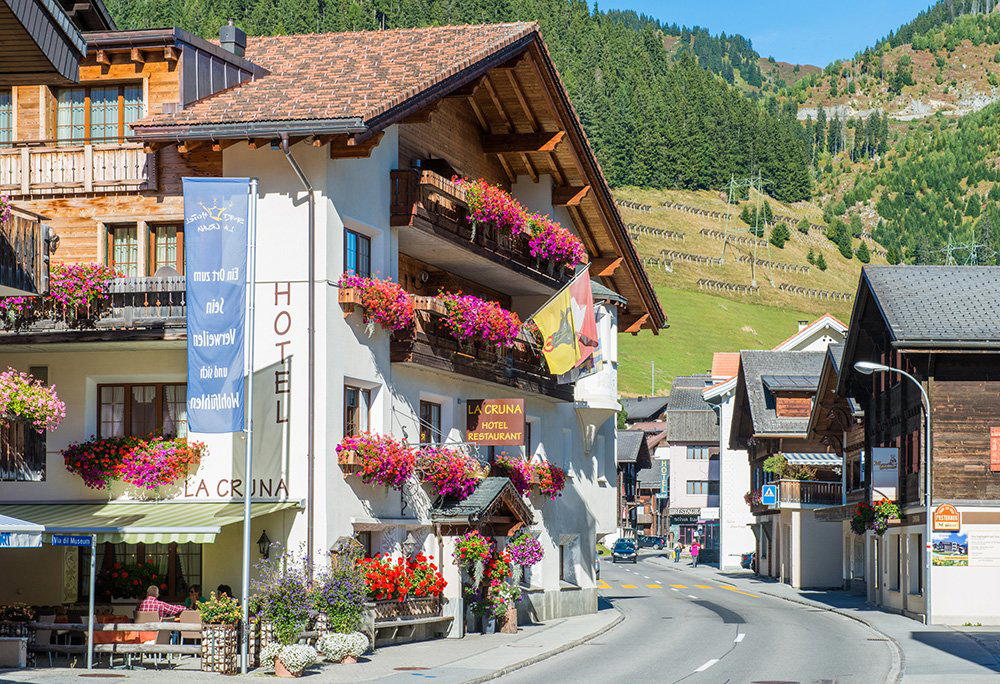
Where the Surselva Valley Sets the Table
La Cruna is a restaurant in Tujetsch, Switzerland, serving Traditional Grisons Alpine Cuisine at the La Cruna Hotel-Restaurant on Via Alpsu 65. The mountains here are not backdrop; they define what grows, what can be transported, and how kitchens operate through a nine-month cycle that swings from summer abundance to the deep restriction of winter. In this context, ingredient sourcing is not a philosophy a chef chooses, it is a condition the landscape imposes. La Cruna, operating within the restaurant Hotel-Restaurant at Via Alpsu 65, occupies a dining room shaped entirely by those conditions.
This part of canton Graubünden sits in a broader Swiss alpine dining category that has grown considerably more sophisticated over the past two decades. Restaurants in Graubünden and the wider eastern Swiss arc, from Schloss Schauenstein in Fürstenau to Da Vittorio - St. Moritz in St. Moritz, have pushed the region into serious culinary conversation. Sedrun itself sits at a quieter register than St. Moritz or Flims, which means the dining proposition here tends to be more grounded in local character than in resort glamour.
Alpine Sourcing as Structural Constraint
Swiss alpine kitchens in the mid-altitude valleys of Graubünden operate within a sourcing logic that most urban restaurants can only approximate. Summer brings high-pasture dairy, foraged mushrooms and herbs from the surrounding slopes, and river fish from the Rhine tributaries. Once the season turns, kitchens pivot to cured and preserved goods, root vegetables, and the dense, fatty proteins that sustain mountain communities through cold months. The guest, arriving at any point in the year, is effectively eating a record of recent seasonal availability, the menu is not curated toward variety but toward what the valley has produced.
This is meaningfully different from sourcing programs at restaurants like Memories in Bad Ragaz or focus ATELIER in Vitznau, both of which operate in locations with broader supply-chain access and price points that allow for more curated procurement. At higher altitudes and in smaller villages, seasonal constraint operates differently, not as creative limitation but as the foundational logic of the kitchen. For those interested in how geography shapes a menu, this kind of regional alpine dining offers a clearer illustration than any deliberate farm-to-table program in a well-supplied urban setting.
Graubünden's culinary identity is closely linked to a handful of regional products: Bündnerfleisch (air-dried beef, a PDO product), maluns (a potato and flour preparation native to the canton), and various forms of dried sausage and cured pork. These are not novelty items but staples built around altitude, climate, and the historical absence of reliable refrigeration. Any serious kitchen in the region works with, or at least against, this inherited repertoire.
Positioning in the Swiss Alpine Dining Circuit
Switzerland's fine-dining circuit skews heavily toward its larger cities and better-known resort destinations. The three-Michelin-star tier, represented by restaurants such as Hotel de Ville Crissier in Crissier and Cheval Blanc by Peter Knogl in Basel, clusters in urban and peri-urban Switzerland, with some notable outliers in spa and resort destinations like 7132 Silver in Vals, which sits in the same Graubünden region. Sedrun is not a resort destination in the same commercial sense as Vals or Laax, which means the restaurant operates without the infrastructure of high-spend tourist clientele that supports destination restaurants elsewhere in the canton.
This positions the restaurant in a different competitive frame from most of the Swiss alpine dining addresses that appear in awards conversations.
Getting There and Practical Orientation
Sedrun is accessible by rail via the Matterhorn Gotthard Bahn from Andermatt or Disentis, the journey from Zurich involves a connection at Göschenen or Disentis, with total travel time in the range of two to three hours depending on connection. By road, the Oberalppass approach is seasonal (closed in winter), making the rail connection the more reliable option for shoulder and winter visits. The hotel-restaurant address, Via Alpsu 65 in Tujetsch, places it within Sedrun village, which is compact enough to reach easily on foot from the railway station. Given the absence of published booking information in the public record, contacting the property directly ahead of any visit is advisable, particularly in peak winter skiing season when the region sees its highest visitor volumes.
Reading the Room: Who Comes Here and Why
The guest profile for a hotel-restaurant in Sedrun differs substantially from those driving to Fürstenau for Schauenstein or to Vitznau for focus ATELIER. This is primarily a village serving its own guests, regional visitors, and travellers using Sedrun as a base for the Oberalp or the surrounding ski and hiking terrain. The dining proposition is framed by that reality. It sits closer in orientation to restaurants like La Brezza in Ascona or Colonnade in Lucerne, hotel dining with genuine regional character, than to destination restaurants that attract visitors for the food itself as the primary reason for travel.
That framing is not a qualification; it is a description of what the experience is likely to offer. Kitchens operating in this register often produce cooking that is more honest to local tradition than technically sophisticated restaurants at larger budgets, because they have to. There is no option to import and no audience expecting international reference points. The sourcing comes from the valley because the valley is what is available. For visitors arriving primarily for Graubünden's landscape or ski terrain, the restaurant provides a logical dining anchor with genuine regional grounding.
In Context: Similar Options
Comparable venues nearby, for context on price, style, and recognition.
| Venue | Cuisine | Price | Notes |
|---|---|---|---|
| La CrunaThis venue — the venue you are viewing | Traditional Grisons Alpine Cuisine | $$$ | Not listed |
| Vista | Grisons Swiss Fine Dining | $$$$ | Sagogn |
| swan21 | Modern Swiss with Mediterranean Influences | $$$ | city center |
| Restaurant 1903 | Refined Swiss with Mediterranean Influences | $$$ | Wengen |
| HERMITAGE Lucerne | Modern Swiss with International Influences | $$$ | Seeburg |
| Cuschina Menono | Contemporary Swiss Fine Dining | $$$$ | Camischolas, Tavetsch |
Continue exploring
More in Sedrun
Restaurants in Sedrun
Browse all →
Bars in Sedrun
Browse all →

Hotels in Sedrun
Browse all →

At a Glance
- Cozy
- Romantic
- Rustic
- Classic
- Scenic
- Family
- Casual Hangout
- Group Dining
- Celebration
- Hotel Restaurant
- Historic Building
- Extensive Wine List
- Local Sourcing
- Mountain
Warm, homely alpine-chic atmosphere with rustic Swiss character, cozy rooms, and a romantic personal touch.