
Tabelog 100 #89
Our verdict
Kyo Chubo belongs to Yokohama Chinatown’s everyday Chinese dining tier rather than its banquet-house register, with Tabelog Chinese EAST 100 selection in 2026 giving it a clear quality signal. The appeal is the neighbourhood rhythm: accessible, family-friendly, non-smoking, and closer to a working local dining room than a ceremonial destination.

Pearl is the En Primeur Club membership app, where members save venues, book tables and use the concierge.
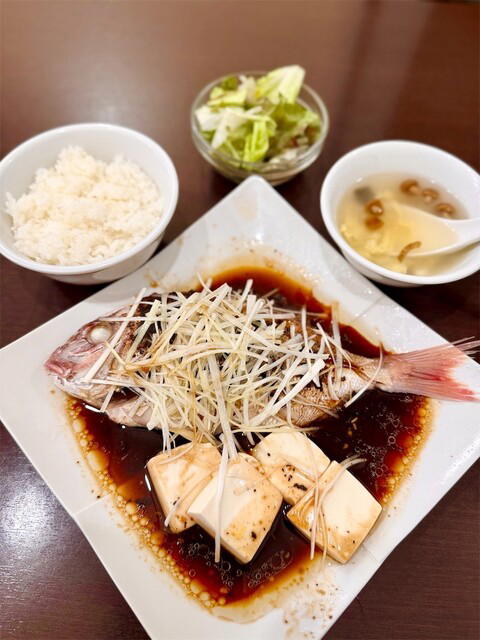
The menu
What to order
- 牛バラ煮込み刀削麺 (Braised Beef Brisket Knife-Cut Noodles)
- 皿ワンタン (Boiled Wontons on a Plate)
Yokohama is not a single dining proposition. The city moves between celebratory tables, quick casual stops, and compact restaurants where the cooking has to justify repeat local custom rather than tourist theatre. Kyo Chubo sits in that last lane: a Chinese restaurant in Yokohama where the room’s value is measured less by spectacle than by pace, clarity, and the confidence of a kitchen that does not need ceremony to make its point.
That matters in this part of Yokohama. The city can be noisy with choice, and the visual grammar often tilts toward queues, steam, and big-group menus. The stronger addresses separate themselves by discipline: a tighter category focus, a room that works for regular meals, and enough recognition to cut through the volume. Selection for Tabelog Chinese EAST 100 in 2026 places Kyo Chubo inside a regional conversation rather than merely a neighbourhood one. A 3.61 Tabelog score adds a second signal, useful in Japan’s rating culture where small decimal movements can indicate meaningful consensus.
Yokohama Chinese dining without the banquet-house weight
The useful comparison is not between Chinese food and Japanese food, but between formats within Yokohama itself. Saiko Shinkan, Kasei Rou Honten, Keitokuchin, and Aichun give readers other Yokohama reference points within the same broad category, while Kyo Chubo’s own case is defined by its accessible budget range and its 2026 Tabelog 100 selection. It belongs in the conversation as more than a simple low-cost recommendation.
This is where Yokohama’s Chinese dining culture is at its most practical. The city functions as both attraction and pantry, feeding visitors moving through the port city while also serving locals who do not need the dining scene explained to them. The better casual rooms hold both audiences without flattening the food into a souvenir. They offer enough comfort for families and friends, enough structure for a planned meal, and enough kitchen seriousness to resist becoming background noise.
The sensory register here is urban rather than theatrical: city movement, station walkers, and the steady compression of restaurants into a dense dining landscape. That setting affects the meal before a dish reaches the table. In Yokohama, appetite is shaped by movement, signage, and the smell of cooking from nearby restaurants; a sit-down restaurant has to calm that momentum without draining it. Kyo Chubo’s appeal is in that middle tempo, a place for Chinese cooking as lunch or dinner rather than a stage set.
Recognition in a city where price tiers vary sharply
Tabelog’s Hyakumeiten lists are especially useful in categories crowded with competent options. They do not turn a restaurant into a luxury address by default; they identify places with enough sustained support to rank inside a specialist field. For Chinese cuisine in eastern Japan, that is a serious filter. In Yokohama, where proximity alone can make an address look credible to a first-time visitor, the award helps separate a deliberate choice from a random stop.
The distinction is sharper because the local price spread is wide. Kasei Rou Honten, Norizo, and Aichun can all serve as named Yokohama comparison points for readers mapping the Chinese category, but Kyo Chubo’s own position is attractive for a specific reason: the decision is not framed around luxury, but around whether a modestly scaled Chinese restaurant has enough external validation and everyday utility to justify planning around it.
The practical texture also matters. Kyo Chubo is listed in a notably accessible budget range, with dinner at JPY 1,000 - JPY 1,999 and lunch up to JPY 999. That changes the social character of a meal: approachable enough for ordinary use, yet still supported by external recognition. The better expectation is not a closed-door occasion or a luxury tasting format, but a straightforward Yokohama dining room whose appeal rests on category fit, value, and repeatability.
How to place it in a Yokohama dining day
Strongest use case is a Yokohama meal folded into a wider city itinerary, not a cross-country pilgrimage built around a chef’s mythology. No chef-led narrative is needed here. The point is the category: Chinese cooking in a historic port city, recognised by a major Japanese restaurant platform, accessible enough for ordinary planning, and grounded in a part of Yokohama where casual does not have to mean careless.
For readers building a wider city plan, the decision can be paired against other Yokohama styles. Other Yokohama dining rooms point toward different casual formats, while Aichun keeps the comparison inside the Chinese category. Other unnamed local restaurants show how Yokohama’s casual dining range stretches beyond a single category, and broader everyday dining options are useful for seeing how regional Japanese restaurants differ in mood and purpose.
The broader planning frame is simple: use Our full Yokohama restaurants guide for dining structure, then add Our full Yokohama hotels guide, Our full Yokohama bars guide, Our full Yokohama wineries guide, and Our full Yokohama experiences guide around the meal. Travellers extending beyond Yokohama can compare the format with other unnamed dining rooms in nearby Japanese cities and farther afield, using Kyo Chubo as the Yokohama Chinese benchmark rather than treating it as part of a generic casual-restaurant list.
The editorial verdict is restrained but clear. Kyo Chubo is for travellers who want Yokohama Chinese dining with evidence behind the choice, not a decorative address chosen at random from a crowded street. Its case rests on category credibility, regional recognition, and a format that fits the city’s daily rhythm.
Frequently asked questions
How do I find Kyo Chubo?
Kyo Chubo is located in Yokohama.
What does dinner at Kyo Chubo typically cost?
Pricing at Kyo Chubo is listed as dinner JPY 1,000 - JPY 1,999 and lunch up to JPY 999.
What days is Kyo Chubo closed?
Specific closing days are not provided here. Check current hours directly before planning a visit.
What's the signature at Kyo Chubo?
Kyo Chubo does not hinge on a named signature dish in the way some destination counters do. Its calling card is broader: Chinese dining in Yokohama with a Tabelog Chinese EAST “Tabelog 100” 2026 selection and a 3.61 Tabelog score.
Is Kyo Chubo good for vegetarians?
Vegetarian suitability is not specified here. Vegetarian diners should confirm options directly with the restaurant before visiting.
Side-by-Side Snapshot
Comparable venues at a glance for context.
| Venue | Cuisine | Price | Awards | Notes |
|---|---|---|---|---|
| Kyo ChuboThis venue (the venue you are viewing) | Traditional Taiwanese-style Chinese in Yokohama Chinatown | $10–20 | Tabelog 100 #89 | Not listed |
| Juraku | Traditional Chinese sweets and bakery | $1–10 | Tabelog 100 #58 | Naka |
| Yokohama Tonton | Chinese Dumpling House | Not listed | Tabelog 100 #86 | Hodogaya |
| Menya Sakigakeboshi | Modern Ramen with White Truffle Oil | $10–20 | Tabelog 100 #94 | Naka |
| Banri | Chinese Dumplings | $20–30 | Tabelog 100 #57 | Naka |
| Tsurumigawa Bashi Motsu Niku Ten | Japanese tachinomi offal bar | $10–20 | Tabelog 100 #32 | Tsurumi |
Recognition history
Dated appearances from independent guides and award organizations, with the underlying list record or original source where available.
Tabelog 100 #89 · No. 89
Tabelog · Tabelog 100 - Chinese cuisine - EAST - 2026
Continue exploring
More in Yokohama
Restaurants in Yokohama
All restaurants in Yokohama →



Bars in Yokohama
Browse all →








Details
- Cozy
- Lively
- Classic
- Family
- Group Dining
- Casual Hangout
- Solo
- After Work
- Standalone
- Street Scene
- A La Carte
- Set Menu
Current opening hours
- Monday
- 11:30 AM–3 PM, 5–10 PM
- Tuesday
- 11:30 AM–3 PM, 5–10 PM
- Wednesday
- Closed
- Thursday
- 11:30 AM–3 PM, 5–10 PM
- Friday
- 11:30 AM–3 PM, 5–10 PM
- Saturday
- 11:30 AM–3 PM, 5–10 PM
- Sunday
- 11:30 AM–3 PM, 5–10 PM
Hours can change for holidays and private events. Hours as of .
Casual, homely Chinatown spot with a cozy, lived-in feel; bright enough for family meals, often busy and lively rather than quiet, emphasizing comfort over design flair.