Pide in Turkey occupies a different register than most Western diners expect — closer to bread-based craft than fast food — and Kuyum Pide Salonu represents Izmir's version of that tradition. The salonu format, common across Aegean Turkey, keeps the focus on the oven, the dough, and the filling rather than on ceremony or décor. For a city that prizes honest, ingredient-led eating, this is where the argument for simplicity is made most convincingly.
Pearl is the En Primeur Club membership app — saves, bookings, and concierge access live there. Same editors, same standards.
- Address
- Izmir, Turkey
- Directions
- Get directions
 Saves & bookings on Pearl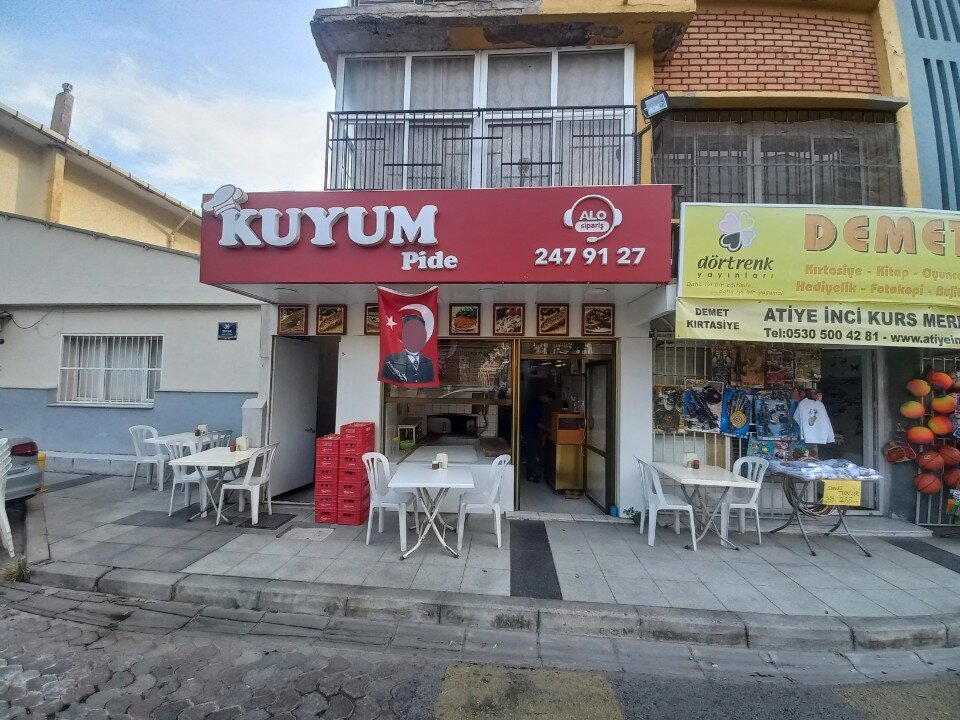
Pide in Izmir: What the Salonu Format Tells You
Walk into any traditional pide salonu in Aegean Turkey and the sequence is immediate: the heat from the taş fırın (stone oven) hits you before you see the counter, the smell of charring dough and rendered fat arrives a beat later, and the room reveals itself as a place organized entirely around production rather than performance. There are no printed tasting notes, no ambient music calibrated to mood, and no soft lighting. The architecture of a salonu is the architecture of a working kitchen given a dining room attached to it. Kuyum Pide Salonu in Izmir operates within that tradition, and understanding what that tradition demands is the first step to understanding what you're walking into.
Izmir's food culture differs from Istanbul's in a specific way: the city has historically favored Aegean restraint over Ottoman abundance. Where Istanbul's fine dining scene — from Michelin-recognized addresses like Turk Fatih Tutak to the centuries-deep Ottoman kitchen research at Asitane in Fatih — draws on layered spice traditions and courtly complexity, Izmir's salonu culture tends toward fewer ingredients handled with more confidence. That is not a lesser ambition. It is a different one, and pide is one of its clearest expressions.
The Ingredient Question: What Goes Into an Aegean Pide
The editorial angle on any honest pide house is sourcing, because the format has almost nowhere to hide. A lahmacun or a kebap can be adjusted with spice and technique; pide dough, by contrast, is a near-transparent lens on the quality of the flour, the water, and the filling. The Aegean region around Izmir has structural advantages here: proximity to the Urla peninsula's olive groves, access to Aegean lamb and ground meat from inland producers, and a dairy tradition that supplies fresh white cheese (beyaz peynir) at a quality level that varies enormously between producers. The salonu format does not typically advertise its sourcing, there are no provenance cards on the table, but the gap between a well-sourced pide and a generic one is detectable in the crust's char pattern, the fat distribution in the kıymalı (minced meat) filling, and the way the cheese melts rather than pools.
Izmir's position in the Aegean food corridor is worth mapping. The Urla peninsula, roughly 45 kilometers from the city center, has produced some of Turkey's most sourcing-conscious restaurants in recent years: OD Urla works a farm-to-table model with French technique, Teruar Urla anchors Mediterranean cuisine to local producers, and Vino Locale applies country-cooking discipline to the same supply chains. The salonu, operating at a different price point and without table-service ceremony, draws from the same geographic pool. The distinction is format and price tier, not necessarily the quality of the raw material.
How Kuyum Pide Salonu Sits in Izmir's Broader Eating Scene
Izmir's restaurant range has widened considerably in the past decade. The city now has credentialed meyhanes, Aegean-focused tasting menus, and wine-centric restaurants alongside its traditional esnaf lokantaları and pide houses. Within that spread, the salonu occupies a specific slot: lunch-anchored, cash-accessible, and organized around a narrow menu executed repeatedly and with accumulated precision. Adil Müftüoğlu, another Turkish address in the budget tier, represents a comparable register. Narımor sits further up the formality scale. Kuyum Pide Salonu occupies the middle distance: a specialist format rather than a general lokanta, with a menu that narrows to the point of discipline.
That narrowness matters. A pide salonu that attempts twelve varieties is usually worse at all of them than a salonu that does four well. The stone oven requires constant management, the dough needs precise timing between proof and baking, and the toppings need to be prepped at a volume that matches the day's expected covers. This is not a casual operation disguised as one. Elsewhere in Turkey, analogous formats include the etliekmek houses of Central Anatolia, Kısmet Etliekmek ve Lahmacun Salonu in Karaman represents that regional variant, and the street-level dürüm specialists of Istanbul, where Dürümzade in Beyoglu has earned long-distance travel for a single format. Kuyum operates in that company: places where format discipline and ingredient honesty do more than ambiance ever could.
Planning Your Visit
The salonu format in Turkey generally runs hardest at lunch, with evenings quieter in the pide-specific category, demand tends to peak when office workers and market traders want a fast, filling midday meal. Arriving before 12:30 or after 14:00 usually means shorter waits and a kitchen still working at full pace rather than running down the day's prep. Izmir's public transport network connects the city's main districts efficiently, and most traditional eating addresses are reachable by metro or dolmuş without a taxi. For broader context on the city's dining geography, our full Izmir restaurants guide maps the range from budget salonu to Aegean tasting menu. Those planning a longer Aegean itinerary might also consider Hiç Lokanta in Urla as a counterpoint: a more contemporary take on the same regional ingredients at a different price register.
For comparison against other regional Turkish specialists, or to understand how Aegean eating differs from Bodrum's coastal luxury at Maçakızı, or from the baklava craft culture of southeastern Turkey at Kocak Baklava in Gaziantep, the salonu format offers the clearest argument for why Turkish food at its most honest does not require fine dining scaffolding to be serious eating. The same principle applies at a global level: restaurants like Le Bernardin in New York City or Atomix demonstrate technical ambition at the highest tier, but the argument for restraint and ingredient integrity cuts across price points. A well-made pide from a competent stone oven is making a version of the same case.
Quick Comparison
| Venue | Cuisine | Price | Awards | Notes |
|---|---|---|---|---|
| Kuyum Pide SalonuThis venue — the venue you are viewing | This venue | Not listed | Not listed | Not listed |
| OD Urla | Farm to Table, Creative French | ₺₺₺ | Michelin 1 Star | ₺₺₺ |
| Vino Locale | Country cooking | ₺₺₺ | Michelin 1 Star | ₺₺₺ |
| Teruar Urla | Mediterranean Cuisine | ₺₺₺₺ | Michelin 1 Star | ₺₺₺₺ |
| Adil Müftüoğlu | Turkish | ₺ | Turkish, ₺ | Not listed |
| Aslında Meyhane | Turkish | ₺₺ | Turkish, ₺₺ | Not listed |
Continue exploring
More in Izmir
Restaurants in Izmir
Browse all →
Hotels in Izmir
Browse all →
Wineries in Izmir
Browse all →
At a Glance
- Rustic
- Casual Hangout
- Historic Building
Casual market eatery with a bustling, authentic local atmosphere in a tiny space.