Krishna Swaad Restaurant sits on NH 169A near Malpe in coastal Karnataka, where the Udupi vegetarian tradition runs deep and the sourcing logic is local by default. The setting is straightforward — a roadside address beside Stella Maris Catholic Church in Kalmadi — but the context is the point: this is Udupi, the region that defined a category of South Indian cooking recognised across the country.
Pearl is the En Primeur Club membership app — saves, bookings, and concierge access live there. Same editors, same standards.
- Address
- KSB COMPLEX, church), NH 169A, beside Stella Maris Catholic Church, Kalmadi, Udupi, Malpe, Karnataka 576106, India
- Phone
- +919035160198
- Directions
- Get directions
 Saves & bookings on Pearl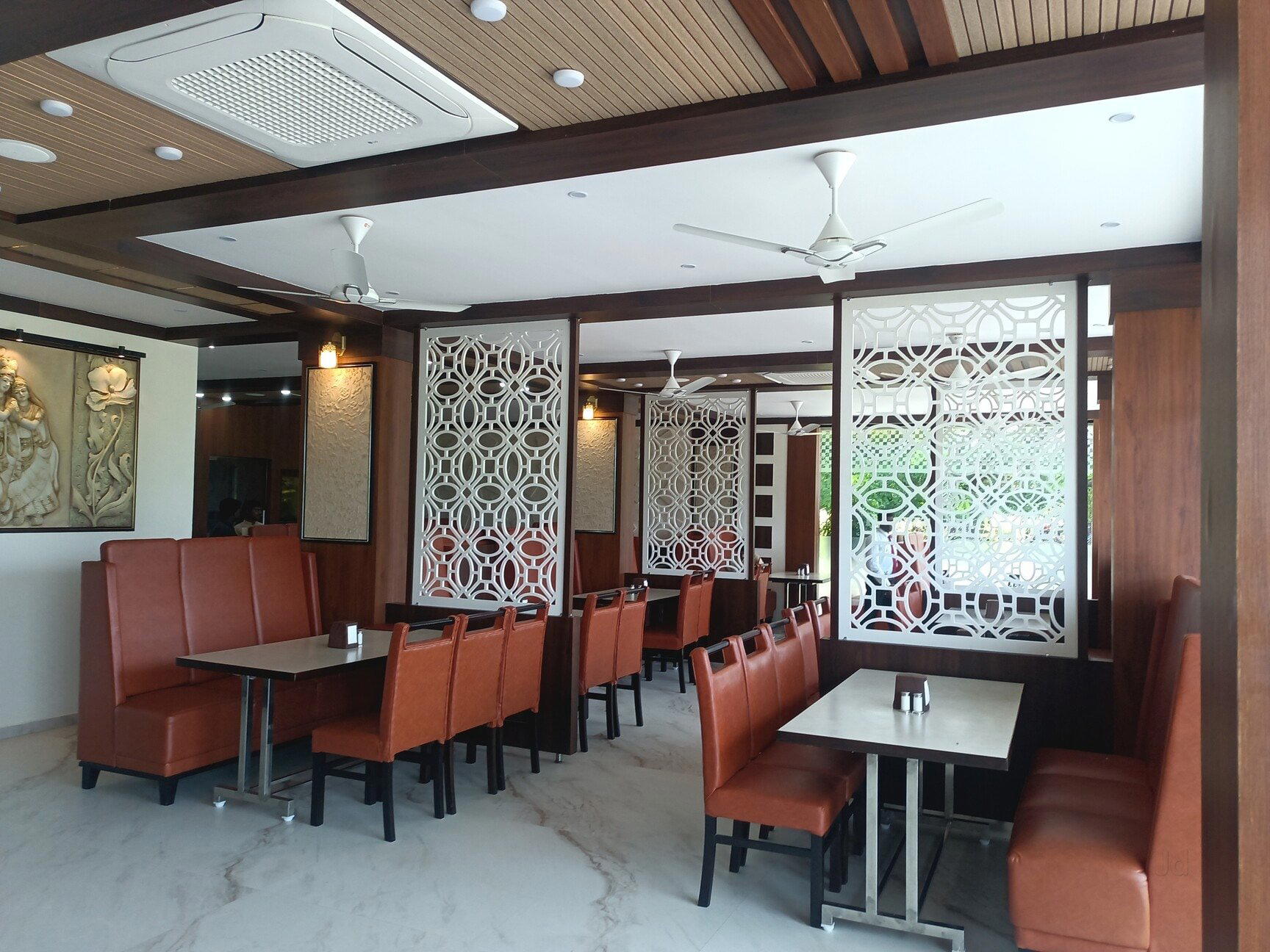
The Coastal Karnataka Table: Why Udupi's Sourcing Story Matters
Udupi sits at the junction of the Western Ghats and the Arabian Sea, and that geography has shaped its cooking more decisively than any chef or school. The town and its surrounding taluk produce coconut, rice, tamarind, curry leaves, raw jackfruit, and a rotation of drumstick, yam, and ash gourd that arrive at local kitchens in a rhythm governed by what the land gives, not what import logistics allow. The Udupi vegetarian tradition — temple-rooted, oil-restrained by religious convention, and built around these local staples — has been exported so widely across India that the original geography is sometimes lost. Here on NH 169A near Malpe, the geography is not lost. It is the context.
Krishna Swaad Restaurant occupies a position on this coastal stretch where the sourcing chain is short. Malpe is a working fishing harbour, but more relevant to a vegetarian kitchen is proximity to the agricultural output of the Udupi district: the paddy fields inland, the coconut groves along the coast, and the market networks that move produce from farm to town without the extended cold-chain logistics that characterise urban restaurant supply. In a city like Bangalore or Mumbai, a restaurant positioning itself around regional Karnataka produce is making a deliberate counter-cultural statement. In Udupi, that positioning is simply the baseline. For a broader look at how coastal and inland South Indian kitchens compare, Leela Kerala Terrace in Trivandrum offers a useful parallel from the Kerala side of the same coastal tradition.
The Address and What It Signals
The restaurant occupies the KSB Complex on NH 169A, beside Stella Maris Catholic Church in Kalmadi. That detail, a vegetarian South Indian kitchen set against a Catholic church landmark on a national highway connecting Udupi to Malpe, captures something true about coastal Karnataka's layered character. The district is simultaneously one of the most brahminical food cultures in India and a coastline where Konkani Catholic, Tulu-speaking fishing communities, and Bunts have maintained distinct culinary identities for centuries. The Udupi vegetarian tradition emerged from a specific temple-town context, and restaurants operating within it are implicitly working within that framework, whether or not they make the connection explicit.
NH 169A itself is a connector road, not a destination street. Restaurants along it serve a mix of local residents, highway travellers moving between Udupi town and the coast, and visitors arriving at Malpe beach. This is not the curated restaurant row of a metropolitan dining district. The setting is functional. That functionality is part of what keeps the cooking grounded in the sourcing logic of the region rather than in the performance logic of a tourist-facing kitchen. For the kind of theatrical coastal presentation that a tourist-facing format produces at the other end of the spectrum, WelcomCafe Oceanic Restaurant in Visakhapatnam offers an instructive contrast.
Udupi Vegetarian Cooking: The Ingredient Logic
Understanding what a Udupi kitchen does requires understanding what it refuses. The classic Udupi temple kitchen excludes onion and garlic, a constraint that, over centuries, produced a cuisine built on asafoetida, coconut, and a sophisticated layering of tempering spices to generate depth without those aromatic shortcuts. The result is a cooking tradition where the quality of the coconut press, the freshness of the curry leaf, and the fat content of the rice determine the outcome more directly than they would in a cuisine with more aromatics to fall back on.
Coconut in coastal Karnataka is not a garnish or a finishing note. It enters dishes at multiple stages: raw, toasted, as fresh-pressed milk, and as dried flakes that temper differently from fresh. Rice in the Udupi tradition extends well beyond the steamed grain: idli, dosa, neer dosa, mudde, and a range of rice-based preparations each require different fermentation timings, different grain varieties, and different water ratios. These are not interchangeable. A kitchen working with locally sourced, properly fermented batter produces a texture and sourness that a batter made from commercial mixes cannot replicate. The dosa category alone, which exported Udupi cooking to every city in India, is far more differentiated at source than its ubiquity elsewhere implies. For a look at how South Indian fermented formats travel into a standalone urban format, Dosa Crepes N More in Mehsana shows how the category adapts away from its origin geography.
Elsewhere in India, the Udupi vegetarian tradition sits in a specific tier: it is associated with value, accessibility, and speed rather than with the premium positioning that, say, Farmlore in Bangalore brings to Karnataka produce storytelling, or that Bukhara in New Delhi has built around North Indian culinary heritage. At origin, in Udupi itself, the tier question is less relevant. The cooking is evaluated on its own terms: does the rasam have proper sourness, does the sambar have body, does the chutney carry fresh coconut without tasting oily. Those are sourcing and technique questions, and they are the right questions to ask in this district.
Planning a Visit
Krishna Swaad Restaurant is located on NH 169A in Kalmadi, Malpe, making it accessible from both Udupi town centre and the Malpe beach area. Travellers arriving via Udupi railway station, on the Konkan Railway line that connects Mumbai to Mangalore, can reach Malpe by auto-rickshaw or local transport in under thirty minutes. Phone and booking details are not confirmed in current records, so arriving directly is the practical approach for most visitors. For a broader overview of where Krishna Swaad sits within Udupi's eating options, our full Udupi restaurants guide covers the district's dining range across price points and formats.
Across India's restaurant spectrum, the contrast in approach between a highway-adjacent Udupi kitchen and premium formats is considerable. Americano in Mumbai, Le Cirque Delhi in Delhi, Atomix in New York City, and Le Bernardin in New York City each operate in a tier where sourcing is a curated narrative point. In Udupi, sourcing is structural. The coconut in a Kalmadi kitchen comes from groves you can see from the road. That proximity is not a branding exercise.
Continue exploring
More in Udupi
Restaurants in Udupi
Browse all →

At a Glance
- Cozy
- Classic
- Family
- Casual Hangout
Current opening hours
- Monday
- 7 AM–10:30 PM
- Tuesday
- 7 AM–10:30 PM
- Wednesday
- 7 AM–10:30 PM
- Thursday
- 7 AM–10:30 PM
- Friday
- 7 AM–10:30 PM
- Saturday
- 7 AM–10:30 PM
- Sunday
- 7 AM–10:30 PM
Hours can change for holidays and private events. Last verified .
Cozy and refined with warm lighting and tasteful decor.
Know Before You Go
- Getting there
- KSB COMPLEX, church), NH 169A, beside Stella Maris Catholic Church, Kalmadi, Udupi, Malpe, Karnataka 576106, India