
Korean Kateiryori Puyo brings Korean home-style cooking into Sendai’s station-side dining orbit, with recognition in Tabelog’s Asian cuisine and ethnic cuisine EAST “Tabelog 100” selections for 2022, 2023, and 2024. Its appeal is less about spectacle than category clarity: Korean cooking treated as everyday comfort, social table food, and a serious regional dining choice in Miyagi.
Pearl is the En Primeur Club membership app — saves, bookings, and concierge access live there. Same editors, same standards.
- Address
- Japan, 〒984-0051 Miyagi, Sendai, Wakabayashi Ward, Shintera, 1 Chome−2−13 渡辺ビル 1F
- Phone
- +81 22-295-1045
- Website
- koreanfood-puyo.com
 Saves & bookings on Pearl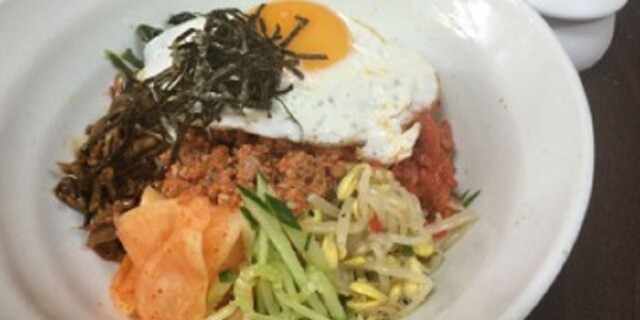
Approaching Sendai’s Shintera side, the city changes register: station crowds thin, office blocks give way to smaller dining addresses, and meals feel less like tourist shorthand than local repetition. Here, Korean Kateiryori Puyo sits in a category that matters in Japan yet is often under-read by visitors: Korean katei ryori, or home-style cooking, served not as a theme-night import but as ordinary urban dining.
Sendai’s public dining identity usually leans toward beef tongue, Sanriku-coast sushi, and station-adjacent sweets. Korean food occupies another lane. It meets a practical social need: group-friendly tables, shared plates, and enough heat, fermentation, rice, soup, and grilled elements to make dinner feel complete without fine-dining formality. The category is culturally specific, but its Japanese appeal is structural: it fits after-work meals, casual family dinners, and friend-group tables where ordering can expand without becoming a tasting menu.
Korean home cooking in a Sendai context
“Korean home-style” matters because it separates this restaurant from two familiar formats: barbecue-led yakiniku and polished contemporary Korean dining. Home-style Korean restaurants value range over theatre. The table is expected to carry contrast: rice with soup, spice with freshness, grilled or stewed dishes with banchan-like small accompaniments, and drinks that can move from beer into shochu, sake, wine, or cocktails without one fixed script.
That flexibility explains why a Korean restaurant can sit comfortably beside Sendai’s casual specialists. A pastry stop such as Ademain, a sweets address like Baisaou, or a local staple such as ankoya Ekimae ten answers a narrow craving. Korean home cooking answers a broader dinner problem: feeding several people well without making the meal revolve around one luxury ingredient.
The Tabelog Asian cuisine and ethnic cuisine EAST “Tabelog 100” recognition in 2022, 2023, and 2024 gives the address a useful signal in a crowded category. It is not a Michelin-style claim and should not be read as one. It does, however, place the restaurant within an eastern Japan selection where consistency, local demand, and category strength matter. For travelers, the value is not rarity for its own sake, but a dependable Korean format that has earned attention beyond neighborhood habit.
Why the format works for groups
Japanese restaurant culture often asks diners to choose between specialization and flexibility. Sushi counters, ramen shops, curry specialists, kissaten, izakaya, and yakiniku rooms each have strong rules of pace and ordering. Korean home-style dining is looser. It can absorb a quick lunch, drawn-out dinner, take-out, private-room use, and group table without changing its identity. That matters in Sendai, where the station area serves office workers, shoppers, domestic travelers, and locals meeting between train lines.
The room supports that role. An 84-seat restaurant with private rooms, spacious seating, tatami areas, and sunken seating belongs to a different dining economy than a counter-only specialist. It is built for conversation and repeat use. In a city where compact rooms often define quality, scale can be a virtue when the food tradition is communal. Korean cooking loses something when forced into preciousness; it gains force when the table has room for multiple dishes and several drinking styles at once.
Price positioning matters, though the editorial point is category rather than bargain. Compared with Sendai sushi addresses such as Shiogama Sushi Tetsu S-PAL sendai ten, where listed dinner budgets sit far higher, or beef-focused rooms such as Sumibi Yakiniku Gura Sendai asaichi ekimae ten, Korean Kateiryori Puyo occupies a more accessible dinner tier. Against casual station-area options such as Senrei Zushi JR sendai eki 3 kai ten or ankoya Ekimae ten, it offers a fuller sit-down meal structure rather than a narrower stop. That middle ground is the point: serious enough for dinner, informal enough for repeat use.
For a wider view of how the city’s dining pieces fit together, Our full Sendai restaurants guide maps the scene beyond the obvious station circuit. Travelers building a fuller itinerary can also cross-reference Our full Sendai hotels guide, Our full Sendai bars guide, Our full Sendai wineries guide, and Our full Sendai experiences guide.
How to read it against Japan's broader casual dining map
Korean restaurants in Japan deserve closer attention because they show how cities absorb neighboring food cultures into daily life. The result is neither purely Korean nor simply Japanese adaptation; it is a working restaurant category shaped by migration, trade, neighborhood demand, and Japan’s habit of giving casual formats clear boundaries. The same logic appears nationwide, from curry specialists such as [Curry Senmon Ten] Maruyama Kyoju. in Sapporo to Vietnamese cooking at (Shoku) Vietnam in Kawasaki and regional Japanese formats such as -Grilled beef Sukiyaki- KAMAKURA TANUKIAN 鎌倉 たぬき庵 in Kamakura.
Sendai’s version is useful because the city is large enough to sustain specialist dining but not so saturated that every category becomes performance. A meal here sits closer to everyday regional life than destination dining choreography. That makes it a counterweight to the polished predictability of major-city itineraries, including Tokyo addresses such as. 鮪と炭火焼き うお炭 秋葉原店 in Tokyo, Osaka cafés like.cafe in Osaka, or Kyushu independents such as.know in Kumamoto.
The better comparison may be with restaurants that serve a clear purpose rather than chase occasion dining. achaar and Ako show how immigrant and cross-cultural cooking can become part of a city’s normal restaurant vocabulary. Outside Japan, the same principle appears in focused ways at Jōdo Saké Bar in Los Angeles or Onigiri Time in Pasadena, where Japanese foodways are translated through local habits. In Sendai, Korean Kateiryori Puyo works in the opposite direction: Korean domestic cooking folded into a Japanese regional city’s everyday dining grammar.
The editorial case is clear. This is not the Sendai meal for ceremony, nor the address for a chef-counter narrative. It is the stronger choice when the priority is Korean cooking with social range, proven local traction, and enough recognition to justify crossing out of the default station-dining script.
Pricing, Compared
Nearby venues at a similar price tier for orientation.
| Venue | Cuisine | Price | Notes |
|---|---|---|---|
| Korean Kateiryori PuyoThis venue — the venue you are viewing | Not listed | $$ | Not listed |
| 扶餘 | 若林区, Korean Home Cooking | $$ | Not listed |
| kazunori ikeda individuel Minamimachidoori ten | Aoba-ku, Modern French Patisserie & Cafe | $$ | Not listed |
| Genji | Not listed | $$ | Aoba Ward / Bunka Yokocho (Culture Alley), Traditional Sendai Izakaya |
| 鮨德 | Sendai, Japanese Restaurant | Not listed | Not listed |
| Una Ki | Kokubuncho, Traditional Japanese Unagi | $$ | Not listed |
Recognition history
Dated appearances from independent guides and award organizations, with the underlying list record or original source where available.
Tabelog 100 #82 · No. 82
Tabelog · Tabelog 100 - Asian cuisine / Ethnic cuisine - EAST - 2024
At a Glance
- Cozy
- Lively
- Casual
- Casual Hangout
- Family
- Group Dining
- After Work
- Late Night
- Standalone
- Beer Program
Current opening hours
- Monday
- Closed
- Tuesday
- 11 AM–2 PM, 5–10 PM
- Wednesday
- 11 AM–2 PM, 5–10 PM
- Thursday
- 11 AM–2 PM, 5–10 PM
- Friday
- 11 AM–2 PM, 5–11 PM
- Saturday
- 11 AM–2 PM, 5–11 PM
- Sunday
- 11 AM–2 PM, 5–10 PM
Hours can change for holidays and private events. Last verified .
A warm, at-home atmosphere with a focus on welcoming both children and adults, feeling like a cozy neighborhood Korean spot rather than a formal restaurant.