Kome Seafood & Grill Buffet
Our verdict
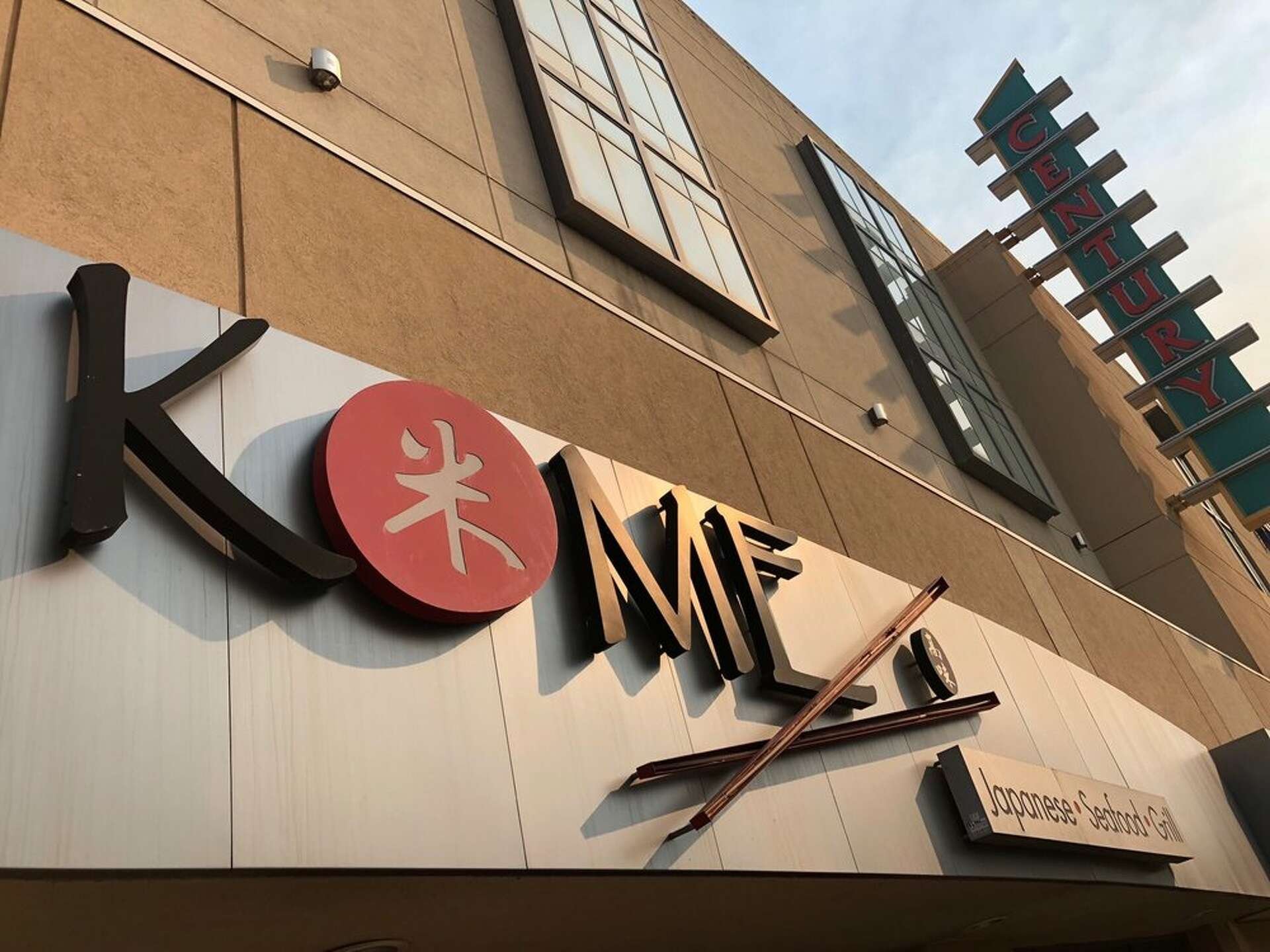
Kome Seafood & Grill Buffet on Junipero Serra Boulevard sits inside Daly City's dense corridor of Asian-American dining, where the buffet format has long served as a practical vehicle for high-volume seafood and grilled proteins. The format here leans into variety across a broad spread, positioning it alongside the neighborhood's value-driven, family-focused table. For diners working through Daly City's options, it occupies the accessible, communal end of the local seafood spectrum.

Pearl is the En Primeur Club membership app, where members save venues, book tables and use the concierge.
The menu
What to order
- Crab legs
- Tempura
- Grilled meats
Where the Buffet Format Does Real Work
Daly City's dining corridor along Junipero Serra Boulevard is not a scene built on minimalism. It is a stretch defined by volume, variety, and the practical demands of a densely populated, working-class immigrant community that expects its tables to deliver quantity alongside quality. The buffet format, often dismissed in fine-dining circles, functions here as something more purposeful: a democratic structure that lets a table of six sample across protein types, preparation styles, and regional influences in a single sitting. Kome Seafood & Grill Buffet, at 1901 Junipero Serra Blvd, sits inside that tradition.
This is a different calculus from the one applied at, say, Le Bernardin in New York City, where a single piece of fish receives weeks of sourcing consideration and is plated for one. At the buffet tier, the sourcing logic inverts: breadth replaces depth, and the kitchen's skill is measured by how consistently it can execute across a large, rotating spread rather than how precisely it can spotlight a single ingredient. Neither model is inherently superior. They answer different questions.
The Seafood Buffet in Its Bay Area Context
The Bay Area has a complicated relationship with the buffet format at large. At the fine-dining end, restaurants like Lazy Bear in San Francisco and Single Thread Farm in Healdsburg have pushed toward highly controlled, course-by-course experiences where sourcing is a narrative device as much as a culinary one. Further south, The French Laundry in Napa operates on a similarly exacting premise. These are restaurants where the origin of each ingredient is treated as part of the meal's meaning.
The buffet tradition that Kome operates within makes a different set of assumptions. Seafood arrives in volume, prepared across multiple methods, and the diner's role shifts from passive recipient of a chef's sequence to active assembler of their own plate. In Daly City specifically, where the Filipino, Chinese, and broader Asian-American communities have long shaped what a restaurant is expected to provide, the format carries cultural weight. It mirrors the logic of the family-style table: abundance as hospitality, variety as respect for different palates at the same meal.
Daly City's broader dining scene reflects this orientation. Koi Palace, one of the city's most recognized Chinese restaurants, has built a substantial reputation on high-volume dim sum executed with consistency. Kan Kiin approaches Thai cuisine from a more focused, single-dish perspective. Kome slots into neither of those models precisely, occupying the open-format buffet tier that prioritizes access and range over editorial curation. For a fuller map of where each of these fits, our full Daly City restaurants guide breaks down the corridor by format and price point.
Sourcing at the Buffet Scale: What It Actually Means
The ingredient-sourcing conversation in American seafood dining tends to center on the high end. Providence in Los Angeles and Addison in San Diego both operate sourcing programs where the provenance of each fish is documented and communicated to the diner. Blue Hill at Stone Barns in Tarrytown has made the farm-to-table origin story its primary editorial identity. These approaches work at low-volume, high-ticket operations.
At the buffet scale, sourcing decisions carry a different kind of weight. The kitchen at a seafood and grill buffet is managing throughput across dozens of proteins simultaneously, which means procurement happens at a volume that rules out the small-batch, relationship-driven supplier model. The relevant question is not whether the fish came from a specific named boat or bay, but whether the kitchen is cycling product frequently enough to keep quality consistent across a long service window. Freshness at this format is a function of turnover rate, not origin story.
This is a useful frame for any diner evaluating a buffet against restaurants operating at a completely different scale. Comparing Kome's model directly to what Alinea in Chicago or Atomix in New York City do with sourcing is a category error. The better comparison set is other Bay Area seafood buffets serving a similar community at a similar price tier, where the editorial question is about consistency and value within the format's own logic.
The Grill Component and Its Place in the Format
The addition of a grill component to a seafood buffet is a common move in this category, and it does specific work. Grilled proteins hold better under heat lamps, offer textural contrast to steamed or poached seafood, and tend to perform well for diners who are less comfortable with raw or lightly prepared fish. In the broader American buffet market, the pairing of seafood and grill stations has become a reliable format for operations targeting families and mixed groups with divergent preferences. It is a practical hedge, not a culinary statement.
Restaurants operating at the opposite end of the spectrum, like The Inn at Little Washington or Bacchanalia in Atlanta, make a single unified argument through their menus. The buffet format makes no such argument; it distributes choice to the diner and asks the kitchen to maintain quality across a wide range simultaneously. That is a harder operational task than it appears from the outside, and when executed well, it earns its own form of respect.
Planning Your Visit
Kome Seafood & Grill Buffet is located at 1901 Junipero Serra Blvd, Daly City, CA 94014, along one of the city's primary commercial corridors with accessible street and nearby lot parking typical of the strip. As a buffet format, reservations are generally not required at comparable operations in this category, though larger groups during peak dinner hours on weekends may encounter wait times. The format suits families and groups with varied preferences, and the price point, while unconfirmed, sits in the range consistent with the Bay Area's mid-tier buffet category.
Diners oriented toward the tasting-menu and sourcing-narrative end of the Bay Area dining spectrum, including the kinds of experiences covered at Brutø in Denver, Causa in Washington, D.C., or Emeril's in New Orleans, will find Kome operating on a completely different set of premises. That difference is not a flaw. It is the format being honest about what it is and what it serves. For Daly City's community-oriented, high-variety seafood buffet tier, the address on Junipero Serra is a practical and culturally grounded choice. The fine-dining seafood conversation happening at the global level is worth knowing, but it does not invalidate the one happening here.
Frequently asked questions
Is Kome Seafood & Grill Buffet child-friendly?
The buffet format at 1901 Junipero Serra Blvd is structured for flexibility, which generally suits families. Self-service stations let diners pick and choose at their own pace, removing the pressure of set menus or tasting courses. Daly City's dining corridor along this stretch is oriented toward community and volume rather than formality.
What's the overall feel of Kome Seafood & Grill Buffet?
Kome operates in the practical, high-turnover register that defines Daly City's commercial dining strip on Junipero Serra Boulevard. The emphasis is on range and quantity over curated presentation. It fits the tradition of Bay Area seafood buffets that prioritize access over ceremony.
How does Kome Seafood & Grill Buffet compare to other seafood buffets near Daly City and San Francisco?
Kome sits in a distinct tier from the à la carte seafood restaurants that dominate San Francisco's waterfront, operating instead within Daly City's value-oriented buffet category. The dual seafood-and-grill format gives it broader range than single-format buffets in the immediate area. For diners coming from the 94014 zip code or nearby, it is one of the few options in the corridor combining both station types under one roof.
What should I order at Kome Seafood & Grill Buffet?
As a buffet, the selection rotates rather than operating from a fixed menu, so the seafood and grill stations are the structural anchors of the meal. Grilled proteins tend to hold quality better in the buffet format than delicate preparations, making the grill component a practical focus. Arrive during peak service for the freshest rotation.
How do I find Kome Seafood & Grill Buffet?
Kome Seafood & Grill Buffet is located at 1901 Junipero Serra Blvd, Daly City, CA 94014, Daly City.
Is Kome Seafood & Grill Buffet reservation-only?
No reservation details are published for Kome Seafood & Grill Buffet at 1901 Junipero Serra Blvd. Buffet-format restaurants in this category typically operate on a walk-in basis, though peak weekend hours along this Daly City corridor can draw significant foot traffic.
What's the standout thing about Kome Seafood & Grill Buffet?
The combination of a seafood-focused spread with a dedicated grill component is the defining structural choice here. In the Bay Area buffet category, that dual format offers range that pure seafood or pure grill operations do not. The location on Junipero Serra Boulevard places it at the center of Daly City's most active dining stretch.
At-a-Glance Comparison
| Venue | Cuisine | Price | Awards | Notes |
|---|---|---|---|---|
| Kome Seafood & Grill BuffetThis venue (the venue you are viewing) | Seafood & BBQ Buffet | $20–30 | Not listed | Not listed |
| Le Bernardin | French Seafood Fine Dining | $300–500 | 3 Michelin Stars · World's 50 Best #13 | French, Seafood |
| Atomix | Modern Korean Tasting Menu | $300–500 | 2 Michelin Stars · World's 50 Best #7 | Modern Korean, Korean |
| Lazy Bear | Modern American Tasting Menu | Not listed | 2 Michelin Stars · World's 50 Best #25 | Progressive American, Contemporary |
| Alinea | Avant-Garde Molecular Gastronomy | $300–500 | 2 Michelin Stars · World's 50 Best #37 | Progressive American, Creative |
| Atelier Crenn | Contemporary French Fine Dining | $300–500 | 3 Michelin Stars · World's 50 Best #44 | Modern French, Contemporary |
Continue exploring
More in Daly City
Restaurants in Daly City
All restaurants in Daly City →
Bars in Daly City
Browse all →
Details
- Lively
- Casual
- Family
- Group Dining
- Casual Hangout
- Buffet
Casual and family-friendly dining environment with a lively buffet atmosphere.