Tabelog 100 #58
Our verdict
Kitchen Pan Chi puts Nakameguro’s yoshoku tradition in a compact, everyday register: Japanese-style Western cooking, omurice, and hamburger steak rather than ceremony or tasting-menu theatre. Its Tabelog 100 Yoshoku EAST 2025 selection, plus earlier Yoshoku 100 appearances in 2020 and 2022, places it among Tokyo’s more closely watched addresses for this genre.

Pearl is the En Primeur Club membership app, where members save venues, book tables and use the concierge.
The menu
What to order
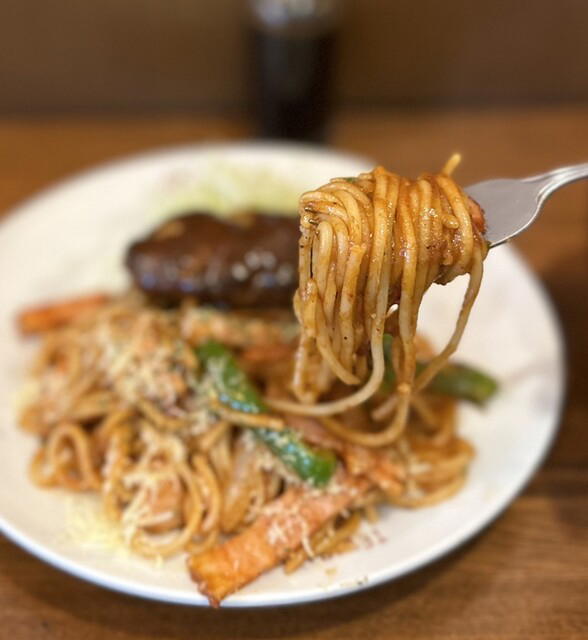
- Hamburg steak with house demi-glace
- Omurice
- Fried shrimp (ebi fry)
- Nokke customizable topping plates
Approaching Tokyo’s small-restaurant streets, the rhythm changes from city traffic to compact dining: narrow frontage, quick decisions, and a room built for turnover rather than lingering spectacle. Yoshoku works well in this setting because the genre has never depended on luxury signals. Its authority comes from repetition, heat control, and a Japanese reading of Western comfort dishes that became local grammar long ago.
Kitchen Pan Chi belongs to that grammar. The category listed around it is precise rather than decorative: yoshoku, omurice, and hamburger steak. Those three words say more about the experience than a long menu essay would. In Tokyo, yoshoku is not a novelty category; it is an urban dining language with its own rules, distinct from French, Italian, or American diner cooking, even when it borrows their silhouettes.
Yoshoku in Tokyo has shifted from comfort food to a judged craft category
Tokyo can be misleading. The city is often discussed through coffee, design stores, seasonal crowds, and wine-bar evenings, but its restaurant map is broader than that lifestyle shorthand. Across the city, casual bakeries, pizzerias, izakaya, French rooms, and long-running Japanese-Western counters sit close enough to make Tokyo feel less like a single dining identity than a set of overlapping habits.
That overlap matters for yoshoku. A dish such as omurice carries a domestic memory for many Japanese diners, but restaurant versions are judged with the same seriousness applied to ramen or tonkatsu: rice texture, sauce balance, egg handling, portion logic, and whether the cooking feels steady under pressure. Hamburger steak sits in a similar zone, familiar enough to expose flaws quickly. The format rewards kitchens that can repeat a narrow brief without making it feel mechanical.
The Tabelog Hyakumeiten 2025 recognition gives this restaurant a useful external marker. Tabelog’s score of 3.70 places it in the kind of Tokyo category where regulars, specialist diners, and list-watchers overlap. For yoshoku, that overlap is significant: this is not a cuisine that relies on imported luxury ingredients to justify attention.
Compared with other Tokyo comparison points, the positioning is clear. Seirinkan represents Tokyo’s pizzeria pull, Les deux sits in a French bracket, and Tori Yoshi Nakameguro honten occupies a Japanese dining lane. TRASPARENTE Nakameguro ten and Premarché Gelateria Toukyou nakameguro ekimae ten show a lighter daytime side of the city’s dining map. Against that spread, Kitchen Pan Chi reads as a compact yoshoku specialist rather than an all-rounder.
The current appeal is discipline, not reinvention for its own sake
The evolution of Tokyo yoshoku is not a simple move from old-fashioned to modern. Better understood, it is a tightening of standards around dishes once treated as everyday. The city has become more precise about casual food: curry shops are parsed by spice structure, ramen by broth architecture, and yoshoku by the small technical decisions that separate nostalgia from craft.
Kitchen Pan Chi fits that shift because its recognition sits inside a genre-specific award context rather than a broad fine-dining hierarchy. That distinction matters. Michelin-style tasting menus and counter omakase can signal ambition through format alone; yoshoku has to make its case through familiar plates that leave little room for abstraction. The restaurant’s listed budget range also keeps the experience close to the practical appeal of the genre. This is not a room designed to disguise its purpose with service choreography.
The casual format pushes it further into Tokyo’s older everyday-dining logic. In a city where many sought-after restaurants now require planning windows, referral trails, or platform fluency, yoshoku can keep a different social contract. The trade-off is patience and timing. The reward is a genre experienced in the register where it developed: direct, compact, and governed by the meal rather than by ceremony.
There is also an etiquette note worth taking seriously in restaurants of this type: attention should not interrupt the room’s flow. Tokyo casual specialists often tolerate interest while trying to protect service and the comfort of other diners. The point is not secrecy. It is maintaining the kind of environment where a small restaurant can function under sustained demand.
How to place it within a Tokyo dining itinerary
This is a smart counterweight to the city’s reservation-heavy meals. A Tokyo itinerary can quickly become dominated by sushi counters, kappo rooms, and modern tasting menus, all of which require planning and budget concentration. Yoshoku offers another reading of the city: Western-derived dishes absorbed into Japanese daily life, then sharpened through local expectations. That makes the category especially useful for travelers who want Tokyo food culture beyond luxury shorthand.
For a wider city plan, use Our full Tokyo restaurants guide alongside nearby or contrasting Tokyo dining rooms, casual counters, specialist cafes, and other unnamed restaurants across the city. For the rest of the trip, pair the meal map with Our full Tokyo hotels guide, Our full Tokyo bars guide, Our full Tokyo wineries guide, and Our full Tokyo experiences guide.
Japan’s casual-specialist circuit also rewards comparison without needing to turn every meal into a famous-name checklist. The same appetite for focused formats appears across other cities and across Japanese-food scenes abroad, where tightly defined formats travel best when the premise is clear. Kitchen Pan Chi is best understood inside that broader pattern of compact restaurants built around a narrow promise.
The editorial read is simple: choose this for yoshoku specificity, not for ceremony. The appeal lies in seeing how a familiar category can accumulate critical weight through consistency, small scale, and a narrow cooking brief. In Tokyo, that may be a more revealing meal than another polished room trying to announce ambition.
Frequently asked questions
When can I go to Kitchen Pan Chi?
Current opening hours for Kitchen Pan Chi are not included in the provided venue details, so check directly before going.
What's the pricing like at Kitchen Pan Chi?
Pricing at Kitchen Pan Chi is listed as JPY 1,000 - JPY 1,999 JPY 1,000 - JPY 1,999 View spending breakdown.
What's Kitchen Pan Chi's location?
Tokyo.
What do critics highlight about Kitchen Pan Chi?
Attention focuses on its place in yoshoku, especially after its Tabelog Hyakumeiten recognition in 2025. The listed categories of yoshoku, omurice, and hamburger steak support a compact, focused reading of the restaurant.
Is Kitchen Pan Chi good for vegetarians?
Kitchen Pan Chi is listed under yoshoku, omurice, and hamburger steak. Those categories do not, by themselves, confirm vegetarian suitability, so diners with dietary requirements should check directly before visiting.
A Pricing-First Comparison
Comparable venues at the same tier.
| Venue | Cuisine | Price | Awards | Notes |
|---|---|---|---|---|
| Kitchen Pan ChiThis venue (the venue you are viewing) | Japanese yoshoku (Western-style comfort food) | $10–20 | Tabelog 100 #58 | Not listed |
| Teuchi Udon Iwashiya Aoyama ten | Handmade Sanuki Udon | $10–20 | Tabelog 100 #34 | Minato, Handmade Sanuki Udon |
| Kitchen Taka | Japanese yoshoku (Western-style comfort food) counter | $10–20 | Tabelog 100 #19 | Shinjuku, Japanese yoshoku (Western-style comfort food) counter |
| Natsuya no Chuka Soba | Japanese Ramen | $1–10 | Tabelog 100 #99 | Ōta, Japanese Ramen |
| Raamen Yama to Ki | Classic Tokyo Ramen Counter | $10–20 | Tabelog 100 #82 | Suginami, Classic Tokyo Ramen Counter |
| Rodin | European-style Japanese Curry | Not listed | Tabelog 100 #18 | Chūō, European-style Japanese Curry |
Recognition history
Dated appearances from independent guides and award organizations, with the underlying list record or original source where available.
Tabelog 100 #58 · No. 58
Tabelog · Tabelog 100 - Yoshoku - EAST - 2025