
A preserved British-style tearoom in Kitahama’s financial quarter, Kitahama Retro turns Osaka café culture toward architecture, queue discipline, cakes, sandwiches, and tea service rather than espresso-bar speed. Its Tabelog 100 Cafe WEST 2025 selection and earlier 2021 recognition place it among Kansai café rooms where format and setting matter as much as the plate.
Pearl is the En Primeur Club membership app — saves, bookings, and concierge access live there. Same editors, same standards.
- Address
- Japan, 〒541-0041 Osaka, Chuo Ward, Kitahama, 1 Chome−1−26 北浜レトロビルヂング
- Phone
- +81 6-6223-5858
- Website
- instagram.com
 Saves & bookings on Pearl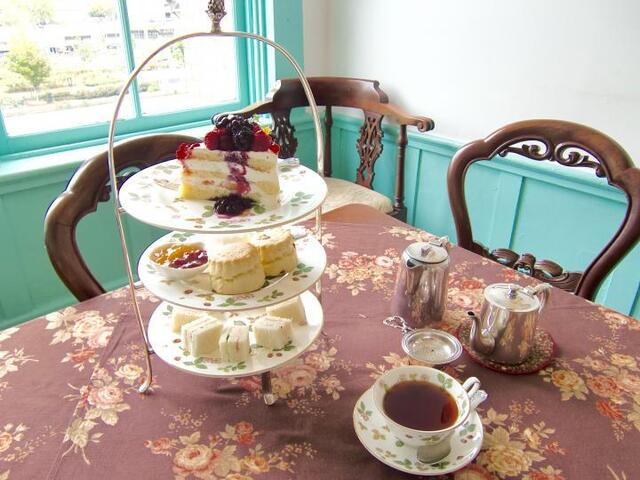
Kitahama’s riverfront moves at a different tempo from Namba’s retail rush or Umeda’s station gravity. Around the Osaka Securities Exchange, the streets keep the city’s old commercial posture: stone façades, bank-era confidence, and purposeful office workers. In that context, Kitahama Retro reads less as a conventional café than a preservation-minded tearoom, where room, counter, cake case, and floor team work in tight sequence.
Osaka is often reduced to takoyaki, okonomiyaki, kushikatsu, and late-night drinking, but its daytime café culture is more layered. Kissaten traditions, patisserie-led salons, bakery cafés, and specialty coffee bars occupy separate lanes. Kitahama Retro sits in the British-tea-and-cake lane, with sandwiches and takeout adding practical rhythm beneath the theatrical upstairs tea-room experience. This is not a caffeine stop for laptop dwellers or a dessert shop built only around display; its appeal is the old-fashioned full-room ritual, handled at café scale.
A tearoom format inside Osaka's banking quarter
The location gives the experience its editorial weight. Kitahama is one of Osaka’s more formal business districts, shaped by finance, offices, and civic architecture, so a tea room here does not compete with Shinsaibashi’s youth-driven dessert traffic or the basement-food energy around major stations. It works as a pause inside that formal district. The building is part of the draw: the site is a nationally registered tangible cultural property, a designation that explains the controlled pace and non-smoking policy more persuasively than any hospitality slogan.
The service format depends on coordination rather than personality. With 40 seats, possible shared-table seating, and a busy-period time limit used to protect turnover and the building, the experience relies on front-of-house pacing. The first floor handles shop and takeout traffic; the second-floor tea room absorbs seated guests. That split creates a hierarchy familiar in Japanese cafés with serious reputations: one flow for purchasing, another for sitting, and a staff rhythm that keeps them from colliding.
Recognition explains why the queue behaves differently from a casual neighborhood stop. Kitahama Retro was selected for Tabelog Cafe WEST “Tabelog 100” in 2025 and Tabelog Cafe “Tabelog 100” in 2021. Tabelog’s café lists capture a category often missed by international awards: rooms where domestic diners judge pastry, tea, architecture, and service discipline together. A 3.68 Tabelog score places it in a serious local conversation without making it a luxury dining proposition.
Cakes, sandwiches, and the discipline of afternoon service
The menu category is concise: café, cake, and sandwich. That sounds ordinary until set against Osaka’s broader dining habits. The city excels at high-speed casual eating and counter-based cooking, while the tearoom asks for different attention. The kitchen and service team are not building a chef-led tasting menu; they manage consistency across items that live or die by freshness, timing, and room temperature. Cakes must hold visual appeal in the case, sandwiches must work as light meal rather than garnish, and tea service must slow the table without freezing the queue.
This team dynamic is the story. In a small café format, there is no sommelier decoding a cellar and no chef biography carrying the narrative. Credibility comes from alignment between shop, kitchen, and floor. Takeout customers need a path separate from seated guests. The upstairs room needs turnover without feeling rushed. Shared tables require host control. Cash-only payment and first-come seating sharpen the operation: with fewer digital buffers and less reservation smoothing, the room depends on direct human choreography.
Against nearby comparison points, the position is clear. OXYMORON Kitahama operates in a similar accessible price band, while MOTO COFFEE keeps one foot in the lower everyday-café bracket. Gokan Kitahama honkan pushes patisserie spending slightly higher, and RIKIchan Kitahama ten belongs to a different dinner economy. The restaurant’s lane is narrower: heritage room, daytime tea, cakes, sandwiches, and an audience willing to wait for atmosphere as well as food. It is a useful counterpoint to Osaka’s faster, hotter, louder eating traditions.
How to read Kitahama Retro in a wider Osaka itinerary
For travelers building a day around food rather than monuments, the café works well as a tonal reset. Pair it with a serious lunch or dinner elsewhere in Osaka rather than treating it as the central meal. The city rewards contrast: tea room in Kitahama, department-store food halls in Umeda, street-level snacks around Namba, and reservation-led counters across quieter neighborhoods. The value is not excess; it is how the room makes Osaka’s commercial history visible through a cup, a slice of cake, and a tightly managed table.
That broader map matters because Osaka’s dining identity is unusually wide. For a café comparison inside the city, .cafe and 52CHO-ME BAKERY show the bakery-and-café side of the spectrum, while 551 Horai (551蓬莱) represents a more populist Osaka food marker. For Italian cooking, 99 Pizza Napoletana Gourmet and a canto (Italian) widen the frame. Readers planning the city as a whole should use Our full Osaka restaurants guide, Our full Osaka hotels guide, Our full Osaka bars guide, Our full Osaka wineries guide, and Our full Osaka experiences guide.
Japan’s casual and specialist dining categories reward cross-city comparison. -Grilled beef Sukiyaki- KAMAKURA TANUKIAN 鎌倉 たぬき庵 in Kamakura. 鮪と炭火焼き うお炭 秋葉原店 in Tokyo.know in Kumamoto, (Shoku) Vietnam in Kawasaki, [Curry Senmon Ten] Maruyama Kyoju. in Sapporo, and [ki:] in Kyoto show how sharply format changes by city. Abroad, Jōdo Saké Bar in Los Angeles and Onigiri Time in Pasadena underline a separate point: Japanese dining culture travels well when format is respected, but the restaurant depends on its Osaka setting. Remove the building and district, and the café loses much of its meaning.
The verdict is practical rather than sentimental. The restaurant belongs on an Osaka dining plan for travelers who care about café history, room discipline, and the small operational details separating a preserved tearoom from a themed one. It is not the place to measure Osaka by volume or spectacle. It is where the city’s mercantile past, domestic café awards culture, and afternoon service habits briefly align.
Where the Accolades Land
Comparable venues by price and recognition.
| Venue | Cuisine | Price | Notes |
|---|---|---|---|
| Kitahama RetroThis venue — the venue you are viewing | British-style tearoom & cafe | $$ | Not listed |
| MONDIAL KAFFEE 328 | Specialty Coffee & Café with House-Roasted Beans and Sweets | $$ | Nishi |
| MLESNATEA OSAKA | Sri Lankan specialty tea cafe with hot cakes | $$ | Kita |
| Main Lounge (Rihga Royal Hotel Osaka) | Hotel lounge café with breakfast, sweets and afternoon tea | $$ | Kita |
| Alcyon Houzenji honten | French-style tea salon & patisserie | $$ | Chūō |
| Whitebird coffee stand | Specialty Coffee Stand | $$ | Kita |
Recognition history
Dated appearances from independent guides and award organizations, with the underlying list record or original source where available.
Tabelog 100 #41 · No. 41
Tabelog · Tabelog 100 - Cafe - WEST - 2025
Continue exploring
More in Osaka
Restaurants in Osaka
Browse all →




Bars in Osaka
Browse all →




Hotels in Osaka
Browse all →




Wineries in Osaka
Browse all →
At a Glance
- Classic
- Cozy
- Romantic
- Well Known
- Date Night
- Casual Hangout
- After Work
- Brunch
- Solo
- Historic Building
- Design Destination
- Standalone
- Waterfront
- Waterfront
- Street Scene
Current opening hours
- Monday
- 11 AM–7 PM
- Tuesday
- 11 AM–7 PM
- Wednesday
- 11 AM–7 PM
- Thursday
- 11 AM–7 PM
- Friday
- 11 AM–7 PM
- Saturday
- 10:30 AM–7 PM
- Sunday
- 10:30 AM–7 PM
Hours can change for holidays and private events. Last verified .
Set in a 1912 historic building with Glasgow School–influenced architecture, the tearoom has a nostalgic, classic British atmosphere with intimate indoor seating, refined vintage decor, and a relaxed, conversational feel ideal for afternoon tea.