
Katsu Yoshi places Ningyocho tonkatsu in a compact, serious register: 18 seats, counter and table formats, lunch and dinner pricing in the JPY 2,000–3,999 range, and repeated selection for Tabelog’s Tonkatsu 100, including 2026. Its drinks listing matters more than it first appears, with sake and wine giving the pork-cutlet format a broader dining rhythm than a quick fry shop.
Pearl is the En Primeur Club membership app — saves, bookings, and concierge access live there. Same editors, same standards.
- Address
- 3 Chome-4-11 Nihonbashiningyocho, Chuo City, Tokyo 103-0013, Japan
- Phone
- +81 3-6231-0641
- Website
- katuyoshi.com
 Saves & bookings on Pearl
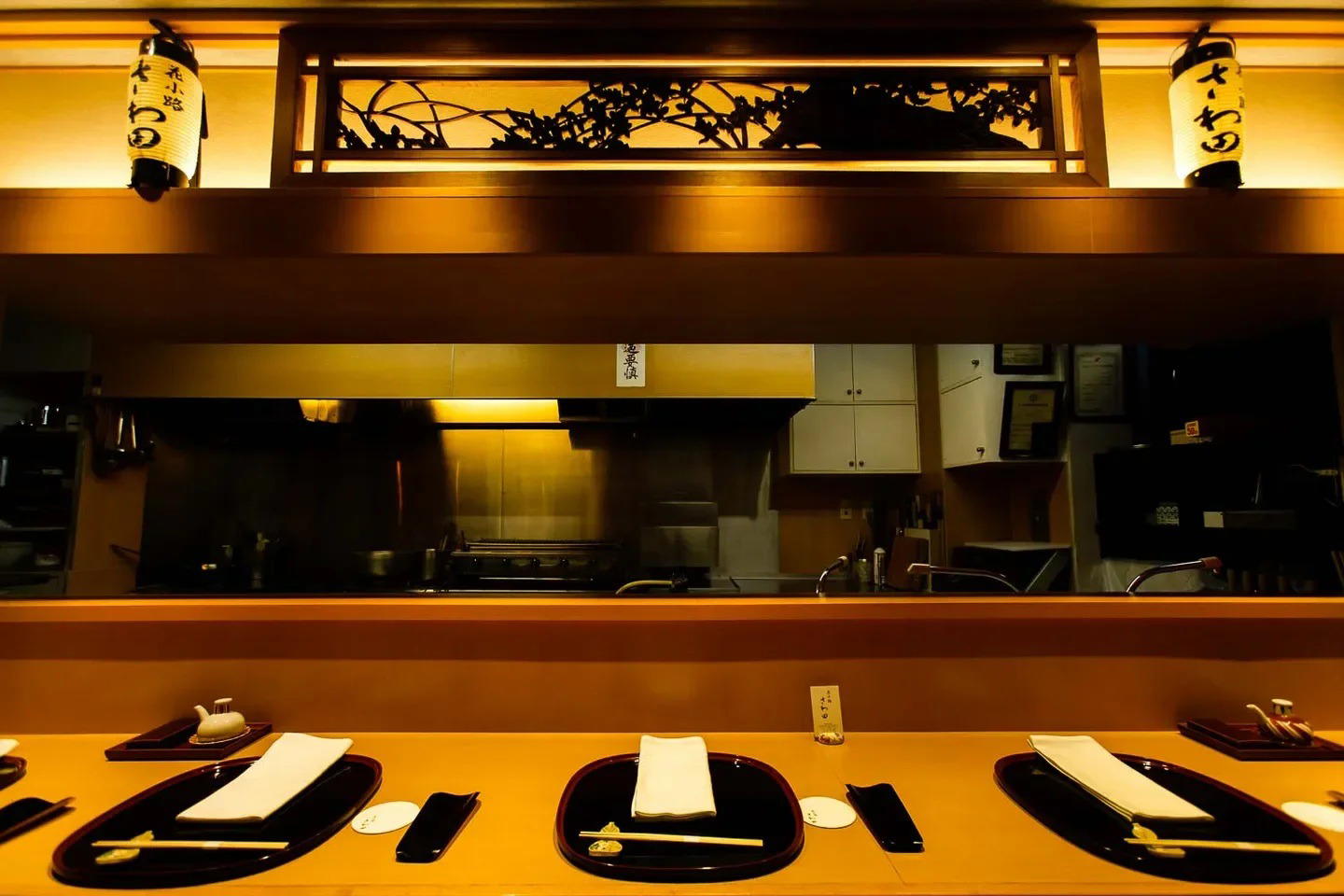
Ningyocho rewards restaurants that keep their scale tight. The streets around the station sit between old merchant Tokyo and office-worker Chuo, so lunch can move quickly while dinner asks for a little more patience. In that setting, tonkatsu works as both comfort food and technical cooking: pork, coating, oil management, cabbage, rice, sauce, and timing. Katsu Yoshi belongs to the smaller end of that category, with 18 seats split between a six-seat counter on the first floor and table seating above. That footprint matters. Tonkatsu loses authority when it becomes anonymous volume; here, the format keeps the cooking close to the room.
Tokyo’s serious tonkatsu scene has become more stratified over the past decade. At one end are casual station-adjacent counters built for turnover; at the other are specialist rooms where cut selection, frying sequence, and pacing are treated with the concentration usually associated with sushi or tempura. This address sits in the specialist bracket without drifting into ceremony. The evidence is practical rather than theatrical: Tabelog’s Tonkatsu 100 selections across 2018, 2019, 2021, 2022, 2024, and 2026, a 3.73 score, and pricing that keeps lunch in the JPY 2,000–2,999 range and dinner in the JPY 3,000–3,999 range.
Tonkatsu treated as a specialist counter meal, not a quick set lunch
The strength of this kind of restaurant is discipline. Tonkatsu looks simple from a distance, but the margin for error is narrow: pork must retain moisture, the crust has to stay clean rather than heavy, and the set-meal structure needs enough balance to avoid fatigue. Tokyo diners understand those distinctions, which is why the city can support both inexpensive cutlet counters and higher-priced specialists within a few train stops of each other. Katsu Yoshi’s repeated Tonkatsu 100 recognition places it among the latter group, a tier where the category itself is the draw rather than a chef personality or a tasting-menu narrative.
Ningyocho also shapes the experience. This is not the late-night neon version of Tokyo dining; it is a neighbourhood of old shops, small offices, and restaurants that depend on repeat judgment. Nearby options such as 川田, Sucre-rie, Isoda, UNISON TAILOR Coffee and Beer NINGYOCHO, and Oniyanma Ningyouchou ten point to the area’s range: sweets, coffee, udon, and small-format meals sit close together. Against that backdrop, tonkatsu with a defined drinks list reads differently. Sake and wine are listed, which signals a dinner use case beyond the standard lunch set. That does not turn the meal into fine dining, and it should not. It gives the cutlet room to function as a full evening plate rather than a rushed midday decision.
Why the sake and wine listing changes the read of the meal
Tonkatsu is often discussed through pork breed or frying oil, but the drinks context can be just as revealing. Beer is the default pairing in many casual rooms; sake and wine suggest a broader view of richness, acidity, and pacing. Without a named sommelier or cellar inventory, the point should not be overstated. The public signal is still useful: a restaurant that lists sake and wine is inviting a slower dinner rhythm, one in which the cutlet is not merely protein with rice but the centre of a compact meal.
That distinction matters for travellers planning Tokyo dining. A city itinerary can easily become overloaded with omakase counters, tempura rooms, and kaiseki reservations. Tonkatsu offers a different kind of pleasure, more direct and less performative, yet still demanding when done at a high level. The price band here makes it especially useful between larger commitments: serious enough to justify crossing town, restrained enough not to distort the rest of the day. For a broader map of the city’s eating options, see Our full Tokyo restaurants guide, with adjacent planning in Our full Tokyo hotels guide, Our full Tokyo bars guide, Our full Tokyo wineries guide, and Our full Tokyo experiences guide.
The editorial case is narrow and convincing: choose this address when the meal should be focused, relatively compact, and rooted in a Japanese comfort-food form that Tokyo takes seriously. The counter seats give solo diners and pairs the sharper view of the format; the upstairs tables make more sense for small groups. Either way, this is a restaurant to approach through category literacy rather than novelty. Tonkatsu is the point, and the room is sized to keep that point clear.
Know Before You Go
- Address: 3 Chome-4-11 Nihonbashiningyocho, Chuo City, Tokyo 103-0013, Japan.
- Nearest station: Ningyocho Station; also within walking range of Suitengumae Station.
- Opening pattern: Lunch and dinner service Monday through Saturday; Sunday closed.
- Budget: Lunch JPY 2,000–2,999; dinner JPY 3,000–3,999.
- Seats: 18 total, including six counter seats and 12 table seats.
- Recognition: Selected for Tabelog Tonkatsu 100 in 2018, 2019, 2021, 2022, 2024, and 2026.
- Payment: JCB, AMEX, and Diners accepted; electronic money and QR code payments not accepted.
- Other details: Non-smoking; no private rooms; parking unavailable; reservations available.
For readers comparing across Japan and beyond, the EP Club archive also covers Tokyo and regional formats including. 鮪と炭火焼き うお炭 秋葉原店, 12/10 Shinjuku ten, 124. KAGURAZAKA (Yakitori), 2D Cafe, 3 Chome no Curry Ya San, -Grilled beef Sukiyaki- KAMAKURA TANUKIAN 鎌倉 たぬき庵 in Kamakura.cafe in Osaka.know in Kumamoto, (Shoku) Vietnam in Kawasaki, [Curry Senmon Ten] Maruyama Kyoju. in Sapporo, [ki:] in Kyoto, Jōdo Saké Bar in Los Angeles, and Onigiri Time in Pasadena.
Peers Worth Knowing
Comparable venues by cuisine and category.
| Venue | Cuisine | Price | Notes |
|---|---|---|---|
| Katsu YoshiThis venue — the venue you are viewing | Tonkatsu (Japanese Pork Cutlet) | $$ | Not listed |
| Kinozen | Traditional Japanese Sweets | $$ | Kagurazaka |
| Umatama Ya | Omurice-focused Yoshoku (Japanese-style Western) counter | $$ | Chiyoda |
| . 鮪と炭火焼き うお炭 秋葉原店 | Maguro and Charcoal-Grilled Fish Izakaya | $$ | Chiyoda |
| 久丹 | Fine Dining Japanese | Not listed | Chūō |
| 弁天山美家古寿司 | Traditional Japanese Okonomiyaki | Not listed | Taitō |
Recognition history
Dated appearances from independent guides and award organizations, with the underlying list record or original source where available.
Tabelog 100 #63 · No. 63
Tabelog · Tabelog 100 - Tonkatsu - 2026







At a Glance
- Cozy
- Classic
- Intimate
- Solo
- After Work
- Casual Hangout
- Group Dining
- Standalone
- Historic Building
- Sake Program
- Street Scene
Current opening hours
- Monday
- 11:30 AM–2 PM, 5:30–8:30 PM
- Tuesday
- 11:30 AM–2 PM, 5:30–8:30 PM
- Wednesday
- 11:30 AM–2 PM, 5:30–8:30 PM
- Thursday
- 11:30 AM–2 PM, 5:30–8:30 PM
- Friday
- 11:30 AM–2 PM, 5:30–8:30 PM
- Saturday
- 11:30 AM–2 PM, 5:30–8:30 PM
- Sunday
- Closed
Hours can change for holidays and private events. Last verified .
A small, smoke-free tonkatsu restaurant tucked in a Ningyocho back alley, with counter and upstairs table seating in a retro, refurbished traditional home that feels cozy and somewhat hushed rather than loud.