

1 Michelin Star
Our verdict
A twelve-seat omakase counter in Cascais, Kappo holds a Michelin Plate (2025) and an Opinionated About Dining Top Restaurants in Europe ranking. Chef Tiago Penão runs a single nightly format built around seasonal Japanese ingredients and the hospitality principle of Omotenashi, positioning it as the most rigorous Japanese dining address on the Estoril Coast.

Pearl is the En Primeur Club membership app — saves, bookings, and concierge access live there. Same editors, same standards.
- Address
- Av. Emídio Navarro 23 A, 2750-337 Cascais, Portugal
- Phone
- +351 21 484 4122
- Hours
- Mon–Tue ClosedWed–Fri 8 PM–12 AMSat–Sun 1–3 PM, 8 PM–12 AM
- Website
- kappo.pt
- Directions
- Get directions
- Booking
- Book on TheFork
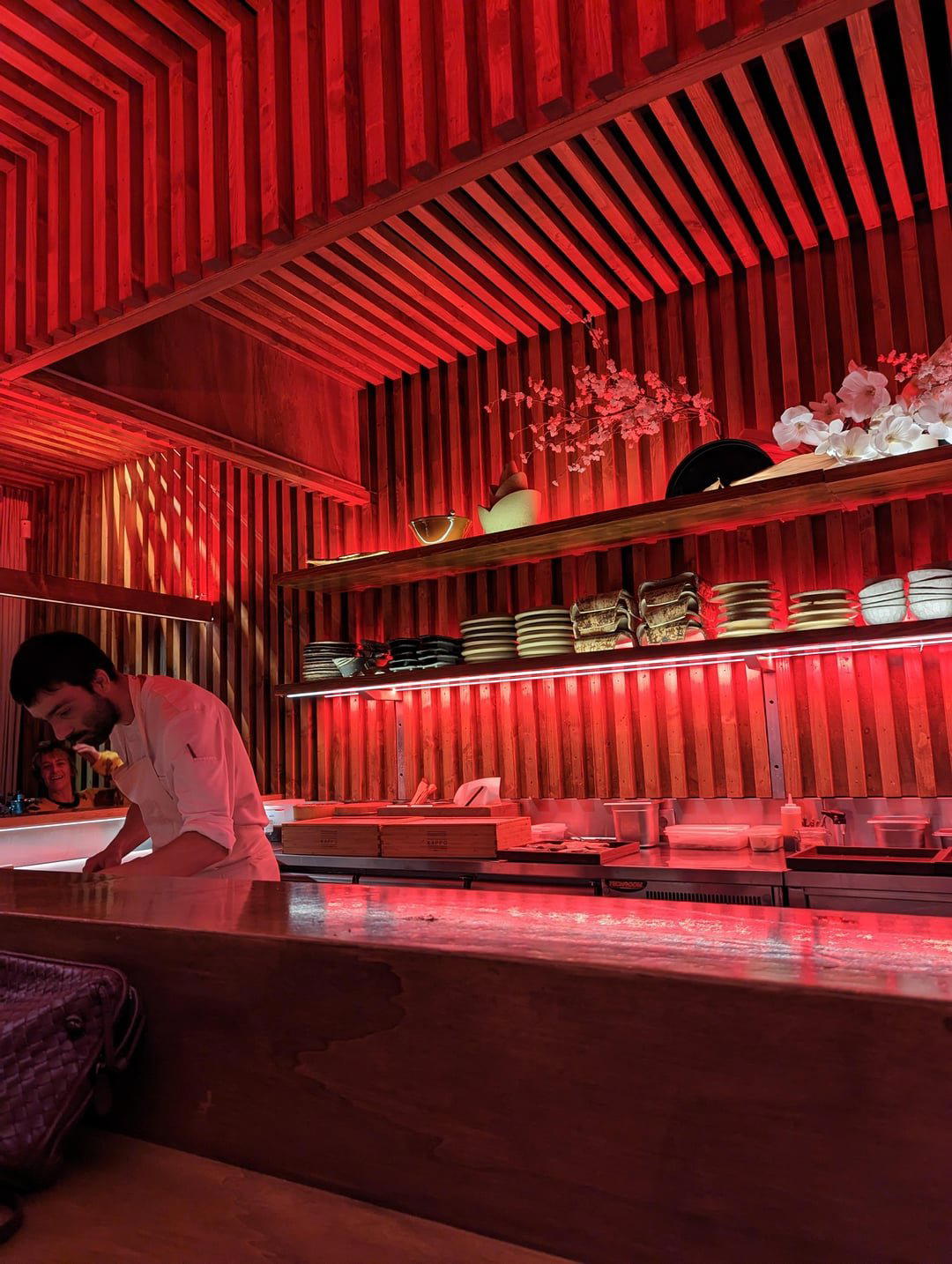
A Counter Format Built Around Raw Materials
In the broader context of Japanese fine dining in Portugal, the omakase counter remains a rare format — most Japanese restaurants in Lisbon and its coastal suburbs operate as izakayas or contemporary fusion addresses, where the kitchen serves the crowd rather than the ingredient. Cascais, a town better known for its Atlantic seafood tradition through places like Porto de Santa Maria and its modern European fine dining at Fortaleza do Guincho, is an unlikely address for a counter dedicated to the Japanese principle that the cook's role is to reveal the ingredient, not to transform it. That is precisely what makes Kappo — the word translates from Japanese as "cut and cook," describing a style of cuisine where technique is disciplined and product-forward, worth understanding on its own terms.
The counter seats twelve. That number matters. In omakase at this scale, the kitchen controls the pace of the meal, the temperature of each course, and the sourcing decisions behind every plate. There is no à la carte buffer between chef and guest. When a format works at twelve seats, it works because the ingredient procurement and the technical execution are in direct alignment, anything weaker in either column becomes immediately apparent to every diner in the room.
The Room and the Approach
The address on Avenida Emídio Navarro presents a recently refurbished interior that signals something distinct from the casual Japanese registers more common in coastal Portuguese towns. The room carries an elegance calibrated to the counter format: intimate without being austere, structured around the chef's station in a way that keeps the kitchen's work visible as part of the experience itself. This physical transparency is integral to the kappo tradition, where the boundary between preparation and service is deliberately narrow.
Chef Tiago Penão operates with a dual reference point: traditional Japanese technique on one axis, contemporary sensibility on the other. In the kappo and kaiseki traditions, that tension is handled through restraint, the contemporary element is not addition but refinement, a sharpening of how classical methods are applied to available produce. Penão's approach, as the Michelin assessment and the Opinionated About Dining recognition both suggest, resolves that tension through precision in the knife work and in the composition of courses, rather than through conceptual showmanship.
The single omakase menu format removes choice from the equation in the most productive way: the guest submits to the chef's reading of what the season and the market have delivered that day. In Japanese culinary thinking, this is where the ingredient-forward philosophy becomes most coherent. The chef does not build a fixed menu and source to match it; the ingredient arrives and the menu forms around it. At the counter level, that sequence is felt directly by the diner.
Where Kappo Sits Among Comparable Addresses
Within Portugal's formal dining circuit, the country's highest-profile restaurants, Belcanto in Lisbon, Vila Joya in Albufeira, Antiqvvm in Porto, Casa de Chá da Boa Nova in Leça da Palmeira, Il Gallo d'Oro in Funchal, Ocean in Porches, and The Yeatman in Vila Nova de Gaia, operate within European and Portuguese culinary traditions. Kappo sits apart from that competitive set entirely, not because it exceeds or falls short of those addresses, but because it is playing a different game. The relevant peer comparison is with serious Japanese counters operating in non-Japanese markets: venues where the craft is defined by fidelity to Japanese sourcing logic and preparation discipline, rather than by local ingredient integration alone.
Among Japanese-format restaurants in Europe, the omakase counter that earns OAD Leading Restaurants in Europe recognition, Kappo ranked 357th in 2025 and 448th in 2024, with a New Restaurants recommendation in 2023, has demonstrated sustained trajectory rather than a single year of attention. OAD rankings weight heavily toward repeat diner assessment, which means that the same guests are returning and rating at a level that drives the restaurant upward in the aggregate score. That is a more demanding signal than a first-year press cycle.
For direct category context in the Cascais area, Izakaya offers Japanese cuisine in the izakaya register at a lower price point and without the fixed counter format. They serve different needs. Kappo's €€€€ pricing positions it with the town's formal dining tier alongside Conceito, though the format and culinary reference are entirely different.
For those who want to understand how Kappo's approach compares to the kappo and omakase tradition at its most rigorous, the reference points are Japanese counters like Myojaku in Tokyo and Azabu Kadowaki in Tokyo, where the format, the pacing, and the ingredient philosophy share the same foundational logic.
The Omotenashi Dimension
The term Omotenashi describes a form of hospitality rooted in anticipation rather than reaction: the host reads the guest's state and responds before the need is expressed. In a twelve-seat counter, this is operationally achievable in a way it cannot be in a larger room. The dedicated team that Penão works with is, by the format's own constraints, small enough to maintain that attentiveness across every seat simultaneously. Whether that translates into a genuinely Japanese hospitality register or a European interpretation of it is something each diner will assess personally, but the structural conditions for it are present in a way that larger formats cannot replicate.
Planning the Visit
Kappo runs two sittings per service, which is a common approach for high-demand omakase counters seeking to maximize a small room without degrading the experience. The restaurant is located at Av. Emídio Navarro 23 A in Cascais, accessible from Lisbon by train on the Cascais Line (approximately 40 minutes from Cais do Sodré), which makes it viable as an evening destination from the capital without requiring an overnight stay. Given the €€€€ price tier, arriving with time to walk the Cascais waterfront before the sitting adds useful context for the evening.
For a wider view of what Cascais offers across all categories, EP Club's full Cascais restaurants guide, hotels guide, bars guide, wineries guide, and experiences guide cover the full range.
Frequently asked questions
What should I budget for a meal at Kappo?
Pricing at Kappo is listed as €€€€.
Has Kappo won any awards?
Kappo has received recognition including: "Cut and cook" is the meaning of the Japanese term that gives this recently refurbished establishment its name, an address that surprises with its elegance and intimate ambience. At the helm of the knife is Chef Tiago Penão, whose mastery o….
Do I need a reservation for Kappo?
Yes. The room seats twelve diners across two sittings per service, making capacity structurally tight. Kappo holds a Michelin Plate (2025) and has appeared in the OAD Top Restaurants in Europe rankings three consecutive years, which sustains demand well beyond walk-in availability. Booking ahead is the only reliable way to secure a seat.
The Minimal Set
| Venue | Cuisine | Price | Awards | Notes |
|---|---|---|---|---|
| KappoThis venue — the venue you are viewing | Modern Japanese Omakase | $100–150 | 1 Michelin Star | Not listed |
| Conceito | Modern Portuguese Fine Dining | $50–100 | Michelin Plate | Contemporary |
| Izakaya | Modern Japanese Izakaya | $50–100 | Michelin Plate | Izakaya |
| Porto de Santa Maria | Traditional Portuguese Seafood | $50–100 | Michelin Plate | Seafood |
Recognition history
Dated appearances from independent guides and award organizations, with the underlying list record or original source where available.
Michelin 1 Star
Michelin
Opinionated About Dining Top Restaurants in Europe Ranked #357
Opinionated About Dining
Full recognition history (5 entries)
Michelin Plate
Michelin
Opinionated About Dining Top Restaurants in Europe Ranked #448
Opinionated About Dining
Opinionated About Dining Top New Restaurants in Europe Recommended
Opinionated About Dining
Continue exploring
More in Cascais
Restaurants in Cascais
Browse all →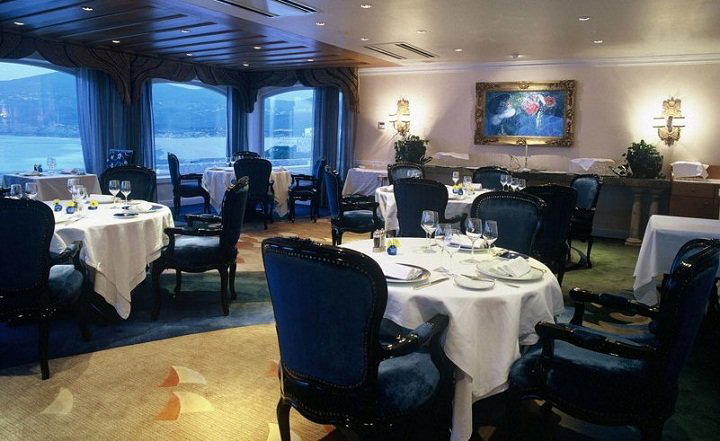
Bars in Cascais
Browse all →
Hotels in Cascais
Browse all →

Details
- Minimalist
- Elegant
- Intimate
- Sophisticated
- Date Night
- Special Occasion
- Solo
- Chefs Counter
- Open Kitchen
- Sake Program
- Extensive Wine List
- Local Sourcing
- Omakase
- Counter Dining
- Sake
- Wine Pairing
Current opening hours
- Monday
- Closed
- Tuesday
- Closed
- Wednesday
- 8 PM–12 AM
- Thursday
- 8 PM–12 AM
- Friday
- 8 PM–12 AM
- Saturday
- 1–3 PM, 8 PM–12 AM
- Sunday
- 1–3 PM, 8 PM–12 AM
Hours can change for holidays and private events. Last verified .
Minimalist Japanese design with a long wooden counter, relaxed yet precise atmosphere, and contemporary elegance fostering immersion in the culinary ritual.