.png)

A Michelin Bib Gourmand holder for 2024 and 2025, Izakaya brings Japanese contemporary cooking to Zagreb's Selska cesta at single-euro price points that sit well below the city's starred competition. Chef Num Samuay (Weerawat Triyasenawat) has earned a global footprint: the kitchen ranked 34th at the World's 50 Best Restaurants MENA 2024, a credential that makes this one of the most internationally recognised addresses in Croatia.
 Discover on Pearl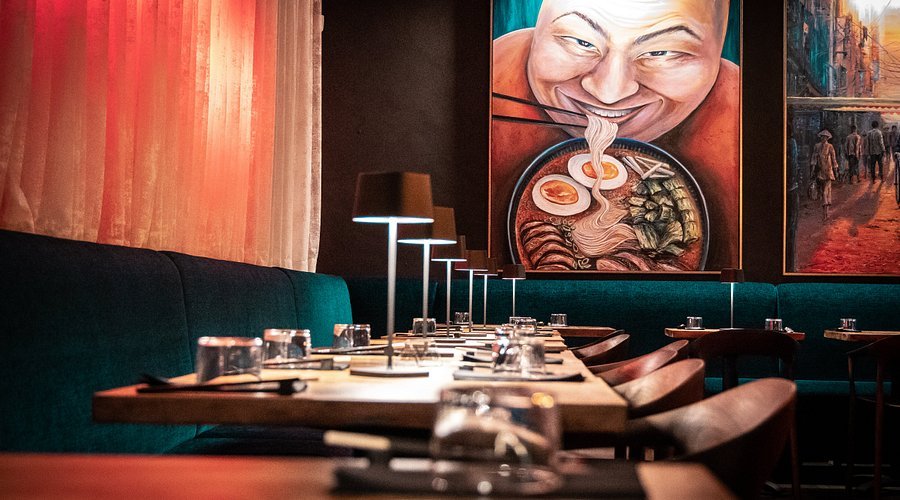
Japanese Comfort Cooking in an Unlikely European Capital
Zagreb is not a city you expect to find a globally ranked Japanese kitchen. Its dining identity is built on Adriatic seafood pushed inland, on slow-braised meats and market-driven Croatian produce that define addresses like Bekal and Beštija. And yet Izakaya, on Selska cesta in the southwest of the city, has quietly accumulated a credential set that would read impressively in Tokyo or Bangkok: two consecutive Michelin Bib Gourmand awards (2024 and 2025) and a ranking of 34th at the World's 50 Best Restaurants MENA 2024. That last award is, admittedly, a regional designation with an unusual geographic reach, but the recognition from both Michelin inspectors and the 50 Best voting academy in the same period is not a coincidence. It signals a kitchen operating at a consistent level that its city context does not immediately suggest.
The address sits in a quieter residential corridor rather than the dense restaurant cluster of the Upper Town or the Dolac market neighbourhood. Getting there by tram from the centre takes roughly fifteen minutes; the location rewards those who look beyond Zagreb's obvious dining spine. With a Google review score of 4.9 across 3,421 ratings, the restaurant has built a following that extends well past the international award circuit.
The shortlist, unlocked.
Hard-to-book tables, cellar releases, and concierge-planned trips.
Get Exclusive Access →The Discipline Behind Simple Bowls
The broader argument about Japanese comfort cooking — ramen, udon, donburi, the whole architecture of bowl-based dishes — is that simplicity is the hardest format to sustain. A tasting menu built around technique has many places to hide. A bowl of broth and noodles has none. The fat content, temperature, and salinity of a stock are immediately legible to anyone eating it. The texture of a noodle communicates whether it was cooked two minutes ago or twenty. This is the register in which izakaya cooking, the Japanese tradition of informal drinking-food restaurants, has always operated: high craft expressed through low ceremony.
European cities have found this format difficult to replicate with any consistency. The supply chains for specific Japanese ingredients , particular grades of dashi kelp, fresh ramen noodles milled to the right alkalinity, aged miso pastes , are less established outside Japan's diaspora cities like London, Paris, or Amsterdam. Zagreb sits outside that infrastructure in a meaningful way, which makes what the kitchen achieves here more interesting as a case study. Chef Num Samuay (Weerawat Triyasenawat) brings a background that connects this address to a different region entirely. The Thai name and the MENA 50 Best credential together suggest a chef operating across culinary geographies, which may explain why the kitchen's approach to Japanese contemporary reads as interpreted rather than imitative , a distinction that matters when the format is as legible as comfort food.
For context on what Japanese contemporary looks like at other price tiers and in other European settings, The Japanese Restaurant in Andermatt and Eika in Taipei represent different expressions of the same broad cuisine category, each shaped by their local context and price positioning.
Price, Peer Set, and Where Izakaya Sits in Zagreb's Market
At a single euro-sign price point, Izakaya occupies the accessible end of Zagreb's dining tiers. The city's Michelin-starred addresses , Dubravkin Put at three euro signs and Noel at four , are built around formal European fine dining formats with corresponding price expectations. The Bib Gourmand designation is specifically Michelin's signal for good cooking at moderate prices, and Izakaya's back-to-back recognition in that category positions it as the city's clearest example of award-level cooking that does not require a formal dining budget.
That price accessibility matters in a city where the dining premium tier is growing but still calibrated to a market where value remains a competitive factor. Balon operates at the Mediterranean end of that accessible tier; Izakaya is its nearest equivalent in Asian cuisine. For visitors building a Zagreb itinerary across multiple meals, the combination of the award credentials and the price point makes this a practical anchor for a week's eating rather than a single special-occasion booking.
The Izakaya Tradition and What It Demands of a Kitchen
An izakaya is not a sushi counter. It is not a kaiseki restaurant. In Japan, it occupies the role that a good neighbourhood bistro plays in France or a serious tapas bar plays in Spain: a place where people drink, eat shared plates, and stay longer than they planned. The format is defined by informality, by menus that cover a wide range of techniques , fried, grilled, raw, simmered , and by an expectation that every dish will be precisely executed because none of them is elaborate enough to excuse sloppiness.
In European cities, the izakaya format has sometimes been diluted into a general Asian fusion frame. The more serious interpretations hold to the logic of the original: small plates, alcohol-friendly flavours, and a kitchen that can produce clean broths and properly textured proteins at speed. The Michelin Bib Gourmand recognises exactly this kind of cooking when it is done well. The fact that Zagreb's Izakaya has held that recognition in two consecutive years suggests the kitchen has solved the consistency problem that undoes many restaurants in this format.
Planning a Visit
Izakaya is located at Selska cesta 90b, Zagreb. The single euro-sign pricing makes it accessible without advance financial planning, though the combination of Michelin recognition and a 4.9 Google rating across more than 3,400 reviews means that booking ahead is advisable, particularly on weekends. Hours and booking contact are leading confirmed directly given that operational details can shift; the address does not currently list a website in the EP Club database. For those building a wider Zagreb itinerary, the full picture of the city's dining scene , from the Adriatic-inflected cooking at Dubravkin Put to the modern Croatian format at Bekal , is covered in our full Zagreb restaurants guide.
Beyond restaurants, our Zagreb hotels guide, bars guide, wineries guide, and experiences guide cover the rest of the city in the same depth. If you are extending your Croatia trip beyond the capital, the country's most recognised kitchens include Agli Amici Rovinj in Istria, Alfred Keller in Mali Lošinj, Boskinac in Novalja, Korak near Jastrebarsko, Krug in Split, and LD Restaurant on Korčula.
Selska cesta 90b, 10000, Zagreb, Croatia
+385 1 3333 660
Pricing, Compared
These are the closest comparables we have in our database for quick context.
Need a table?
Our members enjoy priority alerts and concierge-led booking support for the world's most difficult tables.
Get Exclusive AccessThe shortlist, unlocked.
Hard-to-book tables, cellar releases, and concierge-planned trips.
Get Exclusive Access →