
Kamo to Kamoshi Kodou brings Osaka’s soba culture into a broader meal built around buckwheat noodles, chicken dishes, oyako-don, duck cooking and fermented elements. Its selection for Tabelog 100 - Soba - WEST - 2025 places it in a serious regional category, while the setting in Senriyamanishi, Suita gives the meal a calmer rhythm than central Osaka dining.
Pearl is the En Primeur Club membership app — saves, bookings, and concierge access live there. Same editors, same standards.
- Address
- Japan, 〒565-0851 Osaka, Suita, Senriyamanishi, 4 Chome−37−3 1F
- Phone
- +81 6-6105-8000
- Website
- kodou.co.jp
 Saves & bookings on Pearl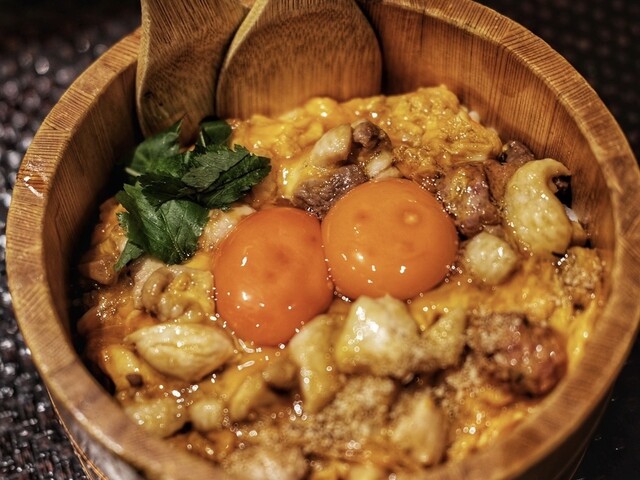
Near Ryokuchi-Koen, the restaurant feels removed from Osaka’s louder dining corridors. The residential calm suits soba, where timing, texture and restraint matter more than spectacle. Kamo to Kamoshi Kodou belongs to that quieter Osaka tradition, but it is not a bare-bones noodle counter. It stretches from lunch soba and oyako-don to evening duck dishes, duck hot pot and fermented cooking, sitting between specialist soba house and full Japanese dining room.
That position matters in Osaka, where casual speed and high craft often sit together. Soba can be fast lunch, seasonal craft product or the backbone of a longer meal. Here, buckwheat noodles anchor the identity, while chicken, egg, duck and fermentation broaden the table. The 2025 Tabelog 100 - Soba - WEST selection gives a clear trust signal within western Japan’s soba field, showing the kitchen is judged against soba specialists rather than general Japanese restaurants.
Soba as the anchor, duck and fermentation as the wider Osaka argument
Osaka’s global reputation runs through takoyaki, okonomiyaki, sushi counters and kaiseki-adjacent rooms, yet soba has a serious Kansai audience. Compared with Tokyo’s long soba lineage, Osaka soba competes in a city shaped by flour-based comfort and quick-service eating. A soba-led restaurant with evening duck and fermented dishes usefully reads the city’s habits: the noodle stays central, but the meal need not end there.
Kamo to Kamoshi Kodou’s listed categories, soba, chicken dishes and oyako-don, point to familiar Japanese forms rather than imported fine-dining grammar. Lunch reads practical and focused; dinner shifts into broader drinking-and-dining mode, helped by sake, shochu, wine and cocktails. The sommelier is telling. In soba restaurants, drinks often default to sake and beer; a wine-aware program treats buckwheat, duck and fermentation as pairable components, not background food.
The Senriyama comparison set sharpens the picture. Kashiwaya Osaka Senriyama occupies a more formal Japanese lane, while Soba-ya Kida sits nearer the accessible soba specialist tier. Kamo to Kamoshi Kodou lands between them: less ceremony-driven than high-form kaiseki, more structured than a quick noodle stop. That middle register helps travelers seeking Osaka craft without committing to a highly formal evening.
The room is built for groups, but the cooking keeps a specialist spine
The physical format changes how the meal should be read. With 58 seats across tables, Japanese private rooms and an eight-seat special private room called Rokumei, this is not a tiny counter trading on scarcity. It is a polished local dining room flexible enough for family meals, business dinners and date-night pacing. Tatami, sunken seating, counter seating and private-room options create several uses for one kitchen, common in suburban Japanese restaurants serving neighborhood regulars and destination diners.
For visitors, that breadth helps. Soba specialists can be austere, and some do not suit mixed groups. This structure works for parties with different appetites: one diner may focus on noodles, another on oyako-don, another on duck and drinks. Children are welcomed at lunchtime, including babies and strollers, placing it apart from compact central counters where space and pace do the filtering.
The award context should not be misread. Tabelog 100 - Soba - WEST is category recognition, not a claim that the restaurant belongs in the same decision set as Osaka’s highest-form tasting menu rooms. Its narrower value is more useful: it identifies a serious soba address in western Japan. For an Osaka itinerary, that makes it a counterweight to the city’s more famous street-food and luxury-restaurant narratives.
How to fit it into an Osaka dining plan
The restaurant works well as a deliberate detour, not a last-minute central Osaka fallback. Senriyamanishi in Suita sits outside the densest visitor circuit, so the meal rewards travelers already moving north of the city center or willing to trade convenience for a calmer dining room. In return, the setting shows how refined everyday Japanese dining works beyond tourist-heavy neighborhoods.
Lunch is the more direct read on soba and oyako-don; dinner gives more room for the duck and fermented side of the kitchen. That split suits two travelers: the efficient eater building a noodle-focused day, and the group planning a slower Japanese dinner with drinks. The listed budget reflects the divide, with lunch accessible and dinner priced for a fuller meal.
For broader Osaka planning, pair this with Our full Osaka restaurants guide, then map the trip through Our full Osaka hotels guide, Our full Osaka bars guide, Our full Osaka wineries guide and Our full Osaka experiences guide. Nearby and citywide references help calibrate the range:.cafe, 52CHO-ME BAKERY, 551 Horai (551蓬莱), 99 Pizza Napoletana Gourmet and a canto (Italian) show how wide the city’s dining spectrum runs.
Travelers extending the same Japanese-food lens beyond Osaka can compare formats through -Grilled beef Sukiyaki- KAMAKURA TANUKIAN 鎌倉 たぬき庵 in Kamakura. 鮪と炭火焼き うお炭 秋葉原店 in Tokyo.know in Kumamoto, (Shoku) Vietnam in Kawasaki, [Curry Senmon Ten] Maruyama Kyoju. in Sapporo, [ki:] in Kyoto, Jōdo Saké Bar in Los Angeles and Onigiri Time in Pasadena. The lesson is not that these places resemble one another, but that Japanese dining travels through formats as much as flavors: noodle house, rice bowl, grill, bar, bakery, curry counter and private-room restaurant each ask for different planning.
Cuisine Lens
Comparable venues at a glance for context.
| Venue | Cuisine | Price | Notes |
|---|---|---|---|
| Kamo to Kamoshi KodouThis venue — the venue you are viewing | Japanese Soba, Duck & Oyakodon | $$ | Not listed |
| Fukushima Koufukuya | Japanese standing bar (tachinomi izakaya) | $$ | Kita |
| Yakitori Shokudo | Yakitori & Izakaya | $$ | Kita |
| Makino | Soba noodle shop | $$ | Not listed |
| Shibaken | Premium branded-pork tonkatsu & curry | $$ | Miyakojima |
| Sekaiichi Himana Ramen Ya | Ramen shop specializing in broth-less and soupy bowls | $$ | Kita |
Recognition history
Dated appearances from independent guides and award organizations, with the underlying list record or original source where available.
Tabelog 100 #88 · No. 88
Tabelog · Tabelog 100 - Soba - WEST - 2025
Continue exploring
More in Osaka
Restaurants in Osaka
Browse all →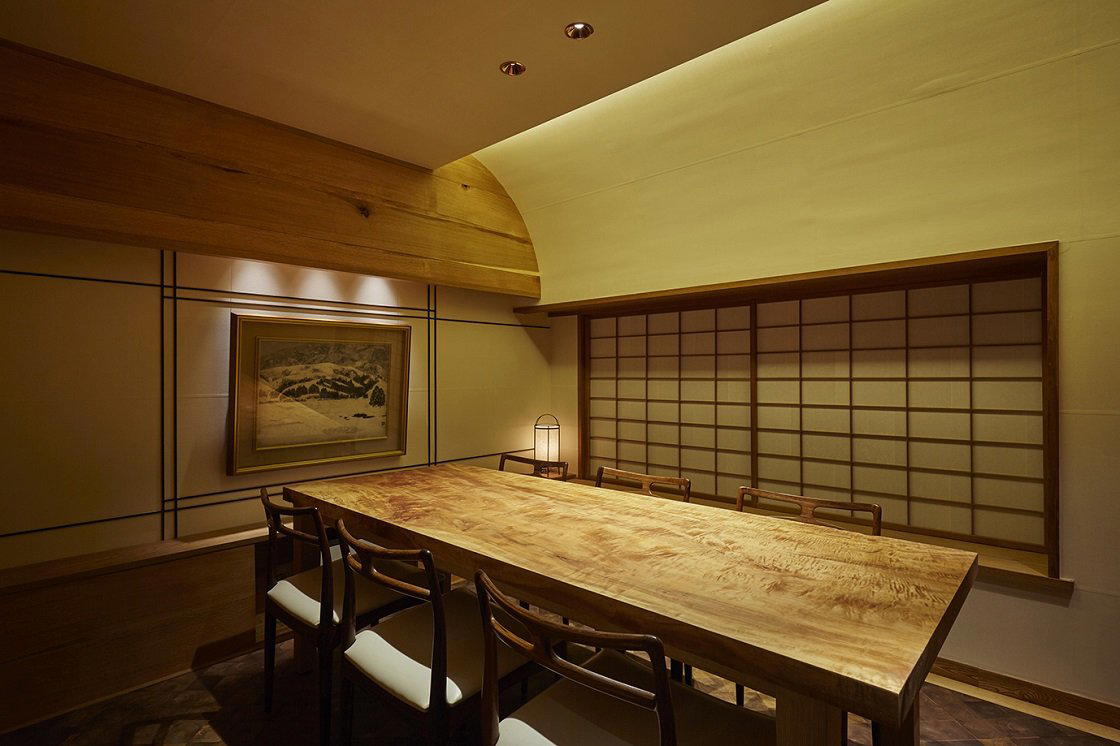




Bars in Osaka
Browse all →




Hotels in Osaka
Browse all →



Wineries in Osaka
Browse all →
At a Glance
- Cozy
- Classic
- Intimate
- Quiet
- Casual Hangout
- Family
- Group Dining
- Special Occasion
- Standalone
- Design Destination
- Private Dining
- Sake Program
Current opening hours
- Monday
- 11 AM–3 PM, 3:30–9:30 PM
- Tuesday
- 11 AM–3 PM, 3:30–9:30 PM
- Wednesday
- Closed
- Thursday
- 11 AM–3 PM, 3:30–9:30 PM
- Friday
- 11 AM–3 PM, 3:30–9:30 PM
- Saturday
- 11 AM–3 PM, 3:30–9:30 PM
- Sunday
- 11 AM–3 PM, 3:30–9:30 PM
Hours can change for holidays and private events. Last verified .
A refined, calm dining space with a distinctive themed interior; the official site describes a 'forest of small sake breweries' at the Toyonaka location and a 'path of forest animals' at the Midorigaoka/Ryokuchi location, with cut-paper artworks displayed in the latter.