
Michelin Plate
Our verdict
On the 37th floor of Menara Ilham, K frames the Kuala Lumpur skyline through panoramic windows while a Japanese head chef works through a tasting menu of more than 15 courses. The kitchen draws on local Malaysian ingredients and combines them with Japanese technique, producing dishes like house-made soba noodles served with abalone. It occupies the upper tier of Kuala Lumpur's fine-dining circuit alongside peers such as Dewakan and DC. by Darren Chin.

Pearl is the En Primeur Club membership app, where members save venues, book tables and use the concierge.
Thirty-Seven Floors Up: The Architecture of a Meal
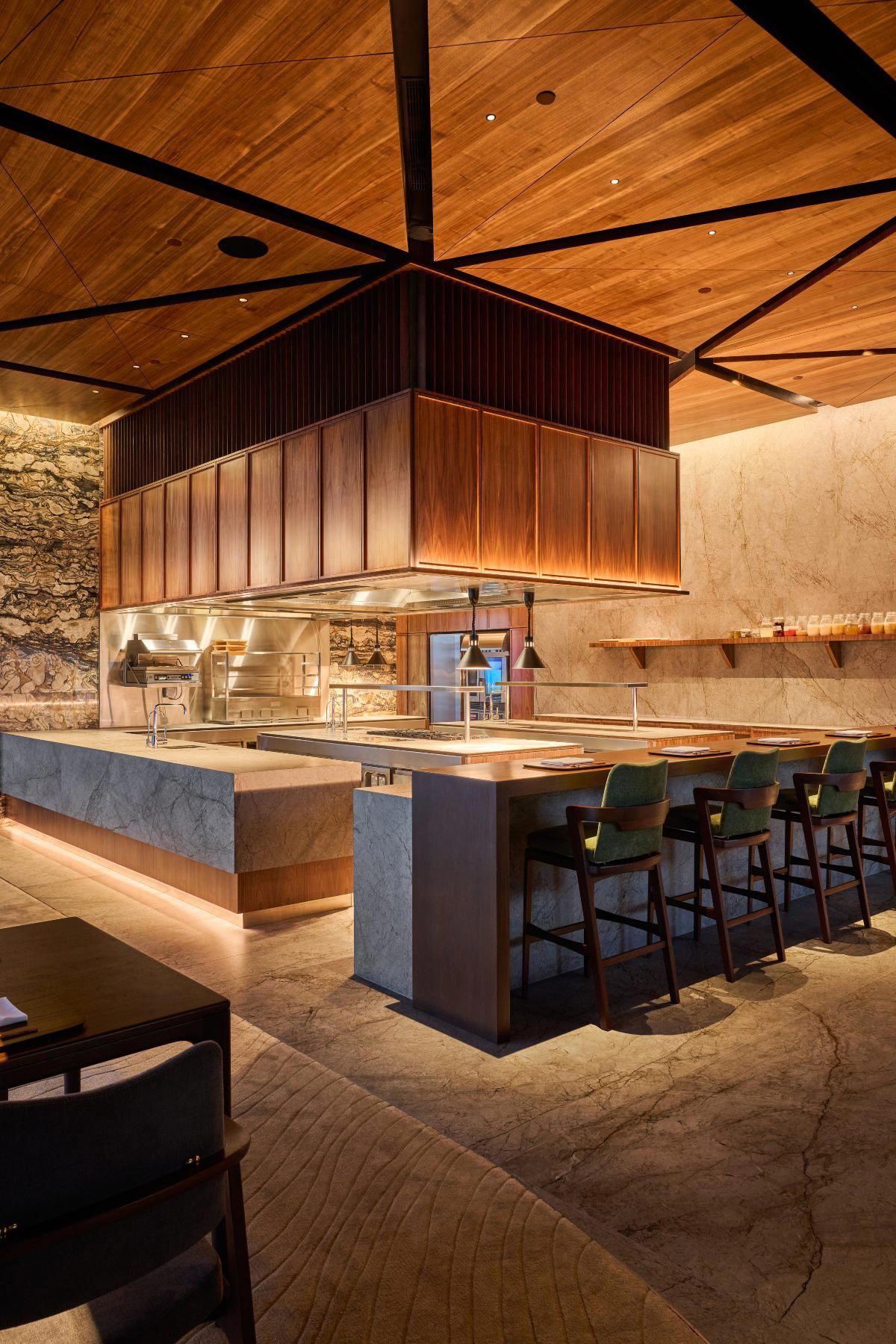
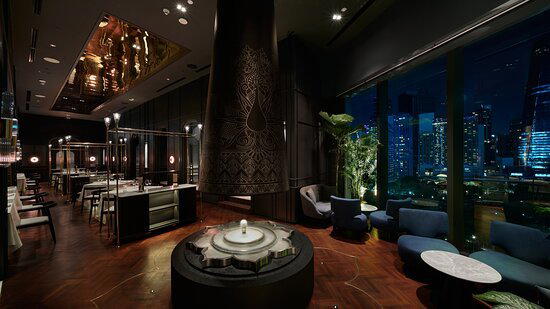
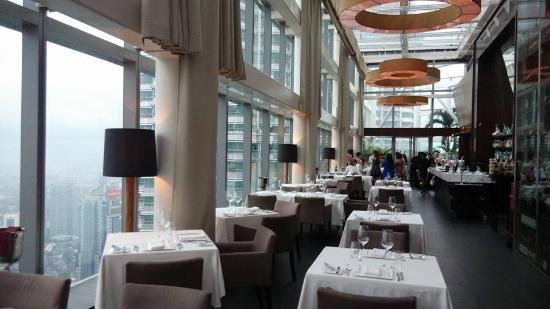
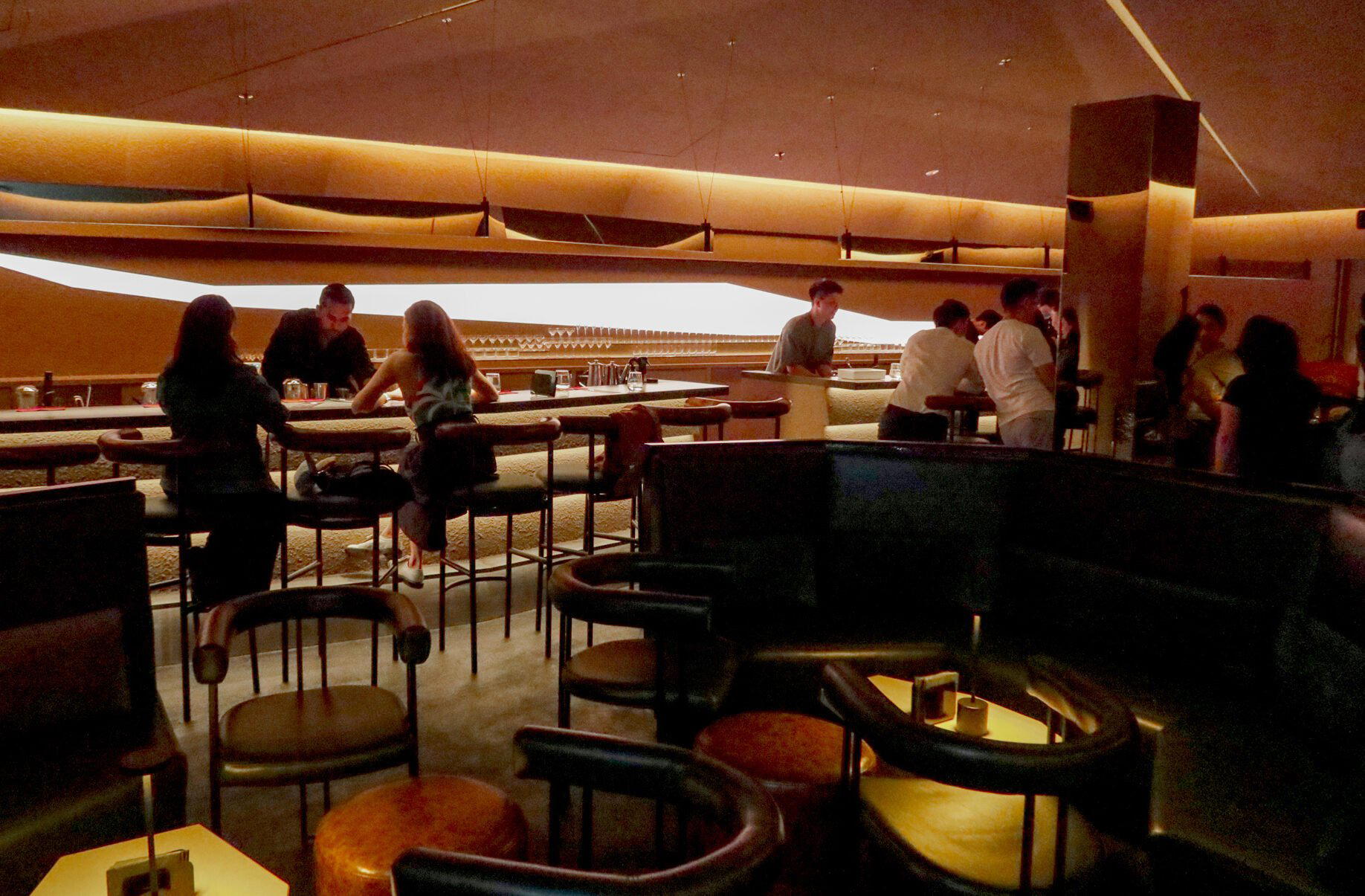
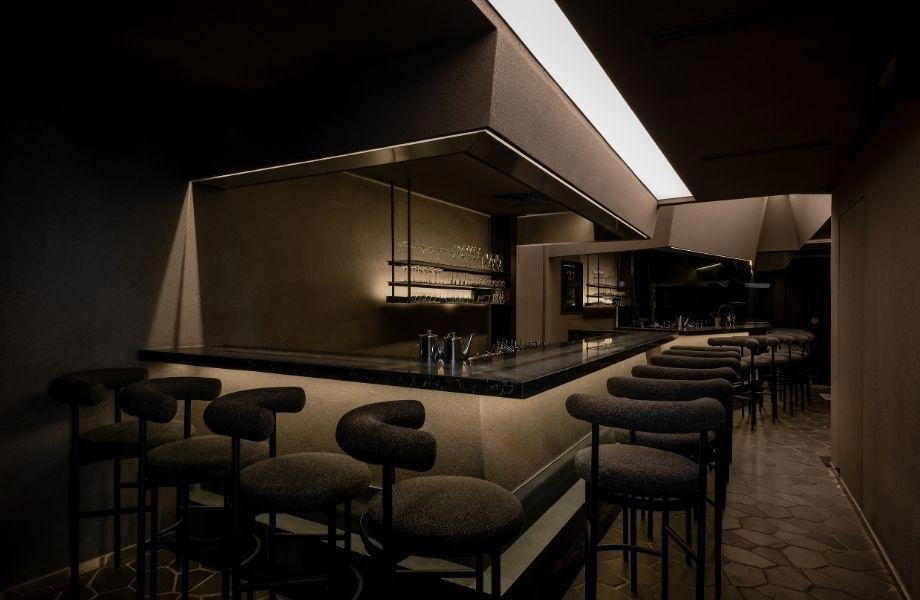
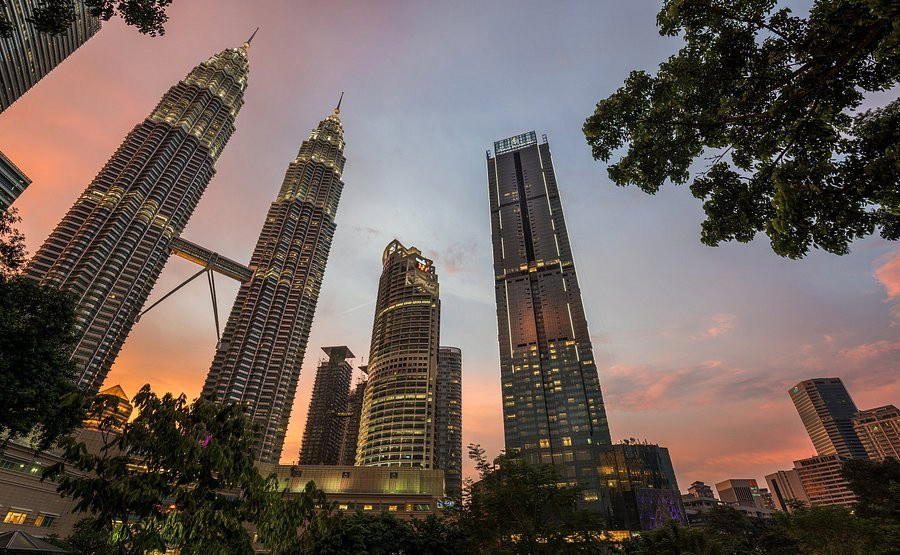
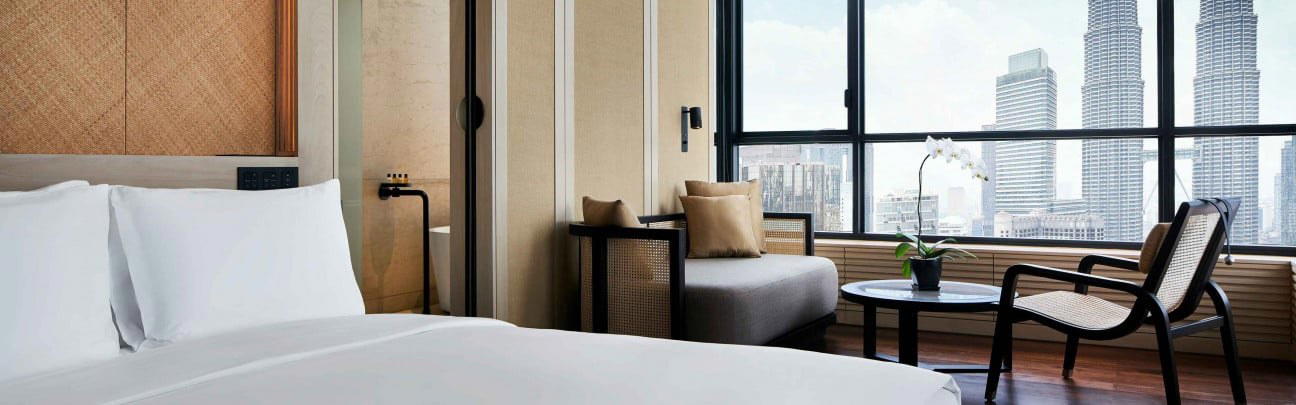
Kuala Lumpur's premium tasting-menu circuit has, over the past decade, split between ground-floor neighbourhood rooms and high-rise addresses that use the city's skyline as a deliberate part of the experience. K sits firmly in the second camp. The room on Level 37 of Menara Ilham, above Jalan Binjai, places diners against panoramic windows that run the full perimeter of the space, positioning the KLCC towers and the city grid below as a living backdrop that shifts from amber dusk light to deep-blue night across the course of a long meal. Stone and wood line the open kitchen, materials that absorb rather than reflect the ambient noise of a working kitchen, keeping the room in the register of conversation rather than spectacle.
That architectural choice matters because it frames the pace of what follows. In a room designed this way, the meal is asked to hold its own against a competing visual drama. The kitchen at K meets that expectation through a single, committed format: one tasting menu, more than 15 courses, no à la carte option. This is the same structural decision made by Kuala Lumpur's most deliberate fine-dining rooms. Dewakan (Malaysian) and DC. by Darren Chin (French Contemporary) both operate in this format, and the choice signals something specific: the kitchen controls the sequence, and the diner's role is to follow, not edit.
The Logic of the Sequence
A tasting menu of 15-plus courses is not simply a long dinner. It is a particular kind of dining ritual, one with its own etiquette and internal rhythm. In the Japanese omakase tradition, from which this kitchen draws its structural DNA, the chef's authority over the sequence is absolute. Courses arrive in an order determined by the kitchen's reading of texture, temperature, and pacing rather than the diner's hunger signals. The expectation is attentiveness, a willingness to track cumulative movement through the menu rather than to evaluate each plate in isolation.
What distinguishes K's approach within this tradition is the explicit intersection of Japanese technique with Malaysian sourcing. Ingredients are drawn from local suppliers whenever possible, meaning the menu responds to what Malaysian producers are putting forward at a given time. This places K in a category that has become increasingly coherent in Kuala Lumpur's fine-dining scene: restaurants working at the intersection of a specific international culinary discipline and the local ingredient supply chain. Beta (Malaysian), Molina (Innovative), and Ling Long (Innovative) each occupy their own version of this intersection, though with different base culinary traditions. The shared logic is that the discipline comes from outside Malaysia, and the raw material comes from within it.
What the Kitchen Produces
The documented standout within the menu is the abalone served with house-made soba noodles. As a single dish it functions as a demonstration of the kitchen's priorities. Soba made from scratch in a restaurant setting is labour-intensive; the process of achieving the correct gluten development in buckwheat dough, and then calibrating the cook to produce a noodle that reads as soft but retains a perceptible bounce, is the kind of technique that separates a kitchen with real craft investment from one that sources finished components. Abalone, particularly the fresh variety used in premium Japanese cooking, requires careful handling at temperature to avoid the rubber texture that characterises poor execution. The combination places two high-technique ingredients on the same plate and asks the kitchen to resolve the textural contrast between them. The fact that this dish appears as a reference point in assessments of the menu suggests the kitchen resolves it well.
Beyond this anchor dish, the over-15-course structure implies a menu with significant movement: likely a progression from lighter preparations through richer ones, with temperature and acidity used to reset the palate at intervals. The use of local ingredients alongside Japanese technique suggests points in the menu where familiar Malaysian flavour references surface inside an unfamiliar structural form, the kind of moment that the leading tasting menus in this category use to orient the diner within the broader sequence. Comparable high-altitude dining experiences elsewhere in Southeast Asia, from The Planters at The Danna in Langkawi to The Datai Langkawi in Kedah, each demonstrate how a strong sense of place in the ingredients can anchor a long tasting format that might otherwise feel unmoored from its geography.
Where K Sits in the City's Tasting-Menu Circuit
Kuala Lumpur's premium tasting-menu tier has grown considerably in the past five years. Among these, the Japanese-technique rooms occupy a specific sub-niche: high technical discipline, restrained plating, and a menu architecture that prioritises accumulation over individual plate drama. K operates at the upper end of this sub-niche, with a 37th-floor address that carries a price premium over street-level equivalents, and a kitchen that has earned recognition for both creativity and technical command.
For diners calibrating where K fits relative to other choices in the city, the relevant comparison is less about cuisine type and more about format commitment. If the object is to experience a single kitchen's complete statement over two to three hours, K's single-menu format delivers that without ambiguity. Rooms that offer more flexibility, like Beta, serve a different purpose. The deeper context for Malaysian fine dining, including market-driven kitchens and heritage-rooted menus, is mapped in our full Kuala Lumpur restaurants guide. For a wider picture of the city, our full Kuala Lumpur hotels guide, our full Kuala Lumpur bars guide, our full Kuala Lumpur wineries guide, and our full Kuala Lumpur experiences guide cover the full spectrum.
For context on what tasting-menu discipline looks like at the international reference tier, Le Bernardin in New York City and Emeril's in New Orleans illustrate how different kitchen cultures approach the long-format dinner. Closer to home, the depth of Malaysian culinary tradition outside the tasting-menu format is on display at Auntie Gaik Lean's Old School Eatery in George Town, Bee See Heong in Seberang Perai, and Christoph's in Penang, while Lavo and Lavo Gallery in Petaling Jaya represents the Klang Valley's quieter but growing fine-dining orbit.
Planning Your Visit
K is located at Level 37 of Menara Ilham on Jalan Binjai, in the Ampang financial corridor within reach of the KLCC area. Given the single-menu format and the high-rise address, this is a reservation-first destination with limited walk-in logic; the format demands a committed block of time, typically an evening. For a tasting menu of this length at this address, booking in advance is the practical default.
Frequently asked questions
Is K award-winning?
K has received recognition including: The open kitchen clad in stone and wood exudes a luxurious vibe and boasts lovely city views through panoramic windows. On the food side, the Japanese head chef offers a single tasting menu of over 15 courses that showcase his creativity an….
Where exactly is K?
K is located at Level 37, Menara Ilham, 8 Jalan Binjai, Kuala Lumpur.
What should I eat at K?
K operates a single tasting menu of more than 15 courses, so the sequencing is handled entirely by the kitchen. The documented standout is the abalone served with house-made soba noodles, where scratch-made noodles are noted for their soft but bouncy texture. Ingredients are sourced locally wherever possible, and the menu reflects the Japanese head chef's balance of technical precision and tradition.
How hard is it to get a table at K?
K's single-menu format at Level 37 of Menara Ilham on Jalan Binjai places it firmly in the tier of Kuala Lumpur restaurants where advance booking is necessary rather than optional. The fixed tasting-menu structure limits covers per service, and demand at high-rise fine-dining addresses in the KLCC corridor runs consistently ahead of availability. Book as early as your schedule allows.
Category Peers
Comparable venues nearby, for context on price, style, and recognition.
| Venue | Cuisine | Price | Awards | Notes |
|---|---|---|---|---|
| KThis venue (the venue you are viewing) | Japanese Kaiseki with Local Ingredients | $200–300 | Michelin Plate | Not listed |
| Kazu | Edomae Sushi Omakase | Not listed | Michelin Plate | Kampong Bukit Mati |
| Sushi Masa | Edomae-style Japanese Omakase | $200–300 | Michelin Plate | Kampong Baharu |
| Kuki | Modern Vegan Japanese Shojin Ryori | $20–30 | Michelin Plate | Taman Tun Dr Ismail |
| Sushi Ori | Traditional Japanese Omakase | $100–150 | Michelin Plate | Kampong Dollah |
| The Brasserie | French-Mediterranean Brasserie | $30–50 | Michelin Plate | Brickfields |
Recognition history
Dated appearances from independent guides and award organizations, with the underlying list record or original source where available.
Michelin Plate
Michelin · 2026 Michelin Plate
Continue exploring
More in Kuala Lumpur
Restaurants in Kuala Lumpur
All restaurants in Kuala Lumpur →
Bars in Kuala Lumpur
All bars in Kuala Lumpur →
Details
- Elegant
- Serene
- Minimalist
- Special Occasion
- Business Dinner
- Date Night
- Open Kitchen
- Panoramic View
- Chefs Counter
- Sommelier Led
- Local Sourcing
- Skyline
- Tasting Menu
- Allergy Accommodating
Current opening hours
- Monday
- Closed
- Tuesday
- Closed
- Wednesday
- 6–11 PM
- Thursday
- 6–11 PM
- Friday
- 6–11 PM
- Saturday
- 6–11 PM
- Sunday
- Closed
Hours can change for holidays and private events. Hours as of .
Serene and elegant with an open stone and wood kitchen, luxurious vibe, and panoramic city skyline views.