Positioned near the Betwa River in Orchha, Jyonar Restaurant sits inside a town where Mughal-era architecture and Bundeli cooking traditions define the setting as much as any kitchen does. The restaurant draws from the agricultural and foraging heritage of Madhya Pradesh, placing it in a regional dining conversation that remains largely absent from India's metropolitan food coverage.
Pearl is the En Primeur Club membership app — saves, bookings, and concierge access live there. Same editors, same standards.
- Address
- near Betwa River, Orchha, Madhya Pradesh 472246, India
- Website
- amarmahal.com
- Directions
- Get directions
 Saves & bookings on Pearl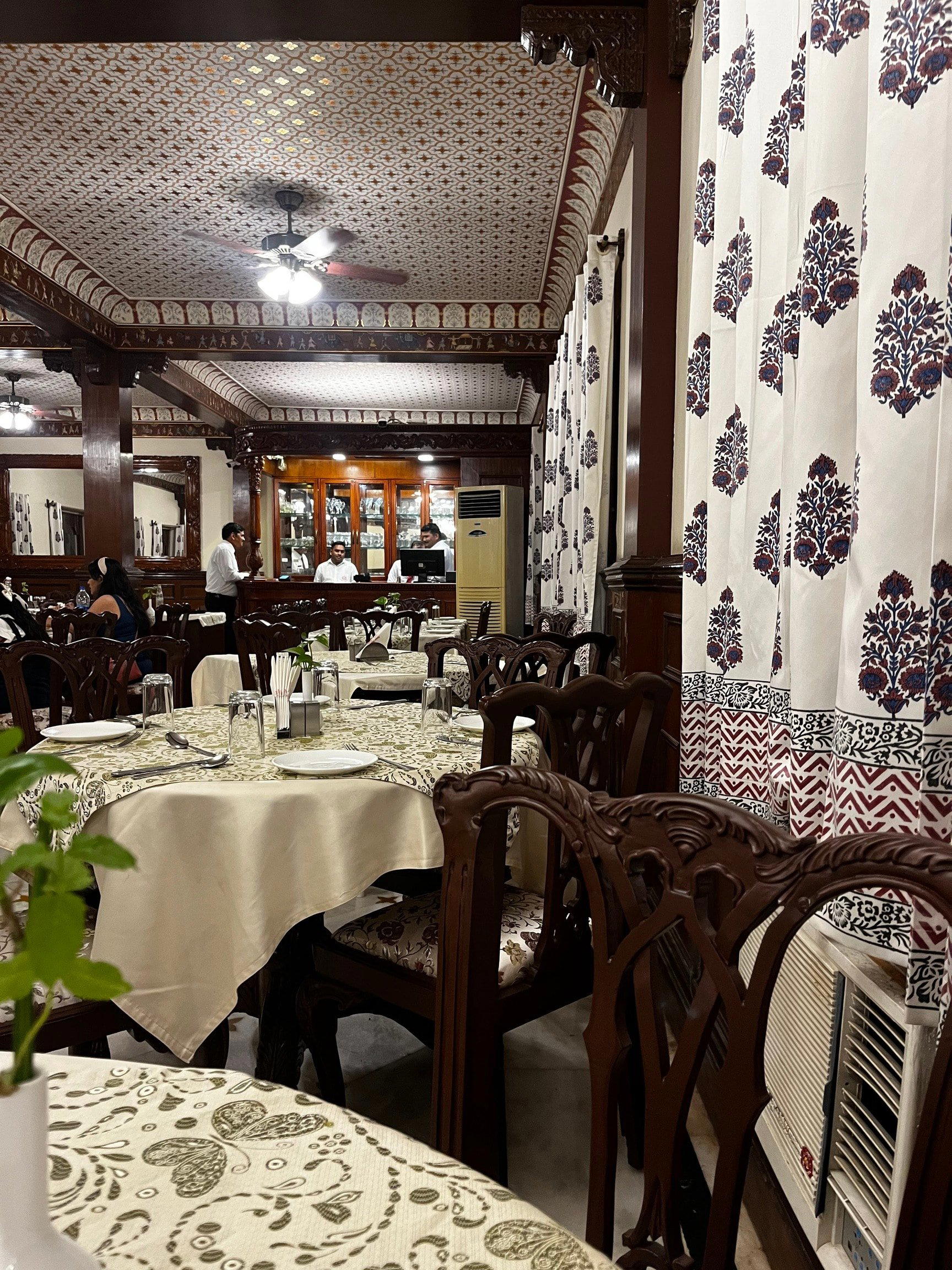
Where the Betwa Sets the Table
Orchha occupies a particular position in Indian travel: a town of cenotaphs, riverside ghats, and palaces that most visitors pass through rather than stay in, yet one whose food traditions run deeper than the tourist infrastructure suggests. The Betwa River, which curves around the town's southern edge, has shaped the agricultural corridor feeding this part of Madhya Pradesh for centuries. Eating near it, rather than in a city far removed from its source ingredients, changes the register of a meal. Jyonar Restaurant sits near the Betwa River in Orchha, Madhya Pradesh, and serves Indian food in a casual, walk-in-friendly setting.
Orchha functions differently: the dining conversation here is narrower, more localized, and more directly tied to what the surrounding Bundelkhand region actually produces.
Bundelkhand on the Plate: What the Region Provides
The agricultural character of Bundelkhand is distinct within Madhya Pradesh. The plateau terrain, the black-cotton soil in parts, and the seasonal rhythms of the Betwa basin produce ingredients that rarely appear on menus in Bengaluru, Mumbai, or New Delhi. Dishes across this region have historically drawn on millets, pulses, and seasonal greens that do not travel well and therefore do not reach metropolitan restaurant supply chains. This structural reality means that eating at a restaurant in Orchha, when it sources regionally, offers access to ingredients that places with far greater reputations cannot easily replicate.
Compare this to the sourcing logic at work in places like Farmlore in Bangalore, where the editorial argument for eating there rests explicitly on farm-to-kitchen traceability and regional producer relationships. The ingredient sourcing argument in Orchha is less formalized but more direct: the supply chain is short because there is no infrastructure to extend it. What arrives in a kitchen near the Betwa is, by necessity, from somewhere nearby.
Bundeli cooking tradition also makes use of river-adjacent produce in ways that differentiate it from the tandoor-heavy vocabulary that defines Indian cuisine internationally. Dal preparations here lean toward local lentil varieties. Seasonal vegetables, often foraged or grown in kitchen gardens adjacent to homes and small establishments, appear in preparations that metro audiences rarely encounter. This is the culinary context Jyonar Restaurant operates within, and understanding it matters more than any individual dish description.
Orchha's Place in India's Regional Dining Map
India's food coverage remains disproportionately weighted toward its six or seven largest cities. The restaurants that receive sustained critical attention, Bukhara in New Delhi, Americano in Mumbai, Le Cirque Delhi, operate within well-documented competitive sets and receive the kind of institutional recognition that international travelers use as navigation tools. Orchha's dining, by contrast, operates outside that framework almost entirely. That absence creates both a gap and an opportunity: travelers who rely on those frameworks miss places entirely, while those willing to read the regional context directly often find more honest expressions of local cooking than anything awarded in a metropolitan setting.
Smaller Indian cities with genuine culinary traditions face this coverage gap across the board. Naar in Kasauli operates in a similar register, a mountain-town restaurant whose sourcing logic and setting provide context that urban fine-dining cannot. Beera Chicken House in Amritsar holds a different kind of authority: decades of local reputation without the credentialing architecture that formal dining guides require. Jyonar, positioned in Orchha, belongs to this broader pattern of regionally significant restaurants that are legible primarily to travelers who have done the reading rather than followed the lists.
Dragon represents the town's alternative register, a reminder that even small heritage towns accumulate a range of options across price and style.
Planning a Visit to Orchha
Orchha is most comfortably visited between October and March, when temperatures across Madhya Pradesh drop to a range that makes outdoor exploration manageable. The summer months bring heat that significantly limits daytime activity, and the monsoon, while atmospheric given the Betwa's transformation during that season, makes some access routes unreliable. Travelers arriving from Jhansi, the nearest major rail junction, roughly 16 kilometers away, will find the journey short enough to manage by road. Orchha itself is walkable at its center, with the river, the temples, and the main accommodation corridor all within reasonable proximity of each other.
Given the limited formal tourism infrastructure in Orchha compared to larger Madhya Pradesh destinations like Khajuraho or Gwalior, dining options operate on local rhythms rather than metropolitan service expectations. Jyonar is open daily from 8 AM to 10:30 PM, and it is walk-in friendly. The practical advice that holds regardless: eating close to the river, in the late afternoon before the light goes off the water, is an experience that Orchha's geography makes available and that no amount of restaurant credentialing can replicate.
Side-by-Side Snapshot
Comparable venues nearby, for context on price, style, and recognition.
| Venue | Cuisine | Price | Notes |
|---|---|---|---|
| Jyonar RestaurantThis venue — the venue you are viewing | Indian | $$ | Not listed |
| Dragon | Pan Asian Fusion | $$ | Orchha |
| Green Park | Indian & International Garden Dining | $$ | Fatehabad Road |
| Nand Di Hatti | Classic Punjabi Chole Bhature | $ | Sadar Bazar |
| Omya | Modern Indian Fine Dining | $$$ | Lodhi Road |
| Hotel Aganta Green | Indian Multicuisine | $$ | Fardapur |
Continue exploring
More in Orchha
Restaurants in Orchha
Browse all →
At a Glance
- Cozy
- Casual Hangout
- Historic Building
Current opening hours
- Monday
- 8 AM–10:30 PM
- Tuesday
- 8 AM–10:30 PM
- Wednesday
- 8 AM–10:30 PM
- Thursday
- 8 AM–10:30 PM
- Friday
- 8 AM–10:30 PM
- Saturday
- 8 AM–10:30 PM
- Sunday
- 8 AM–10:30 PM
Hours can change for holidays and private events. Last verified .
Enjoyable and relaxing atmosphere suitable after a long day.