



Michelin Plate · Guía Repsol 1 Sol · Macarfi 7.4 Food Rating
Our verdict
A Segovia institution holding a Michelin Plate across consecutive years, José María occupies a Castilian-style asador on Calle Cronista Lecea where the roast suckling pig, raised on the family's own Agrocorte Gourmet farm, anchors a menu that moves through seasonal game, market vegetables, and a tasting format paired with wines from Ribera del Duero.

Pearl is the En Primeur Club membership app, where members save venues, book tables and use the concierge.
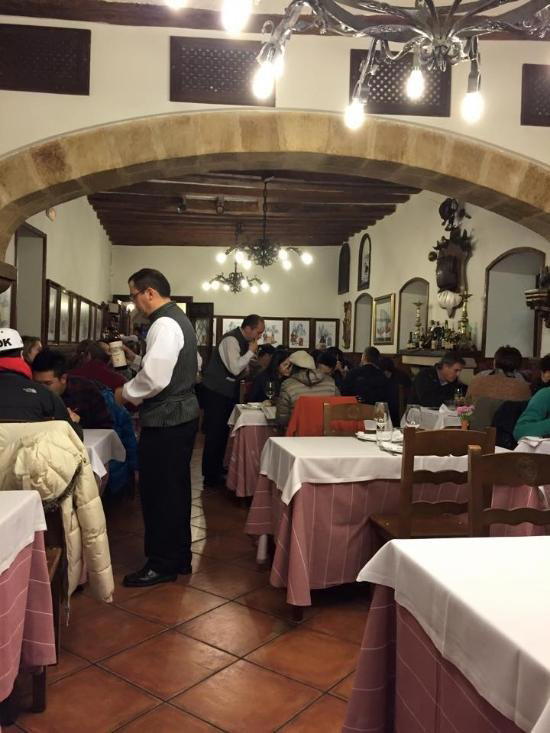
Castilian Asador Tradition in the Heart of Segovia
Entering an asador in Castile is a specific cultural act, not simply a restaurant visit. The genre has a long history across the meseta: wood-fired hornos, whole animals sourced from local farms, and a dining room where the architecture of the meal, whole roast, carving at the table, bread to absorb the juices, has barely changed in decades. In Segovia, that tradition carries particular weight. The city's cochinillo asado is one of the most documented regional dishes in Spain, and the asadors that anchor it hold a civic significance that extends well beyond their Michelin or review-platform standing. José María, on Calle Cronista Lecea in the historic centre, sits at the intersection of that tradition and the kind of institutional longevity that turns a restaurant into a reference point.
The Room: Castilian Scale and Restraint
The Castilian interior is a departure from the low-ceilinged, rough-hewn aesthetic that defines many regional asadors. The sense of space here, documented in Michelin's own notes on the venue, is less expected than the exposed stone or dark wood that typically signals the category. The décor works within Castilian reference points without leaning on rusticity as a shorthand. For diners arriving from Madrid or further afield, the room signals that this is a serious dining address rather than a folkloric experience, even as the cooking remains rooted in the same farmhouse logic that defines the wider genre. That combination of setting and substance is part of why the venue functions as a reliable touchstone for Segovia's culinary identity rather than a single-visit novelty.
Cochinillo Asado: The Dish That Defines the Address
Segovian cochinillo has a defined production and cooking logic. The piglets are sourced very young, typically under three weeks, and roasted whole in wood-fired clay ovens until the skin achieves a lacquer-thin crispness while the meat underneath remains yielding and pale. The theatre of service, where the carving is performed with the edge of a plate to demonstrate tenderness, is part of the dish's cultural grammar in this city. At José María, the cochinillo comes from the family's own farm, Agrocorte Gourmet, which closes the supply chain and gives the kitchen direct control over the animal's age, diet, and condition at the point of slaughter. That level of vertical integration is not standard across Segovia's asador scene, and it is the kind of production detail that sits behind consistent execution rather than occasional excellence. This is the signature dish, and the menu is constructed with that understanding in place.
The Broader Menu: Seasonal Depth and the Tasting Format
The à la carte at José María extends well beyond cochinillo into a range that reflects the agricultural and hunting seasons of Castile. Pumpkin and leeks appear as the autumn and winter markets dictate. Game, wild boar, venison, enters the menu when the hunting season permits, placing the kitchen inside a culinary calendar that predates modern supply chains. This responsiveness to the Castilian season is one of the structural differences between a true asador and a restaurant that simply serves roast meat year-round. The Nuestra Cocina Segoviana tasting menu gathers this range into a structured format, allowing the kitchen to narrate the local pantry across several courses rather than leaving the selection entirely to the diner. For visitors who want context as much as dinner, the tasting menu is the more instructive route through the cooking.
The Wine List: Ribera del Duero as the Logical Counterpart
The wine pairing logic at José María follows the same regional discipline as the food. The Pago de Carraovejas bottles from Ribera del Duero, noted specifically in Michelin's coverage of the venue, represent one of the appellation's more precise and age-worthy producers, working with Tempranillo-dominant blends from old vines on the Valladolid plateau. Ribera del Duero and Segovian roast meat share a natural affinity: the tannin structure and dark fruit of the region's Tempranillo handles the fat and char of wood-fired pork without either element overwhelming the other. The specific attention to Pago de Carraovejas within the list signals a wine program built around complementarity rather than simply regional loyalty. For those exploring further, our full Segovia wineries guide maps the wider regional picture.
Where José María Sits in Segovia's Dining Scene
Segovia's restaurant options divide, broadly, between the asador tradition José María represents and a smaller cohort of contemporary addresses working with the same local ingredients at a different register. Casa Silvano-Maracaibo and Villena operate in that contemporary space, where technique and presentation shift the context without abandoning the Castilian ingredient base. José María occupies the other end of that spectrum: the cooking here is defined by fidelity to a method rather than departure from it. Michelin's Plate recognition in both 2024 and 2025 places it in the tier of recommended addresses without the starred ambition that would change the nature of the dining experience. That is precisely the point. This is a kitchen that earns its authority by doing one thing with unusual consistency, not by innovating around it. Within Spain's broader restaurant conversation, where names like DiverXO in Madrid, Arzak in San Sebastián, El Celler de Can Roca in Girona, Azurmendi in Larrabetzu, Mugaritz in Errenteria, Cocina Hermanos Torres in Barcelona, Quique Dacosta in Dénia, Aponiente in El Puerto de Santa María, and Martin Berasategui in Lasarte-Oria define the avant-garde tier, José María holds a different but equally coherent position as a keeper of regional method. Comparable traditional-format addresses elsewhere in Europe, such as Auberge Grand'Maison in Mûr-de-Bretagne and Auga in Gijón, occupy similar roles within their own culinary geographies.
Planning Your Visit
José María is located at Calle Cronista Lecea 11, in Segovia's historic centre, a few minutes on foot from the cathedral. The price range sits at the €€ level, placing it well within reach for a mid-range dinner budget by Spanish city standards. Segovia is approximately 90 minutes by high-speed rail from Madrid Chamartín, which makes the venue accessible as a day or overnight trip. For a fuller picture of what to do around the meal, our full Segovia restaurants guide, hotels guide, bars guide, and experiences guide cover the city's wider offer.
Frequently asked questions
Has José María won any awards?
José María has received recognition including: The sense of space and attractive Castilian-style decor in this “asador”-style restaurant come as a pleasant surprise in what is one of the city’s classic dining institutions. Without a shadow of a doubt, the signature dish here is the trad….
What should I order at José María?
The cochinillo asado is the reference point: roast suckling pig sourced from the family's own Agrocorte Gourmet farm, cooked by the traditional Segovian method. The Nuestra Cocina Segoviana tasting menu gives a structured route through the kitchen's range, while the à la carte adds seasonal depth through game dishes including wild boar and venison when in season.
How much does it cost to eat at José María?
Pricing at José María is listed as €€.
Can I walk in to José María?
During peak tourist season and weekends, the combination of that volume and the restaurant's standing as one of the city's classic dining institutions makes a reservation the practical approach.
Budget Reality Check
| Venue | Cuisine | Price | Awards | Notes |
|---|---|---|---|---|
| José MaríaThis venue (the venue you are viewing) | Traditional Castilian with Segovian Roast Suckling Pig | $50–100 | Michelin Plate · Guía Repsol 1 Sol | Not listed |
| Aponiente | Avant-Garde Marine Seafood | $200–300 | 3 Michelin Stars · World's 50 Best #84 | Progressive - Seafood, Creative |
| Arzak | Contemporary Basque Fine Dining | $300–500 | 3 Michelin Stars · World's 50 Best #31 | Modern Basque, Creative |
| DiverXO | Avant-Garde Spanish Tasting Menu | $300–500 | 3 Michelin Stars · World's 50 Best #4 | Progressive - Asian, Creative |
| El Celler de Can Roca | Creative Catalan Fine Dining | $300–500 | 3 Michelin Stars · World's 50 Best #2 | Progressive Spanish, Creative |
| Quique Dacosta | Avant-Garde Spanish Fine Dining | $300–500 | 3 Michelin Stars · World's 50 Best #65 | Creative |
Recognition history
Dated appearances from independent guides and award organizations, with the underlying list record or original source where available.
Michelin Plate
Michelin
Guía Repsol 1 Sol
Guía Repsol
Macarfi 7.4 Food Rating
Macarfi
Opinionated About Dining Casual in Europe Recommended
Opinionated About Dining
Full recognition history (7 entries)
Opinionated About Dining Newly Added European Restaurants
Opinionated About Dining
Michelin Plate
Michelin
Michelin Plate
Michelin
Continue exploring
More in Segovia
Restaurants in Segovia
All restaurants in Segovia →

Bars in Segovia
Browse all →
Hotels in Segovia
All hotels in Segovia →

Details
- Classic
- Rustic
- Elegant
- Well Known
- Celebration
- Family
- Special Occasion
- Group Dining
- Historic Building
- Private Dining
- Extensive Wine List
- A La Carte
- Tasting Menu
- Pago De Carraovejas
- Vegetarian Friendly
- Gluten Free Options
Current opening hours
- Monday
- 10 AM–11:30 PM
- Tuesday
- 10 AM–11:30 PM
- Wednesday
- 10 AM–11:30 PM
- Thursday
- 10 AM–11:30 PM
- Friday
- 10 AM–12:30 AM
- Saturday
- 10 AM–12:30 AM
- Sunday
- 10 AM–11:30 PM
Hours can change for holidays and private events. Hours as of .
Traditional Castilian decor blending rustic elements like fireplaces, Romanesque beams, and local art collections with a warm, celebratory atmosphere in multiple distinctive dining rooms.