
Michelin Selected
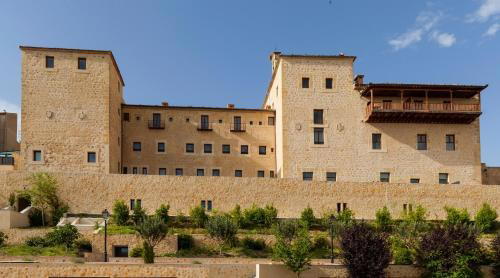
A 17th-century Capuchin convent turned hotel in the heart of Segovia's old city, the Eurostars Convento Capuchinos holds MICHELIN Selected status for 2025. Stone cloisters, vaulted ceilings, and a preserved chapel frame a stay rooted in the city's monastic heritage, placing it firmly in the tier of Spanish heritage conversions that trade spectacle for architectural substance.

Pearl is the En Primeur Club membership app, where members save venues, book tables and use the concierge.
Stone, Silence, and the Logic of Adaptive Architecture
Segovia has always worn its history visibly. The Roman aqueduct bisects the lower city, the Alcázar tips over a rocky promontory to the west, and the cathedral anchors the Plaza Mayor with the gravitational calm of an institution that has outlasted most things around it. Against that backdrop, the conversion of a 17th-century Capuchin convent into a hotel on Plazuela Capuchinos reads less as a novelty and more as the logical continuation of what the city has always done: treat old structures as living infrastructure rather than museum pieces.
The Eurostars Convento Capuchinos belongs to a specific and increasingly recognised category of Spanish hotel development, the kind that treats ecclesiastical or aristocratic buildings as the primary design brief rather than an opportunity for contrast-led renovation. Hotels like Caro Hotel in València and Hotel Mercer Sevilla in Seville operate on the same principle: the original architecture carries the weight, and the intervention stays disciplined. The Convento Capuchinos is Segovia's version of that argument, and the city's dense UNESCO World Heritage designation means it plays at refined architectural stakes.
What a Convent Conversion Actually Looks Like
The spatial grammar of a Capuchin convent is fundamentally different from a palazzo or a manor house. Capuchin foundations were built for austerity, not display. The order's architecture across Europe tends toward low ornamentation, thick load-bearing walls, internal courtyards oriented for contemplation, and chapels positioned to serve as the building's emotional centre rather than its decorative culmination. When a hotel inherits that structure, it either works with those proportions or against them. Properties that work with them tend to produce rooms and corridors where the silence feels architectural rather than incidental, where the cool of stone walls in summer is a feature rather than a historical accident.
Address, Plazuela Capuchinos 2, places the property within the walled city itself, meaning guests are immediately embedded in the medieval street pattern rather than approaching it from a perimeter hotel. That kind of proximity to Segovia's core is not a given: the old city is compact and its street plan was not designed with hotel logistics in mind. The result for guests is a walking relationship with the city that larger or peripheral properties cannot replicate. The cathedral is within reach on foot; so is the aqueduct's upper section and the network of lanes around the Jewish quarter.
MICHELIN Selected Status and What It Signals
Hotel carries MICHELIN Selected recognition in the 2025 edition of the Michelin guide to hotels and stays, listed under the Segovia entries for Spain. MICHELIN Selected is the guide's quality acknowledgement for properties that meet a defined standard of hospitality, comfort, and character without necessarily holding the additional distinction tiers.
For travellers calibrating within the Spanish heritage hotel category, it is worth mapping the Convento Capuchinos against comparison points. Properties like Atrio Restaurante Hotel in Cáceres or Abadía Retuerta LeDomaine occupy different brackets of scale, gastronomy, and investment, but they share the underlying logic of buildings that exist within a historic or agricultural landscape rather than beside it. The Convento Capuchinos operates at a more restrained register: it is a city hotel inside a working heritage city, not a destination estate. That restraint is a position, not a limitation.
Segovia as a Setting: How the City Shapes a Stay
Understanding the Convento Capuchinos requires understanding Segovia's particular rhythm. The city sits roughly 90 kilometres northwest of Madrid by road, accessible by high-speed train from Guiomar station in under 30 minutes on the Alvia service from Madrid Chamartín. That proximity makes Segovia frequently visited as a day trip from the capital, which means its hospitality infrastructure often goes underused by travellers who stay overnight and experience the city after the day crowds have cleared. The old city after 8pm in the evening, or on a weekday morning before tour coaches arrive, belongs to a different register entirely.
Segovia's dining tradition runs toward roast suckling pig (cochinillo asado) and roast lamb (cordero asado) cooked in wood-fired ovens, the same preparation that has defined the city's restaurant identity for generations. The restaurants around the Plaza Mayor and along the lanes descending toward the aqueduct carry that identity with varying degrees of seriousness. Staying inside the walled city, as the Convento Capuchinos' location enables, puts guests within walking distance of that restaurant cluster in a way that shapes how evenings unfold. Our full Segovia restaurants guide covers the dining tier in detail.
For travellers using Segovia as part of a broader Spain itinerary, the property sits comfortably between a Madrid base (consider Mandarin Oriental Ritz, Madrid for the capital's premium tier) and a move toward Castile's deeper interior. Spain's network of converted heritage properties extends well beyond Segovia: Terra Dominicata in Escaladei, Pepe Vieira Restaurant & Hotel in Poio, and Casa Beatnik Hotel in A Coruña each represent different regional takes on architecture-as-hospitality. The Balearic tier, which includes Cap Rocat in Cala Blava, Hotel Can Ferrereta in Santanyí, Hotel Can Cera in Palma, Predi Son Jaumell in Capdepera, and Finca Serena Mallorca in Montuïri, operates at a different price point and climate. The Basque Country has its own architectural hospitality register, well represented by Akelarre in San Sebastián. Catalonia's rural hotel tradition continues at Mas de Torrent Hotel & Spa in Torrent and Hotel Mas Lazuli in Girona. For coastal luxury, Marbella Club Hotel and Royal Hideaway Corales Resort in Adeje define different ends of the southern Spain offering. Internationally, La Residencia, A Belmond Hotel, Mallorca, Mandarin Oriental Barcelona, Torre del Marqués Hotel Spa & Winery in Sardoncillo, The Fifth Avenue Hotel in New York City, Badrutt's Palace Hotel in St. Moritz, and Hôtel de Paris Monte-Carlo each occupy distinct positions in the architecture-led hospitality conversation.
Planning a Stay
The hotel sits at Plazuela Capuchinos, 2, inside Segovia's walled city. The fastest approach from Madrid is by high-speed Alvia train to Segovia-Guiomar, followed by a short taxi or bus connection to the historic centre. Driving from Madrid takes approximately 90 minutes depending on traffic, with limited parking inside the walled perimeter. Booking through the Eurostars group is the most direct route; MICHELIN Selected properties of this type in mid-sized Spanish heritage cities tend to show stronger availability outside high summer and Semana Santa, when Segovia draws the heaviest visitor volumes.
Frequently Asked Questions
What is the vibe at Eurostars Convento Capuchinos?
The atmosphere is shaped primarily by the building itself: a 17th-century Capuchin convent with thick stone walls, internal courtyard proportions built for contemplation, and a location inside Segovia's UNESCO-listed walled city. It is a quieter, more contained register than the large urban properties in Madrid or Barcelona. The MICHELIN Selected 2025 recognition confirms that the experience holds up against a defined hospitality standard, but the character is monastic in origin, which means it suits travellers who want architecture to do most of the work.
What is the leading suite at Eurostars Convento Capuchinos?
For a property of this type, where MICHELIN Selected status recognises overall quality, the most architecturally significant rooms tend to be those positioned around the original cloister or adjacent to the chapel volume, where ceiling height and stone detailing are most pronounced. Confirming room categories directly with the hotel or through the Eurostars group website will give the clearest picture of what the highest accommodation tier offers.
Fast Comparison
Comparable venues nearby, for context on price, style, and recognition.
| Venue | Cuisine | Price | Awards | Notes |
|---|---|---|---|---|
| Eurostars Convento CapuchinosThis venue (the venue you are viewing) | Converted historic convent with modern luxury interiors | Not listed | Michelin Selected | Not listed |
| Castell Son Claret | Historic castle estate with modern luxury renovations | $300–500 | 1 Michelin Key · La Liste Top Hotels | Es Capdellà |
| Camiral, A Quinta do Lago Resort | Contemporary low-rise art deco with modern Catalan influences | Not listed | Michelin Selected | Caldes de Malavella |
| Palacio de Sancti Petri, Gran Meliá | Andalusian palace resort | $300–500 | Michelin Selected · Leading Hotels of World Member | Novo Sancti Petri |
| Hard Rock Hotel Ibiza | Luxury five-star resort combining Hard Rock's well-known brand identity with contemporary Mediterranean design and Ibizan island influences. | $300–500 | Not listed | Playa d'en Bossa |
| InterContinental Madrid | Historic luxury urban retreat | Not listed | Virtuoso Luxury Hotel Partner | Almagro |
Recognition history
Dated appearances from independent guides and award organizations, with the underlying list record or original source where available.
Michelin Selected
Michelin
Continue exploring
More in Segovia
Hotels in Segovia
All hotels in Segovia →
Bars in Segovia
Browse all →

Details
- Elegant
- Quiet
- Historic
- Sophisticated
- Romantic Getaway
- Anniversary
- Weekend Escape
- Historic Building
- Terrace
- Panoramic View
- Wi Fi
- Spa
- Pool
- Fitness Center
- Room Service
- Concierge
- Garden
- Restaurant
- Sauna
- Massage
- Mountain
- Garden
- Elevator
- Wheelchair Accessible
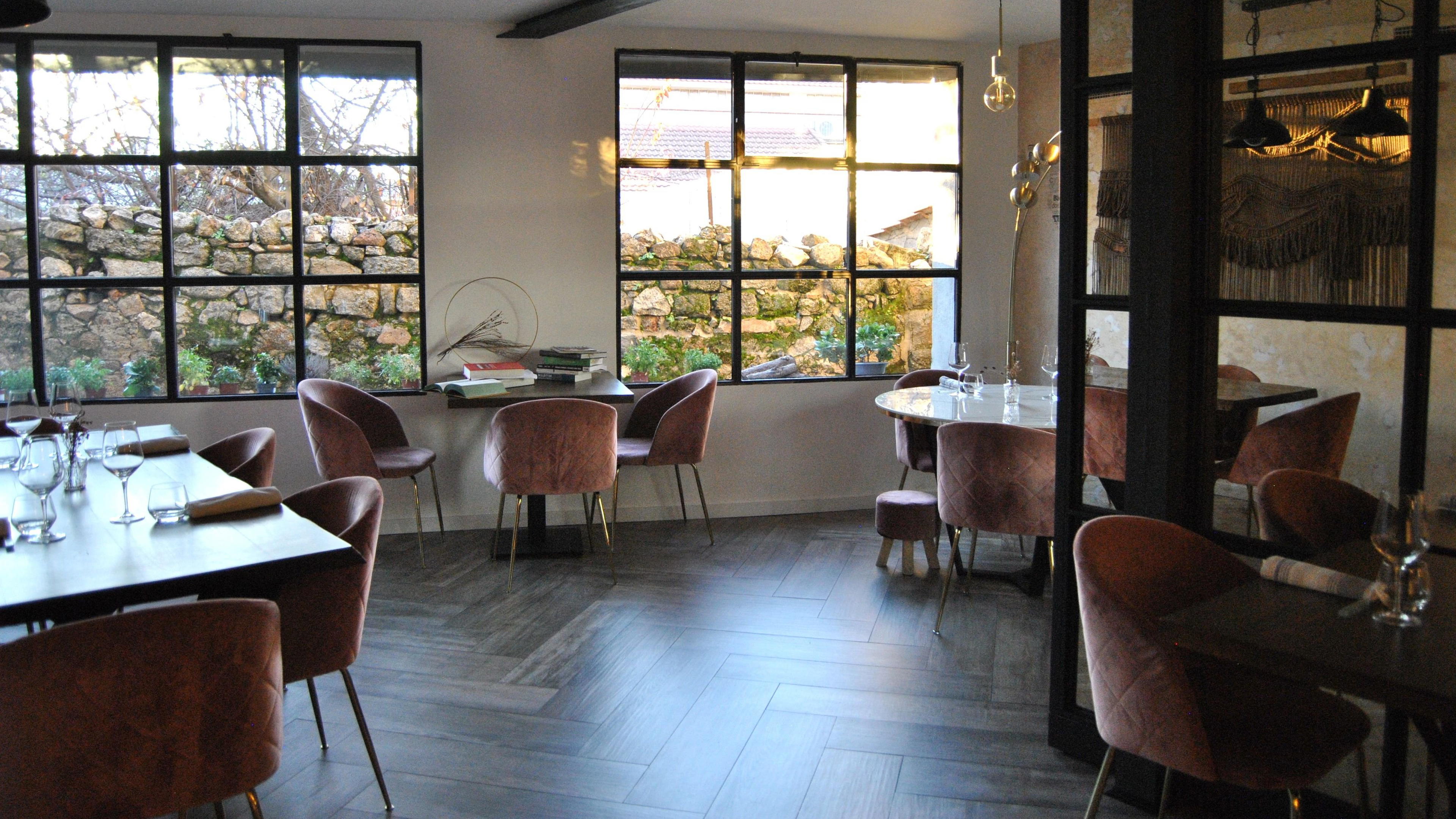
Serene and tranquil atmosphere blending historic austerity with modern luxury, featuring natural light on broad terraces and a relaxing spa oasis.