Bond Street


OpenTable Top 100 Restaurants
Our verdict
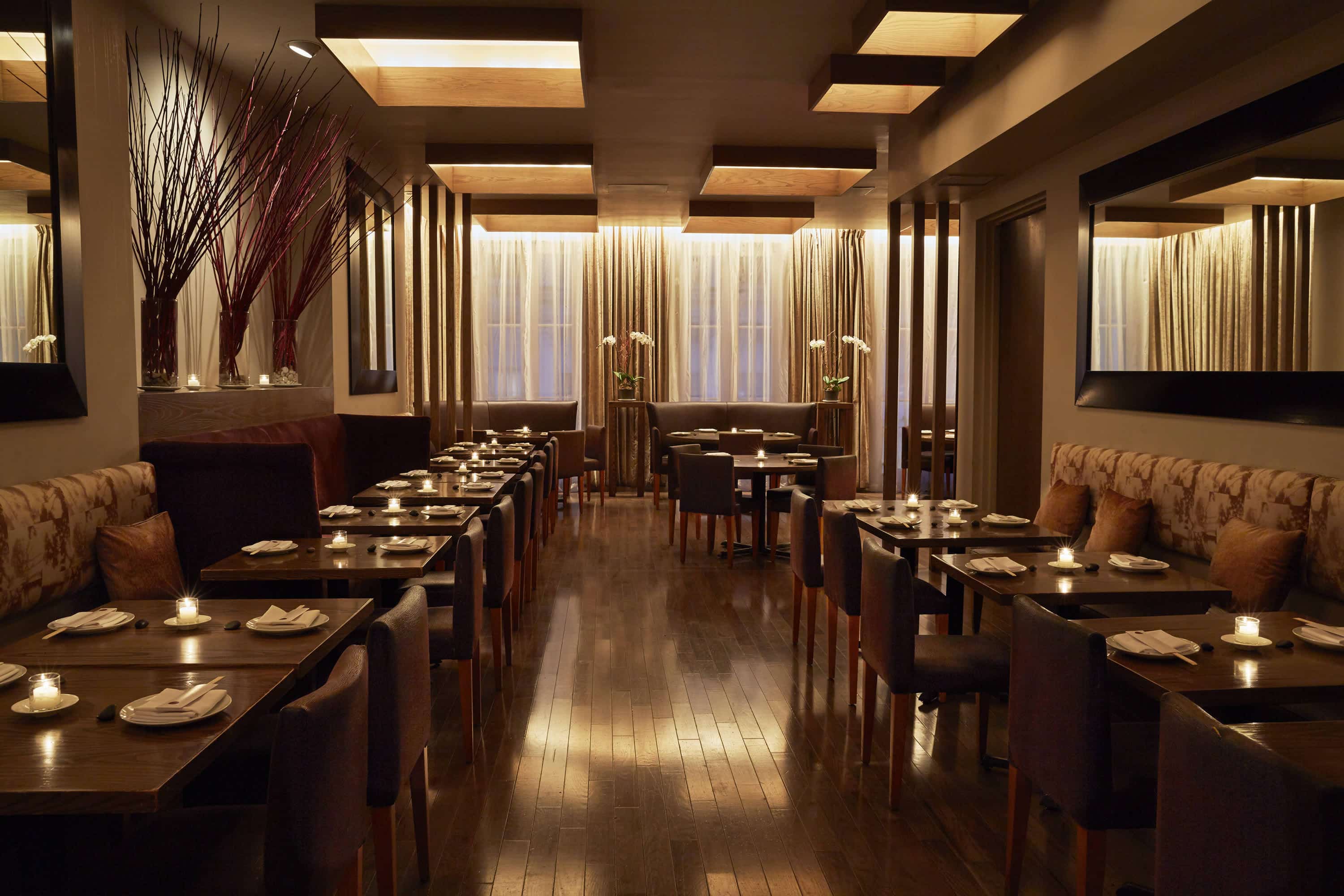
Operating from a NoHo townhouse since 1998, Bond Street occupies a specific position in New York's Japanese dining scene: accessible enough for a convivial evening, committed enough to earn back-to-back Opinionated About Dining recognition in 2024 and 2025. The format spans a full sushi bar and a broader menu of modern Japanese-influenced cooking, making it one of the more format-flexible Japanese addresses in lower Manhattan.

Pearl is the En Primeur Club membership app — saves, bookings, and concierge access live there. Same editors, same standards.
- Address
- 6 Bond St, New York, NY 10012
- Phone
- (212) 777-2500
- Hours
- Mon 5:30–9:30 PMTue–Wed 5:30–10 PMThu–Sat 5:30–10:30 PMSun 5:30–9:30 PM
- Website
- bondstrestaurant.com
- Directions
- Get directions
- Booking
- Book on OpenTable
The menu
What to order
- Tuna_crispy_rice
- Wagyu_skirt_steak
- Tuna_pizza
- Short_rib_gyoza
NoHo's Long Game: Japanese Dining Where the Room Does Half the Work
Bond Street, the stretch of NoHo that runs between Broadway and the Bowery, has a particular quality in the early evening: the light drops fast through the low buildings, the foot traffic thins, and the neighbourhood announces itself as something between downtown cool and residential calm. The Japanese restaurant at number six has inhabited this block since 1998, long enough to have watched NoHo cycle through several identities. That longevity is worth noting before anything else, because in New York's Japanese dining scene, where omakase counters open and close with the rhythm of a fashion season, sustained relevance over more than two decades is not a given.
Modern Japanese restaurants in New York tend to sort themselves into two broad camps: the omakase-only counter, where the price is fixed, the seating is limited, and the experience is choreographed from the first piece of nigiri to the last; and the fuller-format restaurant, where a sushi bar coexists with a broader menu and the evening can go in multiple directions depending on the table. Bond Street operates in the second tradition, and in that respect it belongs to a different competitive conversation than the single-format counters at Joji or Shion 69 Leonard Street.
What the Room Produces
The format at Bond Street has always been part of its identity. A dedicated sushi bar runs alongside a kitchen producing modern Japanese-influenced dishes, which means the evening can be structured around omakase-style progression, à la carte ordering, or some combination of the two. This flexibility is less common than it sounds. Many of the city's most-discussed Japanese addresses have moved decisively toward one format or the other. The dual structure here means a table of four can eat differently from one another without anyone compromising, which is a practical advantage that the room's longevity suggests New York diners have found useful for twenty-seven years.
The cooking sits in the category the venue's own record describes as modern interpretations of Japanese-inspired cuisine. This positions it differently from the classical edomae counters at Sushi Sho or the rarefied Japanese precision found at Bar Masa, which operates in a different price tier and a different register of formality entirely. Bond Street's approach acknowledges Western technique and ingredient alongside Japanese fundamentals, a model that was genuinely novel when it opened in the late nineties and is now an established idiom across American cities from San Francisco to New Orleans.
The Team Behind the Floor
Editorial angle that makes Bond Street interesting in 2025 is less about a single chef's biography and more about how the front-of-house and sushi bar operate as a coordinated unit across an evening. In restaurants where the menu spans classical sushi and kitchen-produced modern dishes, the dynamic between the sushi counter team, the kitchen, and the floor staff is what determines whether the experience feels cohesive or fragmented. A guest seated at the sushi bar is in a different rhythm from a guest at a dining table, and restaurants that manage both formats well do so through genuine communication between those zones rather than through parallel operations that happen to share a building.
For a venue like this, the sommelier or beverage lead plays a connective role: the drinks program needs to work equally well with a sequence of nigiri and with cooked Japanese-influenced dishes, which are genuinely different asks. Sake and Japanese whisky pairings require different logic from wine pairing with seared proteins or vegetable-forward preparations. Long-running restaurants in this format tend to develop institutional knowledge on exactly this problem, and Bond Street has had nearly three decades to develop it.
This team-based coherence is what separates durable multi-format Japanese restaurants from those that feel like two restaurants awkwardly sharing a postcode. Comparable sustained operations at this intersection of formats include Blue Ribbon Sushi, which has operated a similar philosophy of accessible-but-serious Japanese dining in the city for a comparable period.
Where It Sits in the Broader Scene
Opinionated About Dining ranked Bond Street at #564 among North American restaurants in 2024 and moved it to #573 in 2025. The slight shift in ranking does not indicate decline so much as the continued expansion of the field: OAD's North American list has grown in competitive depth, and holding a position in the top 600 across consecutive years is a signal of sustained execution rather than a single standout year. For context, the restaurants that cluster in this range on the OAD list tend to be serious operations with professional kitchens and loyal local followings, not destination-dining flagships in the Michelin three-star tier occupied by Masa, Per Se, or Eleven Madison Park, but also not casual neighbourhood restaurants.
For a comparison of what serious Japanese cooking looks like at its most rarefied international tier, the work being done at Harutaka in Tokyo or Sushi Shikon in Hong Kong represents the apex of the omakase counter tradition. Bond Street is not competing in that register and does not attempt to. It competes instead as a serious full-service Japanese restaurant in a city with no shortage of credible alternatives, and its longevity suggests it does so with consistency.
Across American dining cities, the multi-format modern Japanese restaurant has become a recognizable presence. The version at Emeril's in New Orleans or the kind of tasting-menu discipline found at Lazy Bear in San Francisco, Alinea in Chicago, Single Thread Farm in Healdsburg, The French Laundry in Napa, and Providence in Los Angeles each represent different answers to the question of how to serve serious food at a high price point. Bond Street's answer, sustained since 1998, is to offer format flexibility without abandoning seriousness.
For a complete picture of where Bond Street sits within the wider New York dining conversation, see our full New York City restaurants guide. If you are building an itinerary around the visit, our New York City hotels guide, bars guide, wineries guide, and experiences guide cover the full picture.
Know Before You Go
- Address: 6 Bond St, New York, NY 10012
- Hours: Monday 6–10 pm; Tuesday–Thursday 6–10:30 pm; Friday–Saturday 6–11:30 pm; Sunday 6–10 pm
- Format: Full-service restaurant with dedicated sushi bar; à la carte and sushi bar formats available
- Recognition: Opinionated About Dining Leading Restaurants in North America, ranked #564 (2024) and #573 (2025)
- In operation since: 1998
- Neighbourhood: NoHo, lower Manhattan
Frequently asked questions
What are Bond Street's hours?
Hours at Bond Street: Hours: Monday 6–10 pm Tuesday 6–10:30 pm Wednesday 6–10:30 pm Thursday 6–10:30 pm Friday 6–11:30 pm Saturday 6–11:30 pm Sunday 6–10 pm.
Where the Accolades Land
A short peer table to compare basics side-by-side.
| Venue | Cuisine | Price | Awards | Notes |
|---|---|---|---|---|
| Bond StreetThis venue — the venue you are viewing | Modern Japanese Fusion | $200–300 | OpenTable Top 100 Restaurants | Not listed |
| Le Bernardin | French Seafood Fine Dining | $300–500 | 3 Michelin Stars · World's 50 Best #13 | French, Seafood |
| Atomix | Modern Korean Tasting Menu | $300–500 | 2 Michelin Stars · World's 50 Best #7 | Modern Korean, Korean |
| Masa | Seasonal Hokkaido Tempura Omakase | $150–200 | Tabelog 100 #34 | Sushi, Japanese |
| Per Se | French Fine Dining Tasting Menu | $300–500 | 3 Michelin Stars · World's 50 Best #40 | French, Contemporary |
| Eleven Madison Park | Contemporary Plant-Based Fine Dining | $300–500 | 3 Michelin Stars · World's 50 Best #4 | French, Vegan |
Recognition history
Dated appearances from independent guides and award organizations, with the underlying list record or original source where available.
Opinionated About Dining Top Restaurants in North America Recommended
Opinionated About Dining
OpenTable Top 100 Restaurants
OpenTable
Full recognition history (4 entries)
Opinionated About Dining Top Restaurants in North America Ranked #573
Opinionated About Dining
Opinionated About Dining Top Restaurants in North America Ranked #564
Opinionated About Dining
Continue exploring
More in New York City
More from Chef Various
Browse all →
Restaurants in New York City
Browse all →
Bars in New York City
Browse all →
Hotels in New York City
Browse all →




Details
- Trendy
- Lively
- Elegant
- Modern
- Energetic
- Date Night
- Business Dinner
- Group Dining
- Special Occasion
- Chefs Counter
- Open Kitchen
- Sake Program
- Craft Cocktails
- A La Carte
- Small Plates
- Omakase
- Sake
- Cocktails
Current opening hours
- Monday
- 5:30–9:30 PM
- Tuesday
- 5:30–10 PM
- Wednesday
- 5:30–10 PM
- Thursday
- 5:30–10:30 PM
- Friday
- 5:30–10:30 PM
- Saturday
- 5:30–10:30 PM
- Sunday
- 5:30–9:30 PM
Hours can change for holidays and private events. Last verified .