
Michelin Guide Plate · Michelin Plate
Our verdict
Jiao Cai Seafood at Yishun Park Hawker Centre is a cooked-to-order stall where the sambal stingray sets the standard for what Singapore's hawker seafood tradition does at its most direct. Positioned far from the Orchard Road circuit, it represents the kind of neighbourhood hawker eating that the city's food culture genuinely runs on, where quality arrives without ceremony or reservation systems.

Pearl is the En Primeur Club membership app, where members save venues, book tables and use the concierge.
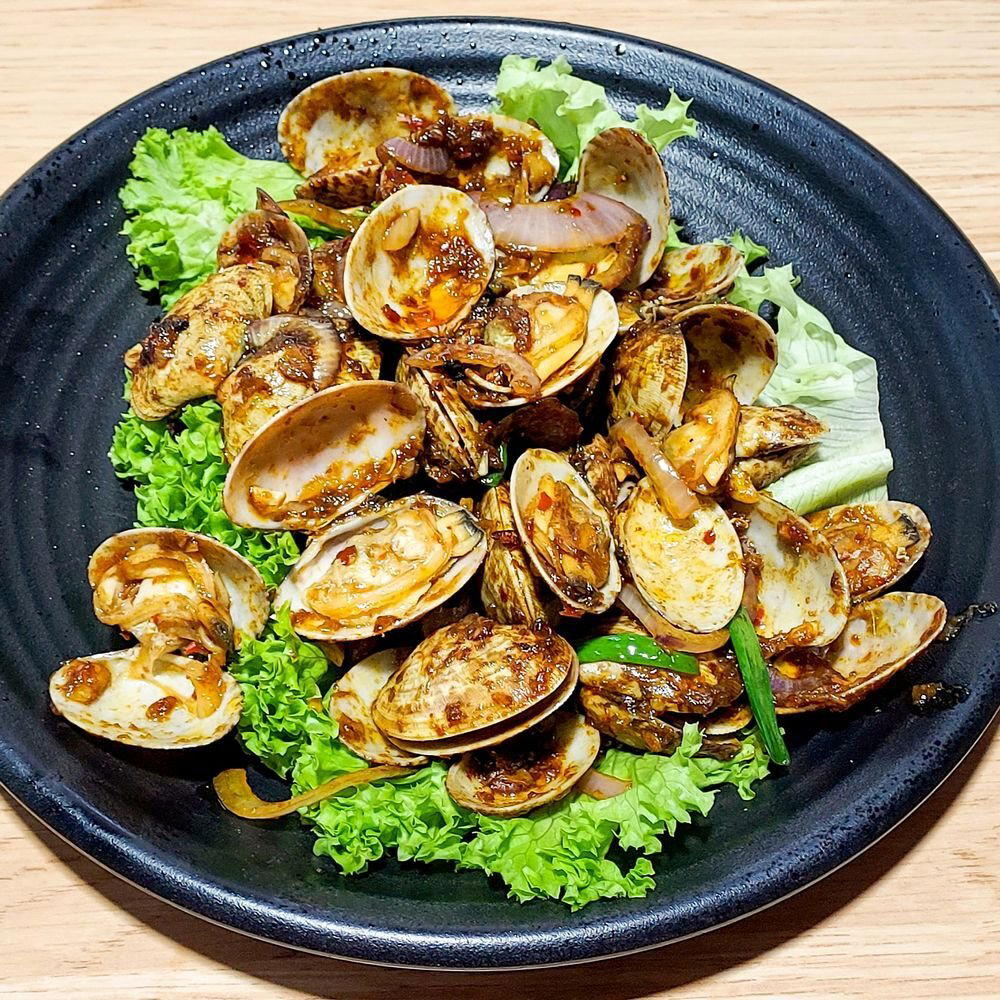
The menu
What to order
- Sambal stingray
- Sambal sotong
Hawker Seafood in Context: Where Yishun Sits in Singapore's Eating Map
Singapore's seafood dining spans a range that few cities can match, from the white-tablecloth precision of places like Odette and Les Amis at the top of the fine-dining register to the open-air hawker centres that have been feeding the city since the 1970s resettlement programme. Jiao Cai Seafood occupies the latter tier, operating from a single stall at Yishun Park Hawker Centre in the far north of the island, at #01-39, 51 Yishun Avenue 11. That address matters: Yishun is not a tourist corridor. The clientele here is largely residential, which is precisely why the cooking is calibrated to locals who eat this food weekly rather than visitors on a single pass.
Singapore's hawker culture received UNESCO Intangible Cultural Heritage recognition in 2020, and that designation reflects something real about how these centres function. They are not food courts in the Western shopping-mall sense. Each stall operates as an independent business, often passed down across generations, with menus refined over decades of repeat customers. Cooked-to-order seafood stalls within this system sit at a particular intersection: the cooking is immediate, the produce turns over fast, and the sauces, particularly sambal, are often the primary differentiator between one stall and the next. For a broader view of how to read Singapore's dining culture across price points and formats, see our full Singapore restaurants guide.
Arriving at Yishun Park Hawker Centre
Approaching Yishun Park Hawker Centre, the sensory register shifts quickly from the air-conditioned transit network to open-air cooking smoke, the hiss of woks, and the ambient noise of a working neighbourhood lunch crowd. The centre sits adjacent to Yishun Park, which gives it a slightly more open feel than the older covered centres closer to the city. Stall #01-39 is reachable by MRT to Yishun station, followed by a short walk or a connecting bus. The journey from the Central Business District takes roughly forty minutes, which positions Jiao Cai Seafood firmly in the category of destination eating for those coming from the tourist centre, rather than casual drop-in dining.
That travel time is worth factoring into the decision. The hawker centre serves a neighbourhood that does not organise itself around visitor schedules, which means the experience reads differently at different points in the day.
The Lunch and Dinner Divide
The gap between a midday visit and an evening visit to a cooked-to-order hawker seafood stall is more pronounced than it might appear from the outside. At lunch, hawker centres in Singapore run at high velocity. Turnover is fast, queues form and clear within minutes, and the cooking pace is intense. For a stall operating cooked-to-order, as Jiao Cai Seafood does, this means dishes arrive quickly but the choice to cook individually rather than in large pre-cooked batches signals a commitment to quality over throughput. Lunchtime at a residential hawker centre also tends to draw office workers and local families on tighter schedules, which keeps the average spend low and the portions calibrated to a midday appetite.
Evening service at hawker centres shifts the mood considerably. The pace slows, tables fill with groups rather than solo diners, and the seafood ordering tends to run more elaborate, with multiple dishes shared across a table rather than individual plates. For cooked-to-order seafood, evenings are often when the fuller range of a stall's capabilities comes through: the longer cook times feel less pressured, and the combination of dishes ordered together allows the flavour contrasts across a meal to read properly. Singapore's seafood hawker tradition has always been oriented toward communal eating, and that social format reaches its most coherent expression at the dinner table.
The sambal stingray, the dish Jiao Cai Seafood is noted for, is a case study in this day-and-night reading. Sambal stingray is a dish of significant character: the ray wing is grilled over charcoal, typically banana-leaf lined, and the sambal, a chilli-based paste cooked down with belacan, lime, and other aromatics, sits on leading and penetrates the flesh during cooking. The result is spicy, layered with fermented funk, and assertive enough to anchor a meal rather than accompany one. At lunch, it functions as a single-plate anchor. In the evening, shared across a table with rice and other dishes, it becomes part of a broader conversation between flavours.
The wider seafood scene in Singapore gives useful comparative context here. Restaurants at the upper end of the market, such as Zén or Jaan by Kirk Westaway, operate on the principle that the dining experience is itself the product, with price points reflecting service architecture and ingredient sourcing at a global tier. Internationally, the model extends to places like Le Bernardin in New York or Aponiente in El Puerto de Santa María, where seafood is the primary creative medium at high investment levels. Hawker seafood operates on an entirely different logic: the product is the cooking itself, stripped of the surrounding architecture, and the value proposition comes from the directness of that exchange. These are not competing categories so much as parallel answers to the question of what seafood cooking can be.
Signature Dish and What It Represents
Sambal stingray is not a dish that travelled widely outside Southeast Asia until relatively recently, which partly explains why it remains strongly associated with Singapore and Malaysia's hawker circuits. The technique of grilling cartilaginous fish over charcoal requires familiarity with how the flesh behaves under heat, and the sambal itself is a sauce that rewards iteration: the ratio of fresh chilli to dried, the fermentation level of the belacan, and the cooking time all shift the final character significantly. A stall that earns specific recognition for its sambal stingray, as Jiao Cai Seafood has, is being credited for consistency and calibration across those variables. That is a meaningful credential in a city where the same dish appears at hundreds of stalls.
Planning a Visit
Jiao Cai Seafood operates within the standard hawker centre model, which means no reservation system and no booking infrastructure. Arrival order determines queue position. For a cooked-to-order stall, that also means the wait during peak periods is real: the cooking is not assembled from pre-cooked components. Going early in either service window, lunch or dinner, reduces wait time. The Yishun Park Hawker Centre setting also provides a broader context for the meal: other stalls in the centre cover different cuisines and price points, which makes it easy to build a full hawker spread across multiple vendors, as is standard practice in Singapore's centre culture.
No website or phone contact is listed for the stall, which is consistent with how most independent hawker operations function. Payment is typically cash or via PayNow QR at hawker stalls of this type, though specific payment methods should be confirmed on arrival. Those planning a longer Singapore trip around food should also consult our full Singapore hotels guide, our full Singapore bars guide, and our full Singapore experiences guide to build the complete picture. For dining comparison at other price points globally, the range covered by venues like Meta in Singapore, Lazy Bear in San Francisco, Alinea in Chicago, or Alléno Paris au Pavillon Ledoyen gives a sense of where hawker eating sits within the full international spectrum, which is at the opposite pole on format and price, but not on intention.
Frequently asked questions
What's Jiao Cai Seafood known for in terms of accolades?
Jiao Cai Seafood has received recognition including: Cooked-to-order seafood dishes. Signature sambal stingray is spicy and delicious.
What's Jiao Cai Seafood's location?
Jiao Cai Seafood is located at Yishun Park Hawker Centre, #01-39, 51 Yishun Avenue 11, Singapore.
What dish is Jiao Cai Seafood famous for?
Sambal stingray is the stall's defining order, cooked-to-order and noted for its heat and depth. The dish has deep roots in Singaporean and Malaysian hawker tradition, and Jiao Cai's version is specifically cited as spicy and well-executed. It is the reason most regulars at Yishun Park Hawker Centre, stall #01-39, make the trip north.
What's the best way to book Jiao Cai Seafood?
There is no booking system. Jiao Cai Seafood operates within the standard hawker centre model at Yishun Park Hawker Centre, which means walk-in only and arrival order determines your wait. Coming early in a session, at the opening of lunch or dinner service, is the practical way to avoid a long queue for cooked-to-order dishes.
The Short List
Comparable venues nearby, for context on price, style, and recognition.
| Venue | Cuisine | Price | Awards | Notes |
|---|---|---|---|---|
| Jiao Cai SeafoodThis venue (the venue you are viewing) | Hotplate BBQ Seafood | $10–20 | Michelin Guide Plate · Michelin Plate | Not listed |
| Ron Sheng Fish Head Bee Hoon | Singaporean Fish Head Bee Hoon | $1–10 | Michelin Plate | YUHUA EAST, Singaporean Fish Head Bee Hoon |
| Mellben Seafood (Ang Mo Kio) | Singaporean Chilli Crab Seafood | $30–50 | Michelin Guide Plate · Michelin Plate | SHANGRI-LA, Singaporean Chilli Crab Seafood |
| San Xiang Rou Cuo Mian | Singaporean Bak Chor Mee | $1–10 | Michelin Guide Plate · Michelin Plate | BEDOK NORTH, Singaporean Bak Chor Mee |
| Hock Hai (Hong Lim) Curry Chicken Noodle | Traditional Singaporean Curry Chicken Noodles | $1–10 | Michelin Guide Plate · Michelin Plate | BEDOK NORTH, Traditional Singaporean Curry Chicken Noodles |
| Food Street Fried Kway Teow Mee | Traditional Char Kway Teow Mee | $1–10 | Michelin Guide Plate · Michelin Plate | CHINATOWN, Traditional Char Kway Teow Mee |
Recognition history
Dated appearances from independent guides and award organizations, with the underlying list record or original source where available.
Michelin Plate
Michelin · 2026 Michelin Plate
Michelin Guide Plate
Michelin Guide
Continue exploring
More in Singapore
Restaurants in Singapore
All restaurants in Singapore →
Bars in Singapore
All bars in Singapore →
Details
- Lively
- Casual Hangout
- Group Dining
- Sustainable Seafood
- A La Carte
Current opening hours
- Monday
- 12–9 PM
- Tuesday
- 12–9 PM
- Wednesday
- 12–9 PM
- Thursday
- 12–9 PM
- Friday
- 12–9 PM
- Saturday
- 12–9 PM
- Sunday
- 12–9 PM
Hours can change for holidays and private events. Hours as of .
Typical hawker centre with fans, tables, chairs, clean and airy atmosphere.