Jia Xiang
On Rue de Lausanne, Jia Xiang sits within Geneva's compact but serious Chinese dining tier, a category that rewards close attention in a city more often associated with French formality. The address places it on the city's right bank, close to the international quarter where demand for precise, ingredient-conscious Asian cooking runs ahead of supply. For visitors already familiar with the broader Swiss fine-dining circuit, it represents a considered alternative to the Franco-Swiss register that dominates the city's upper tier.
Pearl is the En Primeur Club membership app — saves, bookings, and concierge access live there. Same editors, same standards.
- Address
- Rue de Lausanne 56, 1202 Genève, Switzerland
- Phone
- +41227389553
- Website
- jiaxiang.ch
- Directions
- Get directions
 Saves & bookings on Pearl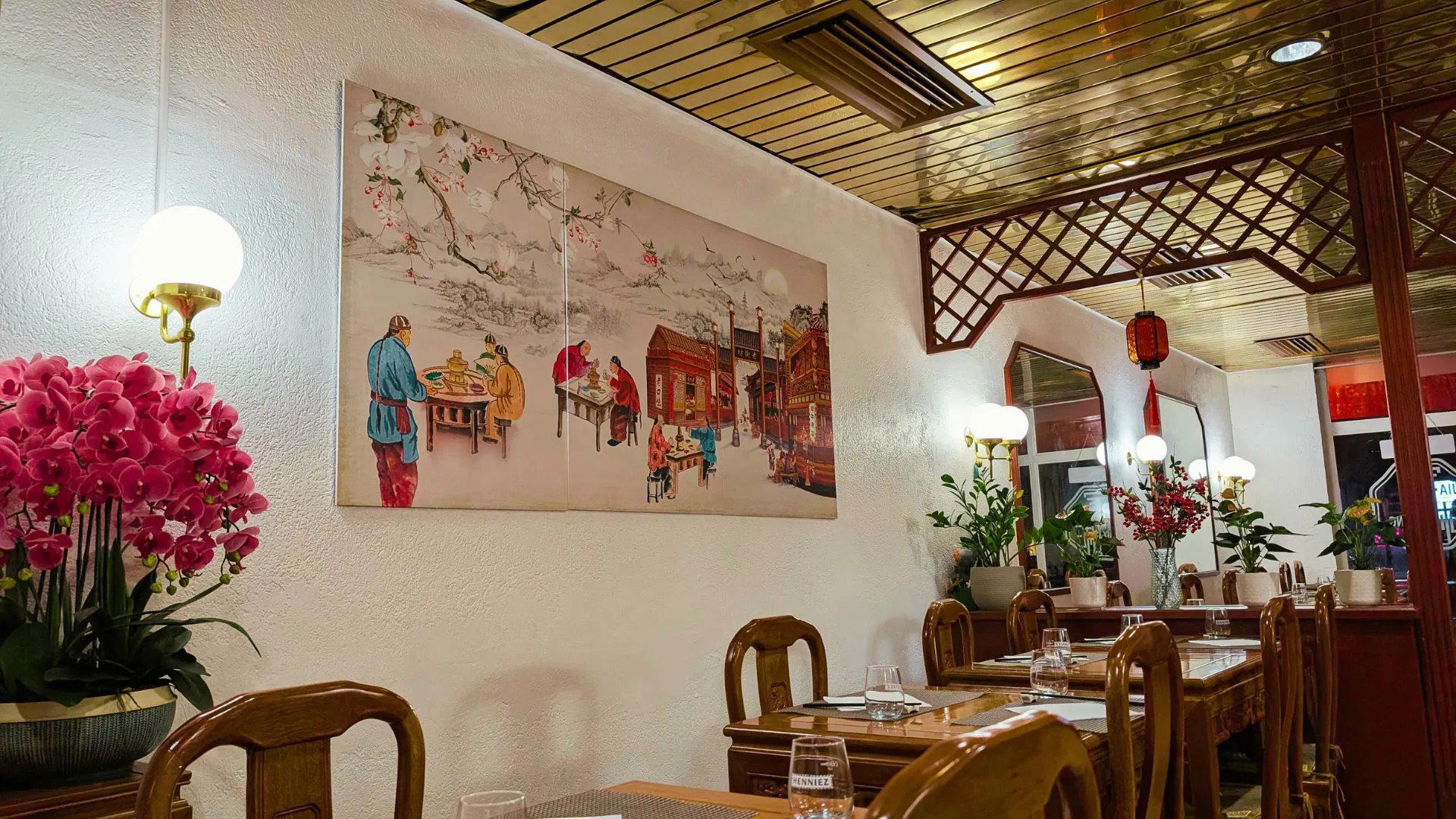
Where Geneva's Chinese Dining Scene Earns Its Credibility
Geneva's restaurant identity is constructed almost entirely around French and Franco-Swiss cooking. Jia Xiang is a casual Chinese restaurant in Geneva, serving authentic Sichuan and Hunan dishes at about $60 per person. The city's Michelin-starred circuit runs from the heavy classical formalism of L'Atelier Robuchon through the modern register of Arakel and into the Mediterranean adjacency of venues like La Micheline. Against that backdrop, serious Chinese cooking occupies a smaller, less publicised tier, one that, in Geneva specifically, is shaped by a large and permanent international community with exacting expectations. The city's proximity to the UN and its affiliated agencies means that demand for regionally specific, ingredient-driven Chinese food is real and continuous, not tourist-facing.
Jia Xiang, at Rue de Lausanne 56 in the 1202 postal district, operates in that space. The right bank address places it close to the international quarter, within walking distance of the Cornavin rail hub and the lake's northern shore. In a city where Chinese restaurants range from direct canteen formats to more considered operations, proximity to this neighbourhood is a functional signal: the clientele here is not searching for approximation.
Ingredient Sourcing and What It Tells You About the Kitchen
A reliable way to read a Chinese restaurant's ambitions in a European city is to look at where its ingredients come from and how the kitchen handles distance. Switzerland imposes strict import controls, which means kitchens working at a higher register must develop sourcing relationships that are specific and deliberate, they cannot simply default to the wholesale channels that supply lower-tier operations. The country's own agricultural produce is high quality by European standards, but it is not aligned with the pantry demands of Sichuan, Cantonese, or Shanghainese cooking without significant effort from the kitchen side.
This is the structural challenge that separates credible Chinese cooking in Switzerland from its more casual peers. Venues like Tsé Fung at the La Réserve hotel, which operates in the €€€ tier, have demonstrated that the Geneva market will support carefully sourced Chinese cooking when the execution is consistent. Jia Xiang sits in this same conversation, on a street that serves a clientele accustomed to ingredient transparency across all cuisines, not just the French ones. For context, the sourcing discipline visible in Swiss fine dining more broadly, at Hotel de Ville Crissier in Crissier or Schloss Schauenstein in Fürstenau, has gradually raised the baseline expectation across all categories, including Asian dining.
The Right Bank Setting and What to Expect on Arrival
Rue de Lausanne is not a destination dining street in the way that Geneva's old town or the Eaux-Vives quarter can be. It is a working arterial road that connects the rail station to the lake's northern edge, lined with hotels, offices, and a practical range of restaurants. That context matters. Venues that sustain a serious kitchen on this stretch do so through consistent execution rather than ambient prestige, the foot traffic is international and purposeful rather than occasion-driven.
The building itself sits within the dense mid-city fabric of Geneva's right bank. Visitors arriving by public transport from Gare de Cornavin are a few minutes on foot; those coming from the southern lakeside or the Vieille Ville will cross the Rhône. The neighbourhood's character is more functional than fashionable, which tends to mean the kitchen carries the weight of return visits rather than the room's design or the postcode's cachet.
Geneva's Chinese Dining Tier in Context
Swiss fine dining is concentrated but geographically spread. The Michelin infrastructure in Switzerland supports a number of serious tables well beyond Geneva: Cheval Blanc by Peter Knogl in Basel, Memories in Bad Ragaz, 7132 Silver in Vals, and focus ATELIER in Vitznau all operate at the summit of the national recognition structure. Within Geneva itself, the awarded tier is dominated by French and European formats, with Asian dining sitting outside the formal recognition system even where execution would justify attention.
That gap is not distinctive to Geneva. In cities where Chinese restaurants have broken into formal recognition, Atomix in New York City represents the Korean equivalent of this trajectory, the shift tends to happen when a venue demonstrates consistent sourcing discipline, regional specificity, and a clientele capable of distinguishing between registers. Geneva has the clientele. The question, as with Chinese dining in many European cities, is whether the kitchen is operating with the specificity to match.
For visitors building a Geneva itinerary that extends beyond the Franco-Swiss core, the city's Italian offering at Il Lago and the modern European work at L'Aparté bracket the kind of considered cooking that sits in a different register from the restaurant but serves a similar function: a deliberate departure from the city's default French register.
The Swiss market also rewards comparison with other serious Asian operations at scale. IGNIV Zürich by Andreas Caminada and Einstein Gourmet in Sankt Gallen represent what ambition looks like in the Swiss context when it is formally recognised. Da Vittorio in St. Moritz and Colonnade in Lucerne show the range of what the country's dining infrastructure can support across categories. The restaurant enters that broader picture as a Geneva-specific option in a category that the city's formal dining infrastructure has historically underweighted.
Planning Your Visit
Rue de Lausanne 56 is direct to reach on foot from Gare de Cornavin, Geneva's main rail terminal, in under ten minutes. The right bank location also connects easily to the city's tram and bus network. As with many Chinese restaurants in European cities operating outside the formal reservation-platform infrastructure, it is advisable to call ahead or visit in person to confirm current hours and availability, particularly on weekends and during Geneva's frequent international conference periods, when demand across the city's mid-to-upper dining tier rises sharply.
How It Stacks Up
Comparable venues nearby, for context on price, style, and recognition.
| Venue | Cuisine | Price | Notes |
|---|---|---|---|
| Jia XiangThis venue — the venue you are viewing | Authentic Sichuan & Hunan Chinese | $$ | Not listed |
| Sando | Japanese Inspired Burgers | $$ | Saint-Gervais |
| Thaï Genève | Authentic Thai Fine Gastronomy | $$$ | Cite |
| Anouch | Seasonal Mediterranean with Armenian and Thai Influences | $$$ | Saint-Gervais |
| Brasserie l'Odéon Genève | Classic French Brasserie | $$$ | Les Delices |
| Chat-Botté | Modern French Fine Dining | $$$$ | Le Prieuré |
At a Glance
- Cozy
- Classic
- Lively
- Group Dining
- Family
- Casual Hangout
- Celebration
- Standalone
- Beer Program
Current opening hours
- Monday
- 11:45 AM–2:15 PM, 5:45–10:15 PM
- Tuesday
- 11:45 AM–2:15 PM, 5:45–10:15 PM
- Wednesday
- Closed
- Thursday
- 11:45 AM–2:15 PM, 5:45–10:15 PM
- Friday
- 11:45 AM–2:15 PM, 5:45–10:15 PM
- Saturday
- 11:45 AM–2:15 PM, 5:45–10:15 PM
- Sunday
- 11:45 AM–2:15 PM, 5:45–10:15 PM
Hours can change for holidays and private events. Last verified .