Japanese Kaiseki and Sushi Luna
Kaiseki and sushi in a resort city better known for beachside tacos and open-fire grills: Japanese Kaiseki and Sushi Luna operates in a culinary register that most of Cabo San Lucas does not. Located on Blvd. Lázaro Cárdenas in El Medano, the address positions it at a deliberate remove from the marina strip, serving a format that demands precision and patience in a city that usually rewards neither.
Pearl is the En Primeur Club membership app — saves, bookings, and concierge access live there. Same editors, same standards.
- Address
- Blvd. Lázaro Cárdenas 2501, El Medano Ejidal, El Medano, 23453 Cabo San Lucas, B.C.S., Mexico
- Phone
- +526242663956
- Website
- lunarestaurant.mx
- Directions
- Get directions
 Saves & bookings on Pearl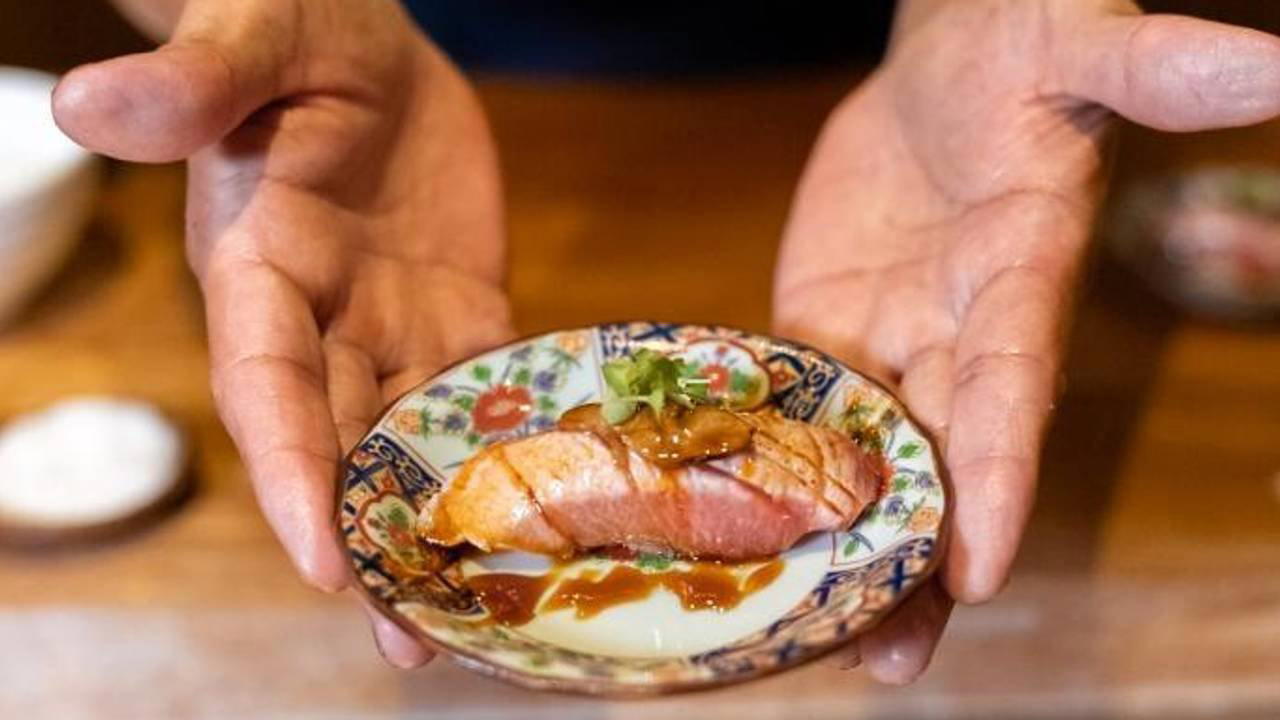
Japanese Precision in a Pacific Resort Town
Cabo San Lucas earns most of its dining reputation through salt air, open flames, and proximity to the sea. The corridor from the marina to the corridor of El Medano is thick with ceviche counters, taco stands, and the kind of high-volume Mexican kitchens that have made Baja California a serious regional food destination. Against that backdrop, kaiseki — the multi-course Japanese format rooted in seasonality, restraint, and obsessive technique — reads almost as a provocation. Japanese Kaiseki and Sushi Luna occupies that counterintuitive space: a restaurant that asks Cabo diners to slow down and pay attention.
The address on Blvd. Lázaro Cárdenas 2501, in the El Medano Ejidal neighbourhood, places the restaurant away from the marina's tourist density. That geographical choice is itself a signal. Restaurants that position themselves in the quieter inland edge of El Medano are generally not competing for walk-in traffic. They rely on reputation and intention, guests who arrive having already decided what they want.
A Format That Runs Against the Cabo Current
Kaiseki as a dining structure emerged from Japanese tea ceremony culture and evolved into the country's most technically demanding restaurant format. The sequence of small, precisely prepared courses, each tied to season, region, and visual arrangement, represents a completely different philosophy from the market-fresh abundance that defines much of Baja cooking. Where Al Pairo at Solaz channels the richness of the Mexican coast, and where Asi y Asado leans into the fire-driven confidence of Mexican grilling, the kaiseki format demands economy of gesture, restraint over abundance, and a course structure that builds meaning cumulatively rather than through individual standout dishes.
Sushi within the kaiseki framework also carries different expectations from the kind of sushi that appears across Cabo's resort menus. At specialist counters operating in the kaiseki tradition, nigiri is not an appetiser or a crowd-pleaser, it functions as a technical statement about rice temperature, fish aging, and hand pressure. That distinction matters when comparing Japanese Kaiseki and Sushi Luna against broader Cabo sushi offerings. The reference points here sit closer to the omakase counters of Japan's major cities or to the caliber of restaurants like Atomix in New York City, which similarly applies a multi-course Korean tasting format in an American city not typically associated with that tradition, than to the fusion rolls that populate most resort sushi menus in Los Cabos.
The Sensory Register
A restaurant committed to the kaiseki format communicates its priorities through physical environment before a single dish arrives. The aesthetic language tends toward restraint: muted materials, deliberate lighting, a room designed to focus attention inward rather than outward toward ocean views or sunset spectacle. This is the structural opposite of the terrace dining that defines restaurants like Aleta, where the Pacific horizon is part of the experience. In the kaiseki setting, what you see, hear, and feel at the table is shaped by the food itself, by the colour of a ceramic, the aroma of dashi, the silence between courses that separates one flavour memory from the next.
That sensory compression is part of what makes the format demanding for both kitchen and guest. Each course carries the full interpretive weight of a meal that might otherwise be spread across a more expansive production. The discipline required to sustain that, service pacing, temperature control, mise en place precision, represents a significant operational commitment for any kitchen, and particularly for one operating outside Japan's dense network of kaiseki-trained cooks and specialist ingredient suppliers.
Cabo's Broader Fine Dining Context
Cabo San Lucas has developed a credible fine dining tier over the past decade, though it remains anchored in Mexican and seafood-forward formats. Restaurants like Arts and Sushi and Baja Brewing serve different points on the price and formality spectrum, but the dominant culinary conversation in Los Cabos stays rooted in regional Mexican and Baja California cooking traditions. Across Mexico more broadly, the country's serious dining scene is concentrated in Mexico City, where Pujol has shaped a decade of international conversation about Mexican fine dining, and in regional anchors like Alcalde in Guadalajara, KOLI Cocina de Origen in Monterrey, and Levadura de Olla in Oaxaca. Alongside those, coastal destinations like HA' in Playa del Carmen and Le Chique in Puerto Morelos have pushed tasting-menu ambition into resort settings.
Japanese Kaiseki and Sushi Luna operates in a similar gap: a format-specific restaurant embedded in a city whose dining identity pulls in a different direction. That positioning has precedent. Some of Mexico's most interesting specialist restaurants, Animalón in Valle de Guadalupe, Lunario in El Porvenir, Olivea Farm to Table in Ensenada, Pangea in San Pedro Garza García, all operate in cities whose culinary centre of gravity doesn't immediately suggest that level of ambition. The pattern is now familiar enough that specialist restaurants in secondary or resort cities are less surprising than they were a decade ago; what varies is execution.
Planning Your Visit
The El Medano address on Blvd. Lázaro Cárdenas is reachable by taxi or rideshare from the marina district in under ten minutes. Given the format, kaiseki and serious sushi counters almost universally require advance booking, walk-in tables, if they exist at all, tend to be limited and unpredictable. Arriving without a reservation at a format-specific restaurant operating at this level is a risk not worth taking. For a broader orientation to Cabo San Lucas dining before or after your visit, the EP Club Cabo San Lucas restaurants guide covers the full range of the city's current offerings. Similarly, anyone seeking a technical benchmark for what serious omakase and tasting counter dining looks like at its ceiling should consider Le Bernardin in New York City as a reference point for the precision and pacing that define the top tier of the format globally.
Continue exploring
More in Cabo San Lucas
Restaurants in Cabo San Lucas
Browse all →
Bars in Cabo San Lucas
Browse all →
At a Glance
- Elegant
- Intimate
- Sophisticated
- Date Night
- Special Occasion
- Chefs Counter
- Sake Program
Current opening hours
- Monday
- Closed
- Tuesday
- 5–10 PM
- Wednesday
- 5–10 PM
- Thursday
- 5–10 PM
- Friday
- 5–10 PM
- Saturday
- 3–10 PM
- Sunday
- 3–10 PM
Hours can change for holidays and private events. Last verified .
Intimate and elegant atmosphere transporting diners to Japan, with warm service and meticulously presented dishes.
Know Before You Go
- Getting there
- Blvd. Lázaro Cárdenas 2501, El Medano Ejidal, El Medano, 23453 Cabo San Lucas, B.C.S., Mexico