Arts & Sushi
On Cabo San Lucas's marina strip, Arts & Sushi sits at the intersection of Baja's Pacific seafood culture and Japanese technique. Plaza Bonita's ground floor puts it squarely in the tourist corridor, yet the concept draws on the same logic driving Mexico's broader raw-fish renaissance: local waters, global method. A reference point for visitors weighing sushi against the peninsula's wider dining options.
Pearl is the En Primeur Club membership app — saves, bookings, and concierge access live there. Same editors, same standards.
- Address
- Boulevard Marina SN, Local 2A, Plaza Bonita, Centro, 23450 Cabo San Lucas, B.C.S., Mexico
- Phone
- +526241444554
- Website
- artsandsushi.com
- Directions
- Get directions
 Saves & bookings on Pearl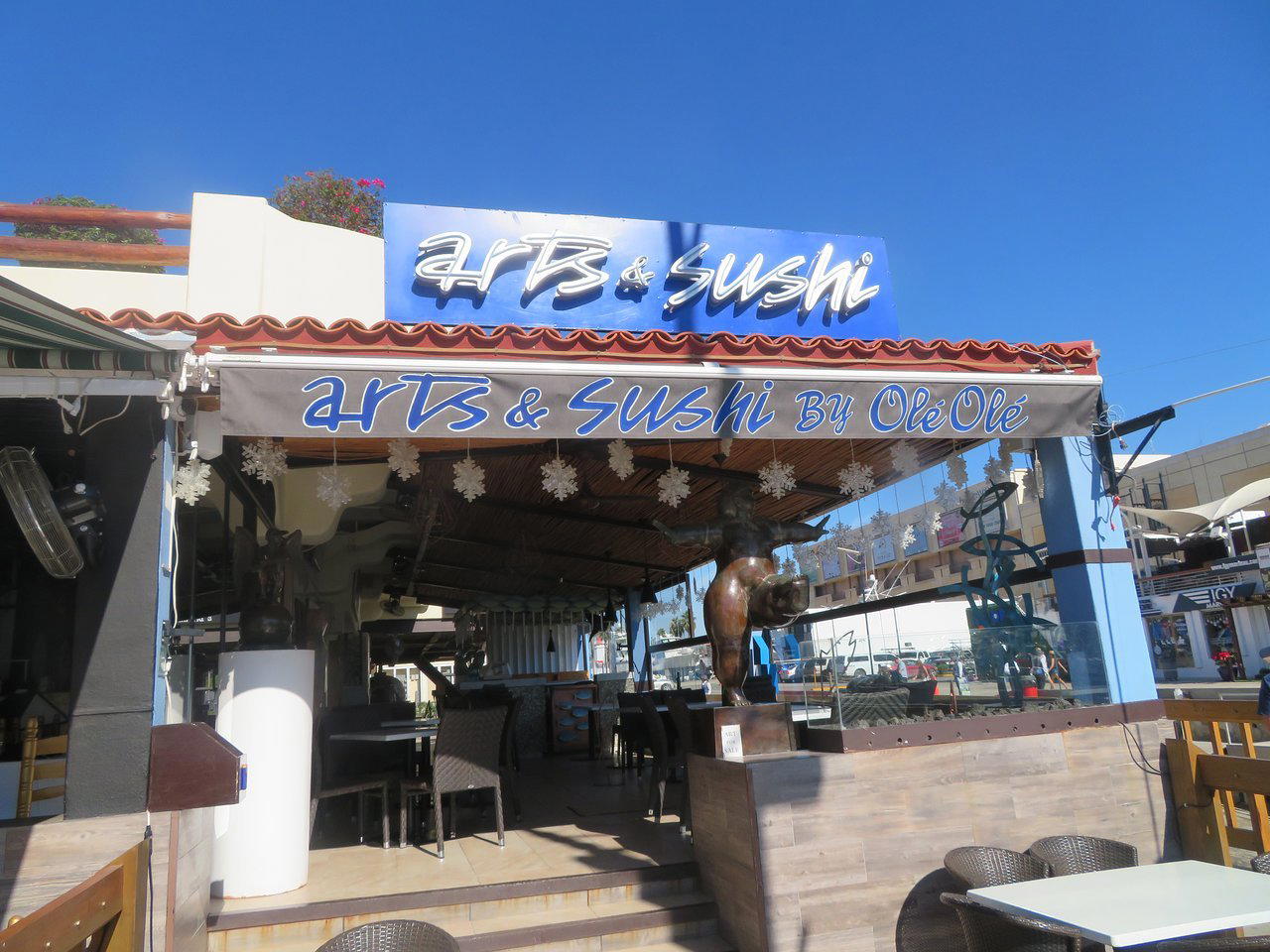
Where Baja's Waters Meet the Counter
The marina boulevard in Cabo San Lucas runs at the edge of where the Sea of Cortez meets the Pacific, and that geography matters more than any interior design choice a restaurant can make. The waters off this peninsula rank among the more biodiverse in the Western Hemisphere, producing yellowfin tuna, dorado, and wahoo that travel from boat to kitchen with a speed most sushi markets in landlocked cities cannot replicate. Arts & Sushi, positioned in Plaza Bonita on Boulevard Marina, is a Japanese Sushi Fusion restaurant in Cabo San Lucas, Mexico. It places itself directly in the path of that supply chain, a deliberate alignment between the raw material available offshore and a Japanese-derived format built to showcase it.
Sushi as a format has spread through Mexico's resort corridor precisely because the ingredient logic works. The tradition of Japanese technique applied to non-Japanese fish is not new: Le Bernardin in New York City built a global reputation on French classical method applied to oceanic produce, and Lazy Bear in San Francisco has demonstrated that format discipline, rather than ingredient provenance, often determines the ceiling of a dining experience. In Baja California Sur, the same principle applies differently: the indigenous product is notable, and the question becomes which kitchen has the technical vocabulary to translate it.
The Broader Baja Sushi Conversation
Cabo's dining scene in recent years has split along a familiar axis: resort-anchored properties with international backing on one side, and smaller concept-driven venues on the other. Arts & Sushi occupies a commercial strip position, Plaza Bonita is a tourist-facing retail and dining complex on the marina, which places it in a different register than the clifftop or beachfront formats that define properties like Bar Esquina or the more destination-driven Aleta. That positioning is not a weakness; it reflects a different intent. The marina strip targets foot traffic and repeat visits from visitors staying nearby, which shapes both format and pacing.
Across Mexico, the intersection of Japanese technique and local seafood has produced some of the country's most interesting dining. HA' in Playa del Carmen applies this logic to Yucatan Peninsula catches. In Baja wine country, Animalón in Valle de Guadalupe and Lunario in El Porvenir have demonstrated that the peninsula's producers, whether fishing or farming, can anchor serious fine-dining ambition. What distinguishes the Cabo execution is proximity to two bodies of water with distinct catch profiles, which gives a kitchen working in this format more raw material variety than most comparable venues in Mexico.
Local Ingredients, Imported Grammar
Japanese culinary technique is, at its foundation, a grammar of restraint: minimal intervention, precise temperature, close attention to the quality and freshness of the base ingredient. When that grammar is applied to Baja's offshore catches, the results track differently than they would in Tokyo or Los Angeles. Yellowfin tuna from the Sea of Cortez carries a different fat profile from the bluefin central to traditional Japanese omakase. Dorado, abundant in these waters during the warmer months from late spring through early autumn, has no real equivalent in the Japanese canon and requires a kitchen to develop its own protocol around texture and presentation.
This kind of translation is exactly what restaurants at the more ambitious end of Mexico's national dining scene have been working through. Pujol in Mexico City has made that method-ingredient dialogue central to its identity. KOLI Cocina de Origen in Monterrey and Alcalde in Guadalajara apply similar thinking to their respective regional products. Le Chique in Puerto Morelos has done it with the Caribbean coast's pantry. Arts & Sushi operates at a more accessible price tier and a less formal register than those references, but the underlying editorial question is the same: does the kitchen treat local seafood as a commodity or as a primary argument?
Setting and Format
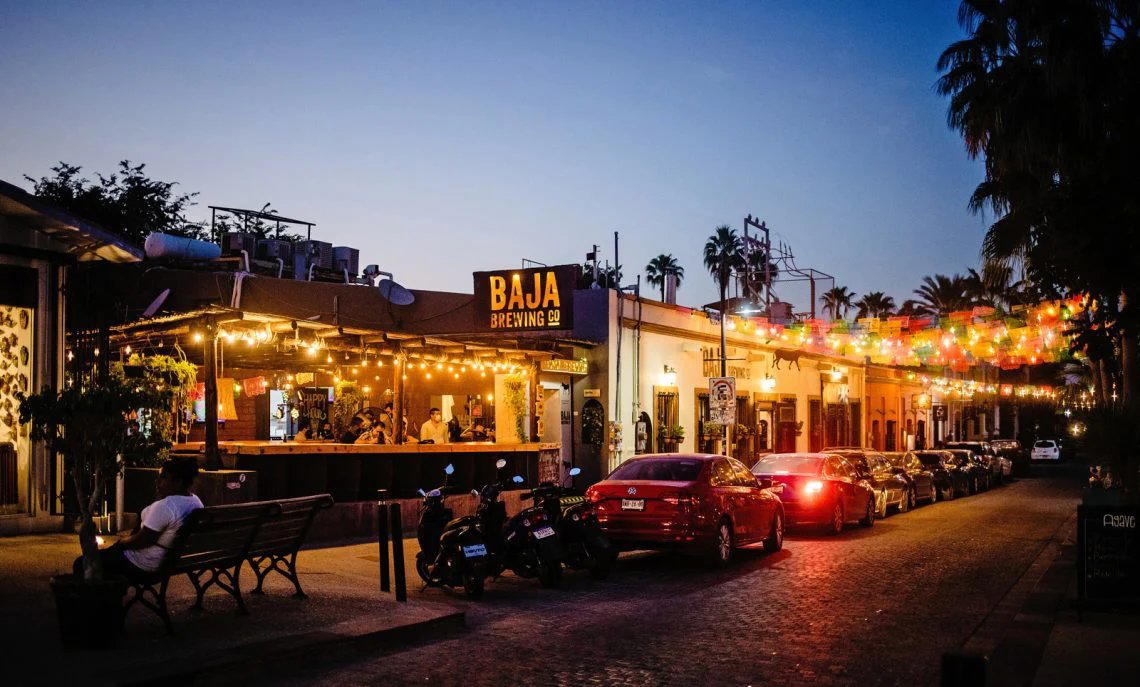
Plaza Bonita's ground-floor location gives Arts & Sushi the kind of visibility that marina-side venues depend on, open to the boulevard, close to the water, positioned where visitors are already moving between the marina's commercial cluster and the boat docks. The setting is animated rather than contemplative, which fits the format: sushi in a resort-marina context tends toward variety and volume over the meditative pace of a traditional counter. For visitors comparing options along the marina, Baja Brewing sits in a different category entirely (casual beer-and-food), while Asi y Asado leans into fire-cooked meat. Arts & Sushi's raw-fish format occupies a distinct lane in that mix.
For visitors whose frame of reference includes resort dining at Al Pairo at Solaz or the broader Cabos fine-dining tier represented by Cocina de Autor, Arts & Sushi operates at a different register: more casual, more accessible, marina-adjacent rather than resort-embedded. That comparison is worth making explicitly because it affects both expectation and planning.
Planning a Visit
Cabo San Lucas operates at two distinct tempos across the calendar year. The winter high season, roughly November through April, brings the highest visitor density and most compressed availability at popular venues along the marina strip. During that window, same-day availability at marina restaurants becomes less reliable, and a venue like Arts & Sushi, in a high-traffic plaza, will see its busiest service periods at prime dinner hours. The summer months, when Baja's offshore waters are most productive for dorado and other warm-water species, represent a different equation: fewer visitors, but potentially more interesting catch on the menu. Visitors with flexibility would do well to consider that seasonal trade-off.
Arts & Sushi sits at Boulevard Marina SN, Local 2A, Plaza Bonita, in Cabo San Lucas's centro district, walking distance from the marina docks and the main tourist corridor. The restaurant is open daily from 11 AM to 11 PM, and reservations are recommended. Levadura de Olla Restaurante in Oaxaca for visitors planning wider Mexico itineraries, and Olivea Farm to Table in Ensenada and Pangea in San Pedro Garza Garcia for those comparing Baja and broader northern Mexico dining contexts.
Peers in This Market
Comparable venues nearby, for context on price, style, and recognition.
| Venue | Cuisine | Price | Notes |
|---|---|---|---|
| Arts & SushiThis venue — the venue you are viewing | Japanese Sushi Fusion | $$$ | Not listed |
| Koi Sushi | Japanese Sushi | $$$ | Cabo San Lucas |
| Nicksan Cabo | Japanese-Mexican Fusion | $$$ | Cabo San Lucas |
| Daikoku | Traditional Japanese with Teppanyaki | $$$ | Cabo San Lucas |
| Japanese Kaiseki and Sushi Luna | Japanese Kaiseki and Omakase | $$$$ | Cabo San Lucas |
| Barrio del Tango | Argentine Steakhouse | $$$ | Cabo San Lucas |
Continue exploring
More in Cabo San Lucas
Restaurants in Cabo San Lucas
Browse all →
Bars in Cabo San Lucas
Browse all →
At a Glance
- Elegant
- Modern
- Scenic
- Date Night
- Special Occasion
- Waterfront
- Terrace
- Sake Program
- Sustainable Seafood
- Waterfront
Current opening hours
- Monday
- 11 AM–11 PM
- Tuesday
- 11 AM–11 PM
- Wednesday
- 11 AM–11 PM
- Thursday
- 11 AM–11 PM
- Friday
- 11 AM–11 PM
- Saturday
- 11 AM–11 PM
- Sunday
- 11 AM–11 PM
Hours can change for holidays and private events. Last verified .
Great ambiance with a lively touch, featuring a wonderful terraced patio overlooking the calm marina waters with yachts.