Jade Harbor
Our verdict
Jade Harbor serves authentic Chinese dim sum in Philadelphia’s Race Street corridor, with fried duck and salted chicken among the signature dishes and a casual, conversational setup.

Pearl is the En Primeur Club membership app — saves, bookings, and concierge access live there. Same editors, same standards.
- Address
- 942 Race St, Philadelphia, PA 19107
- Phone
- (215) 928-0451
- Hours
- Daily 4 PM–2 AM
- Website
- jadeharbortogo.com
- Directions
- Get directions
- Booking
- Book on the venue's website
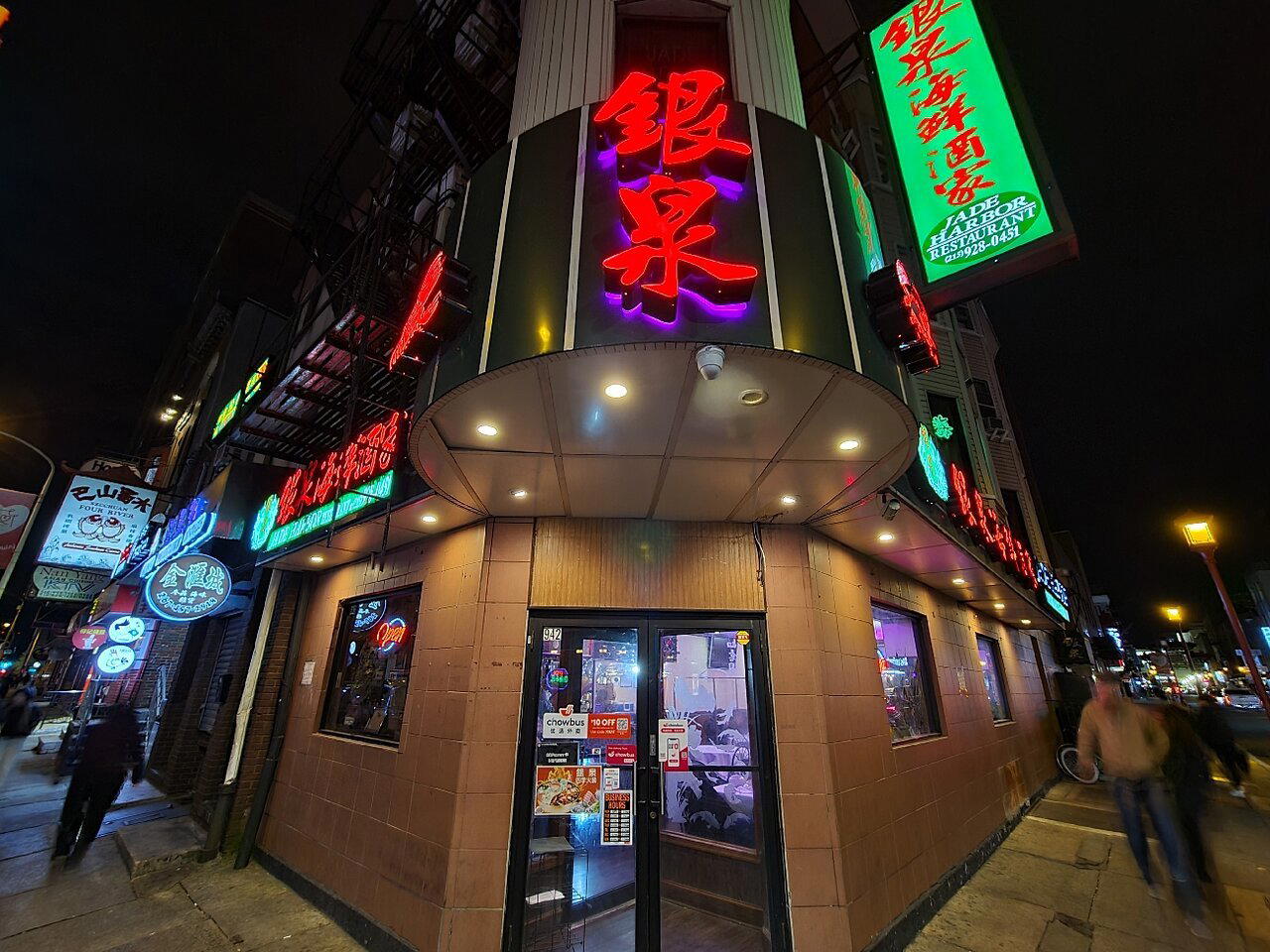
Race Street and the Chinatown Question
The 900 block of Race Street sits at the functional center of Philadelphia's Chinatown, a district that has compressed decades of Chinese-American restaurant history into roughly eight square blocks north of Market Street. The neighborhood rewards attention: its kitchens range from Cantonese roast-meat specialists operating since the 1970s to newer Pan-Asian formats that have drawn national food press. Jade Harbor, at 942 Race St, occupies a street-level address inside that corridor, where the density of competing restaurants means that reputation travels primarily by word of mouth and repeat visits rather than by marketing.
Philadelphia's Chinatown is a useful comparison point for how American urban Chinese dining has evolved. Unlike San Francisco's or Manhattan's Chinatowns, which have absorbed significant tourist infrastructure, Philadelphia's version has remained comparatively functional and neighborhood-scaled. Dining decisions there tend to be made by regulars who know specific dishes at specific tables, not by visitors working through a shortlist. That social context shapes every restaurant on the block, including Jade Harbor.
Ethical Sourcing in a Dense Urban Dining Block
The broader shift toward transparency in sourcing has moved through American Chinese restaurants at a different pace than it has through the New American and French-derived traditions. Restaurants like Blue Hill at Stone Barns in Tarrytown and Single Thread Farm in Healdsburg built their entire identities around provenance and waste-reduction, eventually making those commitments legible through awards recognition and press coverage. The question of how that standard applies to a Chinatown address is less settled, partly because the economic model of Chinese-American restaurants has historically prioritized accessibility over premium sourcing narratives, and partly because the ingredient networks in use are often distinct from the farm-to-table supply chains that food media has documented most thoroughly.
What this means in practice: a restaurant in Jade Harbor's position on Race Street operates within a culinary tradition where the skill applied to an ingredient, the technique of a Cantonese braise or a precisely timed dim sum fold, carries more weight than the provenance story attached to it. Whether a kitchen in this context chooses to align with the sourcing transparency movement is a meaningful signal about which tier of the market it is positioning toward, and which customer it believes is paying attention.
Sustainability in dense urban Chinese dining also shows up in less visible ways: minimizing food waste through whole-animal and whole-fish preparation, maintaining relationships with specific regional suppliers for dried goods and specialty aromatics, and calibrating portions so that neither the kitchen nor the diner is generating excess. These are not practices unique to any single restaurant; they are embedded in the logic of the cuisine itself, which historically developed in conditions where waste was not an option. The more interesting editorial question is which kitchens in Chinatown are making those longstanding efficiencies explicit rather than invisible, and doing so in a way that meets the expectations of a reader who has also eaten at Providence in Los Angeles or Le Bernardin in New York City.
Philadelphia's Broader Restaurant Context
Philadelphia has developed a genuinely plural dining scene over the past decade, with serious attention concentrated in a few distinct registers. The New American format has several strong practitioners, including Fork and Friday Saturday Sunday, both of which have received sustained editorial recognition. Thai cooking is represented at a high level by Kalaya. Pan-Asian formats are evolving, with Mawn drawing attention for its Cambodian-inflected approach, while French-inspired work appears at My Loup. The city has not, as yet, produced a Chinese restaurant with the national awards profile that would place it in the same conversation as Atomix in New York City for Korean cuisine or Alinea in Chicago for fine dining experimentation, though that gap itself says something useful about where Philadelphia's culinary ambition has concentrated.
Jade Harbor's Race Street address places it inside the part of the city where Chinese restaurant density is highest and the competition is entirely within the cuisine category rather than across genres. On Race Street, the comparison is narrower and more exacting.
What the Address Implies About Format
Street-level Chinatown restaurants in American cities typically sort into a few recognizable formats: large-capacity Cantonese banquet rooms, smaller noodle and congee specialists, roast-meat operations, and the more recent wave of regional Chinese kitchens emphasizing Sichuan, Hunan, or Shanghainese cooking. The address and neighborhood position of Jade Harbor place it within that structural range, though the specific format requires direct confirmation. For readers accustomed to the precision of reservation-driven tasting menus at The French Laundry in Napa or Addison in San Diego, a Chinatown restaurant at this address likely operates with a different set of conventions: walk-in availability at certain hours, a menu organized for table sharing, and a pace that follows the kitchen rather than a choreographed service sequence.
That format difference is not a deficit. It reflects a distinct hospitality tradition in which the food itself, rather than the service architecture surrounding it, carries the weight of the experience. Restaurants operating in that tradition have produced some of the most technically demanding cooking in American cities. The analogous argument applies internationally: 8 1/2 Otto e Mezzo Bombana in Hong Kong demonstrates that fine dining credentials can coexist with Chinese culinary geography, even if the model there is Italian-rooted. The more relevant domestic comparison may be how Emeril's in New Orleans or Lazy Bear in San Francisco have used transparency about sourcing and preparation to shift the terms on which their respective cuisines are evaluated.
For planning purposes: Jade Harbor is located at 942 Race St in the Chinatown district, accessible from multiple transit lines serving Center City. The immediate neighborhood operates across lunch and dinner hours with varying peak times; weekend dim sum service, where applicable in a given kitchen, typically draws the heaviest early-afternoon volume. Readers approaching from Rittenhouse or the Philadelphia Convention Center are within walking distance. The EP Club recommends consulting our full Philadelphia restaurants guide for neighborhood context before planning a visit.
Frequently asked questions
Where is Jade Harbor located?
Jade Harbor is located at 942 Race St, Philadelphia, PA 19107, Philadelphia.
Is Jade Harbor in Philadelphia's Chinatown a good option for a group dinner?
Jade Harbor sits at 942 Race St in Philadelphia's Chinatown, a block where the dominant restaurant formats include both large Cantonese banquet rooms built for group service and smaller counter-style operations. Philadelphia's Chinatown has a documented track record of accommodating family-style group dining, and Race Street addresses in particular have historically supported that format.
What do people recommend at Jade Harbor?
Regulars in dense urban Chinatown corridors like this one tend to gravitate toward roasted proteins, clay pot preparations, and house noodle dishes. Checking recent diner reports or calling ahead will give you the clearest read on current strengths.
What's the best way to book Jade Harbor?
Phone and web booking details for Jade Harbor are not currently listed in public directories. For street-level Chinatown restaurants at this address, walk-ins during off-peak hours — mid-afternoon lunch or early weeknight dinner — are often the most reliable approach. Arriving before the main dinner push on weekends is advisable given the density of foot traffic the 900 block of Race Street draws.
What makes Jade Harbor worth seeking out?
Jade Harbor occupies 942 Race St, the functional core of Philadelphia's Chinatown, a district that has sustained Chinese-American dining through decades of urban pressure and real estate change. That address carries weight: restaurants that hold a position on this block do so against considerable competition and neighborhood churn. Whether Jade Harbor distinguishes itself through sourcing, format, or kitchen depth is best confirmed through current local sources, but the location alone puts it inside one of Philadelphia's most concentrated dining corridors.
Cuisine Lens
Comparable venues nearby, for context on price, style, and recognition.
| Venue | Cuisine | Price | Notes |
|---|---|---|---|
| Jade HarborThis venue — the venue you are viewing | Authentic Chinese Dim Sum | $20–30 | Not listed |
| David's Mai Lai Wah | Cantonese Chinese | $20–30 | Chinatown |
| CinCin | Upscale Chinese-Pan Asian with French Flair | $20–30 | Chestnut Hill |
| EMei | Authentic Sichuan Chinese | $30–50 | Chinatown |
| Nan Zhou Hand Drawn Noodles | Hand-Drawn Northern Chinese Noodles | $10–20 | Chinatown |
| TingTing's | Hong Kong-Style Cha Chaan Teng Fusion | $20–30 | Chinatown |