

Tabelog Silver #45
Our verdict
Isoda belongs to Tokyo’s serious Japanese-cuisine tier rather than the casual Ningyocho dining circuit around it. Recognition from The Tabelog Award 2026 Silver, Tabelog Japanese cuisine TOKYO 100 in 2025, and OAD’s 2026 Japan Recommended list puts it in a narrow bracket where sourcing, seasonality, and reservation discipline matter more than decoration.

Pearl is the En Primeur Club membership app, where members save venues, book tables and use the concierge.
The menu
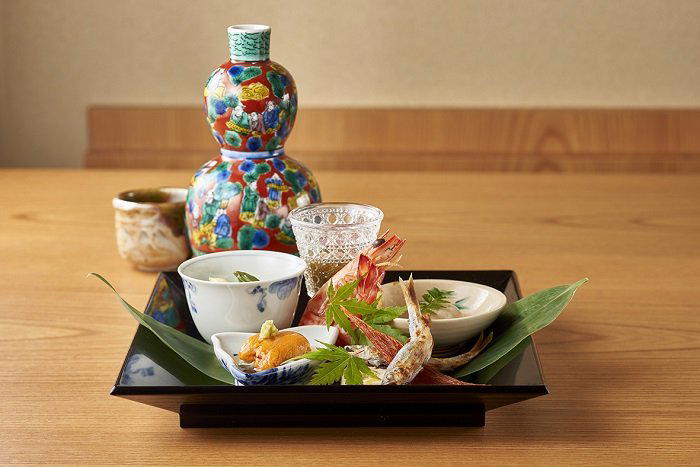
What to order
- Sweetfish
- Grilled sea bream
- Pufferfish milt soup
The approach to Ningyocho changes the register before dinner begins. This is old mercantile Tokyo, with narrow streets, low-rise buildings, and a food culture that has long rewarded specialization over spectacle. Around the station, casual counters, sweets shops, sukiyaki rooms, and everyday lunch houses form the district’s visible layer; the serious Japanese-cuisine rooms operate in a quieter register, where the room is secondary to procurement, pacing, and the kitchen’s reading of the season.
That matters because high-end Japanese cooking in Tokyo is increasingly split between two kinds of ambition. One side pursues luxury through theatre, rare tableware, and international-facing polish. The other keeps the grammar closer to kappo and kaiseki: ingredients arrive with less explanation, courses move by season rather than menu copy, and the measure of the kitchen is whether it knows when not to interfere. Isoda sits firmly in the second camp. Its public recognition is already unusually dense for a restaurant that opened on 2024.11.1: The Tabelog Award 2026 Silver, selection for Tabelog Japanese cuisine TOKYO 100 in 2025, a Tabelog score listed at 4.38 in 2026, and inclusion in Opinionated About Dining’s 2026 Japan Recommended restaurants.
Ningyocho gives the room a different kind of pressure
Ginza and Aoyama can make a restaurant feel expensive before the first course. Ningyocho works differently. The neighbourhood’s reputation rests on older Tokyo habits: confectionery, sukiyaki, eel, soba, tempura, and compact counters that build loyalty through repetition. In that setting, a serious Japanese-cuisine restaurant has less use for grand arrival rituals. The competitive pressure comes from local literacy. Diners here understand the difference between luxury ingredients and well-bought ingredients; they also know that a seasonal meal can fail when sourcing is treated as a shopping list rather than a sequence.
The comparison within Ningyocho is instructive. Hiyama represents the district’s sukiyaki lineage, Uokyu Eat-in Ajimise Honten works at a far more everyday price tier, Katsu Yoshi occupies a middle lane, and places such as Oniyanma Ningyouchou ten or Sucre-rie show how the area supports focused specialists outside the high-end dinner category. Against that backdrop, Isoda is not simply another expensive Tokyo counter. It is a Japanese-cuisine address operating in a neighbourhood where ingredient identity has always been part of the local dining vocabulary.
That ingredient angle is the useful lens. Kaiseki-derived cooking depends on timing: bamboo shoots before they become heavy, fish when fat and texture align, vegetables when bitterness or sweetness suits the season. Tokyo’s advantage is access. The city draws from Toyosu, regional growers, specialist brokers, and long-standing supply networks that reward kitchens with buying discipline. Awards do not prove taste, but they do indicate that enough experienced diners and evaluators have found the sourcing-and-sequence equation convincing. A Tabelog Silver award and Japanese-cuisine TOKYO 100 selection place the restaurant among heavily scrutinized peers, not merely among fashionable new openings.
The case for restraint over performance
Tokyo’s premium Japanese-cuisine scene can be unforgiving because the form leaves little room to hide. Unlike a cuisine built around abundance or visual shock, the meal often turns on proportion: stock, temperature, knife work, rice, and the order in which richer elements appear. The absence of private rooms at Isoda also points toward a format where attention is concentrated in the shared dining experience rather than dispersed across entertaining spaces. Private use is available, but the normal proposition reads as focused, adult, and ingredient-led.
The restaurant’s no-smoking policy, credit-card acceptance, and reservation-only structure fit the contemporary Tokyo pattern for serious small-format dining. These are not luxuries; they are operational signals. They tell the traveller to treat the meal as a planned appointment, not a spontaneous neighbourhood drop-in. The absence of electronic money and QR code payments is also typical of higher-touch Japanese restaurants that prefer controlled settlement to broad casual convenience.
Chef Taketo Isoda is named in OAD’s 2026 listing, but the more relevant point is not biography. In this category, chef identity matters when it translates into consistent buying, editing, and pacing. The early awards profile suggests that the kitchen has entered the conversation quickly, yet the better reason to pay attention is its position in Tokyo’s ingredient-first Japanese-cuisine tier: expensive enough to compete with serious counters, restrained enough to resist the international luxury script, and located in a district where the old standards of Japanese dining remain legible.
How to place it within a Tokyo itinerary
For travellers building a Tokyo food schedule, this is the kind of dinner that should not be paired with another heavy tasting menu on the same day. The smarter rhythm is contrast: a simple breakfast, a light lunch, then a dinner slot where seasonal Japanese cooking can register without fatigue. Ningyocho also makes geographic sense for itineraries that include Nihonbashi, Ginza, or the eastern side of central Tokyo, rather than a night built around Shibuya or Shinjuku.
It also belongs in a different decision set from Tokyo’s casual food crawl. Use the broader city map to separate categories before committing nights: Our full Tokyo restaurants guide is the wider dining frame, while Our full Tokyo hotels guide, Our full Tokyo bars guide, Our full Tokyo wineries guide, and Our full Tokyo experiences guide help keep the evening from becoming overbuilt. Within Tokyo’s restaurant spread, the contrast with. 鮪と炭火焼き うお炭 秋葉原店, 12/10 Shinjuku ten, 124. KAGURAZAKA (Yakitori), 2D Cafe, and 3 Chome no Curry Ya San shows how wide the city’s dining register runs, from pop-culture cafés to specialist grill counters and curry shops.
For broader Japan context, compare the capital’s formal Japanese-cuisine lane with regional and overseas Japanese-adjacent formats such as -Grilled beef Sukiyaki- KAMAKURA TANUKIAN 鎌倉 たぬき庵 in Kamakura.cafe in Osaka.know in Kumamoto, (Shoku) Vietnam in Kawasaki, [Curry Senmon Ten] Maruyama Kyoju. in Sapporo, [ki:] in Kyoto, Jōdo Saké Bar in Los Angeles, and Onigiri Time in Pasadena. Isoda’s appeal is narrower and more demanding: it asks the diner to value sourcing, season, and restraint over breadth.
Frequently asked questions
Is Isoda open every day?
Hours at Isoda: Mon, Tue, Wed, Thu, Fri 18:00 - 23:00.
What part of town is Isoda in?
Isoda is located in Tokyo.
What's the signature at Isoda?
Those details are not published. Isoda’s clearest calling card is its 2026 Tabelog Silver award, its Tabelog 100 Tokyo 2025 selection, and the reservation-only dinner format in Ningyocho, Tokyo. Check the venue's official channels for the latest details.
What if I have allergies at Isoda?
Isoda takes reservations through OMAKASE, so allergy notes can be added in that booking flow. For tighter checks, the listed phone number is +81 3-3527-3116, and the restaurant serves Japanese cuisine at 1-5-10 Nihonbashiningyocho, Chuo City, Tokyo.
A Quick Peer Check
Comparable venues nearby, for context on price, style, and recognition.
| Venue | Cuisine | Price | Awards | Notes |
|---|---|---|---|---|
| IsodaThis venue (the venue you are viewing) | Kyoto-style Kaiseki Omakase | $300–500 | Tabelog Silver #45 | Not listed |
| Sushi Tokami | High-End Sushi Omakase | $200–300 | Not listed | Chūō |
| Hatou | Edomae Omakase | $200–300 | Not listed | Shinjuku |
| Kintsuta | Modern Hakata-Style Takiniku Hotpot | $50–100 | Not listed | Minato |
| Sushiyuu | Traditional Edomae Omakase | $150–200 | Not listed | Minato |
| Kawada | Traditional Japanese Omakase | $300–500 | Tabelog Bronze #171 | Minato |
Recognition history
Dated appearances from independent guides and award organizations, with the underlying list record or original source where available.
Opinionated About Dining Top Restaurants in Japan Recommended
Opinionated About Dining
Tabelog Silver #45
Tabelog
Full recognition history (4 entries)
Tabelog Bronze
Tabelog
Tabelog 100 #61 · No. 61
Tabelog · Tabelog 100 - Japanese cuisine - TOKYO - 2025
Continue exploring
More in Tokyo
Restaurants in Tokyo
All restaurants in Tokyo →







Details
- Elegant
- Intimate
- Minimalist
- Sophisticated
- Special Occasion
- Chefs Counter
- Sake Program
- Omakase
- Sake
- Wine
Current opening hours
- Monday
- 6–11 PM
- Tuesday
- 6–11 PM
- Wednesday
- 6–11 PM
- Thursday
- 6–11 PM
- Friday
- 6–11 PM
- Saturday
- 6–11 PM
- Sunday
- Closed
Hours can change for holidays and private events. Hours as of .
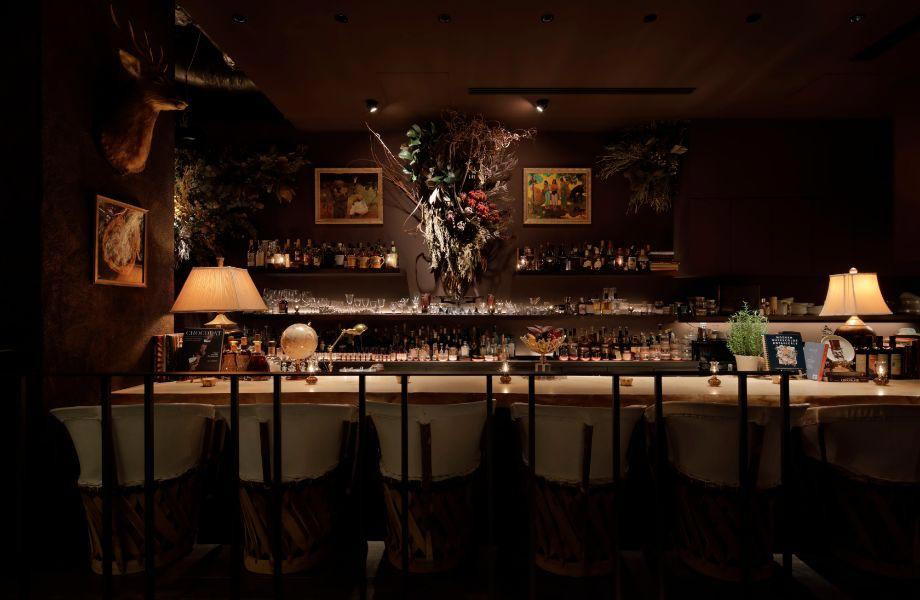
Simple and tasteful with a warm sense of hospitality around the open counter.